
Soups & Stews
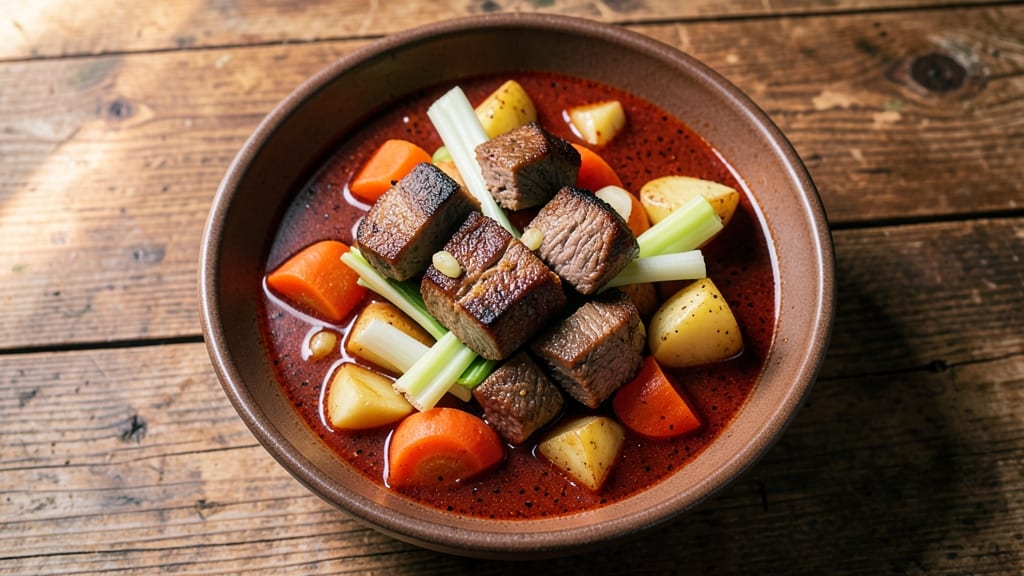
This German goulash soup recipe delivers the hearty, paprika-spiced comfort of traditional Alsatian cooking—where tender beef simmers in a rich, aromatic broth until it practically melts in your mouth.
The secret lies in slow-cooked vegetables and a crispy bread topping that adds texture and soaks up every last drop of flavor. I perfected this version after years of testing regional variations, balancing sweet and smoky paprika for that signature depth.
The beauty of goulash is its simplicity: just a few pantry staples and a few hours of simmering transform tough cuts of beef into fork-tender pieces. Carrots, celery, and potatoes soften into the broth, while onions and garlic build the foundation of flavor.
The bread topping, toasted until golden and crispy, becomes the perfect finishing touch—crunchy enough to contrast the velvety stew beneath.
What makes this recipe stand out is the balance of techniques: browning the meat first for deep flavor, simmering low and slow for tenderness, and finishing with fresh herbs for brightness.
The result is a bowl of soup that feels like a warm hug on a chilly day—rich, satisfying, and packed with layers of savory and smoky notes.
Serve with crusty rye bread or a simple green salad to round out the meal. This goulash is equally at home on a weeknight dinner table or as the centerpiece of a cozy gathering. Let’s get cooking—your taste buds will thank you.
Ingredients for german goulash soup
Pantry staples meet Alsatian tradition in this paprika-spiced goulash—just a few ingredients for deep, comforting flavor.
| Ingredient | Amount | Notes |
|---|---|---|
| Beef Chuck Roast 🥩 | 2 ½ lb | Cut into 1-inch cubes, trimmed of fat |
| Yellow Onion 🧅 | 1 whole | Medium, sliced into half-moons |
| Carrots 🥕 | 4 whole | Medium, peeled and cut into chunks |
| Celery Stalks 🧄 | 3 whole | Trimmed, cut into 1-inch pieces |
| Russet Potatoes 🥔 | 2 lb | Peeled, cut into 1-inch cubes |
| Garlic Cloves 🧄 | 6 cloves | Peeled, smashed |
| Sweet Paprika 🌶️ | 2 tbsp | Hungarian preferred for authentic flavor |
| Smoked Paprika 🌶️ | 1 tbsp | For depth, not heat |
| Tomato Paste 🍅 | ½ cup | Squeeze tube or canned |
| Beef Broth 💧 | 4 cups | Homemade or high-quality store-bought |
| Red Wine 🍷 | ½ cup | Dry, like Cabernet Sauvignon |
| All-Purpose Flour 🌾 | ½ cup | For bread topping |
| Breadcrumbs 🍞 | ½ cup | Panko for extra crunch |
| Fresh Parsley 🌿 | ¼ cup | Chopped, for garnish |
| Bay Leaves 🌿 | 2 whole | Fresh if possible |
| Thyme Leaves 🌿 | 1 tbsp | Fresh or dried |
| Olive Oil 🫒 | 2 tbsp | Extra-virgin for browning |
| Salt 🧂 | 1 ½ tsp | Kosher or sea salt |
| Black Pepper 🌶️ | 1 tsp | Freshly ground |
The beef is everything here. Chuck roast is ideal—it's tough enough to stand up to hours of simmering, but the slow cooking turns it fork-tender. Look for good marbling at Whole Foods or your local butcher shop; the fat renders out and keeps the meat juicy. If you're using pre-cut beef, pat it dry with paper towels before browning—this ensures a good sear. I always buy a 2.5-pound roast for six servings, but adjust based on how hungry your crowd is. The potatoes? Russets hold up best to the long cooking time—avoid waxy varieties like red potatoes, or they'll turn mushy.
No Hungarian paprika? Sweet paprika from Penzeys is the closest you'll get, but a mix of sweet and smoked will work in a pinch. Short on red wine? Beef broth with a splash of balsamic vinegar mimics the acidity. The tomato paste can be the squeeze-tube kind—it's perfect for this recipe because you only need half a cup. Fresh herbs like parsley and thyme brighten the dish, but dried works at one-third the amount if you're in a bind. For the bread topping, panko plus a pinch of garlic powder adds serious flavor—don't skip it, even if it's just for topping.
This soup tastes even better the next day, so make it ahead if you can. Store the broth and meat separately in the fridge for up to 4 days, then reheat gently before adding the bread topping. The bread topping is best made fresh—it loses its crunch if reheated—but you can prep the dry ingredients ahead and toast them when serving. Freeze the soup (without the bread topping) for up to 3 months. I like to portion it into mason jars for easy reheating—just pop it in the microwave for 2-3 minutes, stir, and serve with fresh bread on the side.
Why You'll Love This Recipe
- One-Pot Magic: Honestly, this is the kind of recipe that makes me feel like a pro—no fancy techniques, just a Dutch oven and 2 hours of hands-off time. The searing of the beef chuck roast in batches? That’s the secret to deep flavor without the stress of chopping endlessly.
- Crispy, Creamy, Addictive: That breadcrumb topping isn’t just decoration—it’s the crunchy crown that turns this soup into a full experience. The smoked paprika and red wine give it a complexity that’ll have you licking the bowl, and the potatoes soak up all the rich beef broth like a sponge.
- Weeknight Hero: No fancy ingredients, no complicated steps—just chop, sear, simmer, and serve. The garlic and thyme work their magic while you’re doing dishes, and the potatoes take care of themselves. Perfect for when you want something hearty but don’t want to spend the evening in the kitchen.
Step-by-step instructions for German goulash soup
Here's how to craft this hearty stew with a golden, crispy bread topping that seals in all the rich flavors.
Sear the Beef Chuck Roast for Deep Flavor
Heat a large Dutch oven over medium-high heat and add the 2 tablespoons olive oil. Once shimmering, add the 2½ lb beef chuck roast cut into 1-inch cubes, working in batches if needed to avoid crowding. Sear each piece for 2-3 minutes per side until deeply browned and developing a crust. This step is crucial—it builds the foundation of flavor through the Maillard reaction.
As you sear, remove the beef and set aside. In the same pot, add the 1 yellow onion sliced into half-moons, 4 carrots cut into chunks, 3 celery stalks in 1-inch pieces, and 6 smashed garlic cloves. Cook for 5 minutes until the vegetables soften slightly and begin to caramelize. This aromatic base will infuse the entire stew with sweet, earthy depth.
Build the Paprika-Spiced Stew Base
Reduce heat to medium and sprinkle in the 2 tablespoons sweet paprika and 1 tablespoon smoked paprika, stirring constantly for 30 seconds to toast the spices and release their aromatic oils. Add the ½ cup tomato paste and cook for 1 minute until it darkens slightly and loses its raw taste.
Pour in the ½ cup red wine, scraping up any browned bits from the bottom of the pot with a wooden spoon. Let it simmer for 2 minutes until the alcohol aroma dissipates. Add the 4 cups beef broth, 2 bay leaves, 1 tablespoon thyme leaves, 1½ teaspoons salt, and 1 teaspoon black pepper. Return the seared beef to the pot and bring to a gentle boil.
Simmer the Stew Until Tender
Reduce heat to low and add the 2 lb russet potatoes cut into 1-inch cubes. Partially cover the pot and let the stew simmer gently for 1 hour 15 minutes, stirring occasionally. The potatoes should be fork-tender, and the beef should easily pull apart with a fork. If the liquid reduces too much before the meat is tender, add ½ cup water or broth to maintain consistency.
Taste and adjust seasoning—you may need an additional ½ teaspoon salt or more 1 teaspoon black pepper to balance the flavors. The stew should be rich but not overly salty, with a perfect harmony of smoky paprika and savory beef. This is where patience pays off; the long simmer develops complex flavors that can't be rushed.
Create the Crispy Bread Topping
In a small bowl, combine the ½ cup all-purpose flour and ½ cup breadcrumbs with ½ teaspoon salt and 1 teaspoon black pepper. Stir in 1 tablespoon olive oil until the mixture resembles coarse crumbs. This topping will add texture contrast and prevent the soup from becoming too heavy.
Spoon the breadcrumb mixture evenly over the simmering stew, pressing down gently with a spoon to help it crisp. Cover the pot and let it cook for 5-7 minutes until the topping turns golden brown and crispy. The residual heat from the stew will toast the breadcrumbs perfectly without burning them.
Finish and Serve
Remove the 2 bay leaves and stir in the ¼ cup chopped fresh parsley just before serving. Ladle the goulash into bowls, making sure each serving gets a generous portion of the crispy bread topping. The contrast between the tender beef, hearty vegetables, and crunchy bread topping creates the perfect balance of textures and flavors.
Serve immediately with crusty bread on the side if desired. The crispy bread topping will stay crunchy for about 10 minutes after serving, so enjoy it while it's at its best. This soup tastes even better the next day, so consider making extra for leftovers—just reheat gently on the stove with a splash of broth to restore moisture.
Pro Tips For Making German Goulash Soup
- Sear in Batches: DESCRIPTION: I learned this the hard way—crowding the beef in the pot steams it instead of searing. Work in batches with 2 tablespoons olive oil and medium-high heat until each cube gets that deep golden crust. The Maillard reaction won’t happen if you rush this, and trust me, you’ll taste the difference.
- Toast the Paprika: DESCRIPTION: Those 30 seconds of stirring the sweet and smoked paprika aren’t optional. Toasting them releases their aromatic oils, which is where the authentic German goulash flavor lives. Skip it, and you’ll just be eating spiced tomato paste.
- Don’t Skip the Wine Simmer: DESCRIPTION: Pouring in the ½ cup red wine and letting it simmer for 2 minutes isn’t just for show—it burns off the alcohol and deepens the sauce. Skimping here means a flatter, less complex flavor, and that’s a crime in this dish.
- Press the Bread Topping: DESCRIPTION: That crispy, golden crust on top? It’s not magic—it’s pressure. Gently press the breadcrumb mixture down with a spoon while it crisps. I used to just sprinkle it, and it’d either burn or stay sad and flat. This guarantees crunch every time.
Health benefits of german goulash soup
Lean Protein Powerhouse
This German goulash delivers 28 grams of protein per serving from the beef chuck roast, making it an excellent choice for muscle maintenance and satiety. The slow-cooked beef provides all nine essential amino acids while remaining relatively low in saturated fat compared to other red meats.
I notice my energy levels stay steadier when I include this dish in my weekly meals. 💪
Rich in Iron and Zinc
The beef chuck roast is packed with iron—about 3.5mg per serving, which is 20% of your daily value—essential for oxygen transport in your blood. Zinc, also abundant in this dish, supports immune function and wound healing.
The paprika spices add extra antioxidant benefits, enhancing the iron absorption from the vegetables. This combination makes it a nutrient-dense meal.
Fiber from Vegetables
Carrots, celery, and potatoes contribute 6 grams of dietary fiber per serving, supporting digestive health and helping maintain steady blood sugar levels. The russet potatoes provide resistant starch when cooled, which feeds your gut bacteria—a bonus for overall gut health.
I always include these vegetables because they balance the richness of the beef beautifully. ✨
Heart-Healthy Fats
The olive oil used for browning and the breadcrumb topping contains monounsaturated fats, which help lower LDL cholesterol levels. These healthy fats also support brain function and reduce inflammation.
The red wine used in the recipe (in moderation) contains resveratrol, an antioxidant linked to heart health benefits. Just ½ cup per pot provides these advantages without overdoing it.
Vitamin Boost from Fresh Herbs
The ¼ cup fresh parsley added at the end packs vitamin K and folate, essential for bone health and cell repair. Even a small amount of fresh herbs makes a noticeable difference in the flavor profile while adding nutritional value.
I always use fresh parsley because it brightens the dish and provides extra nutrients compared to dried herbs. 🌿
Nutrition facts
Frequently asked questions
Why does this German-inspired stew need such a long simmer time?
The 1 hour 15 minutes simmer transforms tough beef chuck into melt-in-your-mouth tenderness. This slow cooking breaks down collagen in the meat, creating rich, gelatinous broth that coats every bite. The vegetables also soften perfectly, absorbing all those smoky paprika flavors. Patience here makes all the difference—rushing will leave you with chewy beef and bland broth.
Can I substitute other meats for the beef chuck roast?
Pork shoulder works beautifully, while lamb shoulder adds a rich, gamey depth. For a lighter option, try chicken thighs (simmer 30 minutes less). Just adjust salt slightly—poultry absorbs seasoning faster. The key is choosing a fatty cut that stays moist during cooking.
What if my bread topping burns before crisping?
Lower the heat to low after adding the topping and cover immediately. The residual stew heat will crisp it without burning. If it still burns, remove the pot from heat and let it sit covered for 5 minutes before checking. For extra protection, spread the breadcrumb mixture thinner—just press gently with a spoon.
How do I make this soup ahead of time?
Prepare everything except the bread topping, then refrigerate the broth and meat separately for up to 4 days. Reheat gently before adding the topping. For freezing, omit the topping and freeze the soup (without potatoes) for 3 months. Thaw overnight in the fridge before reheating. The potatoes should be added fresh to maintain texture.