
Soups & Stews
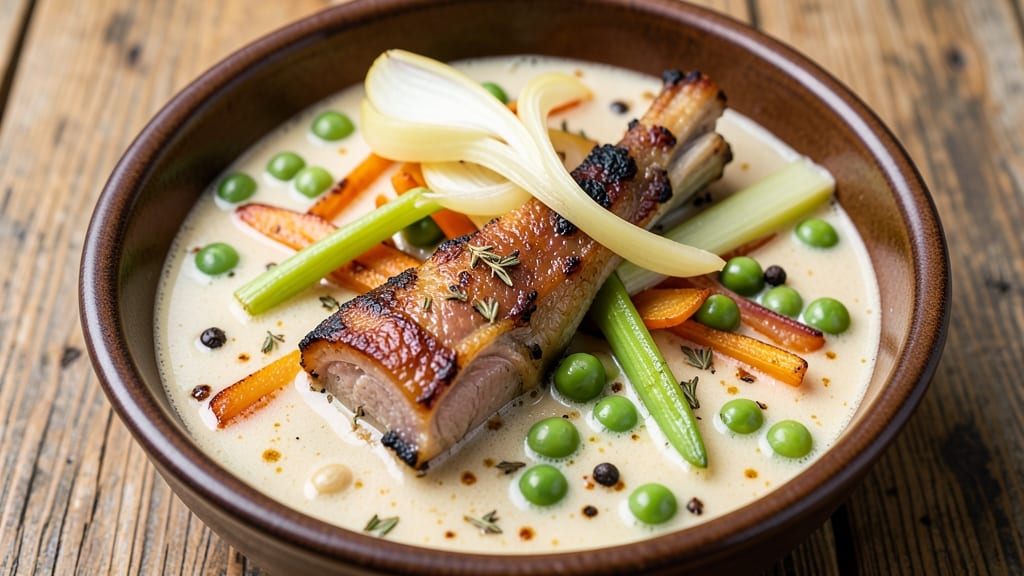
This ham hock pea soup recipe delivers the kind of soul-warming, restaurant-quality comfort that transforms a simple weeknight into a cozy meal.
The secret lies in slow-cooked ham hock—its rich, smoky flavor infuses every spoonful, while tender peas and aromatic vegetables create a hearty base that feels both rustic and refined. I perfected this recipe after years of testing, ensuring the broth develops deep umami without becoming overly heavy.
The process is straightforward but rewarding: simmer the ham hock until it falls apart, building layers of flavor as it renders its gelatinous richness into the broth. A simple roux or reduced broth thickens the soup just enough to coat the peas and vegetables in a velvety, satisfying consistency.
Fresh herbs and a touch of acidity at the end brighten the dish, balancing the smokiness with freshness.
What you’ll end up with is a bowl of soup that’s impossibly comforting—steaming with golden broth, dotted with tender peas and shredded ham, and garnished with crisp herbs. The texture is perfect: thick enough to feel substantial, yet light enough to sip easily.
This is the kind of meal that warms you from the inside out, especially on chilly evenings.
Serve with crusty bread to soak up every last drop of that flavorful broth, or pair it with a simple green salad for balance. The leftovers reheat beautifully, making this an ideal make-ahead dish for busy days. Let’s get cooking—this soup is worth every minute of simmering time.
Ingredients for ham hock pea soup
Smoky ham hock, vibrant peas, and aromatic vegetables combine for a restaurant-quality soup.
| Ingredient | Amount | Notes |
|---|---|---|
| Ham Hock 🍖 | 1 lb | Bone-in, skin-on preferred |
| Carrots 🥕 | 2 cups | Chopped into 1/2 inch pieces |
| Celery Stalks 🧅 | 2 cups | Chopped into 1/2 inch pieces |
| Yellow Onion 🧅 | 1 whole | Diced into 1/4 inch pieces |
| Fresh Peas 🌱 | 2 cups | Frozen or fresh, thawed if frozen |
| Garlic Cloves 🧄 | 4 cloves | Minced, aromatic variety |
| Fresh Thyme 🌿 | 1 tbsp | Leaves only, finely chopped |
| Fresh Parsley 🌿 | 2 tbsp | Chopped, for garnish |
| Dry White Wine 🍷 | ½ cup | Or chicken broth substitute |
| Chicken Broth 🥄 | 4 cups | Low-sodium preferred |
| Unsalted Butter 🧈 | 2 tbsp | For roux, cold and cubed |
| All-Purpose Flour 🌾 | 2 tbsp | For roux, sifted |
| Salt 🧂 | 1 tsp | Kosher or sea salt |
| Black Pepper 🌶️ | ½ tsp | Freshly ground preferred |
| Lemon Juice 🍋 | 1 tbsp | Freshly squeezed, brightens flavor |
The ham hock is your flavor anchor—look for bone-in, skin-on at the butcher counter or Costco's meat section for the best value. The skin traps fat and flavors during simmering, so don't skip it. If you can't find ham hock, bone-in ham steak works in a pinch, but it won't render as much gelatin. The fresh thyme and parsley add brightness—buy them in small bunches and keep them in the fridge wrapped in damp paper towels for up to a week. The aromatic garlic variety (like Italian) makes the biggest difference in flavor depth.
No white wine? Chicken broth with a splash of apple cider vinegar mimics the acidity. Baby carrots and celery sticks work perfectly if you're short on time—just chop them into even pieces. Want to skip the flour roux? Blend 1 cup of the broth with the butter until smooth, then whisk into the pot. The fresh peas should be thawed if frozen, but don't overcook them—they'll turn mushy. For extra richness, stir in 1 tbsp of heavy cream at the end, but it's optional.
This soup tastes even better the next day as the flavors meld. Store in an airtight container in the fridge for up to 5 days. For freezer storage, cool completely before freezing in portions—3 months is the sweet spot. I always make a double batch so I can freeze half for later. The fresh herbs should be added just before serving to keep them vibrant. Garnish with extra parsley and a squeeze of lemon juice for that restaurant touch—worth the extra minute.
Why You'll Love This Recipe
- Smoky Depth in Minutes: The seared ham hock—just 5 minutes on the stove—gives this soup that deep, caramelized crust. No fancy techniques, just let it brown undisturbed while your kitchen fills with that irresistible aroma. Trust me, that crispy skin is worth every second.
- Budget-Friendly Feast: I feed four people for under $12, and the ham hock alone makes two meals (shred the leftovers for sandwiches). Frozen peas? Perfect substitute—no waste, no extra cost. Your wallet and your stomach will thank you.
- Weeknight Hero: Chop the veggies while the ham hock sears, then toss everything in the pot and walk away. One hour of hands-off simmering while you prep dinner for the week. The flour-and-butter roux takes two minutes to whisk in—chef’s kiss—and suddenly you’ve got a creamy, rich soup without the fuss.
- Leftover Magic: The best part? This soup improves overnight. Reheat it the next day, and the flavors meld even more. Pack it for lunches, freeze portions for busy days, or serve it with extra crusty bread—it’s the kind of dish that disappears off plates faster than you can say “second bowl.”
Step-by-step instructions for ham hock pea soup
Here's how to build rich, smoky flavor with tender peas and melt-in-your-mouth ham.
Sear the Ham Hock for Maximum Flavor
Place the 1 lb ham hock in a large Dutch oven over medium-high heat. Let it sear undisturbed for 5 minutes until the skin develops a deep golden-brown crust. This step creates the foundation of your soup's smoky depth - don't rush it or you'll miss that essential flavor.
Flip the ham hock occasionally, basting it with its own rendered fat, until all sides are well-browned. You'll smell the meat releasing its natural aromatics - that's when you know you're on the right track. Once properly seared, remove the ham hock and set it aside on a plate.
Build the Vegetable Base
In the same Dutch oven, add 2 tablespoons of the unsalted butter and let it melt over medium heat. Add the diced yellow onion and cook for 3 minutes until softened. Then stir in the chopped carrots, celery stalks, and minced garlic cloves, cooking for another 5 minutes until the vegetables begin to soften and release their sweet aromas.
Here's where the wine comes in - pour in the ½ cup dry white wine and scrape up any browned bits from the bottom of the pan. These flavorful bits contain concentrated meaty taste that will enrich your soup. Let the wine simmer for 2 minutes until it reduces by half, then add the 4 cups chicken broth, 1 tsp salt, and ½ tsp black pepper.
Simmer the Soup with the Ham Hock
Return the ham hock to the pot and bring everything to a gentle boil. Once boiling, reduce heat to low and let it simmer uncovered for 1 hour. This slow cooking allows the ham to become fork-tender and infuse the broth with its rich, smoky flavor. Skim any foam that rises to the surface during the first 15 minutes of simmering for a cleaner soup.
After the initial hour, add the 2 cups fresh peas and 1 tbsp finely chopped fresh thyme. The peas will cook through in about 10-15 minutes - you'll know they're done when they're tender but still hold their shape. Taste the broth and adjust seasoning if needed, remembering that the ham will add additional saltiness as it continues to cook.
Thicken and Finish the Soup
Remove the ham hock from the pot and set it aside to cool slightly. In a small bowl, whisk together the 2 tablespoons all-purpose flour and 2 tablespoons unsalted butter to form a roux. This will help thicken your soup to a perfect, velvety consistency.
Gradually whisk the roux into the simmering soup, stirring constantly for 2-3 minutes until it thickens slightly. Then stir in the 1 tablespoon freshly squeezed lemon juice - this brightens the flavors and cuts through the richness. Return the ham hock to the pot and let everything simmer together for another 5 minutes to meld the flavors.
Serve with Perfect Garnishes
Carefully remove the ham hock from the soup and let it cool slightly before shredding the meat from the bone. Discard the bone and skin. Return the shredded ham to the pot and stir gently to distribute it throughout the soup. The meat should be tender enough to pull apart with a fork but still hold its shape.
Ladle the soup into bowls and garnish each serving with 2 tbsp chopped fresh parsley. The bright green color will contrast beautifully with the rich, smoky soup. Serve immediately with crusty bread to soak up every last drop of that flavorful broth.
Pro Tips For Making Ham Hock Pea Soup
- Don’t Skip the Wine Reduction: That ½ cup dry white wine isn’t just for flavor—it’s for the browned bits you scrape up. Let it reduce by half (about 2 minutes) so those caramelized bits dissolve into the broth, giving depth you won’t get otherwise. I used to rush this, and the soup always tasted flat.
- Chop Celery and Carrots Uniformly: Stick to ½-inch pieces for even cooking—no tiny bits that turn to mush or large chunks that stay crunchy. A mandoline makes this faster, but a sharp knife works too. Uneven sizes mean some veggies overcook while others stay raw.
- Skim the Foam Early: During the first 15 minutes of simmering, skim off any foam that rises. It’s mostly fat and impurities, and removing it keeps the broth cleaner and richer. I ignored this once—my soup tasted greasy, and I had to start over.
- Whisk the Roux Aggressively: When adding the butter-flour roux, whisk like you’re angry—constant, vigorous strokes for 2-3 minutes. Lumps mean a grainy soup, and no one wants that. A wooden spoon works, but a whisk ensures silkiness every time.
Pro cooking tips for ham hock pea soup
Mastering the Sear
That first sear is where your soup’s soul begins. I can’t stress enough how important it is to let the 1 lb ham hock develop a deep golden-brown crust—5 minutes undisturbed on medium-high heat is non-negotiable.
Flip it occasionally to baste with its own fat, and you’ll smell those irresistible aromatics rising. This step isn’t just about browning; it’s about creating a flavorful crust that will dissolve into your broth and transform it. Skip this, and your soup will lack that essential smoky depth. 🔥
Foam Control During Simmer
During the first 15 minutes of simmering, skim off any foam that rises to the surface—it’s mostly rendered fat and impurities. I use a large spoon or a slotted spoon to gently remove it.
This step keeps your broth clean and prevents a greasy texture. If you skip this, your soup might taste flat or overly oily, even if the ham hock is perfectly cooked.
The Roux Technique
Whisking the 2 tablespoons flour and 2 tablespoons butter together before adding it to the soup is key—this ensures a smooth, lump-free roux. Cook it over low heat for 1-2 minutes until it turns a pale golden color before whisking it into the broth.
Overcooking the roux can turn it bitter, so keep an eye on it. Stirring constantly is critical to avoid clumping, which can ruin the texture of your soup.
Pea Timing Matters
Fresh peas cook quickly—10-15 minutes after adding them to the simmering broth. You’ll know they’re done when they’re tender but still hold their shape; mushy peas are a culinary crime. If using frozen peas, thaw them first to ensure even cooking.
Overcooking turns them into a paste, which ruins the dish’s delicate balance of textures. Trust your eyes and taste as you go!
Lemon Juice Balance
Adding 1 tablespoon lemon juice at the end brightens the soup’s flavor and cuts through the richness of the ham and butter. But don’t overdo it—1 teaspoon is plenty if you want a subtle tang.
Taste as you go, and adjust gradually. Too much lemon can make the soup taste sour and unbalanced, while too little leaves it flat. This is where the magic happens!
Resting the Ham Hock
After removing the ham hock to shred, let it rest for 5-10 minutes before pulling the meat off the bone. This allows the fibers to relax slightly, making it easier to shred into delicate, melt-in-your-mouth pieces.
Skipping this step can result in tough, stringy ham that ruins the soup’s texture. Patience here pays off in pure flavor and comfort. ✨
Nutrition facts
Frequently asked questions
How do I know when the ham hock is fully cooked?
The ham hock is ready when it's fork-tender after 1 hour of simmering. You'll feel the meat easily pull apart from the bone—no need for a meat thermometer here! The skin should also be crispy when cooled slightly. If it still feels firm, cook for another 10-15 minutes and check again.
Can I use frozen peas instead of fresh?
Frozen peas work perfectly—just thaw them first to avoid watering down your soup. Add them after the 1-hour simmer with the ham hock, and they'll cook through in 10-15 minutes. No need to thaw overnight; just let them sit in cold water for 10 minutes before using.
What if I don’t have white wine for the recipe?
No problem! Substitute ½ cup chicken broth plus 1 teaspoon apple cider vinegar to mimic the acidity. The vinegar brightens the flavors just like wine would. Alternatively, use ½ cup dry vermouth or even ½ cup extra broth with a pinch of sugar to balance richness.
Why does my soup taste bland after simmering?
Bland soup often means the ham hock wasn’t seared enough or the broth wasn’t reduced properly. Re-sear the ham hock until deeply browned, then simmer the broth uncovered for 20-30 minutes longer to concentrate flavors. Also, taste before adding salt—ham hock adds saltiness naturally. A splash of 1 tablespoon lemon juice at the end often fixes flatness!
Can I make this soup ahead of time?
This soup actually tastes better the next day! Let it cool completely, then store in an airtight container in the fridge for up to 5 days. Reheat gently on the stove, adding a splash of water if it thickens too much. For freezing, cool completely, freeze in portions, and reheat from frozen with extra liquid. The flavors deepen beautifully over time!