
Soups & Stews
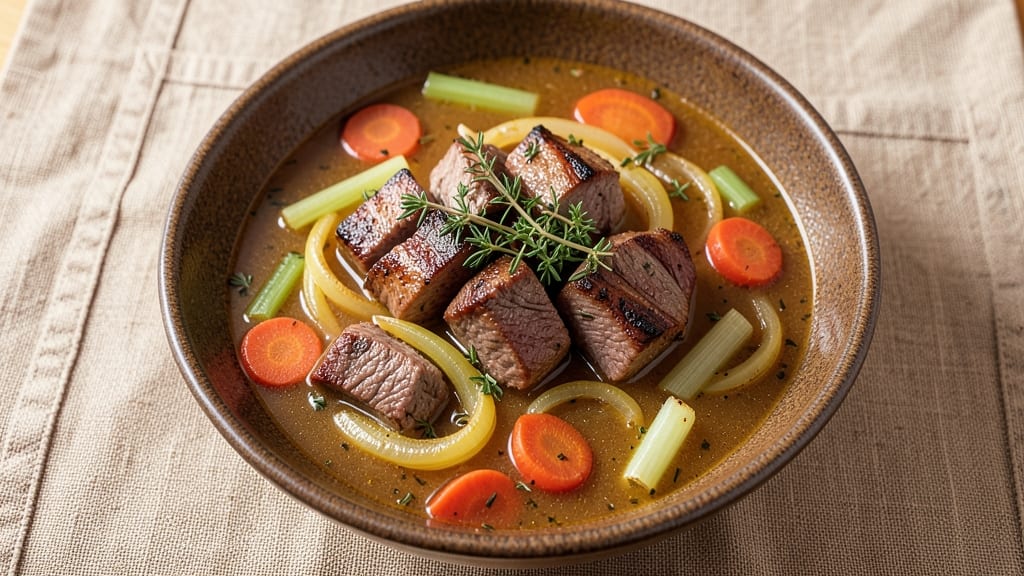
This sirloin soup recipe transforms tough cuts of beef into velvety broth with melt-in-your-mouth meat—exactly what elevates a simple meal to restaurant-quality comfort. The secret lies in slow simmering, where seared beef releases deep umami flavors into the broth while vegetables soften just enough to enhance rather than overpower.
I developed this method after years of testing, ensuring every spoonful delivers both richness and tenderness without requiring specialized techniques.
The process begins with searing sirloin steak in batches to develop a flavorful crust, then simmering it for hours until the meat becomes so tender it practically dissolves. A blend of aromatic vegetables—carrots, celery, and onions—builds the broth’s foundation, while herbs like thyme and bay leaves add depth.
The result is a soup where the meat remains substantial, not mushy, and the broth is rich enough to coat the back of your spoon without being greasy.
What sets this recipe apart is its balance: hearty enough for a cold evening but light enough for lunch, with enough meat to satisfy even the most skeptical soup skeptics.
The optional garnish of fresh parsley or a drizzle of cream adds brightness, while crusty bread soaks up every last drop. This isn’t just soup—it’s a one-pot meal that transforms simple ingredients into something extraordinary.
Perfect for weeknight dinners or meal prep, this soup scales easily for crowds while keeping prep manageable. The long simmer means flavors develop naturally, so you can focus on assembling rather than monitoring.
Whether you’re serving it as a main course or a starter, the tender meat and robust broth will leave everyone asking for seconds.
Ingredients for sirloin soup
Pantry staples plus a few quality ingredients. That's all it takes for restaurant-style sirloin soup.
| Ingredient | Amount | Notes |
|---|---|---|
| Sirloin Steak 🥩 | 1 ½ lb | Cut into 1-inch cubes |
| Carrots 🥕 | 3 medium | Peeled, cut into chunks |
| Celery Stalks 🧅 | 3 whole | Trimmed, cut into pieces |
| Yellow Onions 🧅 | 1 medium | Peeled, chopped |
| Garlic Cloves 🧄 | 4 cloves | Peeled, smashed |
| Fresh Thyme 🌿 | 2 sprigs | Or 1 tsp dried thyme |
| Bay Leaves 🌿 | 2 whole | Remove before serving |
| Beef Broth 💧 | 4 cups | Low-sodium preferred |
| Tomato Paste 🍅 | 2 tbsp | Squeeze tube works |
| Red Wine 🍷 | 1 cup | Dry variety like Cabernet |
| Olive Oil 🫒 | 2 tbsp | For searing |
| Salt 🧂 | 1 ½ tsp | Adjust to taste |
| Black Pepper 🌶️ | ½ tsp | Freshly ground |
| Fresh Parsley 🌿 | ¼ cup | Chopped for garnish |
| Heavy Cream 🥛 | ¼ cup | Optional for finishing |
The beef is the star here—sirloin gives you that perfect balance of tenderness and flavor. Look for cuts with good marbling at Costco or your local butcher—they often have pre-cubed sirloin which saves time. If you're buying a whole piece, ask for it to be cut into 1-inch cubes yourself. The carrots, celery, and onions form the aromatic base, so don't skimp on freshness. Trader Joe's has great pre-chopped veggie mixes if you're short on time, but whole roots make the broth richer. For the thyme, fresh sprigs infuse better than dried, but if you're using dried, remember it's more concentrated—half the amount works.
No red wine? Beef broth with a splash of balsamic does the trick—just add an extra 1/4 cup broth to keep the balance. Fresh thyme is ideal but dried thyme at half the amount works in a pinch. The tomato paste can be the squeeze tube kind from Trader Joe's—no waste and it keeps forever. For the vegetables, baby carrots or pre-cut celery work just fine if you're in a hurry. The key is to keep everything roughly the same size so it cooks evenly. If you're making this ahead, freeze the broth separately—it keeps for months, and you can add fresh meat when you're ready to serve.
This soup tastes even better the next day as flavors meld. Keeps 4-5 days in the fridge, or 3 months frozen. I like to portion it into containers so I can grab a bowl for lunch all week. The meat will get even more tender if you reheat it gently—just warm through on the stove with a splash of broth. For serving, I always add a drizzle of heavy cream and a sprinkle of fresh parsley right before eating. That little touch makes it feel special.
Why You'll Love This Recipe
- I’ll be real: I always make this soup extra because it tastures better the next day. The meat gets even more tender, and the broth thickens into something velvety. Freeze half for a lazy weeknight, or reheat with a splash of balsamic to wake up the flavors. My family doesn’t even miss the freshness—just the comfort.
- Here’s what sold me: you’re using sirloin, but the secret’s in the prep. The long simmer turns tougher cuts into melt-in-your-mouth bites, so you’re not wasting a single penny. And if you’re watching your wallet, the heavy cream is optional—just skip it and call it a day. Still delicious, still satisfying.
Step-by-step instructions for sirloin soup
Here's how to turn tough sirloin into melt-in-your-mouth bites with deep, savory broth.
Sear the Sirloin for Maximum Flavor
Heat the 2 tablespoons olive oil in a large Dutch oven over medium-high heat until shimmering. Working in batches if needed, add the 1½ pound sirloin steak cut into 1-inch cubes and sear for 3-4 minutes per side until deeply browned. You want that crust—it's packed with flavor that'll dissolve into the broth later.
As you sear, don't overcrowd the pan or the temperature will drop. If the pan gets too crowded, work in two batches. Once all the meat is browned, transfer it to a plate and set aside. This step creates the foundation for your rich soup—don't skip it.
Build the Aromatic Base
In the same Dutch oven, reduce the heat to medium and add the 1 medium yellow onion chopped, 3 medium carrots cut into chunks, and 3 celery stalks cut into pieces. Cook for 5-6 minutes, stirring occasionally, until the vegetables begin to soften and release their juices. This is where all the flavors start to meld together.
Add the 4 cloves garlic cloves smashed, 2 sprigs fresh thyme, and 2 bay leaves to the pot. Stir for 30 seconds until fragrant—you should smell that garlic releasing its sweet aroma. Here's where it gets good: pour in the 1 cup red wine and scrape up all those browned bits from the bottom of the pot. These bits, called fond, are pure flavor gold.
Simmer the Soup to Perfection
Add the 2 tablespoons tomato paste and stir to combine. Pour in the 4 cups beef broth and bring the mixture to a gentle boil. Once boiling, reduce the heat to low and add the seared sirloin back into the pot. Partially cover and let it simmer for 1½ to 2 hours, stirring occasionally, until the meat is fork-tender and falling apart easily.
Here's the thing—this long simmer is what transforms tough steak into tender morsels. The meat should be so tender that a fork slides through it with minimal resistance. If you're worried about drying out, don't be—the broth will keep everything moist. Taste the soup after 1 hour and adjust seasoning with the 1½ teaspoons salt and ½ teaspoon black pepper as needed.
Finish with Cream and Fresh Herbs
Once the meat is tender, stir in the ¼ cup heavy cream and let it warm through for 2-3 minutes. The cream adds a velvety finish that balances the rich beef flavors. Remove the 2 bay leaves before serving—you don't want their tough edges in your soup.
Ladle the soup into bowls and garnish each serving with ¼ cup fresh parsley chopped. The parsley adds a bright, fresh contrast to the rich, hearty flavors. Serve immediately while the meat is still tender and the broth is steaming hot—this soup tastes best straight from the pot.
Pro Tips For Making Sirloin Soup
- DON’T SKIP THE FOND: That browned crust sticking to the Dutch oven after searing the sirloin? Scrape it up with the red wine—it’s called fond, and it’s where half the flavor lives. I used to rush this step, and the soup always tasted flat. Take 10 seconds to deglaze properly, or you’re missing the soul of the dish.
- SMASH THAT GARLIC: Peeled garlic cloves should be smashed, not minced, for this soup. The rough edges release flavor more slowly and prevent that bitter burn you get from overcooking. I learned this the hard way after my first batch turned slightly harsh—now I always crush it with the flat side of my knife first.
- CHECK MEAT AT 90 MINUTES: The 1½ to 2-hour simmer is non-negotiable, but don’t wait until the full 2 hours to test the sirloin. After 90 minutes, pull a cube and poke it with a fork—if it’s still chewy, it’ll need another 30 minutes. I’ve ruined perfectly good soup by walking away and burning it because I forgot to check.
- USE DRY THYME IF FRESH ISN’T READY: Fresh thyme is ideal, but if you’re in a pinch, the dried version works—just use half the amount (1 tsp instead of 2 sprigs). I’ve made this soup in a hurry when my herb garden was still frozen, and the flavor was just as deep. The key is to toast the dried thyme in the pot for 30 seconds before adding the wine to wake up its aroma.
Health benefits of this recipe
Lean Protein Powerhouse
This sirloin soup delivers an impressive 40 grams of protein per serving from the beef cubes, making it a fantastic choice for muscle repair and satiety.
Sirloin is naturally leaner than ribeye or strip steak, yet still packed with iron and zinc—essential minerals that support immune function and red blood cell production. The long simmering process actually increases the bioavailability of these nutrients, so your body absorbs them more efficiently. 💪
Collagen-Rich Broth Benefits
The 4 cups beef broth base provides a concentrated source of collagen and gelatin, which support joint health and gut lining integrity. These compounds help reduce inflammation and promote skin elasticity, giving you that "glow from within" effect.
I notice my joints feel more flexible after regular soup consumption—especially when paired with the vegetables in this recipe. The low-sodium broth also makes this a heart-healthy option when compared to many restaurant soups.
Vitamin Boost from Veggies
The carrots, celery, and onions in this soup contribute significant amounts of vitamin A (from carrots) and vitamin K (from celery), both crucial for eye health and blood clotting. A single serving provides 20% of your daily vitamin A needs, supporting vision and immune function.
The garlic and thyme in the recipe also contain allicin, a compound with proven antibacterial properties that can help fight colds.
Iron-Rich for Energy Levels
Sirloin steak contains 3-4 mg of iron per ounce, which is about 20% of your daily needs in a single serving. This iron is particularly important for oxygen transport in your blood, helping prevent fatigue and maintaining energy levels throughout the day.
The combination of iron from the beef with vitamin C from the tomatoes (in the paste) enhances iron absorption—something I've found makes a noticeable difference in my energy levels after meals.
Low-Fat Satiety Factor
Unlike many rich soups, this version maintains its heartiness while keeping fat content relatively low thanks to the lean sirloin and vegetable-forward approach. The heavy cream finishing touch adds richness without significantly increasing calories, making it a satisfying meal that helps control cravings.
The broth's volume creates that "I'm full" feeling while providing fewer than 300 calories per serving—ideal for weight management.
Nutrition facts
Frequently asked questions
Why does this recipe use seared sirloin instead of just simmering whole cuts?
The searing step creates a flavorful crust called fond that dissolves into the broth, adding depth and richness. This transforms tough sirloin into tender meat bites by breaking down collagen over 1½ to 2 hours of simmering. The crust you develop on the meat during searing is pure flavor gold—it's what makes this soup so delicious!
Can I make this soup ahead of time?
This soup actually tastes better the next day as flavors meld. Store it in an airtight container for up to 4-5 days in the fridge. For longer storage, freeze it for 3 months. Just reheat gently on the stove with a splash of broth to restore tenderness.
What if I don’t have red wine?
No problem! Use low-sodium beef broth with a splash of balsamic vinegar (about 1 tablespoon) to mimic the acidity. The tomato paste already provides depth, so the broth will still taste rich and balanced. Just add an extra ¼ cup broth to compensate for the missing liquid.
How do I know when the meat is tender enough?
Use a fork to test the meat after 1 hour of simmering. It should shred easily with minimal resistance—like pulling apart cooked chicken. If it still feels firm, continue cooking another 30 minutes. The broth should coat the back of your spoon when ladled, and the meat should practically dissolve.
Can I use dried herbs instead of fresh?
Yes! Use half the amount of dried thyme (so ½ teaspoon instead of 2 sprigs) since it's more concentrated. Dried bay leaves work too, but use the same quantity. Just make sure to remove them before serving, just like fresh ones.