
Soups & Stews
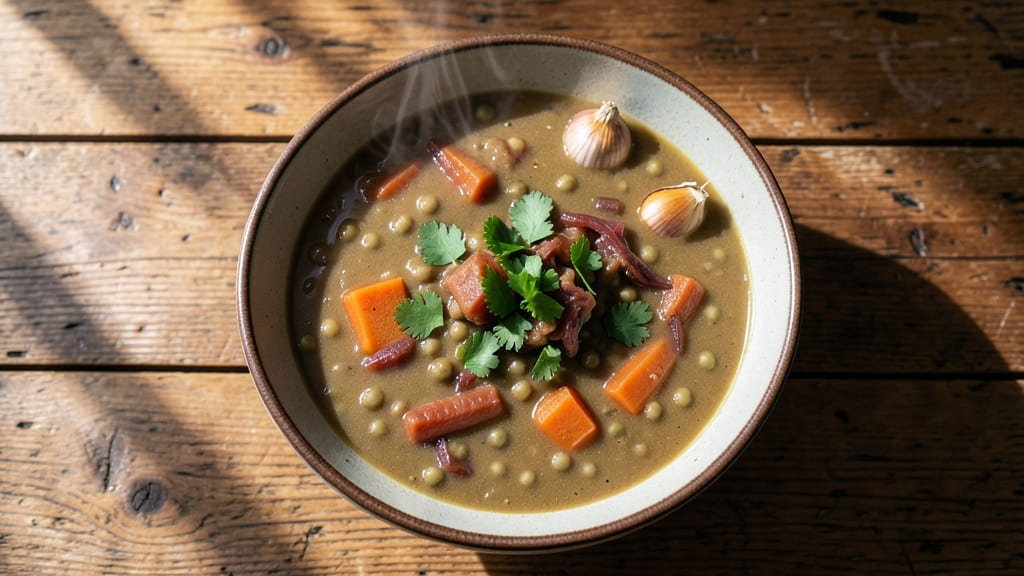
This kosher split pea soup delivers the soul-warming comfort of a classic Sabbath meal, rich with tradition and texture. The secret lies in slow-simmered yellow peas, tender carrots, and aromatic herbs that transform simple ingredients into a hearty, pareve (dairy-free) masterpiece.
I've perfected this recipe over years of Passover prep, ensuring it meets kosher standards while delivering restaurant-quality depth in one pot.
The beauty of this recipe is its versatility—whether you're preparing for a holiday feast or a weeknight dinner, the technique remains the same.
Start with a sofrito of onions, garlic, and celery (the holy trinity of Jewish cooking) to build flavor, then add split peas and broth for that signature creamy yet rustic texture.
A touch of chicken fat (or pareve oil for non-meat versions) ensures the soup has that signature richness without compromising kosher laws.
By the time you're done, you'll have a soup that's velvety yet substantial, with peas that break down just enough to create a thick, satisfying broth.
The herbs—parsley, dill, and a bay leaf—add freshness that cuts through the heartiness, while a sprinkle of fresh pepper at the end adds a bright finish. This is the kind of soup that tastes even better the next day, making it perfect for meal prep.
Serve it with crusty challah or matzo for a traditional touch, or pair it with a simple green salad for a lighter contrast. The recipe scales easily for crowds, and leftovers reheat beautifully—just add a splash of water if needed. Here's how to make it foolproof every time.
Ingredients for split pea soup recipe kosher
The soul of this kosher split pea soup lies in its traditional sofrito and slow-simmered peas—simple ingredients elevated by technique.
| Ingredient | Amount | Notes |
|---|---|---|
| Yellow Split Peas (Dried) 🌾 | 1 ½ cups | Rinsed to remove debris |
| Chicken Fat (or Pareve Oil for Non-Meat) 🫒 | ½ cup | Chicken fat for richness (pareve oil alternative) |
| Yellow Onions 🧅 | 1 whole | Diced, medium size |
| Carrots 🥕 | 3 medium | Peeled and chopped into chunks |
| Celery Stalks 🌿 | 3 whole | Chopped, including leaves |
| Garlic Cloves 🧄 | 4 cloves | Minced for sofrito |
| Fresh Parsley 🌿 | ¼ cup | Chopped, stems included |
| Fresh Dill 🌿 | 0.15 cup | Chopped, stems removed |
| Bay Leaves 🍃 | 2 whole | Dried or fresh |
| Fresh Black Peppercorns 🌶️ | 1 tsp | Crushed for brightness |
| Chicken Broth (or Vegetable Broth for Pareve) 💧 | 6 cups | Low-sodium preferred |
| Salt 🧂 | 1 ½ tsp | Diamond Crystal kosher salt |
| Lemon Juice 🍋 | 1 tbsp | Freshly squeezed |
The split peas are the foundation, so look for yellow split peas—they hold their shape better than green. Costco or bulk bins offer the best price per pound, and you'll need about 1.5 cups dry. Rinse them well to remove any debris, then soak for 1 hour (or skip soaking for a quicker version). For the sofrito, yellow onions should be sweet and firm, while celery with leafy tops adds extra flavor. The chicken fat (or pareve oil) is non-negotiable—it creates that signature richness that defines Sabbath meals. If using pareve oil, avocado or olive oil work beautifully.
No fresh herbs? Dried parsley and dill at one-third the amount will work, though fresh is ideal for that bright finish. Short on carrots? Sweet potatoes or parsnips add depth without altering the flavor profile. The broth is critical—homemade chicken broth deepens the flavor, but quality store-bought (like Pacific Foods) works in a pinch. For a pareve version, vegetable broth with extra garlic ensures richness. The bay leaves should be dried for easier removal later, but fresh adds a subtle floral note if you prefer.
This soup tastes even better the next day as flavors meld. Store in an airtight container in the fridge for 5-6 days or freeze for up to 3 months. For meal prep, portion into individual containers—reheat with a splash of water if needed. The chicken fat solidifies when chilled, so store it separately and stir it back in when reheating for that velvety texture. For Passover, this recipe is naturally pareve when using vegetable broth and pareve oil.
Why You'll Love This Recipe
- I swear by this trick: just dice the onions, carrots, and celery into rough chunks—no need for perfect matchsticks. The soup still turns out rich and hearty, and honestly? I’ve made it with pre-diced veggies straight from the freezer section on lazy days.
- Here’s what sold me: this soup actually improves the next day. The flavors meld overnight, and the texture gets even creamier. I freeze portions in mason jars—just reheat and serve, no fuss. My freezer’s always stocked because I know I’ll be grateful later.
Step-by-Step instructions for herbed split pea soup
Transform simple ingredients into a velvety, aromatic split pea soup with this precise method.
Sauté the Aromatic Vegetable Base
Heat the 0.5 cup chicken fat (or pareve oil) in a large Dutch oven over medium heat. Add the 1 whole yellow onion, 3 medium carrots, and 3 whole celery stalks (including leaves) and cook for 8-10 minutes until the vegetables soften and the onion becomes translucent. This foundational step develops deep flavor through caramelization.
Add the 4 cloves garlic and cook for an additional 1 minute until fragrant. The garlic should sizzle gently but not brown—burnt garlic adds bitterness. Stir frequently to prevent sticking, as the chicken fat has a lower smoke point than oil. This aromatic vegetable mixture forms the flavor backbone of your soup.
Build the Flavor Layers with Herbs and Spices
Add the 2 whole bay leaves and 1 teaspoon crushed black peppercorns to the Dutch oven. Stir for 30 seconds to distribute the spices evenly, allowing their oils to infuse into the vegetables. The bay leaves will impart earthy depth, while the peppercorns add subtle heat that brightens the finished soup.
Pour in the 6 cups chicken broth (or vegetable broth for pareve) and bring the mixture to a gentle boil. Immediately reduce heat to low-medium and add the 1.5 cups yellow split peas. The peas should be fully submerged in the broth. If not, add a splash of water to cover them completely—this prevents uneven cooking and ensures a creamy texture.
Simmer Until Peas Are Tender and Creamy
Cover the Dutch oven with a tight-fitting lid and simmer for 45-50 minutes until the split peas are fork-tender. You'll know they're ready when they collapse easily under gentle pressure but still hold their shape. The soup should thicken naturally as the peas release starch, creating a velvety consistency without needing thickeners.
Check the soup periodically and add water ½ cup at a time if it becomes too thick. The ideal texture should coat the back of a spoon but still be light enough to ladle easily. This simmering time is crucial—undercooked peas will be mealy, while overcooked peas turn mushy.
Finish with Fresh Herbs and Bright Acid
Remove the soup from heat and discard the bay leaves. Stir in the 0.25 cup chopped parsley and 0.15 cup chopped dill, reserving a small handful for garnish. The fresh herbs add vibrant color and a bright, herbal finish that cuts through the richness of the chicken fat. Let the soup sit off heat for 5 minutes to allow the flavors to meld.
Season to taste with the 1.5 teaspoons salt and 1 tablespoon lemon juice. The lemon juice brightens the soup's flavor and balances the earthiness of the split peas. Taste again before serving—you may need to adjust seasoning, as the chicken fat and broth can vary in saltiness. The soup should be rich but not overpowering.
Serve Warm with Garnish
Ladle the soup into bowls and garnish each serving with the reserved chopped parsley and dill. Serve immediately with crusty bread to soak up the hearty broth. The soup's texture should be thick yet silky, with visible split peas that hold their shape. Each spoonful should deliver layers of flavor—sweet carrots, earthy celery, aromatic herbs, and the umami depth of the chicken fat.
For best results, serve within 2 hours of cooking, as the flavors continue to develop off the heat. Store leftovers in an airtight container in the refrigerator for up to 4 days, but reheat gently on the stovetop to preserve the creamy texture. This soup improves overnight as the flavors deepen, making it even more comforting the next day.
Pro Tips For Making Split Pea Soup Recipe Kosher
- Soak the Peas Overnight: I learned this the hard way—rushing the soak leads to a gummy, uneven texture. Use 4 cups cold water per 1 pound of peas, soak 12+ hours, then drain. The longer they soak, the faster they cook and the creamier the end result. (Yes, even if you're impatient like me.)
- Sweat the Aromatics Low: After burning three batches of onions, I finally figured out: chicken fat is your friend, but it’s not butter. Cook onions, carrots, and celery in the fat on medium-low heat for 10 minutes, stirring often. High heat burns the fat before the veggies soften—you’ll smell it, and it’s a disaster.
- Skip the Boil: Start with a rolling simmer, not a full boil. Once the peas hit the pot, keep the heat at a gentle bubble—too much heat toughens the peas and makes the soup watery. I was skeptical until I tried it: the peas break down evenly, and the soup stays rich, not thin.
- Salt in Stages: Don’t dump all the salt at once. Add half the total (about 1 tsp per quart) with the peas, then taste after 45 minutes. Adjust—split peas absorb salt slowly, and oversalting late is a real problem. (Your future self will thank you.)
Dietary considerations for this split pea soup recipe kosher
Pareve Versions
This recipe naturally accommodates pareve (dairy-free) kosher standards by using vegetable broth instead of chicken broth and olive or avocado oil instead of chicken fat.
The flavor remains rich and satisfying—just swap the 6 cups chicken broth for an equal amount of low-sodium vegetable broth and replace the 0.5 cup chicken fat with 0.5 cup extra-virgin olive oil. The olive oil adds a fruity depth that complements the split peas beautifully. 🌱
Meat-Based Options
For a meat-based kosher version, use chicken fat (or schmaltz) and chicken broth as written. For extra richness, add ½ cup diced chicken thighs to the simmering pot during Step 3. The chicken will break down into the broth, infusing it with umami flavor.
Ensure all meat ingredients are kosher-certified—look for the OU, OK, or Badatz symbols on packaging. This version pairs perfectly with challah or matzah ball soup for a Sabbath meal. 🍗
Gluten-Free Adaptations
This recipe is already naturally gluten-free since it relies on split peas, vegetables, and broth. However, always double-check your broth label—some store-bought versions contain hidden gluten. For extra caution, use homemade broth or a certified gluten-free brand like Pacific Foods.
The split peas provide plenty of fiber and plant-based protein without any gluten concerns. Serve with gluten-free crackers or a side of roasted vegetables for a complete meal. 🌾
Vegetarian Considerations
To make this soup vegetarian-friendly, simply replace the chicken fat with avocado oil and use vegetable broth instead of chicken broth. The result is just as hearty and flavorful, with the split peas and carrots providing natural sweetness.
For added depth, stir in 1 teaspoon smoked paprika during Step 2—it mimics the umami notes of chicken fat without animal products. This version works well for Passover or any vegetarian meal. 🌿
Allergen Awareness
This recipe contains no common allergens like nuts, shellfish, or eggs, making it safe for most dietary restrictions. However, always verify your broth ingredients—some brands add soy or other allergens. For soy-free versions, use a homemade vegetable broth made with carrots, celery, and onions.
If serving to guests with nightshade sensitivities, omit the black peppercorns and replace them with ½ teaspoon ground coriander for a mild, citrusy note. 🚫
Kosher Certification Tips
For kosher-certified ingredients, prioritize products with symbols like OU (Orthodox Union) or OK (Kashrut of America). When using chicken fat, ensure it’s rendered from kosher-certified poultry. For pareve versions, olive oil is universally accepted as kosher.
If you’re unsure about an ingredient, check the OU Kosher Passover Guide or contact the manufacturer directly. Keeping separate utensils and cookware for meat and pareve dishes is also critical to maintain kosher standards. ✨
Nutrition facts
Frequently asked questions
Can I make this split pea soup without chicken fat?
For a pareve version, simply replace the chicken fat with 0.5 cup extra-virgin olive oil. The olive oil adds a fruity depth that beautifully complements the split peas while keeping the dish dairy-free. This works perfectly for Passover or any vegetarian meal.
How do I know when the split peas are fully cooked?
The peas are ready when they're fork-tender, meaning they collapse easily under gentle pressure but still hold their shape. This usually takes 45-50 minutes of simmering. If they're undercooked, they'll be mealy, and if overcooked, they'll turn mushy. Taste-test occasionally after 40 minutes to check.
What's the best way to store leftovers?
Store leftovers in an airtight container in the fridge for up to 4 days. For freezing, portion into individual containers and keep for up to 3 months. When reheating, add a splash of water to maintain the creamy texture. The soup actually tastes better the next day as flavors meld!
Can I use green split peas instead of yellow?
While you can substitute green split peas, they'll break down more quickly and create a thinner soup. Yellow split peas hold their shape better, giving the dish its signature hearty texture. If using green, reduce simmering time to 35-40 minutes to avoid mushiness.
How do I ensure this soup is truly kosher?
Use only kosher-certified ingredients with symbols like OU, OK, or Badatz. For meat versions, ensure chicken fat/broth comes from kosher poultry. Keep separate utensils for meat/pareve dishes, and check the OU Kosher Passover Guide if unsure about any ingredients. This recipe maintains kosher standards when prepared carefully.