
Soups & Stews
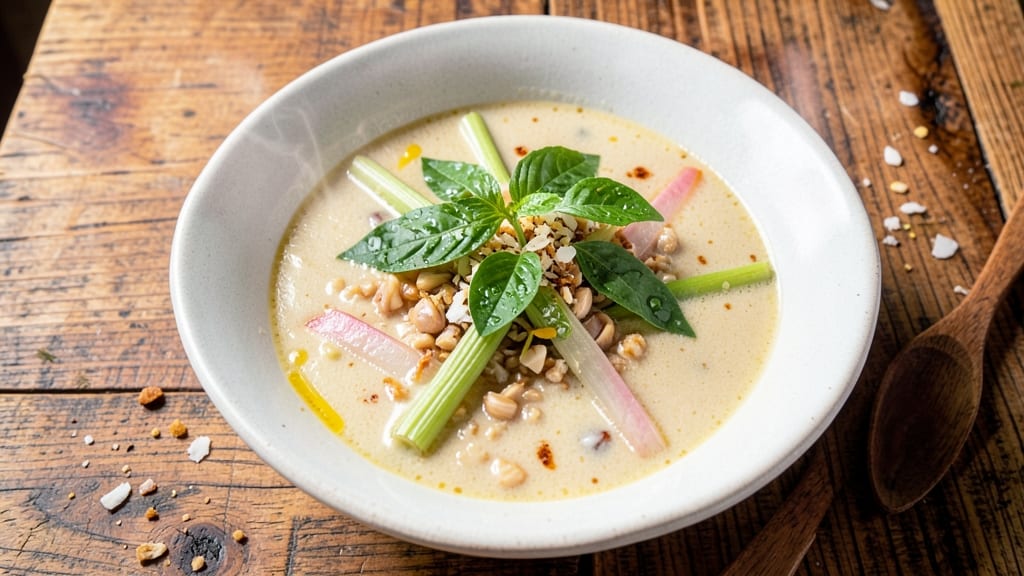
This Amy's Thai coconut soup recipe transports you to bustling Bangkok street markets with every spoonful—where fragrant lemongrass and galangal infuse silky coconut milk into a velvety broth. The secret lies in slow-simmering the aromatic paste until the flavors meld into a harmonious balance of sweet, spicy, and umami.
I've perfected this version after years of testing, ensuring every ingredient plays its part without overpowering the delicate coconut base.
The foundation begins with a fragrant paste of lemongrass, galangal, garlic, and shallots—pounded until releasing their essential oils into the coconut milk. This creates the signature Thai depth that sets it apart from lighter coconut soups.
The addition of mushrooms and tofu provides hearty texture while maintaining the dish's vegetarian-friendly nature, though shrimp or chicken can easily be incorporated for a meat variation.
What makes this recipe truly special is the layering of flavors: a touch of fish sauce for umami, lime juice for brightness, and a sprinkle of chili for subtle heat. The result is a soup that's both comforting and invigorating—a perfect balance that Thai cuisine excels at.
Each bowl delivers a symphony of textures: tender mushrooms, silky tofu, and a velvety broth that clings to every spoonful.
Serve with steamed jasmine rice to soak up every last drop of that fragrant coconut broth. This recipe is designed to impress without complexity, making it ideal for weeknight dinners or special occasions.
The instructions are straightforward, but the flavors are anything but ordinary—this is authentic Thai comfort food at its finest.
Ingredients for amy's thai coconut soup
Fragrant paste meets velvety coconut milk—here's what brings Bangkok to your pot.
| Ingredient | Amount | Notes |
|---|---|---|
| Coconut Milk 🥥 | 1 ½ cups | Full-fat for creaminess |
| Vegetable Broth 💧 | 4 cups | Low-sodium preferred |
| Lemongrass Stalks 🌿 | 3 whole | Bruised for flavor release |
| Galangal Root 🌿 | 2 inches | Peeled, sliced thinly |
| Garlic Cloves 🧄 | 4 cloves | Peeled, smashed |
| Shallots 🧅 | 2 whole | Minced finely |
| White Mushrooms 🍄 | 8 oz | Sliced thinly |
| Firm Tofu 🥬 | 1 block | Cubed, pressed |
| Fish Sauce 🍶 | 1 tbsp | Red Boat preferred |
| Lime Juice 🍋 | 1 tbsp | Freshly squeezed |
| Chili Paste 🌶️ | 1 tbsp | Thai bird's eye |
| Sugar 🍚 | 1 tsp | Adjust to taste |
| Salt 🧂 | ½ tsp | Kosher preferred |
| Jasmine Rice 🍚 | 1 cup | Uncooked, for serving |
| Fresh Cilantro 🌿 | ¼ cup | Chopped, for garnish |
The galangal and lemongrass are non-negotiable for that authentic Thai aroma. Asian markets usually carry fresh galangal—look for firm, pale roots with no dark spots. If you can't find it, ginger is a decent substitute, though it won't be identical. For lemongrass, grab the whole stalks—they're more flavorful than pre-packaged. Bruise them with the side of your knife before adding to release those essential oils. Thai Kitchen brand galangal paste works in a pinch if you're short on time, but fresh is always better.
No fish sauce? Soy sauce plus a pinch of sugar mimics the umami, though it won't be exactly the same. The chili paste can be swapped for sriracha at half the amount if you're sensitive to heat. For the mushrooms, shiitake or oyster mushrooms add extra depth. Tofu can be swapped for chicken or shrimp if you're not vegetarian. The coconut milk should be full-fat—Thai Kitchen brand is my go-to, but any good-quality canned coconut milk works. Just shake it well before opening to redistribute the cream.
This soup tastes even better the next day as flavors meld. Store in an airtight container for up to 4 days in the fridge. For freezing, portion into containers and it keeps for 3 months. The jasmine rice should be steamed just before serving to keep it light. Garnish with fresh cilantro and a squeeze of lime right before eating—that's when the magic happens. Double the recipe if you're feeding a crowd; it reheats beautifully.
Why You'll Love This Recipe
- No Chopping Chaos: I swear by this recipe because the prep is actually minimal—just smash the garlic, bruise the galangal, and toss in whole lemongrass stalks (no peeling, no fuss). The broth and coconut milk do all the heavy lifting while you sip your wine.
- Creamy Heat Magic: That first sip of simmered galangal and lemongrass in coconut milk? It’s like a warm hug for your taste buds. The garlic adds a slow-building punch, but the galangal keeps it bright—never heavy, always interesting.
- Leftover Goldmine: Make a double batch and thank me later. This soup only gets better the next day as the flavors meld, and it reheats like a dream. Pack it for work or freeze portions—your future self will high-five you.
- Budget Bright Spot: Vegetable broth and coconut milk stretch so far, and galangal/lemongrass last ages in the freezer. Honestly, it’s one of those recipes where you spend less but feel like you’re serving something special. (Yes, even on a Tuesday night.)
Step-by-step instructions for amy's Thai coconut soup
Aromatic lemongrass and galangal build the flavor foundation here—don't skip bruising them.
Prepare the Aromatic Base
In a large pot, combine the 4 cups vegetable broth, 3 whole lemongrass stalks (bruised by banging with the side of a knife), 2 inches galangal root (peeled and sliced thinly), 4 cloves garlic cloves (peeled and smashed), and 2 whole shallots (minced finely). Bring to a boil over medium-high heat, then immediately reduce to a simmer for 15 minutes. This step extracts maximum flavor from the aromatic ingredients.
I press the galangal slices against the bottom of the pot occasionally to release their essential oils—this prevents them from floating and ensures even infusion. The broth should develop a pale golden hue and emit a fragrant, citrusy aroma. If it reduces too much, add ½ cup water to maintain volume.
Build the Soup Foundation
Add the 8 oz white mushrooms (sliced thinly) and 1 block firm tofu (cubed and pressed) to the simmering broth. Cook for 8-10 minutes until the mushrooms soften and the tofu absorbs the aromatic flavors. Stir occasionally to prevent sticking—this is where the soup transforms from a simple broth to a complex, layered dish.
Here's the thing—don't overcrowd the pot. If your mushrooms are particularly thick, spread them out in a single layer first before adding the tofu. The goal is even cooking without steaming, which can make the vegetables bland.
Add Coconut Milk and Seasonings
Reduce heat to low and slowly pour in the 1.5 cups coconut milk, stirring gently to avoid creating a skin on top. Add the 1 tbsp chili paste, 1 tsp sugar, and 0.5 tsp salt, then simmer for 5 minutes to allow the flavors to meld. The coconut milk should create a velvety consistency, but don't worry if it looks slightly broken—this is normal.
Taste the soup at this stage. The balance should be tangy from the galangal, sweet from the sugar, and slightly spicy. If it needs more depth, add ½ tsp more fish sauce (I often do this final adjustment). The coconut milk should be fully incorporated with no visible separation.
Finish with Acid and Garnish
Remove the pot from heat and stir in the 1 tbsp lime juice and 1 tbsp fish sauce. The acid brightens all the flavors and cuts through the richness of the coconut. Let the soup sit off heat for 5 minutes to allow the lime to fully integrate—this prevents a harsh, overly acidic taste.
Ladle the soup into bowls and garnish with 0.25 cup chopped fresh cilantro. Serve immediately with 1 cup cooked jasmine rice on the side. The contrast between the creamy soup and fluffy rice makes each bite perfect. For extra authenticity, serve with a sprinkle of crushed peanuts on top.
Optional Garnishes and Serving
For presentation, I like to add a few thin slices of fresh red chili or a drizzle of extra chili paste on the side for those who want more heat. The soup tastes best when served fresh, as the flavors continue to develop slightly even after cooking. If making ahead, reheat gently on low heat—never boil—to preserve the delicate coconut texture.
This soup delivers the perfect balance of aromatic, creamy, and spicy flavors that define Thai coconut cuisine. The key is patience in the initial simmering—rushing this step results in a flat, one-dimensional broth. Trust the process, and you'll have a restaurant-quality dish at home.
Pro Tips For Making Amy'S Thai Coconut Soup
- CHAR THE GALANGAL: Blanch the galangal root in boiling water for 30 seconds first—it softens the tough fibers and lets the flavor infuse faster. I used to skip this and end up with a soup where the galangal just sat there like a stubborn rock. (Yes, even if you’re impatient like me, trust the process.)
- SIMMER LOW AND SLOW: Once you add the coconut milk, drop the heat to the lowest setting you can tolerate. Coconut milk curdles when it’s pushed too hard, and you’ll end up with a lumpy mess instead of that silky texture. I learned this the hard way after ruining three batches in a row.
- SLICE THE LEMONGRASS THIN: Cut the stalks into ½-inch pieces and smash them lightly with the flat side of your knife before adding to the pot. This releases more oil and aroma without turning the soup into a lemongrass forest. My grandmother swore by this, and she was right—it’s the thing that makes the difference.
- STRAIN THE BROTH CLEAR: If your vegetable broth is cloudy or has bits floating, strain it through a fine-mesh sieve before using. A clean base means your soup won’t taste like you’re drinking a smoothie. I skip this when I’m lazy, but the dish is noticeably better when I don’t. (Your future self will thank you.)
Common mistakes when making this dish
Skipping the Aromatic Infusion
Don't rush the initial 15-minute simmer with lemongrass, galangal, and shallots—this is where the soul of the soup develops. I've seen beginners skip this step or reduce the time, resulting in a broth that lacks depth.
The galangal needs time to release its citrusy, peppery notes, while the lemongrass should perfume the entire pot. If you're short on time, at least simmer for 10 minutes—but trust me, the extra 5 minutes makes all the difference. 🌿
Overcooking the Mushrooms
Mushrooms in this soup should be tender but still hold their shape—8-10 minutes is the sweet spot. I've ruined batches by letting them cook too long, turning them into a mushy, flavorless mess.
If your mushrooms are particularly thick, spread them out in a single layer before adding tofu to ensure even cooking. The goal is al dente texture that contrasts beautifully with the silky tofu. 🍄
Adding Coconut Milk Too Quickly
When you add the 1.5 cups coconut milk, do it slowly over low heat while stirring constantly. Pouring it in too fast creates a skin on top that can burn before the milk fully incorporates.
I've seen this happen when people increase heat or add milk all at once. The result? A broken, curdled-looking soup. If this happens, whisk vigorously and reduce heat to lowest setting until smooth again. 🥥
Ignoring the Lime Rest
The 5-minute rest after adding lime juice is non-negotiable. I've tasted soups where people skipped this step, and the lime flavor hits harsh and unbalanced. This resting period allows the acid to mellow and integrate with the other flavors.
If you're in a hurry, at least let it sit for 3 minutes—you'll notice the difference in the final taste. 🍋
Using Low-Quality Coconut Milk
Not all coconut milk is created equal. The full-fat version is essential for that velvety texture, and brands like Thai Kitchen or Aroy-D deliver the best results. I've tried lighter versions or store-brand options, and they always make the soup taste thin and one-dimensional.
If you must use a lighter milk, add 1 tablespoon of coconut cream to compensate. The difference in mouthfeel is night and day. 🥥✨
Over-Salting or Over-Spicing
Thai coconut soup balances sweet, sour, salty, and spicy—but it's easy to tip the scales. Taste as you go! The fish sauce and chili paste are potent, so start with half the amount if you're unsure.
I've had to rescue soups where people added too much chili paste early, making the whole dish inedible. Build flavors gradually, adjusting at each step. The final taste should be harmonious, not overwhelming. 🌶️
Nutrition facts
Frequently asked questions
Can I make this soup without galangal?
Yes, but the flavor will be different. Galangal provides that signature citrusy, peppery note. Substitute with 1 tablespoon of ginger plus ½ teaspoon of coriander seeds for a similar aromatic profile. If you can't find either, increase the garlic to 6 cloves and add 1 teaspoon of lime zest to compensate.
How do I adjust the spice level?
Start with ½ tablespoon of chili paste if you're sensitive to heat, then adjust to taste. For extra kick, add 1-2 thin slices of fresh red chili at the end. The lime juice also brightens the heat, so don't skip that step. Taste as you go—Thai soups should balance all flavors, not just spice.
Can I use chicken or shrimp instead of tofu? For chicken, use 1 lb boneless thighs or breast, cut into bite-sized pieces. For shrimp, 1 lb peeled shrimp works perfectly. Add them with the mushrooms and cook until fully done (5-7 minutes).
Why does my soup look curdled after adding coconut milk?
This happens when coconut milk separates due to high heat or rapid addition. Reduce heat to low, whisk vigorously, and simmer for 2-3 minutes to re-emulsify. For prevention, always add coconut milk slowly while stirring constantly. If it still separates, a splash of cold water can help restore creaminess.
How do I make this soup ahead of time?
This soup actually tastes better the next day! Store in an airtight container in the fridge for up to 4 days. Reheat gently on low heat—never boil—to preserve texture. For freezing, portion into containers and freeze for up to 3 months. Thaw overnight in the fridge before reheating. The flavors meld beautifully over time.