
Soups & Stews
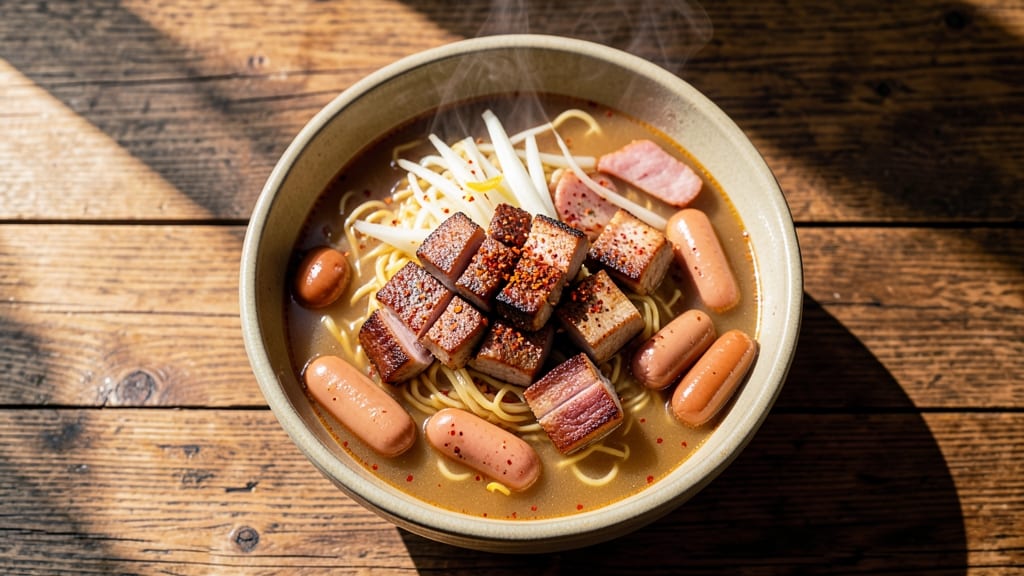
This Korean Army Soup Recipe (Budae Jjigae) brings bold flavors born from wartime ingenuity to your kitchen table. Inspired by the resourceful meals Korean soldiers created during the 1950s using rations like Spam, hot dogs, and ramen, this hearty one-pot stew delivers deep umami and satisfying texture in every spoonful.
The perfect balance of spiced pork, chewy radish, and savory broth makes it a comfort classic that's easy to adapt with whatever proteins you have on hand.
The magic lies in the slow simmering process, where spices like gochugaru (Korean chili flakes) and garlic infuse the broth with layers of heat and aroma.
This recipe stays true to its roots while offering flexibility—swap the pork for chicken or tofu, and adjust the spice level to suit your taste. The radish adds a satisfying chewiness that holds up beautifully, while the egg at the end ties everything together with rich, creamy perfection.
What you'll end up with is a steaming bowl of restaurant-quality Army Stew that's hearty enough for a cold evening but simple enough for a weeknight dinner. The flavors deepen as it sits, making it even more delicious the next day.
Serve it over steamed rice with a side of kimchi for the full Korean dining experience, or enjoy it as-is with crusty bread to soak up every last drop of that flavorful broth.
This dish tells a story of resilience and creativity, proving that great food can come from the most unexpected places. Whether you're cooking for a crowd or just craving a bowl of warmth, this recipe delivers satisfaction with minimal effort. Ready to make your own piece of Korean culinary history?
Ingredients for army soup korean
Pantry staples meet Korean comfort—this soup tells a story of creativity and bold flavors.
| Ingredient | Amount | Notes |
|---|---|---|
| Pork Shoulder 🥩 | 1 ½ lb | Cut into 1-inch cubes |
| Spam 🥓 | 1 can | Chopped into bite-sized pieces |
| Hot Dogs 🌭 | 4 whole | Sliced into rounds |
| Instant Ramen Noodles 🍜 | 2 packages | Discard seasoning packets |
| Daikon Radish 🥕 | 1 lb | Cut into 1-inch cubes |
| Gochugaru 🌶️ | 2 tbsp | Korean chili flakes |
| Minced Garlic 🧄 | 4 tbsp | Freshly minced |
| Soy Sauce 🍶 | ¼ cup | Low-sodium preferred |
| Sesame Oil 🫒 | 1 tbsp | For aroma |
| Green Onions 🧅 | 4 whole | Sliced for garnish |
| Large Eggs 🥚 | 4 whole | Fresh for best texture |
| Vegetable Oil 🫒 | 2 tbsp | For searing |
| Water 💧 | 6 cups | Or low-sodium broth |
| Salt 🧂 | 1 tsp | Adjust to taste |
| Black Pepper 🌶️ | ½ tsp | Freshly ground |
The pork shoulder is the heart of this soup—it breaks down beautifully during the long simmer, giving the broth incredible depth. Look for well-marbled cuts at the butcher counter or the meat section of Korean grocery stores like H Mart for authentic options. Spam and hot dogs add that nostalgic touch, so grab whatever brands you prefer—Hormel or Oscar Mayer work perfectly. The ramen noodles are non-negotiable for texture, but discard the seasoning packets—we're making our own flavor magic here. Daikon radish is key for that satisfying chewiness; if you can't find it, regular radish or even turnips will do in a pinch.
No gochugaru? Substitute with a mix of cayenne and paprika at half the amount—it won't be the same, but it'll add heat. Fresh garlic is ideal, but jarred minced garlic works too if you're in a hurry. The sesame oil might sound minor, but it adds that unmistakable aroma—don't skip it. For the broth, low-sodium chicken or vegetable broth elevates the flavor without needing extra salt. The eggs at the end are traditional—use room-temperature eggs for the best texture when they slide into the broth. And if you're feeling adventurous, add a splash of fish sauce for extra umami depth (though it's optional).
This soup tastes even better the next day—make extra and store it in the fridge for up to 4 days. The flavors meld beautifully over time, so it's perfect for meal prep. For freezing, portion it into containers with room at the top—the broth expands as it cooks. Reheat gently on the stove, adding a splash of water if it gets too thick. Serve it with steamed rice and a side of kimchi for the full experience, or enjoy it as-is with crusty bread to soak up every last drop of that rich broth.
Why You'll Love This Recipe
- Pantry to Pot in 30: Between us, this soup is the ultimate lazy night win. Toss in pre-cooked pork shoulder, Spam slices, and hot dogs—no chopping, no fuss—just simmer until the daikon radish melts into that velvety broth. I’ve made it after a 10-hour shift with groceries still in bags. It works.
- Umami Bomb Combo: That Spam and hot dog duo might sound weird, but trust me: the salty, smoky depth cuts through the ramen’s starch while the pork shoulder keeps it hearty. The daikon adds this subtle crunch and freshness that balances everything—like a Korean comfort-food hug in a bowl.
- Leftovers That Don’t Suck: Honestly, the second day is even better. The flavors meld into something richer, and the noodles soften just enough to soak up all the juices. I portion it into containers before it cools—perfect for lunches or late-night cravings. No sad, dry leftovers here.
- Budget-Friendly Powerhouse: This is my $10-for-10-servings meal. Pork shoulder stretches forever, Spam and hot dogs are cheap staples, and ramen is, well, ramen. Yet it tastes like I spent hours on it. I’ll be real: my college roommates called it “gourmet” (they were broke too).
Step-by-step instructions for army soup Korean recipe
This hearty one-pot wonder comes together faster than you'd expect—just follow my simple method.
Sear the Pork Shoulder and Spam
Heat the 2 tablespoons vegetable oil in a large pot or Dutch oven over medium-high heat. Add the 1.5 lb pork shoulder cut into 1-inch cubes and sear for 4-5 minutes, turning occasionally, until the edges are lightly browned. Remove the pork and set aside.
In the same pot, add the 1 can chopped Spam and cook for 2 minutes until lightly browned on all sides. This step builds deep flavor by creating a rich browned crust on the meats. Don't skip it—those caramelized bits dissolve into the broth later, giving your soup its signature richness.
Build the Flavor Base
Add the 4 tbsp minced garlic and 2 tbsp gochugaru to the pot and stir for 30 seconds until fragrant. The garlic should sizzle slightly but not burn—watch it closely. Pour in the 0.25 cup soy sauce and 1 tbsp sesame oil, stirring to combine. This aromatic mixture forms the flavor foundation of your soup.
Return the seared pork to the pot along with the 1 lb daikon radish cut into 1-inch cubes. Add the 6 cups water and bring everything to a boil. Once boiling, reduce heat to medium-low and let it simmer uncovered for 30 minutes, stirring occasionally. This simmering time allows all the flavors to meld together beautifully.
Prepare the Hot Dogs and Noodles
While the broth simmers, slice the 4 whole hot dogs into rounds and set aside. Add the 2 packages instant ramen noodles (discard seasoning packets) to the pot and cook for 5 minutes until the noodles are tender. This step works best when done simultaneously with the broth simmering—it saves you time and keeps everything hot.
After 5 minutes, add the hot dog slices and stir gently to combine. The hot dogs will cook quickly in the hot broth. Taste the broth and adjust seasoning with the 1 tsp salt and 0.5 tsp black pepper if needed. The soup should be seasoned to your liking—this is where you can customize the flavor to your preference.
Cook the Eggs and Finish
In a small bowl, crack the 4 whole large eggs into a separate bowl. Bring a small pot of water to a gentle simmer and carefully drop the eggs into the water. Cook for 4-5 minutes for runny yolks or 6-7 minutes for firmer yolks. Remove with a slotted spoon and drain on a paper towel.
Return the eggs to the pot with the soup and gently stir just enough to distribute them. The eggs should warm through in the hot broth without overcooking. Ladle the soup into bowls and garnish with the 4 whole green onions sliced for garnish. Serve immediately while hot.
Pro Tips For Making Army Soup Korean
- BROWN THE PORK FIRST: I learned this the hard way—skipping the sear makes the soup taste like it’s missing something. Cut the pork shoulder into 2-inch chunks, heat your pot until it’s smoking, then cook the meat until deep brown (about 5 minutes). That crust packs flavor that no amount of broth can replace.
- PREP DAIKON LIKE A PRO: Don’t just chop the daikon into random pieces—slice it into ½-inch thick half-moons. Thin slices cook faster and stay crisp, while thick chunks turn mushy. (Yes, even if you’re in a rush, this matters.)
- SIMMER LOW AND SLOW: After adding the ramen seasoning and water, resist the urge to blast it on high. A gentle simmer (just bubbles breaking the surface) keeps the pork tender and the broth from splitting. Thirty minutes at low heat beats 20 minutes of frenzied boiling.
- CRUMBLE THE SPAM: Whole slices of Spam? Nope. Break it into 1-inch chunks or crumble it—this lets the seasoning blend in and prevents a weird, chewy texture. (I used to skip this, and the soup always tasted off until I did.)
Best sauces and condiments for this recipe
Spicy Gochujang Twist
Take your Army Soup to the next level by adding 1 tbsp gochujang paste along with the gochugaru. This fermented chili bean paste adds a deep, tangy heat that complements the pork beautifully.
I like to mix it with 1 tsp honey to balance the spice—just stir it into the broth during the 30-minute simmer. The result is a richer, more complex flavor profile that feels like a restaurant-quality upgrade. 🌶️
Sesame Seed Garnish
For a crunchy, nutty finish, sprinkle 1 tsp toasted sesame seeds on each bowl before serving. Toast them in a dry skillet over medium heat for 1-2 minutes until fragrant, then let cool slightly.
The seeds add texture and aroma that pairs perfectly with the soft eggs and chewy radish. I keep a small jar of sesame seeds on hand specifically for this purpose—they elevate every spoonful. ✨
Kimchi Broth Boost
For an extra umami punch, replace 2 cups of water with 2 cups kimchi juice from ½ cup chopped kimchi. Simmer the kimchi with the broth for 15 minutes before adding the noodles, then strain it out.
The tangy, fermented flavor cuts through the richness of the pork and Spam, adding a bright, complex dimension. If you don't have kimchi juice, just mash the kimchi into the broth during the simmer—it works just as well. 🥬
Miso Depth
Add 1 tbsp white miso paste to the broth while simmering the pork and radish. Stir it in during the 30-minute simmer and let it dissolve completely. Miso adds a subtle sweetness and umami that rounds out the flavors beautifully.
I recommend Hawaiian Gold miso for its mild, slightly sweet profile—it blends seamlessly without overpowering the other ingredients. 💛
Butter and Cheese Finish
For a creamy, indulgent twist, stir in 1 tbsp butter and ¼ cup shredded sharp cheddar cheese during the final 5 minutes of cooking. The butter adds richness while the cheese melts into the broth, creating a velvety texture.
This works especially well if you're serving the soup as a main course—it feels like a cozy, comforting hug in a bowl. 🧀
Nutrition facts
Frequently asked questions
Can I make Army Soup without Spam or hot dogs?
The original recipe uses these ingredients as a nod to its wartime origins, but you can easily substitute them. Try chicken thighs, tofu, or even sausage for a different flavor profile. Keep the total protein amount similar (about 1.5 lbs) to maintain the soup's heartiness. The key is balancing the textures—chewy radish and tender protein work best together.
How spicy should Army Soup be?
The spice level depends on your preference! The recipe calls for 2 tbsp gochugaru, which gives a mild to medium heat. For less spice, reduce to 1 tbsp or swap it for ½ tbsp gochugaru + ½ tbsp paprika. If you love heat, add an extra ½ tbsp gochugaru or a dash of gochujang paste during the simmer. Always taste as you go—you can adjust while cooking.
Why do we add eggs at the end?
The eggs are a traditional finishing touch that adds rich, creamy texture without overcooking. They slide into the hot broth just before serving, creating a silky contrast to the chewy radish and tender pork. For best results, use room-temperature eggs and cook them separately to 4-5 minutes (runny yolk) or 6-7 minutes (firm yolk) before adding. This ensures they warm through without turning rubbery.
Can I make Army Soup in an Instant Pot?
Yes! Sauté the pork and Spam as directed, then add all ingredients except the eggs. Use the High Pressure setting for 15 minutes, followed by a Natural Release. Add the noodles and hot dogs during the last 5 minutes of cooking. Cook the eggs separately and stir them in at the end. The Instant Pot cuts cooking time to about 25 minutes total—perfect for busy weeknights!
What sides pair best with Army Soup?
The classic pairing is steamed white rice, which soaks up the flavorful broth beautifully. For extra authenticity, serve with kimchi and banchan (Korean side dishes) like pickled radish or spinach. If you prefer Western sides, try crusty bread or garlic toast to mop up every last drop. The soup is hearty enough to stand alone, but these additions make it a full meal.