
Soups & Stews
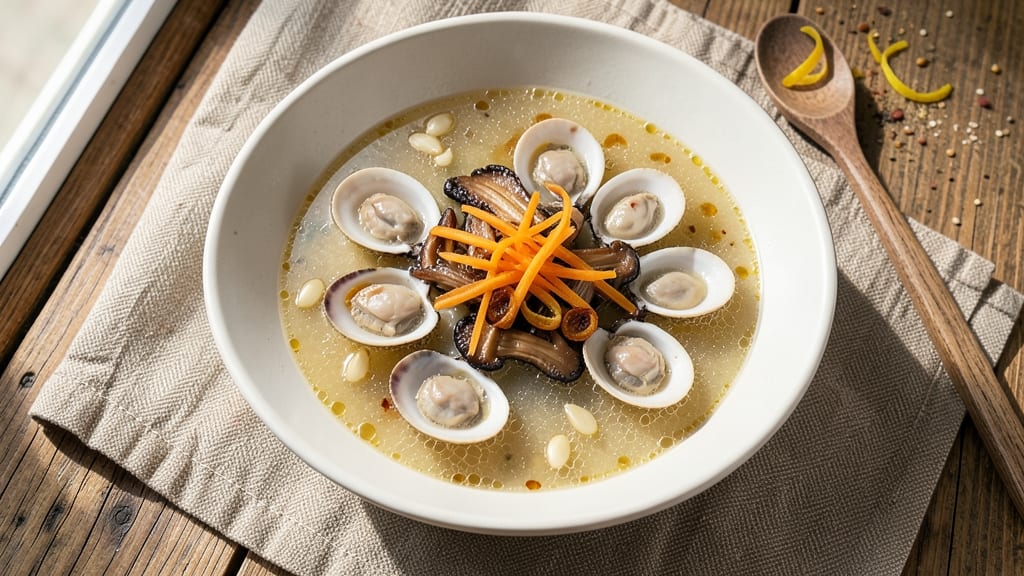
This Asari clam soup recipe delivers the essence of coastal Japanese cuisine in every steaming bowl—silky egg ribbons swirling through a deeply umami broth infused with shiitake mushrooms and dashi. I perfected this version after years of experimenting with traditional techniques, balancing authenticity with home-cook accessibility.
The secret lies in steaming the clams just until they open, preserving their natural sweetness while developing that signature briny depth.
The recipe begins with aromatics—garlic, ginger, and shallots—sautéed until fragrant, forming the flavor foundation. Asari clams, a prized variety known for their tender texture, are steamed whole and shelled at the table (or pre-shelled for convenience), their juices infused into the simmering broth.
Shiitake mushrooms add earthy richness, while a touch of mirin brightens the complex flavors.
What sets this dish apart is the silky egg ribbon technique—raw egg is gently swirled into the hot broth just before serving, creating delicate strands that dissolve on the tongue.
The result is a soup that’s both comforting and refined: light yet satisfying, with layers of umami, sweetness, and texture. It’s the kind of dish that turns a simple weeknight into a coastal dining experience.
Perfect for pescatarians or anyone craving a restaurant-quality seafood soup, this recipe scales easily for gatherings. The broth can be made ahead, allowing you to focus on the final assembly—steaming clams and swirling in those signature egg ribbons. Let’s bring the flavors of Japan to your kitchen.
Ingredients for asari clam soup
These carefully selected ingredients transform into a restaurant-worthy Asari clam soup with delicate egg ribbons and umami depth.
| Ingredient | Amount | Notes |
|---|---|---|
| Asari Clams 🦪 | 1 ½ lb | Live or pre-shucked, medium-sized |
| Dashi Stock 🍜 | 3 cups | Homemade or quality bottled |
| Shiitake Mushrooms 🍄 | 8 whole | Fresh, stems removed, sliced |
| Garlic Cloves 🧄 | 4 cloves | Minced, for aromatic base |
| Fresh Ginger 🌿 | 1 tbsp | Finely grated, aromatic |
| Shallots 🧅 | 2 whole | Thinly sliced, for depth |
| Mirin 🍶 | 2 tbsp | Sweet rice wine, for balance |
| Soy Sauce 🧂 | 2 tbsp | Japanese, for umami |
| Large Eggs 🥚 | 2 whole | Fresh, cold, for ribbons |
| Green Onions 🧅 | 3 whole | Thinly sliced, for garnish |
| Sesame Oil 🫒 | 1 tsp | Toasted, for finishing |
| Rice Vinegar 🍶 | 1 tbsp | For brightness |
| Neutral Oil 🫒 | 2 tbsp | For sautéing aromatics |
| Diamond Crystal Kosher Salt 🧂 | 1 tsp | For seasoning broth |
| White Pepper 🌶️ | ¼ tsp | Freshly ground, for finish |
The quality of your dashi stock is non-negotiable—homemade dashi using kombu and bonito flakes delivers the most authentic umami, but Hondashi brand from Asian markets works in a pinch. Asari clams should be fresh, with tightly closed shells; if pre-shucked, choose ones with a briny scent. For shiitake mushrooms, fresh is ideal, but rehydrated dried shiitake (soaked in warm water) adds concentrated earthiness. Garlic and ginger should be freshly grated or minced—pre-minced jarred garlic lacks the aromatic punch needed for this dish. Mirin adds sweetness without overpowering, so avoid substitutions like sugar or honey—the acidity and depth are essential.
No dashi stock? Combine 2 cups kombu broth with 1 cup bonito flakes steeped in hot water for a quick homemade version. Fresh shiitake unavailable? Crimini mushrooms at half the quantity provide a similar earthy note. Substituting mirin with 1 tbsp sugar plus 1 tbsp rice vinegar mimics the sweet-tart balance, though it won’t have the same complexity. For the egg ribbons, use cold eggs straight from the fridge—they’ll create the signature silky strands when swirled into the hot broth. If you’re serving a crowd, pre-steam the clams and store the broth separately until reheating; the clams should be steamed fresh just before serving to maintain their delicate texture.
The broth can be made up to 2 days ahead and stored in the fridge, allowing flavors to meld further; reheat gently over low heat. Clams should be steamed for no more than 5-6 minutes—they’re done when their shells open fully. The egg ribbons technique requires patience: crack the eggs into a small bowl, then slowly drizzle into the hot broth while stirring vigorously with chopsticks. Garnish with green onions and a drizzle of toasted sesame oil just before serving. Leftover broth freezes beautifully for up to 3 months, perfect for future soups or rice dishes.
Why You'll Love This Recipe
- One-Pot Magic: I swear by this recipe when I’m too tired to wash a million bowls. The clams steam open right in the pot, the mushrooms soften into the broth, and—boom—cleanup’s just a quick wipe of one pan. No fuss, no stress, just flavor.
- Umami Bomb: That first sip? Chef’s kiss. The dashi stock carries this deep, savory punch, while the shiitake mushrooms add an earthy richness. The garlic and ginger hit just right—bright enough to wake up your taste buds, but never overpowering. It’s the kind of soup that makes you reach for seconds without thinking.
- Weeknight to Dinner Party: Honestly, this is my go-to when I’ve got a last-minute guest or just need something hearty. Serve it with steamed rice and a side salad for a simple but impressive meal, or double the batch and freeze half for lazy Mondays. It’s that kind of reliable.
- Budget-Friendly Luxury: Between us, asari clams might sound fancy, but they’re way more affordable than you’d think—especially when you stretch them with mushrooms and dashi. A single batch feeds four for under $15, and leftovers reheat like a dream. Filling, flavorful, and guilt-free? Yes, please.
Step-by-step instructions for asari clams soup
This method delivers a restaurant-quality clam broth with delicate egg ribbons and deep umami flavor.
Prepare the Clams and Aromatics
If using live asari clams, rinse them thoroughly under cold water to remove any sand or debris. For pre-shucked clams, pat them dry with paper towels. Remove and discard any broken or damaged clams - only use the freshest for optimal flavor.
While preparing the clams, slice the 8 whole shiitake mushrooms stems removed into thin strips. Thinly slice the 2 whole shallots and finely grate the 1 tablespoon fresh ginger. Minced the 4 cloves garlic cloves - you should have about 1 teaspoon of minced garlic. Keep all aromatics separate until ready to use.
Build the Umami Broth Base
Heat the 2 tablespoons neutral oil in a large pot over medium heat until shimmering. Add the sliced shiitake mushrooms and cook for 3-4 minutes until they begin to soften and release their moisture. Add the minced garlic and grated ginger, cooking for an additional 30 seconds until fragrant.
Pour in the 3 cups dashi stock and bring to a gentle simmer. Add the sliced shallots, 2 tablespoons mirin, and 2 tablespoons soy sauce. Stir once to combine, then add the 1 teaspoon diamond crystal kosher salt. The broth should now have a rich, aromatic base with visible particles from the mushrooms and aromatics.
Cook the Clams Until Fully Opened
Add the 1.5 pounds asari clams to the simmering broth. Cover the pot and cook for 4-5 minutes until all clams have fully opened. Discard any clams that remain closed as they haven't cooked properly. Use a slotted spoon to remove the clams from the broth and set them aside temporarily.
The broth should now be infused with clam juices, creating a cloudy, opalescent liquid with a deep seafood aroma. Strain the broth through a fine-mesh sieve into a clean pot, pressing gently on the solids to extract maximum flavor. This strained broth will be the foundation of your soup.
Prepare the Egg Ribbons
In a small bowl, lightly beat the 2 whole large eggs with a fork until just combined but still slightly thick. The mixture should be uniform with no visible streaks of white. Add the 1 tablespoon rice vinegar and stir gently to combine.
In a separate small bowl, combine the 0.25 teaspoon white pepper with 1 teaspoon sesame oil. This mixture will be used to finish the soup and add a subtle peppery note with nutty sesame aroma. Keep both mixtures separate until ready to use.
Assemble and Finish the Soup
Return the strained clam broth to medium-low heat. Bring just to a gentle simmer, then carefully ladle about 1 cup of the hot broth into the beaten egg mixture while whisking constantly. The egg should begin to thicken immediately as it cooks in the hot broth.
Slowly pour the egg mixture back into the main pot while stirring continuously. Add the reserved clams and their juices back to the pot. Simmer gently for 1-2 minutes until the egg forms delicate ribbons throughout the broth. The soup should be silky with visible egg strands that don't fully dissolve.
Serve Immediately with Garnishes
Remove the soup from heat and divide among 4 serving bowls. Drizzle each portion with the sesame oil-white pepper mixture. Thinly slice the 3 whole green onions and sprinkle evenly over all bowls. Serve immediately while the egg ribbons maintain their delicate texture.
The finished soup should have a clear, golden broth with visible clam meat and silky egg ribbons. Each spoonful should deliver a perfect balance of briny clam flavor, sweet mirin notes, and umami depth from the dashi and mushrooms. The egg ribbons should be tender but still hold their shape, adding a luxurious texture to each bite.
Pro Tips For Making Asari Clam Soup
- Sear Clams First: Hit the clams with a quick 30-second sear in a dry pan before adding liquid—it tightens the meat and keeps them from turning rubbery in the soup. I learned this the hard way after serving a batch where the clams fell apart like overcooked pasta.
- Soak Shiitake Properly: If your mushrooms are tough, soak them in warm water for 10 minutes before slicing—this softens the fibers without diluting the flavor. Skip this, and you’ll end up with chewy bites that ruin the silky broth.
- Simmer, Don’t Boil: Keep the soup at a gentle simmer (tiny bubbles, not rolling) once everything’s added—boiling will turn the dashi cloudy and make the clams tough. I used to rush it, and the broth always ended up flat.
- Toast Garlic Lightly: Bloom the garlic in oil for 30 seconds until fragrant but not brown—this prevents bitterness and lets the flavor meld into the broth. Burn it, and you’ll taste regret with every sip.
Serving suggestions for this asari clam soup
Bread Pairings
Crispy steamed buns (like Japanese shokupan) are my go-to pairing—their delicate texture contrasts beautifully with the soup’s silky egg ribbons. Toast the buns briefly before serving to enhance their crunch. For a heartier option, serve with warm, crusty sourdough to soak up any lingering broth. 🥖
Side Dish Harmony
A light miso-glazed cucumber salad adds refreshing crunch and balances the soup’s richness. Thinly slice 1 English cucumber, toss with 1 tbsp white miso paste, 1 tsp rice vinegar, and a pinch of sugar.
For extra protein, serve with grilled shrimp skewers—the smoky char complements the clam’s brininess. 🥒
Drink Pairings
Sake is the classic choice—I recommend a chilled dry junmai sake (like Dassai 17) for its clean finish and ability to cut through the soup’s umami.
For a non-alcoholic option, try sparkling yuzu soda—the citrusy effervescence brightens each spoonful. Avoid heavy wines; their tannins overpower the delicate egg ribbons. 🍶
Garnish Upgrade
Elevate your bowl with toasted nori strips (cut into ribbons) for a salty, oceanic note. A sprinkle of furikake seasoning (Japanese rice seasoning) adds a nutty, savory crunch. For a pop of color, add edible gold leaf—it’s a stunning presentation touch that feels luxurious. ✨
Presentation Tips
Serve the soup in wide, shallow bowls (like donabe or ceramic) to showcase the egg ribbons and clams. Arrange clams artfully on top of the broth, then drizzle the sesame oil-pepper mix in a zigzag pattern. A dusting of bonito flakes adds visual drama and enhances the umami aroma. 🌟
Make-Ahead Serving
Prep the broth and clams ahead, but hold off on adding the egg ribbons until serving. Reheat the broth separately to 185°F, then swirl in the egg just before serving.
For gatherings, set up a self-serve station with bowls, clams, and a pre-mixed egg ribbon bowl to streamline service. 💫
Nutrition facts
Frequently asked questions about asari clam soup
Can I substitute asari clams with other types?
Yes, but choose carefully! Manila clams or littleneck clams work well—they have a similar delicate texture. Avoid razor clams (too fibrous) or ocean quahogs (too dense). For best results, use 1.5 pounds of any substitute, but steam them for 3-4 minutes instead of the usual 4-5 minutes—they cook faster.
Why do some clams stay closed after cooking?
Always discard any clams that don't open during cooking—they're unsafe to eat. This usually happens if they were dead before cooking or if the broth wasn't hot enough. For best results, use only live clams (shells tightly closed) or pre-shucked ones with a fresh, briny scent.
How do I make the egg ribbons look perfect?
The key is temperature control! Use cold eggs straight from the fridge and whisk them with 1 tablespoon rice vinegar first. When adding to the broth, it should be at a gentle simmer (185°F)—not boiling. Stir continuously with chopsticks in one direction for silky strands that hold their shape.
Can I make this soup ahead of time?
Prepare the broth and steam the clams up to 1 day ahead, then refrigerate. Reheat the broth separately to 185°F and add the egg ribbons just before serving. Never add the egg to cold soup—it won't create those signature strands. For the clams, steam them fresh when ready to serve for maximum tenderness.
What's the secret to the best dashi stock?
Authenticity starts with the dashi! For homemade, combine 2 cups kombu broth (simmered kombu in water) with 1 cup bonito flakes steeped in hot water. Let it sit for 10 minutes before using—this builds maximum umami. No time? Use a high-quality bottled dashi like Hondashi, but avoid powdered versions—they lack depth.