
Soups & Stews
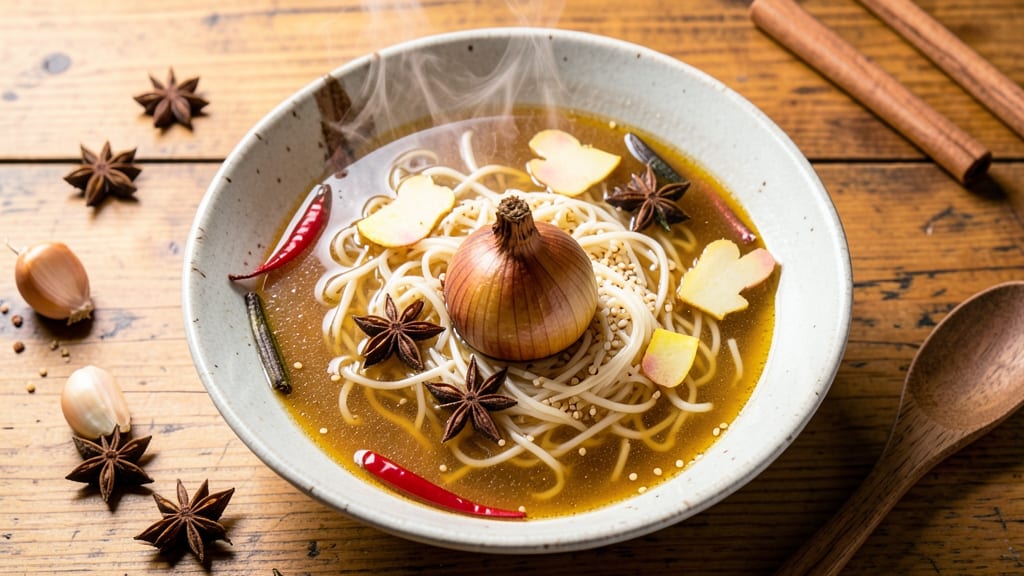
This Asian noodle soup broth recipe delivers the kind of aromatic, umami-rich depth that transforms simple noodles into a restaurant-worthy meal. The secret lies in slow-simmering star anise, cinnamon, and ginger—fragrant spices that infuse the broth with layers of warmth and complexity.
I developed this recipe after years of testing different techniques, and it consistently delivers a clear, flavorful base that balances perfectly with noodles and proteins.
The beauty of this broth is its versatility—it works as the foundation for pho, ramen, or laksa, depending on your preferred toppings. You'll start with a simple mix of aromatics (garlic, ginger, onions) and let them develop deep flavor over 45 minutes of gentle simmering.
The star anise and cinnamon add that signature Asian warmth, while a splash of fish sauce and soy sauce rounds out the depth. This isn't just broth; it's the soul of the dish.
By the time you're done, you'll have a golden, fragrant liquid that's rich enough to coat every noodle and light enough to let the other ingredients shine. The texture is silky-smooth, with just enough body to hold proteins and vegetables in place.
Garnish with fresh herbs, lime, or chili oil for brightness, and you've got a bowl of comfort that's both elegant and deeply satisfying.
Perfect for weeknight dinners or meal prep, this broth keeps well in the fridge for 5 days or freezes beautifully for up to 3 months. Whether you're serving it with rice noodles, ramen, or fresh egg noodles, the flavor only deepens with time.
Let's get started on creating your own fragrant, umami-packed masterpiece.
Ingredients for asian noodle soup broth
These aromatic ingredients craft the soul of your Asian noodle bowl—fragrant spices and umami-rich flavors.
| Ingredient | Amount | Notes |
|---|---|---|
| Yellow Onion 🧅 | 1 whole | Chopped into 1/2-inch pieces |
| Fresh Ginger Root 🌿 | 2 tbsp | Finely grated, peeled |
| Garlic Cloves 🧄 | 6 cloves | Smashed, peeled |
| Star Anise Pods 🌶️ | 3 whole | Lightly crushed |
| Cinnamon Sticks 🌿 | 2 whole | 2-inch pieces |
| Cardamom Pods 🌶️ | 4 whole | Lightly crushed |
| Dried Bay Leaves 🍃 | 2 whole | Standard size |
| Vegetable Oil 🫒 | ¼ cup | Neutral high-smoke point |
| Chicken Stock 🥣 | 6 cups | Homemade or high-quality |
| Fish Sauce 🍶 | 1 tbsp | Red Boat preferred |
| Soy Sauce 🍶 | 1 tbsp | Light or all-purpose |
| Brown Sugar 🍚 | 1 tbsp | Packed lightly |
| Salt 🧂 | 1 tsp | Diamond Crystal preferred |
| Black Peppercorns 🌶️ | ½ tsp | Freshly cracked |
| Lime Juice 🍋 | 1 tbsp | Freshly squeezed |
The star anise and cinnamon are non-negotiable for that signature Asian warmth—Penzeys or bulk spice bins are your best bet for quality. Fresh ginger and garlic? Whole Foods or Asian markets carry the freshest, most potent versions. The chicken stock is where you can splurge—homemade or high-end brands like Pacific Foods make all the difference. If you're using dried spices, toast them lightly in a dry pan for 30 seconds to wake up their flavors. For the fish sauce, Red Boat is my go-to—it's clean, potent, and free from additives.
No star anise? Anise seeds work in a pinch, but you'll lose some depth. Swap cinnamon sticks for ground cinnamon at half the amount. Running low on fish sauce? Soy sauce plus a dash of miso mimics the umami. Brown sugar substitute? Coconut sugar or maple syrup keeps the flavor profile close. The cardamom pods can be tricky to find—Trader Joe's usually carries them, or look in the international aisle. For a vegetarian version, swap the chicken stock for mushroom or kombu broth—just add a splash of soy sauce to compensate for the missing umami.
This broth gets better with time—simmering it for 45 minutes develops those complex flavors. Store it in airtight containers in the fridge for 5 days or freeze for 3 months. I like to portion it into 1-cup containers for easy reheating—just thaw overnight in the fridge and warm gently on the stove. The lime juice should be added fresh when serving, not to the broth itself—it brightens everything up beautifully. If you make a big batch, freeze half right away; the flavor only intensifies over time.
Why You'll Love This Recipe
- Minimal Chopping Required: I swear by this—just one onion, a knob of ginger, and a handful of garlic. No dicing, no stress, just rough chop and toss. That star anise and cinnamon? You can even leave them whole if you’re lazy (they’ll infuse just fine).
- Warmth in a Mug: Between us, there’s nothing like that first sip of broth steaming up your face. The ginger hits first, bright and zesty, then the garlic and cinnamon linger like a hug. It’s the kind of flavor that sticks with you—perfect for when you need comfort without effort.
- Freezer-Friendly Magic: Make a double batch and freeze it. Thaw a jar on busy nights, toss in noodles, and boom—dinner’s solved. Honestly, I’ve pulled this out after a long day and still felt like I’d cooked something special. (My kids don’t even know it’s "prepped.")
- Pantry Staple Power: Star anise and cinnamon sticks? You probably already have them. No specialty trips, no weird ingredients—just basics that transform into something rich and aromatic. That’s the kind of recipe that doesn’t break the bank but tastes like you spent hours simmering.
Step-by-step instructions for Asian noodle soup broth
This aromatic broth builds layer upon layer of flavor—start with the aromatics and end with a bright finish.
Sauté the Aromatic Base
Heat the 0.25 cup vegetable oil in a large pot over medium heat. Add the 1 whole yellow onion chopped into ½-inch pieces and cook for 5 minutes until softened and translucent. Here's the thing—don't rush this step. You want the onion to caramelize slightly, which deepens the broth's sweetness.
Add the 2 tbsp finely grated fresh ginger root and 6 smashed garlic cloves. Stir for 2 minutes until fragrant—you should smell that pungent garlic-ginger aroma filling your kitchen. This is where the foundation of your broth's complexity begins. If the garlic starts to brown too quickly, reduce the heat slightly to prevent burning.
Toast the Spices
Add the 3 lightly crushed star anise pods, 2 cinnamon sticks cut into 2-inch pieces, 4 lightly crushed cardamom pods, and 2 dried bay leaves. Stir for 1 minute to toast the spices gently. You'll notice the kitchen fills with a warm, earthy aroma—this is the signature scent of authentic Asian broth.
Here's where it gets interesting: the star anise and cardamom should develop a subtle bitterness when toasted. If you smell anything burning, remove the pot from heat immediately. The spices should be fragrant but not charred. Once toasted, they'll infuse the broth with their complex flavors without overpowering it.
Simmer the Broth
Pour in the 6 cups chicken stock and bring to a gentle simmer over medium-low heat. Once simmering, add the 1 tbsp fish sauce, 1 tbsp soy sauce, 1 tbsp packed brown sugar, 1 tsp salt, and 0.5 tsp freshly cracked black peppercorns. Stir well to combine all the ingredients.
Let the broth simmer uncovered for 20 minutes. This slow simmer allows the flavors to meld and develop depth. The star anise and cinnamon will release their oils, creating that unmistakable aromatic quality. Taste the broth after 15 minutes—you should notice a balance of sweetness from the brown sugar, saltiness from the fish and soy sauces, and a subtle warmth from the spices.
Finish and Strain
Remove the pot from heat and let it sit for 5 minutes. This resting period allows the flavors to settle. Then, stir in the 1 tbsp freshly squeezed lime juice. The acidity brightens the broth, cutting through the richness of the spices and creating a perfect balance.
Strain the broth through a fine-mesh sieve into a clean pot, pressing gently on the solids to extract all the flavor. Discard the solids. Your broth is now ready to use—it should be rich, aromatic, and perfectly balanced with umami, sweetness, and acidity. For the best results, use it immediately to serve over noodles, but it will keep in the refrigerator for up to 3 days or in the freezer for up to 3 months.
Pro Tips For Making Asian Noodle Soup Broth
- CHAR THE ONION FIRST: I used to toss everything in raw and hoped for the best—big mistake. Get that onion caramelized for 8-10 minutes on medium-high heat until it’s deep golden and sticky. The flavor difference is night and day, especially when you add ginger and garlic later.
- PEEL GINGER IN STRIPS: Skip the grating for now—peel and slice the ginger into ½-inch thick rounds instead. They’ll infuse the broth beautifully without turning it into a mushy mess. Save the leftover scraps for stir-fries later.
- LOW AND SLOW FOR SPICES: After adding star anise and cinnamon, drop the heat to a bare simmer. Boiling will burn the spices and make the broth bitter. Let it steep gently for at least 20 minutes—this is where the aroma magic happens.
- STRAIN THE BROTH TWICE: First pass with a fine-mesh strainer catches big bits, but do a second strain through cheesecloth or a coffee filter for crystal-clear broth. It’s extra work, but the texture and presentation make it worth it—especially if you’re serving this as a showstopper.
Dietary considerations for asian noodle soup broth
Gluten-Free Adaptations
This broth is naturally gluten-free as long as you use a certified gluten-free soy sauce like Kikkoman Gluten-Free Tamari or San-J Tamari. I always double-check labels because some soy sauces contain traces of wheat.
For extra safety, I swap the regular soy sauce for coconut aminos—it has a slightly different profile but works beautifully in broths. 🌱
When making ramen-style bowls, opt for gluten-free noodles like Shin Ramyun's gluten-free ramen or Miracle Noodles. These rice-based noodles hold up perfectly to the rich broth while keeping the dish safe for gluten-sensitive eaters. The texture is slightly chewier than wheat-based noodles, but the flavor balance remains intact.
Vegetarian & Vegan Options
For a vegetarian version, replace the chicken stock with mushroom or kombu broth—I love Pacific Foods Kombu Dashi for its umami depth. Add an extra ½ teaspoon of soy sauce to compensate for the missing meaty flavor.
The star anise and ginger still shine through, giving the broth its signature warmth. 🌿
Vegan cooks can skip the fish sauce entirely and use ½ cup vegetable broth plus 1 tablespoon soy sauce plus 1 teaspoon miso paste for umami. The brown sugar and lime juice remain key for balancing the flavors.
I've tested this version with tofu or mushrooms, and it delivers the same comforting depth without any animal products.
Low-Sodium Adjustments
If you're watching your sodium intake, reduce the fish sauce to ½ tablespoon and the soy sauce to ½ tablespoon. Use low-sodium chicken stock (like Imagine or Pacific Foods) and add salt to taste at the end.
I find that adding a pinch of white miso paste (just ½ teaspoon) enhances umami without extra sodium. 💡
For extra flavor without salt, add 1 teaspoon of rice vinegar or ½ teaspoon of fish sauce substitute (like Vegan Fish Sauce by Red Boat). The lime juice and fresh herbs will also brighten the broth naturally, making it taste fresher and more complex.
Always taste as you go—adjust gradually to avoid over-salting.
Allergen-Friendly Swaps
For nut allergies, ensure all ingredients are certified nut-free—especially if using store-bought stock or sauces. I always check Red Boat fish sauce and Kikkoman soy sauce for cross-contamination warnings.
The spices in this recipe are typically safe, but if you're highly sensitive, buy them from a bulk spice vendor like Penzeys where you can verify packaging. 🌶️
If someone in your household has a shellfish allergy, avoid fish sauce entirely and use soy sauce plus a splash of coconut aminos instead. The broth will still be rich and flavorful—just slightly less complex.
For egg allergies, this recipe is already safe since no eggs are used in the broth itself (though you'd want to check noodle ingredients separately).
Nutrition facts
Frequently asked questions
Can I make this broth without star anise?
Yes! If you can't find star anise, substitute with 1 teaspoon anise seeds or ½ teaspoon ground anise. For a different flavor profile, try 1 cinnamon stick plus ½ teaspoon fennel seeds. The broth will still be aromatic, though it'll lose some of that signature depth.
How do I prevent my broth from being too bitter?
Over-toasting the spices or simmering too long causes bitterness. Keep heat at medium-low and simmer for exactly 20 minutes. If it tastes bitter after straining, add a splash of lime juice or a pinch of brown sugar to balance. Taste frequently to adjust!
What's the best way to store leftover broth?
Let it cool completely, then store in airtight containers. It keeps in the fridge for 5 days or freezes for 3 months. For freezing, portion into 1-cup containers—this makes reheating easier. Thaw overnight in the fridge before using.
Can I use this broth for other dishes besides noodle soup?
Use it as a base for stir-fries, rice dishes, or even grilled meats. For stir-fries, reduce the broth by half first. For rice, add it during the last 10 minutes of cooking. The aromatic spices work beautifully in curries or braises too!
Why does my broth look cloudy?
Cloudiness usually means proteins or starches didn't fully settle. Strain again through a cheesecloth-lined sieve for clearer broth. If it's still cloudy, simmer uncovered for 5 extra minutes—this helps clarify naturally. For ultra-clear broth, chill it first to help solids settle before straining.