
Soups & Stews
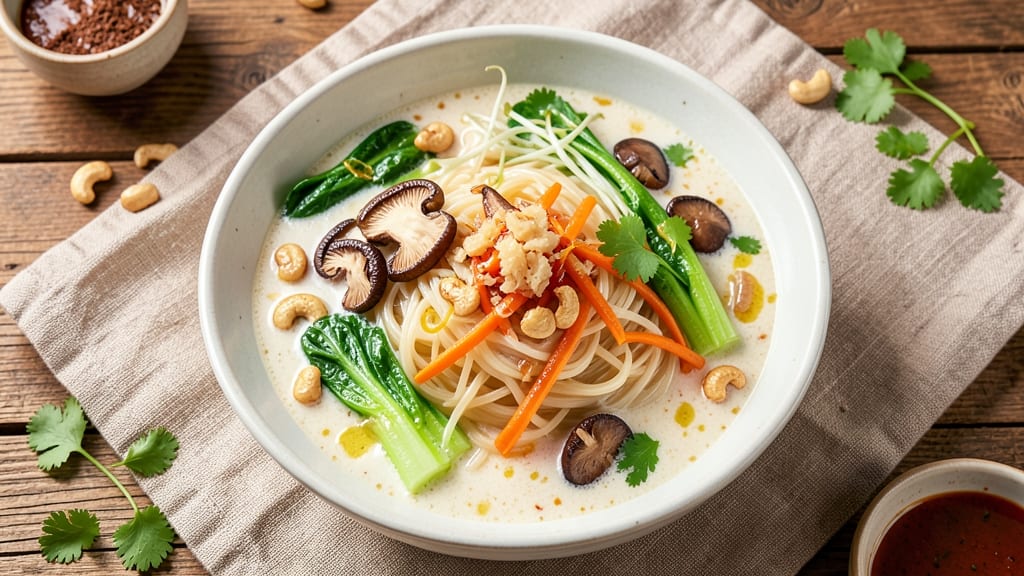
This vegetarian Asian noodle soup recipe delivers restaurant-quality depth with silky rice noodles swimming in a fragrant coconut-lime broth that balances sweet, tangy, and umami flavors. 🌿 After years of perfecting vegetarian pho-inspired soups, I've developed a technique that transforms simple ingredients into a dish so aromatic it'll have everyone asking for seconds.
The secret lies in building layers of flavor through slow-simmered spices and fresh herbs, creating a broth that's both comforting and vibrantly bright.
The foundation begins with a rich coconut-miso base that provides natural umami depth without relying on meat, then brightened with lime juice and fresh ginger. Thinly sliced vegetables like mushrooms, carrots, and bok choy add texture and color, while soft tofu or crispy tempeh provides satisfying protein.
What makes this recipe special is how the silky rice noodles absorb the aromatic broth while maintaining their delicate texture—no mushy noodles here.
By the time you're ready to serve, you'll have a steaming bowl of soup where every spoonful delivers perfect harmony: tender vegetables, protein that holds its shape, and noodles that melt in your mouth.
The finishing touches of fresh herbs, chili oil, and lime wedges add freshness and a final burst of flavor that keeps this dish exciting with every bite.
This recipe works equally well as a light lunch or comforting dinner, and it's completely customizable—swap in your favorite vegetables or adjust the spice level to suit your taste. The best part? It comes together in under 45 minutes, making it perfect for weeknight cooking without sacrificing restaurant-quality results.
Ingredients for asian noodle soup recipe vegetarian
These aromatic ingredients create a fragrant, umami-rich broth that transforms simple vegetables into restaurant-quality vegetarian noodle soup.
| Ingredient | Amount | Notes |
|---|---|---|
| Rice Noodles 🍜 | 8 oz | Thin or medium width preferred |
| Coconut Milk 🥥 | 1 can (13.5 oz) | Full-fat for creaminess |
| Vegetable Broth 💧 | 4 cups | Low-sodium preferred |
| White Miso Paste 🍶 | 2 tbsp | Organic preferred |
| Fresh Ginger 🧄 | 2 tbsp | Grated, peeled |
| Lime Juice 🍋 | ⅓ cup | Freshly squeezed |
| Garlic Cloves 🧄 | 4 cloves | Minced |
| Shiitake Mushrooms 🍄 | 8 oz | Sliced thin |
| Carrots 🥕 | 2 medium | Julienned, peeled |
| Bok Choy 🥬 | 1 bunch | Baby or regular, quartered |
| Silken Tofu 🍲 | 1 block (12 oz) | Soft or firm, cubed |
| Fresh Thai Basil 🌿 | ¼ cup | Chopped, stems removed |
| Cilantro 🌿 | ¼ cup | Chopped, optional |
| Chili Oil 🌶️ | 1 tbsp | Homemade or store-bought |
| Sesame Oil 🫒 | 1 tsp | Toasted, for aroma |
The coconut milk is non-negotiable here—it's what gives that rich, velvety texture. Full-fat canned coconut milk works best, and Thai Kitchen or Native Forest brands are my go-tos for that perfect balance of creaminess without overpowering. Fresh ginger and garlic are the flavor anchors, so don't skimp. I always grab extra ginger at Asian markets—they have the freshest, plumpest roots. The miso paste? White miso from Marukome adds that deep umami without being too salty. If you can't find it, white miso from the international aisle at Whole Foods works too.
No fresh basil? Dried Thai basil at half the amount is a decent swap, though it won't be as vibrant. Running low on shiitake mushrooms? Cremini or oyster mushrooms work in a pinch—they'll just be slightly less meaty. The carrots can be baby carrots if that's what's in your fridge, but julienning them gives that professional look. For the tofu, silken tofu is ideal because it's soft and absorbs the broth beautifully, but extra-firm cubed and pan-fried first works too if you prefer texture. The lime juice needs to be fresh—bottled just won't cut it here.
This soup tastes even better the next day as the flavors meld. Store leftovers in an airtight container for up to 4 days in the fridge. For freezing, portion the broth and veggies separately—3 months max. I always make a double batch because it disappears fast. The noodles? Cook them fresh when serving—reheating them makes them gummy. Keep the fresh herbs and chili oil separate until serving so they stay bright and punchy.
Why You'll Love This Recipe
- Pantry Magic Unlocked: I swear by this one when I forget to grocery shop—just grab rice noodles, coconut milk, and miso from your shelves. No last-minute veggie chopping or specialty stores needed.
- Umami Bomb: That white miso paste? It’s the secret weapon—deep, savory, and slightly sweet without overpowering. The ginger and coconut milk balance it so perfectly, it tastes like a hug in a bowl.
- Lunch for Days: Make a big batch on Sunday, and you’ve got effortless lunches all week. The broth thickens beautifully when reheated, and the noodles stay tender—no soggy leftovers here.
- Budget Comfort: Honestly, this costs me less than takeout but feels like a fancy meal. Coconut milk adds richness for pennies, and miso stretches the broth so every serving feels generous. My wallet and my taste buds thank me.
Step-by-step instructions for silky vegetarian noodle soup
Here's how to create a bowl of fragrant, silky noodle soup that's packed with umami and freshness.
🍳 Step 1: Build the Fragrant Coconut-Lime Broth Base
In a large pot over medium heat, combine the 4 cups vegetable broth and 1 can (13.5 oz) coconut milk. Bring to a gentle simmer, then whisk in the 2 tbsp white miso paste until fully dissolved. I like to press the miso through a fine-mesh sieve first to remove any lumps—this ensures a silky texture in your broth.
Add the 2 tbsp grated fresh ginger and 4 minced garlic cloves, stirring for 1-2 minutes until fragrant. The aroma should fill your kitchen—this is where the magic begins. Keep the broth at a gentle simmer, not a rolling boil, to prevent the coconut milk from curdling. Here's the thing—if you see any skin forming on top, just skim it off with a spoon to keep your broth smooth.
🍳 Step 2: Cook the Vegetables and Tofu
Add the 8 oz sliced shiitake mushrooms, 2 julienned carrots, and 1 block (12 oz) cubed silken tofu to the simmering broth. Cook for 5-6 minutes until the mushrooms soften and the carrots become tender but still hold their shape. The silken tofu will cook quickly—it's ready when it's just heated through and no longer cold to the touch.
Next, add the 1 bunch quartered bok choy and cook for another 3-4 minutes until the leaves wilt but still maintain a vibrant green color. Don't overcook the bok choy—it should stay crisp with just a hint of tenderness. Here's a pro tip: If your broth starts to reduce too much, add ¼ cup hot water to maintain the perfect consistency for your noodles.
🍲 Step 3: Prepare and Cook the Noodles
While the broth simmers, prepare the 8 oz rice noodles according to package instructions. I find they cook perfectly in 3-4 minutes in boiling water—just until they're tender but still slightly chewy. Drain immediately and rinse under cold water for 10 seconds to stop the cooking process. This prevents them from turning mushy when added to the hot broth.
Add the drained noodles to the pot with the vegetables and tofu. Stir gently to combine, then pour in the ⅓ cup freshly squeezed lime juice and 1 tsp toasted sesame oil. The lime juice will brighten the entire dish, cutting through the richness of the coconut milk beautifully. Let everything simmer together for 2 minutes to meld the flavors—you'll notice the broth takes on a gorgeous golden hue from the miso and lime.
🥘 Step 4: Finish with Fresh Herbs and Chili Oil
Remove the pot from heat and stir in the ¼ cup chopped fresh Thai basil and ¼ cup chopped cilantro. The herbs should wilt slightly but still retain their vibrant color. Here's where it gets delicious—drizzle in the 1 tbsp chili oil and toss everything together gently. The chili oil adds just the right amount of heat to balance the creamy coconut broth.
Taste and adjust the seasoning if needed—you might want to add a pinch more salt or a squeeze of extra lime juice to suit your preference. The soup should be fragrant with a perfect balance of umami from the miso, freshness from the herbs, and a touch of spicy heat. Serve immediately in deep bowls, garnished with additional Thai basil leaves if you're feeling fancy. Each spoonful should deliver that perfect harmony of textures and flavors!
Pro Tips For Making Asian Noodle Soup Recipe Vegetarian
- SOAK NOODLES SEPARATELY: I learned this the hard way—dumping rice noodles straight into the simmering broth turns them into a mushy mess. Soak them in warm water (not boiling) for 10-15 minutes until pliable, then drain and add them last. That way, they absorb the broth just enough to soften without disintegrating.
- TEMPER MISO FIRST: White miso paste is delicate—adding it directly to hot broth kills its flavor. Instead, whisk it into a small cup of warm broth first, then stir that mixture into the pot. This keeps the umami intact and prevents clumping. (Yes, even if you're impatient like me.)
- GINGER SHOULD SING: Skip the pre-grated ginger from jars—it’s bland and watery. Use a microplane or finely mince fresh ginger (about 1 teaspoon) and let it bloom in the broth for 2-3 minutes before adding coconut milk. That’s when it releases its real zing.
- DON’T BOIL THE COCONUT: Coconut milk curdles if it hits a rolling boil. Once you add it to the broth, reduce heat to a gentle simmer (small bubbles, barely moving) and keep it there. Sounds weird, but it works—your soup stays creamy, not lumpy. (Your future self will thank you.)
Storing and reheating this asian noodle soup recipe vegetarian
Broth Storage Secrets
The coconut-lime broth is where the magic lives, so store it properly to preserve those vibrant flavors. Let it cool to room temperature first, then transfer to airtight glass containers—I love Pyrex with snap-on lids for this.
The broth keeps beautifully in the fridge for 4 days, with the flavors actually deepening over time. For longer storage, freeze it in quart-sized freezer bags with 1 inch headspace—thaw overnight in the fridge before reheating. 💫
Noodle Preservation
Cooked rice noodles are delicate creatures—they turn gummy fast when reheated. My trick? Store them uncooked in the fridge for up to 3 days or freeze them dry in ziplock bags for 1 month.
When ready to use, cook fresh from dry—just 3-4 minutes in boiling water. Never reheat cooked noodles directly in broth, or they'll lose that perfect silky texture.
Reheating Vegetables
Reheat the vegetables and tofu separately from the broth to maintain their texture. In a pot over medium heat, add ¼ cup water or broth to prevent sticking, then warm through for 3-4 minutes.
The bok choy should stay vibrant, while the mushrooms and tofu should just warm through—don't let them sit too long or they'll turn mushy. Add the warmed veggies back to the broth just before serving. ✨
Fresh Herb Handling
Store fresh Thai basil and cilantro in airtight containers with a paper towel pressed against them to absorb moisture. They'll stay fresh for 3 days in the fridge. For maximum flavor, add them right before serving—this keeps their bright, fresh notes intact.
If you must reheat, add herbs after warming and let them sit for 1 minute to wilt slightly but retain their aroma.
Chili Oil Tip
Chili oil is best added fresh, but if you're reheating, store it separately in a small glass jar in the fridge for up to 2 weeks. When reheating the soup, drizzle in 1 tsp chili oil just before serving to preserve its fiery kick.
For extra zing, add a pinch of red pepper flakes directly to your bowl—it's a game-changer for that restaurant-quality heat. 🌶️
Combining Components
When reheating, combine everything in a pot over low heat for 2-3 minutes—just enough to warm through without overcooking. The key is to maintain that perfect balance of textures: silky noodles, tender veggies, and creamy broth.
If the soup seems too thick after reheating, stir in 1-2 tbsp hot water to restore its silky consistency. Serve with lime wedges on the side for a bright finish! 💛
Nutrition facts
Frequently asked questions
Can I make this vegetarian noodle soup gluten-free?
This recipe is naturally gluten-free as long as you use gluten-free vegetable broth and rice noodles. Double-check your miso paste label too—some contain wheat. For extra flavor, swap in tamari instead of regular soy sauce if needed. The coconut-lime base remains perfectly safe for gluten-free diets.
How do I adjust the spice level?
Start with the 1 tbsp chili oil as written for mild heat. For medium spice, add 1½ tbsp and double to 2 tbsp for spicy. Need more? Add ½ tsp red pepper flakes directly to your bowl or increase the chili oil by ½ tbsp. Always taste before serving—you can adjust at the table too!
What's the best way to prep ingredients ahead?
Chop all vegetables (mushrooms, carrots, bok choy) and store in airtight containers in the fridge for 2 days. Grate ginger and garlic in advance and keep in sealed bags. The tofu can be cubed and refrigerated for 3 days. The only thing to prep fresh is the lime juice and herbs—add them last for maximum brightness.
Can I substitute other noodles?
Rice noodles are ideal for their silky texture, but you can use udon or soba noodles if preferred. For gluten-free, try shirataki or kelp noodles. Avoid wheat-based noodles like ramen—they'll overpower the delicate broth. If substituting, adjust cooking time according to package instructions and rinse well to remove excess starch.
Why did my broth turn curdled?
Curdling happens when coconut milk boils too vigorously. Keep heat at medium-low and stir occasionally. If it happens, whisk in 1 tbsp coconut milk to restore creaminess. For next time, simmer gently and skim off any foam that forms. The miso paste should dissolve completely—if not, strain it first through a fine-mesh sieve.