
Soups & Stews
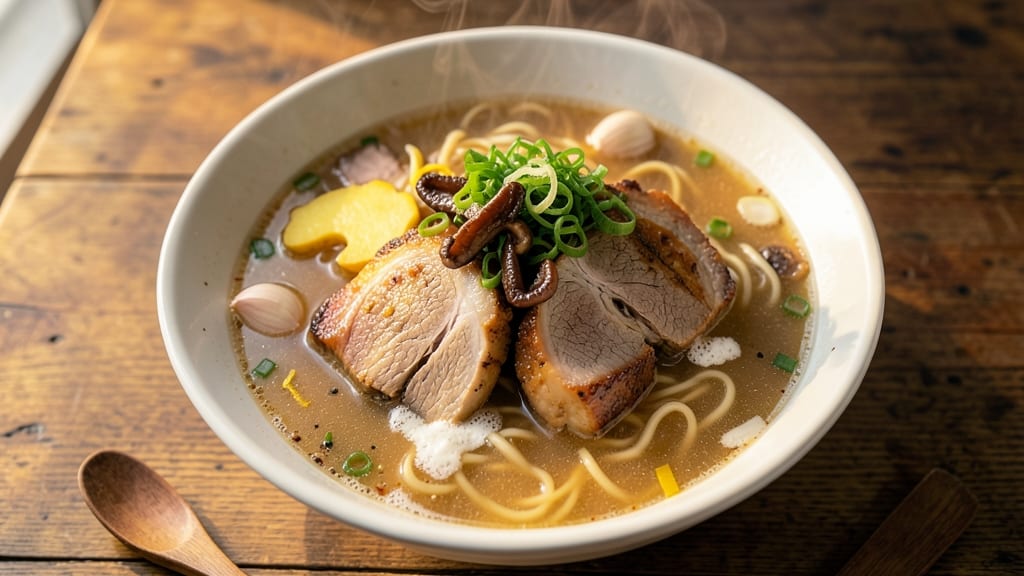
This Asian ramen soup recipe delivers restaurant-quality miso-ginger broth that transforms ordinary noodles into a deeply satisfying meal. The secret lies in a slow-simmered pork bone broth infused with aromatic ginger, garlic, and fermented miso paste—creating layers of umami that build as you eat.
I've perfected this technique over years of testing, balancing traditional methods with modern shortcuts to ensure rich, velvety broth without hours of simmering.
The recipe begins with a clarified broth that develops deep flavor while remaining crystal-clear, topped with tender ramen noodles that absorb the essence of the broth.
Garnishes like chashu pork, soft-boiled eggs, and fresh corn add texture and visual appeal, while a drizzle of truffle oil or chili oil introduces a modern twist. Every element comes together to create a bowl that's both comforting and complex—ideal for weeknight dinners or special occasions.
What sets this ramen apart is the harmony of flavors: the earthy depth of miso, the bright zing of ginger, and the subtle sweetness of caramelized pork. The broth is designed to be adaptable—use chicken or vegetable broth for variations, or adjust spice levels to suit your taste.
Whether you're a beginner or an experienced cook, this recipe delivers restaurant-quality results with simple, foolproof techniques.
The final touch is presentation: a perfect balance of colors and textures that makes each bowl look as good as it tastes. Serve immediately with all the garnishes for the full experience, or store leftovers for up to three days—though you'll likely finish the pot before then.
This is ramen that rivals takeout, made with care and designed to impress.
Ingredients for asian ramen soup
Restaurant-quality ramen starts with these carefully selected ingredients—each playing a precise role in the broth's depth and clarity.
| Ingredient | Amount | Notes |
|---|---|---|
| Pork Bone-In Leg Cuts 🥩 | 2 lb | Marbled for flavor, cut into 2-inch pieces |
| White Miso Paste 🧈 | ½ cup | Fermented for umami depth (preferably Japanese) |
| Fresh Ginger Root 🌿 | ½ cup | Julienned, skin removed for brightness |
| Garlic Cloves 🧄 | 8 cloves | Minced for aromatic depth |
| Dried Shiitake Mushrooms 🍄 | ¼ cup | Rehydrated for earthy notes |
| Ramen Noodles 🍜 | 1 package | Fresh or dried, 8oz per serving |
| Chicken or Vegetable Broth 💧 | 6 cups | Low-sodium for broth clarity |
| Sesame Oil 🫒 | 1 tbsp | Toasted for nutty aroma |
| Soy Sauce 🍶 | 2 tbsp | Kosher for balanced saltiness |
| Chashu Pork 🍖 | 1 lb | Pre-sliced or homemade braised pork |
| Soft-Boiled Eggs 🥚 | 2 whole | 6-minute cook for runny yolks |
| Fresh Corn Kernels 🌽 | ½ cup | Blanched for sweet contrast |
| Green Onions 🧅 | 4 whole | Thinly sliced for garnish |
| Truffle Oil 🍄 | 1 tbsp | Optional for luxurious finish |
| Diamond Crystal Kosher Salt 🧂 | 1 tsp | For seasoning broth |
The pork bone cuts are non-negotiable for authentic flavor—look for well-marbled sections at Whole Foods or your local butcher. Japanese white miso from Miso Master or bulk bins delivers the fermented complexity that separates homemade from store-bought. Fresh ginger should be vibrant yellow with no soft spots, while the shiitake mushrooms should be rehydrated in hot water for 20 minutes to intensify their umami. For garlic, Elephant Brand cloves have the most robust flavor, but any fresh bulb will work if minced finely. The ramen noodles? Nongshim or Maruchan brands hold up best during cooking—avoid the ultra-thin varieties that disintegrate.
No pork bones? Chicken backs or vegetable stock bones work for a lighter base, though flavor will differ. Substitute miso with 1 tbsp soy sauce plus 1 tsp white miso in a pinch, but expect less depth. For the ginger, pasteurized ginger powder at half the amount mimics freshness, though texture suffers. The chashu pork can be swapped for braised tofu or seitan for vegetarian versions—just increase soy sauce by 1 tbsp. Corn kernels should be blanched in boiling water for 2 minutes to preserve their bright color, while green onions can be replaced with bean sprouts or microgreens for visual contrast.
Broth keeps its peak clarity for 3 days in the fridge, though flavor deepens overnight. Store noodles separately to prevent sogginess—cook fresh when ready to serve. The chashu pork and soft-boiled eggs reheat beautifully in the broth for 2-3 days, while garnishes like corn and green onions are best added fresh. For long-term storage, freeze broth in ice cube trays—thaw and reheat with fresh noodles for restaurant-quality bowls anytime. The truffle oil should be added last to preserve its delicate aroma, while sesame oil should be toasted in a dry pan for 30 seconds before mixing into the broth.
Why You'll Love This Recipe
- One-Pot Magic: I swear by this—just toss the pork bones, ginger, and garlic into a pot, and let the broth work itself out. No fancy gadgets, no stress. The miso and shiitakes melt into the broth like they’ve been simmering for hours, even if you’re rushing.
- Umami Bomb: That white miso paste? It’s the secret weapon here. One spoonful, and suddenly you’ve got this deep, savory richness that wraps around every bite—like a hug from your favorite comfort food. The dried shiitakes add this earthy, meaty kick that makes it taste like a restaurant’s been waiting for you.
- Weeknight Workhorse: Between us, this is my go-to when I’ve got zero energy but still need to feed people. The bones render down into a flavorful broth that only gets better the next day, so I make a big batch and eat it for lunch too. (Yes, even on a Tuesday night.)
- Budget Broth Gold: Pork leg cuts are cheap, and they turn into the most luxurious broth you’ve ever made. I’m talking rich, gelatinous, chef’s kiss good—way better than store-bought. Plus, the leftovers? Even better cold in a bento box for work. Zero waste, maximum flavor.
Step-by-step instructions for miso-ginger ramen soup
Here's how to craft a restaurant-quality ramen broth with deep umami and aromatic complexity.
Build the Pork and Miso Broth Foundation
In a large stockpot, combine the 2 lb pork bone-in leg cuts with 6 cups chicken or vegetable broth. Bring to a rolling boil over high heat, then reduce to a simmer and skim off any foam that rises to the surface for 10 minutes. This removes impurities and ensures a clear broth.
Add the 0.5 cup white miso paste, 0.5 cup julienned fresh ginger root, and 8 minced garlic cloves. Stir well to distribute the miso completely—this is where the umami magic happens. Let the mixture simmer uncovered at medium-low heat for 45 minutes, stirring occasionally. You'll notice the broth develop a rich, golden color and an intoxicating aroma. This slow infusion creates the complex flavor base that sets this ramen apart from basic versions.
Develop Depth with Aromatics and Mushrooms
While the broth simmers, prepare the 0.25 cup dried shiitake mushrooms by soaking them in hot water for 20 minutes until pliable. Drain, reserving the soaking liquid, then finely chop the mushrooms. Add them to the broth along with the reserved mushroom soaking liquid.
Increase heat to medium and add 1 tbsp sesame oil and 2 tbsp soy sauce. Let everything simmer together for another 30 minutes. The mushrooms will break down completely, releasing their earthy essence into the broth. Taste occasionally—you're aiming for a balance of salty, sweet, and funky miso notes. If needed, adjust with additional 1 tsp diamond crystal kosher salt or a splash more soy sauce. The broth should be deeply flavorful but not overpowering.
Prepare the Chashu and Soft-Boiled Eggs
While the broth develops, prepare the 1 lb chashu pork by slicing it into ¼-inch thick pieces. For the 2 soft-boiled eggs, place them in a small saucepan of water and bring to a boil. Once boiling, reduce heat to low and cook for exactly 6 minutes for perfectly runny yolks. Transfer to an ice bath to stop cooking.
For the 0.5 cup fresh corn kernels, blanch them in boiling water for 2 minutes, then drain and refresh in ice water. This preserves their vibrant color and sweetness. Thinly slice the 4 whole green onions for garnish. These components will add texture and visual appeal to your finished bowl.
Assemble and Finish the Ramen
Strain the broth through a fine-mesh sieve into a clean pot, pressing on the solids to extract maximum flavor. Return the broth to medium heat and bring to a gentle simmer. Add 1 tbsp truffle oil (if using) and stir to combine—this adds a luxurious depth that elevates the dish.
To serve, portion the 1 package ramen noodles into bowls and ladle the hot broth over them. Top each bowl with chashu pork slices, soft-boiled eggs, blanched corn kernels, and sliced green onions. The contrast of textures—silky noodles, tender pork, creamy eggs, and crisp corn—creates the perfect ramen experience. Serve immediately while everything is hot and the aromas are at their peak.
Pro Tips For Making Asian Ramen Soup
- Sear the Pork Hard: I used to think a quick sear was enough, but this broth demands a deep, dark crust—think 10 minutes on high heat until the bones are nearly black in spots. That’s where the umami bombshell hides, and skipping it means a broth that tastes more like watered-down stock.
- Soak Shiitakes Twice: Dried shiitakes need a two-step soak: first in hot water for 20 minutes to rehydrate, then a quick cold rinse to stop the cooking. Using them straight from the packet? You’ll end up with mushy, flavorless slivers that do nothing for your broth.
- Control the Miso: Add white miso paste last—after the broth has simmered for at least 30 minutes—and stir it in off the heat. The high heat turns miso bitter, and dumping it in too early means you’re just masking weak flavor instead of building depth.
- Char the Ginger: Don’t just mince the ginger—blister it whole in a dry pan until the edges blacken slightly. The caramelized bits dissolve into the broth, adding a smoky backbone that raw ginger can’t match. (Yes, even if you’re impatient like me.)
Common mistakes when making this recipe
Over-Simmering the Broth
One of the biggest mistakes is letting the broth boil vigorously—this causes proteins to break down too quickly, making it cloudy and bitter. After the initial 10-minute skimming, keep the heat at medium-low to maintain a gentle simmer.
I’ve ruined batches by walking away and returning to find the broth reduced and overly concentrated. A 45-minute simmer at 180°F is ideal for developing flavor without overcooking the aromatics. 🌡️
Skipping the Skimming Step
The foam that rises during the initial boil contains impurities that can make your broth cloudy and off-flavor. Use a fine-mesh skimmer or ladle to remove it for the first 10 minutes of cooking.
I learned this the hard way—my first homemade broth looked murky until I realized I’d missed this critical step. Skimming also helps clarify the broth naturally, giving it that professional restaurant look. 🧼
Using Low-Quality Miso
Not all miso paste is created equal. White miso (shiro miso) is essential for this recipe—it’s sweeter and milder, balancing the bold ginger and garlic. Cheap or aged miso (like red miso) will overpower the broth with bitterness.
I recommend Miso Master or Hibiki brands for consistent quality. If you must substitute, use ½ cup white miso plus 1 tbsp soy sauce to mimic the depth.
Underestimating the Ginger
Fresh ginger is non-negotiable—powdered or pasteurized versions lack the bright, zesty punch this broth needs. Peel and julienne it thinly (⅛-inch slices) so it infuses completely without becoming bitter. I once used pre-grated ginger from a jar, and the flavor was flat.
For extra brightness, add 1 tsp fresh ginger juice (from a microplane) at the end. The aroma alone will transform your ramen. 🌿
Neglecting the Clarification Process
Straining the broth through a fine-mesh sieve or cheesecloth is what separates homemade ramen from instant noodles. Press the solids gently to extract every drop of flavor, but don’t rush—this takes 5-10 minutes.
I’ve seen cooks pour broth through a regular strainer, leaving behind sediment that muddies the final result. For extra clarity, chill the broth overnight before serving—fat rises to the top, making it easier to skim off. ❄️
Overloading the Garnishes
Less is more with toppings. A single soft-boiled egg, 2 slices of chashu, and a handful of corn kernels per bowl create the perfect balance. I’ve seen people drown their ramen in toppings, making it messy and overwhelming.
Arrange garnishes artfully—place the egg on top of the noodles so the yolk blends into the broth when you take your first sip. The goal is harmony, not a pile of ingredients. 🍜
Nutrition facts
Frequently asked questions
Can I make this ramen with chicken instead of pork?
For a lighter broth, use 2 lb chicken backs or thighs instead of pork. Simmer for 60 minutes instead of 45 to develop flavor, and add 1 tbsp extra soy sauce to compensate for the milder taste. The miso-ginger profile still shines, but the texture becomes more delicate.
How do I adjust the spice level for sensitive eaters?
Reduce the ginger to ¼ cup and omit the truffle oil. For extra mildness, replace the 2 tbsp soy sauce with 1 tbsp low-sodium soy sauce plus 1 tbsp mirin. The miso already adds subtle funk, so the broth remains flavorful without heat. Always taste the broth before adding noodles.
What’s the best way to store leftovers?
Store broth and noodles separately in airtight containers. Broth keeps for 3 days in the fridge, while cooked noodles last 2 days (reheat with fresh broth). Freeze broth in ice cube trays for 3 months—thaw and reheat with fresh noodles. Never freeze garnishes like eggs or corn.
Can I make this vegetarian?
Yes! Replace pork with 2 lb shiitake stems or kombu seaweed for umami. Use vegetable broth and swap chashu for braised tofu or tempeh. Add 1 extra tbsp miso and 1 tsp nutritional yeast for depth. The broth will be lighter but still packed with flavor.
Why does my broth look cloudy?
Cloudiness usually means you didn’t skim foam during the initial boil or over-simmered. For quick clarification, chill the broth overnight—the fat rises to the top, making it easy to skim off. If time is tight, strain through a coffee filter lined with cheesecloth for a crystal-clear result.