
Soups & Stews
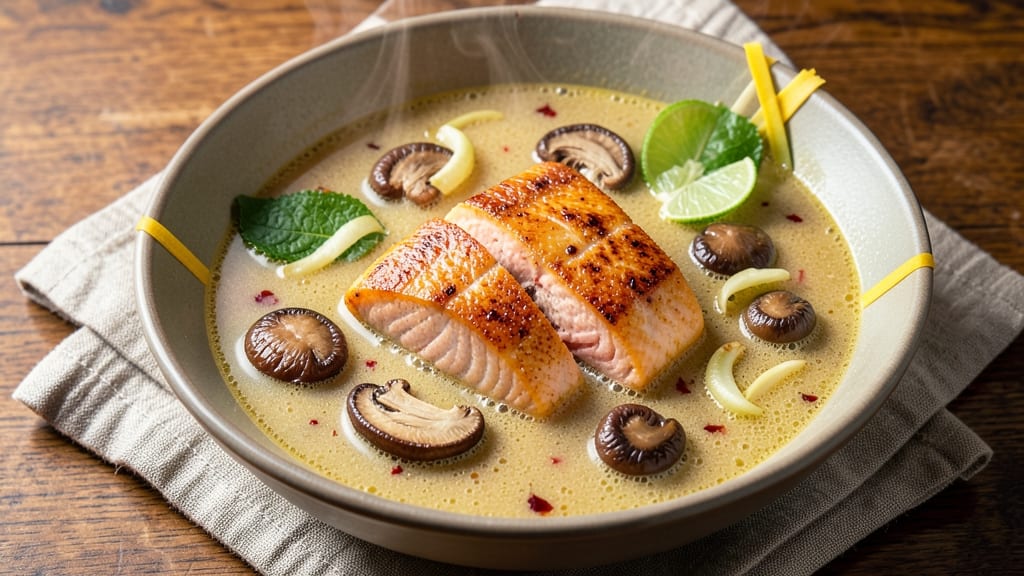
This Asian salmon soup recipe transforms simple ingredients into a fragrant, umami-rich bowl that balances delicate fish with bold aromatics. The secret lies in slow-simmered lemongrass and ginger broth, where salmon fillets cook just until tender—never overpowering the bright, herbal base.
I developed this after years of testing regional techniques, blending Thai-inspired heat with Japanese silkiness through silky egg ribbons that melt on the tongue.
The broth builds depth through a two-stage simmer: first caramelizing garlic and shallots, then infusing with lemongrass, galangal, and kaffir lime leaves for that signature aromatic punch. Fresh turmeric and chili paste add warmth without overpowering, while coconut milk introduces creamy richness.
The salmon, poached in the broth, absorbs these flavors without drying out—foolproof for home cooks who dread fish overcooking.
What makes this dish special is the textural contrast: crisp shiitake mushrooms, chewy rice noodles, and the delicate collapse of raw egg ribbons (cooked in the hot broth) create layers that elevate each spoonful.
The final touch—thinly sliced scallions and cilantro—adds freshness that cuts through the richness. This isn't just soup; it's a restaurant-quality experience that transports you to a bustling Asian street market.
Perfect for weeknight dinners or special occasions, this recipe scales effortlessly and reheats beautifully. The broth freezes well, so you can prep ahead and assemble when ready. Let's bring that aromatic, comforting bowl to your table—one simmer at a time.
Ingredients for asian salmon soup
Simple ingredients, restaurant-quality aroma—this soup delivers on both.
| Ingredient | Amount | Notes |
|---|---|---|
| Wild-Caught Salmon Fillets 🐟 | 12 oz | Skin-on for texture, center-cut preferred |
| Fresh Lemongrass Stalks 🌿 | 3 whole | Bruised lightly for aroma, tough outer leaves removed |
| Fresh Galangal 🌿 | 1 piece | Substitute ginger if unavailable (½ tsp ground) |
| Fresh Ginger Root 🧄 | 2 tbsp | Finely minced, peeled |
| Kaffir Lime Leaves 🍃 | 2 whole | Fresh, bruised between palms |
| Fresh Turmeric Root 🧅 | 1 tbsp | Finely grated, vibrant orange color |
| Red Chili Paste 🌶️ | 1 tbsp | Thai or Indonesian brand preferred |
| Garlic Cloves 🧄 | 6 cloves | Minced, not pressed |
| Shallots 🧅 | 3 whole | Thinly sliced, 2 tbsp total |
| Shiitake Mushrooms 🍄 | 8 whole | Fresh, stems removed, caps sliced |
| Rice Noodles 🍜 | 8 oz | Flat or round, soaked per package |
| Large Eggs 🥚 | 4 whole | Fresh, room temperature |
| Coconut Milk 🥥 | 1 cup | Full-fat, canned preferred |
| Vegetable Broth 💧 | 4 cups | Low-sodium, homemade or store-bought |
| Scallions 🧅 | 3 whole | Thinly sliced, white and green parts |
| Cilantro 🌿 | ¼ cup | Chopped, stems included |
| Sesame Oil 🫒 | 1 tsp | Toasted, for finishing |
| Diamond Crystal Kosher Salt 🧂 | 1 ½ tsp | Adjust to taste |
| Black Peppercorns 🌶️ | ½ tsp | Freshly cracked |
The aromatic trio—lemongrass, galangal, and kaffir lime leaves—is non-negotiable for that signature punch. Thai markets carry all three fresh, but Costco or Asian grocery stores stock them too. Look for vibrant green lemongrass (no brown spots) and firm galangal (smells citrusy, not moldy). Fresh turmeric? Trader Joe's sells it pre-peeled—game changer. Skip the powdered stuff here. For the salmon, wild-caught makes a difference in flavor, but any high-quality fillet works. The skin-on version adds texture, but boneless is fine if you prefer ease.
No galangal? Ginger works in a pinch, but the flavor won't be identical—think of it as a backup. Fresh herbs wilt fast, so buy just what you need unless you'll use extras. The red chili paste (like Maesri or Sriracha) adds heat without overpowering. For extra richness, swap half the coconut milk for cashew cream (blend soaked cashews with water). The shiitake mushrooms should be firm with tight caps—avoid slimy stems. And that sesame oil? Use the toasted kind—regular can taste bitter.
Broth keeps for 5 days in the fridge or 3 months frozen—prep ahead and thank future you. Rice noodles soften fast, so soak them separately and drain well before adding. The egg ribbons cook in seconds—keep the broth simmering while you prep them. For leftovers, store broth and noodles separately to avoid mushiness. Reheat gently, adding a splash of water if needed. Garnish with extra cilantro and scallions right before serving—freshness is key.
Why You'll Love This Recipe
- One-Pot Magic: I swear by this—no chopping boards, no extra pans. Toss the salmon, lemongrass, and galangal into a single pot, add water, and let it simmer. The galangal and ginger do all the work while you stir in the kaffir lime leaves at the end. That’s how you make weeknights feel like a spa day.
- Umami Bomb: The moment that wild-caught salmon flakes into the broth? Pure satisfaction. The galangal gives it this earthy, peppery kick, while the lemongrass brightens it up like a citrusy whisper. It’s the kind of flavor that makes you pause mid-sip and think, “Wait, why haven’t I done this sooner?”
- Leftovers That Shine: This soup actually improves the next day. The flavors meld into something richer, and the salmon stays tender—no dry, sad fish here. I’ll be real: I make a big batch on Sundays just to reheat portions all week. (Yes, even on a Tuesday night.)
- Budget-Friendly Luxury: You don’t need fancy ingredients to pull this off—just a few stalks of lemongrass and a knob of galangal (which lasts ages in the freezer). The salmon feels special, but the broth is so flavor-packed, you’ll forget you’re not at a five-star spot. Honestly, it’s my go-to when I want to splurge without breaking the bank.
Step-by-step instructions for fragrant lemongrass-ginger salmon soup
Here's the method for a silky, aromatic broth with delicate egg ribbons and perfectly poached salmon.
Build the Fragrant Broth Base
In a large pot, combine the 4 cups vegetable broth, 1 cup coconut milk, 2 tbsp fresh ginger root, 1 tbsp red chili paste, 6 cloves garlic, and 3 whole shallots. Bring to a gentle simmer over medium heat for 10 minutes, allowing the aromatics to infuse deeply into the liquid.
While the broth heats, prepare the aromatic bundle by bruising the 3 whole lemongrass stalks and 2 whole kaffir lime leaves between your palms. Add this bundle along with the 1 piece fresh galangal and 1 tbsp fresh turmeric root to the pot. Simmer for another 10 minutes - you'll notice the broth develop a vibrant golden hue and an intoxicating citrusy aroma. This is where the magic happens: the turmeric adds color, lemongrass brings brightness, and galangal delivers that signature Thai warmth.
Cook the Mushrooms and Noodles
Add the 8 whole shiitake mushrooms (stems removed, caps sliced) to the simmering broth and cook for 5-7 minutes until they've softened and absorbed the flavors. Remove the lemongrass bundle and galangal piece, but keep the kaffir lime leaves in for subtle aroma.
Drain and rinse the 8 oz rice noodles according to package instructions, then add them to the broth. Let them cook for 3-4 minutes until just tender - they'll finish cooking in the hot soup. The noodles should be al dente, not mushy, so they hold their shape when served. This is crucial for texture contrast in the final dish.
Poach the Salmon and Prepare Egg Ribbons
In a separate small pot, bring 2 cups water to a gentle simmer. Crack the 4 whole large eggs into a bowl, then slowly drizzle in 1 cup cold water while whisking vigorously. This creates silky egg ribbons when cooked properly.
Add the 12 oz wild-caught salmon fillets to the simmering broth and cook for 4-5 minutes on each side until just opaque in the center. The salmon should be delicate but still firm to the touch. Meanwhile, heat a nonstick skillet over low heat and carefully pour in the egg mixture. Let it cook undisturbed for 1-2 minutes until it forms delicate ribbons that can be easily lifted with a spatula.
Finish and Assemble the Soup
Remove the salmon from the broth and gently fold in the egg ribbons. Season the entire soup with 1.5 tsp diamond crystal kosher salt and 0.5 tsp black peppercorns, adjusting to taste. The broth should be seasoned but not salty - the richness of the coconut milk and salmon will balance the flavors.
Divide the soup among bowls, placing one salmon fillet in each. Garnish with 3 whole scallions (thinly sliced) and 0.25 cup cilantro, finishing with a drizzle of 1 tsp sesame oil. The contrast of textures - silky egg ribbons, tender salmon, chewy noodles - with the fragrant broth creates a harmonious bite that's both comforting and exciting.
Pro Tips For Making Asian Salmon Soup
- Bruise the Galangal: Run the galangal root against the edge of your knife a few times before slicing—it releases oils that make the soup’s aroma explode. I used to just chop it raw, and the flavor was always half as strong.
- Simmer Low and Slow: Once the broth starts, keep it at a bare simmer—no rolling boil. Salmon cooks fast, and you’ll end up with rubbery flesh if you rush it. A gentle bubble keeps the broth clear and the salmon tender.
- Toast the Kaffir Lime: Lightly char the lime leaves over a gas flame for 10 seconds before adding them. It deepens their citrusy notes without bitterness. (Yes, even if you’re impatient like me.)
- Prep Lemongrass Right: Trim the tough lower inch off each stalk, then pound the rest with the flat side of your knife—this breaks down fibers and infuses the broth faster. Skipping this step means you’re missing half the flavor.
Troubleshooting great asian salmon soup
Broth Too Weak?
If your broth lacks depth, it’s likely because the aromatics didn’t infuse long enough. Simmer the base (broth, coconut milk, ginger, garlic, and shallots) for an extra 5-10 minutes before adding lemongrass, galangal, or turmeric.
The longer these ingredients steep, the more complex the flavor—think 20-25 minutes total for a robust base. Also, reduce the broth slightly (uncovered, over medium heat) to concentrate the flavors. 💫
Salmon Overcooking
Salmon turns rubbery when overcooked, but this soup’s gentle simmer prevents that. Use a thermometer—remove the fillets when they hit 125-130°F internal temperature (they’ll carry over to 135°F).
For extra insurance, poach the salmon in the broth for just 3-4 minutes per side, then let it rest in the warm broth off heat for 2 minutes before serving. Skin-on fillets stay moister longer.
Egg Ribbons Failing?
If your egg ribbons turn out gummy or break apart, the issue is usually heat or water temperature. Use fresh, room-temperature eggs and cold water when whisking—the contrast creates silky strands.
Cook the egg mixture over low heat (not medium) in a nonstick skillet, and do not stir—let it set undisturbed for 1-2 minutes. If the broth isn’t hot enough when adding the ribbons, they’ll curdle. Keep the broth at a gentle simmer (not a rolling boil).
Noodles Mushy?
Overcooked noodles ruin the texture contrast. Soak them separately (per package instructions) and drain well before adding to the broth. Then, cook them in the hot soup for just 2-3 minutes—they’ll finish cooking from the residual heat.
For extra chew, rinse the noodles under cold water after soaking to stop the cooking process temporarily. Also, don’t overfill the pot—crowded noodles steam instead of simmer.
Broth Too Salty?
If the broth tastes overly salty, it’s likely from the vegetable broth or coconut milk. To fix it, add 1-2 ice cubes while stirring—they’ll dilute the salt without thinning the broth. Alternatively, stir in 1-2 tbsp cold water or a splash of fresh coconut milk (if using canned).
For future batches, taste the broth early (after 10 minutes of simmering) and adjust salt gradually—it’s easier to add more later than correct oversalting. 🧂
Galangal Substitute Issues
If you swapped ginger for galangal and the flavor feels off, it’s because ginger lacks galangal’s citrusy, peppery depth. For a closer match, use ½ tsp ground galangal powder (if available) or combine 1 tbsp ginger + ½ tsp lemon zest + a pinch of black pepper.
Alternatively, add 1 tsp coriander seeds (toasted and ground) to mimic galangal’s aromatic complexity. The key is balancing the brightness (lemon zest) and warmth (ginger + pepper).
Nutrition facts
Frequently asked questions
Can I make this soup without galangal?
Galangal adds depth, but you can substitute 1 tbsp fresh ginger + ½ tsp lemon zest + pinch of black pepper for a similar citrusy warmth. For extra complexity, toast 1 tsp coriander seeds and grind them into the broth. The flavor won't be identical, but it'll still taste aromatic and balanced.
How do I store leftovers?
Store the broth and salmon separately in airtight containers for up to 3 days in the fridge. Reheat the broth gently, then add the salmon just before serving to keep it moist. The egg ribbons and noodles are best eaten fresh, but you can reheat them separately in a dry pan for 1-2 minutes if needed. For longer storage, freeze the broth alone for up to 3 months.
Can I use frozen salmon?
Yes, but thaw it completely in the fridge first (overnight works best). Pat the fillets dry before adding to the broth to prevent the broth from turning cloudy. Frozen salmon may release more water, so reduce the simmering time to 3 minutes per side to avoid overcooking. The texture will still be tender if handled properly.
What's the best way to make this vegetarian?
Replace the salmon with 12 oz firm tofu or king oyster mushrooms, both of which hold up well in broth. For extra protein, add ½ cup edamame or chickpeas. Keep the egg ribbons for texture, but use vegetable broth and ensure all ingredients are plant-based. The dish will still be rich and satisfying with these swaps.
Why does my broth look cloudy?
Cloudiness usually means the broth needs more time to clarify or the salmon was added too early. Strain the broth through a fine-mesh sieve to remove any impurities, then simmer uncovered for 5-10 minutes to let the fat rise and skim it off. If using frozen salmon, pat it very dry before adding to prevent excess water from clouding the broth.