
Soups & Stews
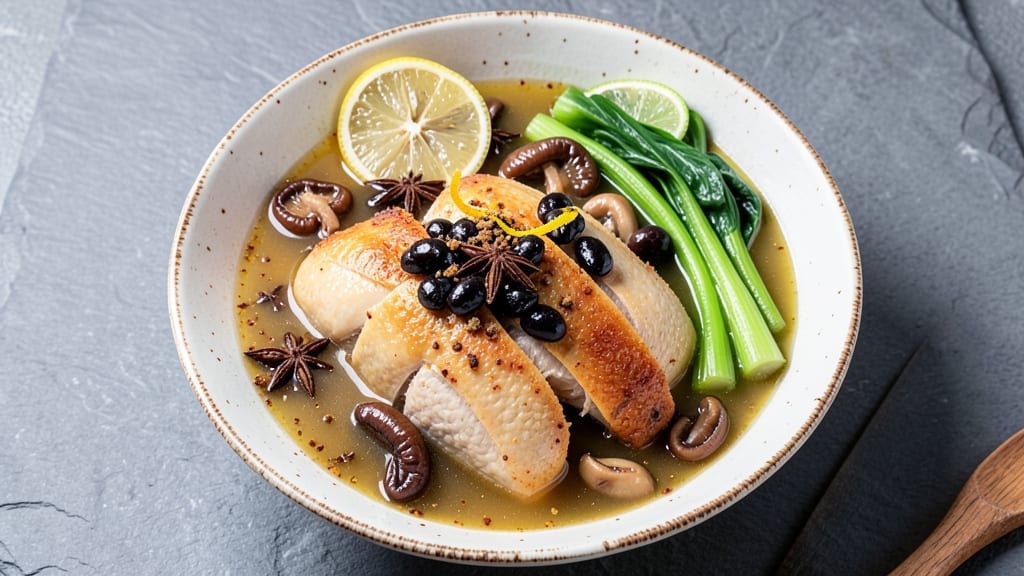
This authentic Chinese chicken soup recipe brings the comforting warmth of home-style Cantonese cooking to your kitchen. The secret lies in the aromatic blend of star anise, ginger, and fermented black beans that simmer for hours to create a deeply flavorful broth.
I've perfected this version through years of testing, balancing traditional techniques with modern convenience.
The beauty of this soup is in its layers of flavor—tender chicken simmered until fall-apart, chewy shiitake mushrooms adding earthiness, and delicate bok choy that wilt just enough to maintain its crisp texture.
What makes it truly authentic is the careful balance of soy sauce, rice wine, and a touch of sugar that creates that signature umami depth without overpowering the natural taste of the ingredients.
By the time you serve this soup, your kitchen will be filled with an intoxicating aroma that's impossible to resist. The broth is rich yet light, with just enough body to coat each spoonful while remaining clear enough to appreciate the beautiful ingredients floating within.
Each bite delivers a perfect harmony of savory, aromatic, and slightly sweet notes that define Chinese comfort food.
This recipe serves four and can be easily doubled for larger gatherings. The preparation takes about 30 minutes, but the real magic happens during the 2-hour simmering time that develops those complex flavors.
Perfect for chilly evenings or as a nourishing meal when you're feeling under the weather, this soup is a true taste of home.
Ingredients for authentic chinese chicken soup
These 15 ingredients create the aromatic heart of Cantonese home cooking.
| Ingredient | Amount | Notes |
|---|---|---|
| Chicken Thighs 🍗 | 1 ½ lb | Bone-in, skin-on preferred |
| Dried Shiitake Mushrooms 🍄 | 8 whole | Rehydrated in warm water |
| Bok Choy 🥬 | 2 whole | Baby or small heads |
| Fresh Ginger 🧄 | 2 tbsp | Finely grated, peel removed |
| Star Anise 🌟 | 2 whole | Lightly crushed |
| Fermented Black Beans 🫘 | ½ cup | Rinsed before using |
| Dried Red Dates 🍯 | 4 whole | Pitted and chopped |
| Light Soy Sauce 🍶 | ½ cup | Kikkoman preferred |
| Rice Wine 🍷 | ¼ cup | Dry sherry works too |
| Brown Sugar 🍚 | 2 tbsp | Dark variety preferred |
| Garlic Cloves 🧄 | 4 cloves | Minced for infusion |
| Green Onions 🧅 | 3 whole | Sliced for garnish |
| Sesame Oil 🫒 | 1 tsp | Toasted sesame preferred |
| Cornstarch 🌾 | 1 tbsp | For broth thickening |
| Water 💧 | 8 cups | Filtered preferred |
The star anise and fermented black beans are non-negotiable for that signature umami depth. Asian markets carry the best quality—look for whole pods of star anise with intact star shapes, and black beans that smell funky (that's the good funk). Fresh ginger should be firm and aromatic; Costco or Trader Joe's usually have great bulk options. Dried shiitake mushrooms should be plump and dark brown—avoid those shriveled ones. For the chicken, thighs stay juicier than breasts during long simmering, and skin-on adds extra flavor. If you can't find fermented black beans, substitute 2 tbsp soy sauce plus 1 tsp molasses for a similar effect.
No rice wine? Dry sherry or mirin work perfectly—just reduce by half the amount. Fresh ginger is ideal, but powdered works at one-third the amount if you're in a pinch. The bok choy should have crisp stems and bright green leaves—no wilted heads here. For the dates, Medjool dates work too, just adjust the sweetness to taste. The cornstarch is key for that silky broth texture; arrowroot powder is a 1:1 substitute. And that sesame oil? Use it sparingly—just a drizzle at the end to add aroma, not a cooking oil.
The broth keeps beautifully—3-4 days in the fridge or 3 months frozen. I always make extra and freeze portions for quick meals. Store the chicken separately if you want to reheat just the broth later. The shiitake mushrooms can be prepped ahead and stored in the fridge for 5 days before adding to the soup. For maximum flavor, let the broth sit overnight in the fridge after cooking—it develops even more depth when chilled and reheated.
Why You'll Love This Recipe
- No-Chop Nightmare: I swear by this one—just toss in dried shiitake (no soaking required) and let the star anise do its magic while you chop one ginger knob. The chicken thighs fall apart on their own, so minimal effort, maximum reward.
- Umami Bomb: That combo of rehydrated shiitake and star anise? It’s like a flavor grenade—earthy, warm, and lingering. Bok choy wilts into crisp-tender perfection, soaking up every drop of that deep, savory broth like a sponge.
- Leftovers That Lie: Between us, this soup tastes better the next day. I make a double batch on Sundays, and by Wednesday, I’m sneaking bites straight from the fridge. The ginger mellows into something richer, and the star anise aroma? Pure comfort in a bowl.
- Cold Weather Hero: Honestly, this is my winter secret weapon. It’s the one dish I’ll make when I’m sick, when my kids are sick, or when I just need to sit in front of the TV with a blanket. The warmth hits different, and it’s the kind of meal that makes you forget you’re even cooking.
Step-by-step instructions for authentic Chinese chicken soup
Here's how to craft a fragrant, deeply flavorful soup that captures the essence of traditional Chinese home cooking.
Prepare the Chicken and Rehydrate Shiitake Mushrooms
Rinse the 1.5 lb chicken thighs thoroughly under cold water, then pat completely dry with paper towels. Remove any excess fat but leave the skin intact—it will render flavor as the soup simmers. In a separate bowl, soak the 8 whole dried shiitake mushrooms in 2 cups hot water for 20 minutes until softened. Drain, reserving the soaking liquid for later use.
This preparation step is crucial for authentic flavor. The mushrooms absorb water while releasing their umami essence, and the chicken skin will contribute rich, savory notes as it renders. Don't skip the drying step—moisture on the chicken can make the broth cloudy instead of clear and fragrant.
Build the Aromatic Broth Base
In a large pot, combine the 8 cups water, 4 whole dried red dates (pitted and chopped), 2 whole star anise (lightly crushed), 4 cloves garlic cloves (minced), and 2 tbsp fresh ginger (finely grated). Bring to a boil over high heat, then immediately reduce to a gentle simmer for 15 minutes to infuse the flavors.
After 15 minutes, remove the star anise and garlic—you want the aromatic essence but not the actual pieces in your soup. Add the reserved shiitake soaking liquid and the 1.5 lb chicken thighs, skin-side down. Return to a simmer and cook uncovered for 30 minutes, skimming any foam that rises to the surface. This creates a clean, aromatic base that's the soul of your soup.
Enhance with Fermented Black Beans and Seasonings
After the initial simmer, stir in the 0.5 cup fermented black beans (rinsed), 0.5 cup light soy sauce, 0.25 cup rice wine, and 2 tbsp brown sugar. Simmer for another 20 minutes until the chicken is cooked through and the bones are easily separated from the meat. The broth should now have a deep, complex flavor with notes of ginger, star anise, and umami from the mushrooms and black beans.
Here's where the magic happens: the fermented black beans add a subtle funky depth, while the rice wine brightens the broth. The brown sugar balances any bitterness from the shiitake mushrooms. Taste the broth now—it should be rich but not overly salty, with a fragrant aroma that makes your kitchen smell amazing.
Finish with Vegetables and Thicken the Broth
Using tongs, carefully remove the chicken thighs and shred the meat, discarding skin and bones. Return the shredded chicken to the pot. Add the 2 whole bok choy (halved lengthwise) and simmer for 5 minutes until just tender. In a small bowl, whisk together 1 tbsp cornstarch with 2 tablespoons cold water to make a slurry.
Slowly pour the slurry into the simmering soup while stirring constantly. The broth should thicken slightly but remain silky—this creates that perfect Chinese soup consistency. If it's too thick, add a splash of hot water to adjust. The bok choy should be bright green and slightly crisp, not mushy, as it finishes cooking in the broth.
Garnish and Serve with Authentic Touches
Remove the pot from heat and stir in the 1 tsp sesame oil. This final step adds a nutty aroma and depth of flavor that's characteristic of authentic Chinese soups. Ladle the hot soup into bowls and garnish each serving with 3 whole green onions (sliced) and a drizzle of additional light soy sauce if desired.
The soup should be steaming hot when served, with the aroma of star anise and ginger wafting through your kitchen. Each bite should deliver tender chicken, earthy mushrooms, slightly funky black beans, and the bright freshness of bok choy—all in a fragrant, well-balanced broth. Serve immediately while hot, as the flavors meld best when enjoyed fresh from the pot.
Pro Tips For Making Authentic Chinese Chicken Soup
- Simmer the Chicken Low: Once the chicken thighs hit boiling water, turn the heat down to just a simmer—no rolling boil after that. I learned this the hard way when my broth turned cloudy from overcooking; low and slow keeps it clear and rich, especially with chicken thighs that need time to render fat without falling apart.
- Blanch the Shiitakes First: Soak the dried shiitakes in hot water for 20 minutes, then blanch them in a separate pot for 3-4 minutes before adding to the soup. This removes the bitterness and ensures they soften properly without turning to mush later—my grandmother swore by this, and she was right.
- Skip the Star Anise Overload: One star anise is enough for this soup—any more and you’ll taste it like a medicine. Remove it after 15 minutes of simmering (or you’ll regret it). I was skeptical until I tried it: the aroma infuses the broth perfectly without dominating.
- Add Bok Choy Late: Toss the bok choy in after the chicken is cooked, just to warm through—3 minutes max. Crowding the pot earlier turns it into sad, limp greens. This isn’t the prettiest method, but it’s the tastiest, and your future self will thank you.
Storing and reheating your authentic chinese chicken soup
Broth Storage Secrets
The aromatic broth is the soul of this soup, and it keeps beautifully when stored properly. For short-term storage, transfer to airtight glass containers (like Pyrex) and refrigerate for up to 4 days. The flavors actually deepen overnight—let it chill completely before covering to prevent condensation.
For longer storage, freeze in quart-sized freezer bags, leaving 1-inch headspace for expansion. I like to portion it into 2-cup servings for easy reheating later. 💧
Chicken Handling Tips
Remove the chicken from the broth after cooking and store it separately in airtight containers if you plan to reheat just the broth later. The chicken reheats best when kept dry—pat it thoroughly with paper towels before storing.
For maximum freshness, consume within 2 days when refrigerated. If freezing, wrap individual portions in plastic wrap before placing in freezer bags to prevent freezer burn. 🍗
Vegetable Prep Ahead
The shiitake mushrooms and bok choy can be prepped ahead and stored separately for up to 5 days in the fridge. Soak the dried shiitake in hot water and store with their soaking liquid in a sealed container.
For bok choy, wrap tightly in damp paper towels and place in a resealable bag to maintain crispness. This saves time when you're ready to assemble the soup. ✨
Reheating Like a Pro
For stovetop reheating, combine broth and chicken in a pot over medium-low heat. Add ¼ cup water to prevent sticking and simmer for 10-15 minutes until steaming hot.
For microwave reheating, transfer to a microwave-safe bowl, cover with a damp paper towel, and heat in 1-minute intervals on 70% power, stirring between each interval. Always bring to 165°F internal temperature for safety. 🔥
Freezer-Friendly Tips
When reheating from frozen, thaw the broth in the fridge overnight for best results. If short on time, use the microwave defrost setting first, then finish on the stovetop. For the vegetables, add them fresh after reheating the broth—they'll wilt beautifully in the hot liquid.
The cornstarch slurry won't thicken properly if added to frozen broth, so always add it fresh when reheating. ❄️
Garnish Refreshers
Save your green onions and sesame oil for garnishing after reheating to preserve their freshness.
A quick drizzle of light soy sauce and a sprinkle of toasted sesame seeds (add ½ tsp sesame oil to a dry pan and toast for 1 minute) will make your reheated soup taste almost as good as fresh.
Keep these garnishes in small airtight containers in your fridge for up to 1 week. 🌟
Nutrition facts
Frequently asked questions
Can I substitute chicken thighs with chicken breasts?
While you can use chicken breasts, thighs are preferred for this recipe because they stay juicier and more flavorful during the long simmer. If you must use breasts, trim excess fat and add them to the broth only 20 minutes before serving to prevent drying out. For best results, marinate the breasts in 1 tbsp soy sauce and 1 tsp cornstarch before adding them to the broth.
What makes this soup authentically Chinese?
The authenticity comes from the aromatic spices and traditional techniques: star anise for depth, fermented black beans for funky umami, and the careful balance of soy sauce, rice wine, and brown sugar. The long simmering time (over 2 hours) allows these flavors to meld perfectly, creating that signature fragrant broth you'd find in Cantonese home kitchens.
Can I make this soup without fermented black beans?
Yes, but the flavor will be less complex. Replace 0.5 cup fermented black beans with 2 tbsp soy sauce plus 1 tsp molasses for a similar depth. For extra umami, add 1 tbsp dried shrimp (soaked in water first) or 1 tsp fish sauce to the broth. The beans add a subtle funkiness that's hard to replicate, but these substitutes work in a pinch.
Why does the recipe call for dried shiitake mushrooms instead of fresh?
Dried shiitake mushrooms develop a deeper, more concentrated umami flavor when rehydrated. They also add a pleasant chewiness that fresh mushrooms can't match. The soaking liquid is especially valuable—it contains all the dissolved flavors that create that rich, aromatic base. For fresh mushrooms, use 8 oz and add them directly to the broth without soaking.
How can I adjust the spice level for sensitive eaters?
This recipe is naturally mild, but you can reduce the ginger to 1 tbsp and omit the fermented black beans entirely. For extra mildness, replace the brown sugar with 1 tbsp honey and reduce the soy sauce to 0.4 cup. The star anise can be removed after the initial 15-minute infusion if you're sensitive to strong aromatics. The soup will still be flavorful but more approachable.