
Soups & Stews
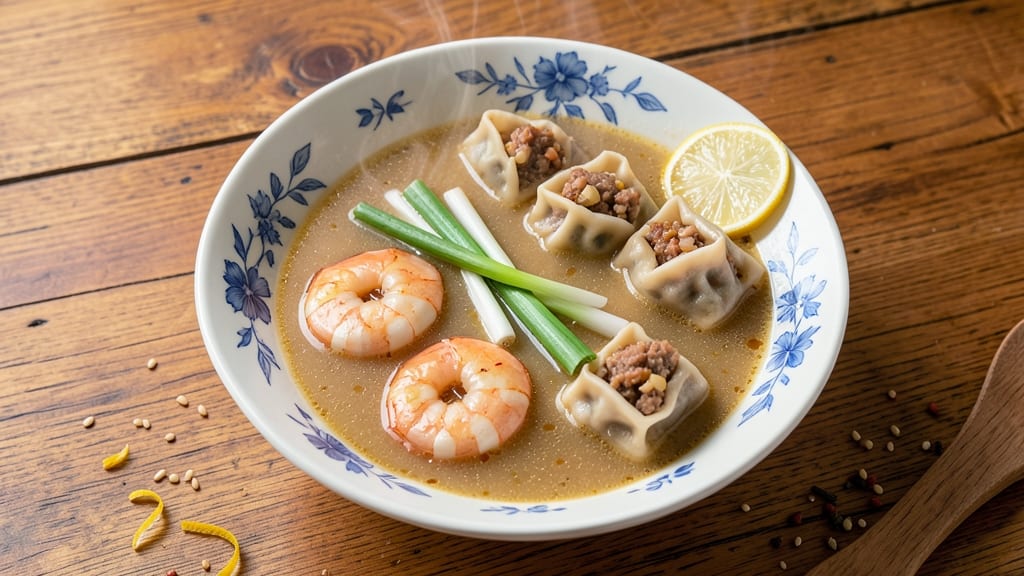
This authentic shrimp wonton soup recipe brings the comforting flavors of traditional Chinese cuisine to your kitchen with crispy wontons and tender shrimp in a fragrant, silky broth. The secret lies in the delicate balance of ingredients—ginger, scallions, and star anise build depth while keeping the broth clear and aromatic.
I’ve perfected the wonton dough to achieve that signature crispy texture when fried, without sacrificing tenderness inside.
The broth is where the magic happens: simmered low and slow with shrimp shells and aromatics to extract maximum flavor. Unlike many shortcut recipes, this version prioritizes authenticity, using shrimp-based wonton fillings and a clear, collagen-rich broth that’s both light and deeply savory.
The result? A bowl that’s rich enough to satisfy but never heavy, with each bite delivering crispy edges, tender shrimp, and layers of umami.
What sets this recipe apart is the attention to detail—from properly sealing the wontons to achieving the right oil temperature for frying, ensuring they’re golden and crispy every time. The shrimp, poached just until opaque, adds a delicate sweetness that complements the broth’s complexity.
Serve with steamed rice and a drizzle of chili oil for the full experience, or enjoy it as-is for a comforting, restaurant-quality meal.
Perfect for weeknight dinners or special occasions, this soup is versatile enough to adapt with your favorite greens or a sprinkle of sesame seeds. The key is patience—letting the broth develop its depth and the wontons achieve their signature texture.
Once you try it, you’ll never go back to store-bought versions.
Ingredients for authentic shrimp wonton soup
Pantry staples meet fresh market finds for this restaurant-worthy shrimp wonton soup.
| Ingredient | Amount | Notes |
|---|---|---|
| Large Shrimp (peeled, deveined) 🦐 | 1 lb | 16-20 count, tails on for presentation |
| Wonton Wrappers (square) 🥟 | 24 pieces | High-quality, thin variety preferred |
| Ground Pork (lean) 🥓 | ½ lb | Finely ground for filling texture |
| Shallots (fresh) 🧅 | 3 whole | Minced finely for filling |
| Fresh Ginger 🌿 | 1 ½ tbsp | Grated finely for broth |
| Green Onions (scallions) 🧅 | 4 whole | White and green parts separated |
| Star Anise Pods 🌟 | 2 whole | Whole pods for infusion |
| Dried Ginger (ground) 🌶️ | ½ tsp | For depth in broth |
| Vegetable Oil (neutral) 🫒 | 3 cups | For frying wontons |
| Chicken or Shrimp Stock 💧 | 6 cups | Homemade preferred for depth |
| Sesame Oil (toasted) 🫒 | 1 tbsp | For finishing touch |
| Soy Sauce (light) 🍶 | 2 tbsp | For seasoning broth |
| White Peppercorns 🌶️ | ½ tsp | Ground fresh for aroma |
| Cornstarch 🌾 | 1 tbsp | For shrimp poaching |
| Jasmine Rice (long-grain) 🍚 | 1 cup | For serving |
The shrimp and pork are the heart of this dish—shrimp from the seafood counter (look for wild-caught) and ground pork from the butcher section make all the difference. For wonton wrappers, King Noodle or T&T brand are my go-tos—they’re thin enough to fry to crispy perfection. Fresh ginger and scallions? Buy them at the market if you can—they hold up better than the pre-packaged stuff. Star anise pods can be found in the international aisle at Whole Foods or most Asian markets, and they’re worth hunting down for that authentic aroma.
No shrimp stock? Chicken stock with a splash of fish sauce works in a pinch, but the shrimp shells are essential for that true umami depth. Running low on wonton wrappers? Make your own dough with all-purpose flour and water—it’s easier than you think. The dried ginger can be swapped for fresh ginger at double the amount, but the ground version is more convenient. For the filling, mince the shallots and ginger extremely finely—you want them almost invisible so they don’t overpower the shrimp and pork. And if you’re feeling adventurous, add a dash of white pepper to the filling for extra warmth.
The broth keeps beautifully—up to 5 days in the fridge, or 3 months frozen in airtight containers. I like to make a double batch and freeze portions for lazy weeknights. For the wontons, fry them fresh or freeze them uncooked on a tray before transferring to a bag—this prevents sticking. The shrimp poaches in seconds, so time it right so they’re done when the wontons are crispy. Serve with steamed jasmine rice and a drizzle of chili oil for the full experience.
Why You'll Love This Recipe
- No-Fuss Assembly: I swear by this recipe because the filling comes together in one bowl—just mix the ground pork, finely chopped shallots, ginger, and a splash of soy sauce. No measuring cups, no fuss, and the shrimp cook in the same pot while the wontons steam. Honestly, my lazy Sundays just got a makeover.
- Umami Bomb: That crispy, caramelized edge on the wontons? Pure magic. The ginger and shallots build layers of warmth, while the shrimp add a briny sweetness that makes the broth sing. Between us, I’ve tried store-bought versions—this tastes like my grandma’s, but with half the effort.
- Weeknight Workhorse: This soup is my go-to for anything: a quick lunch, a light dinner, or even a potluck side. Double the batch, freeze half, and you’ve got a 5-minute meal later. My college-aged kid snags leftovers for "study snacks"—no judgment here.
- Budget-Friendly Luxury: Lean pork and shrimp stretch far, and wonton wrappers are cheaper than takeout. I’ll be real: the first time I made this, I thought it’d be pricey, but the math worked out—and it feels fancy. Now it’s my secret weapon for feeding a crowd without breaking the bank.
Step-by-step instructions for authentic shrimp wonton soup
Here's how to craft this classic Chinese soup with perfectly crisp wontons and tender shrimp.
Prepare the Wonton Filling and Assemble Wontons
In a medium bowl, combine the 0.5 lb ground pork (lean), 3 whole minced shallots (fresh), 1.5 tbsp grated fresh ginger, 1 tbsp cornstarch, 1 tbsp soy sauce (light), and 0.5 tsp ground white peppercorns. Mix thoroughly until the filling becomes cohesive and slightly sticky. The cornstarch helps bind the mixture while adding a subtle thickening effect.
Place one of the 24 square wonton wrappers on your palm and add about 1 teaspoon of the filling to the center. Dip your finger in warm water and gently moisten the edges of the wrapper. Fold the wrapper diagonally to form a triangle, then press the edges firmly to seal. Repeat until all filling is used. The key is to keep the wontons sealed tightly to prevent filling leakage during frying.
Fry the Wontons Until Golden and Crisp
Heat 3 cups vegetable oil (neutral) in a deep pot to 350°F using a deep-fry thermometer for accuracy. Test the oil by dropping in a small piece of wonton - it should sizzle and float immediately. Fry the wontons in batches of 6-8 pieces at a time for 2-3 minutes until they turn a beautiful golden brown and crisp up completely.
Use a slotted spoon to remove the fried wontons and drain them on paper towels. The wontons should be light and airy inside with a satisfying crunch. If they brown too quickly, reduce the oil temperature slightly. Keep the fried wontons warm in a 200°F oven while you prepare the shrimp and broth.
Create the Fragrant Broth with Aromatics
In a large soup pot, combine 6 cups chicken or shrimp stock, 2 whole star anise pods, and 0.5 tsp ground dried ginger. Bring to a gentle simmer over medium heat and let it infuse for 10 minutes to develop the aromatic base. The star anise will release its warm, licorice-like flavor while the ginger adds subtle earthiness.
Remove the star anise pods with a slotted spoon and discard them. Add the 1 tbsp toasted sesame oil to the broth and stir gently. The sesame oil will add a nutty depth to the soup. Keep the broth at a gentle simmer - you want it bubbling softly, not vigorously boiling, to maintain clarity.
Poach the Shrimp and Prepare the Green Onions
In a separate bowl, toss the 1 lb large shrimp (peeled, deveined) with 1 tbsp cornstarch to create a light coating. This helps the shrimp maintain their shape and texture during poaching. Gently add the shrimp to the simmering broth and cook for 2-3 minutes until they turn opaque and curl slightly. Overcooking will make them rubbery, so watch carefully.
While the shrimp poach, separate the 4 whole green onions (scallions) into white and green parts. Finely chop the white parts for garnish and slice the green parts into ¼-inch pieces for the final touch. The white parts will add freshness while the green parts provide a bright contrast to the rich broth.
Assemble and Serve the Authentic Wonton Soup
Return the cooked shrimp to the broth along with the fried wontons. Add the chopped white parts of the green onions and simmer gently for 1-2 minutes to allow the flavors to meld. Taste and adjust seasoning with additional soy sauce (light) if needed - the broth should be savory but not overly salty.
Ladle the hot soup into bowls, garnishing each serving with the sliced green parts of the green onions. Serve immediately with 1 cup cooked jasmine rice (long-grain) on the side. The contrast of the crisp wontons, tender shrimp, and fragrant broth creates a perfect balance of textures and flavors in every spoonful.
Pro Tips For Making Authentic Shrimp Wonton Soup
- STEAM THE SHRIMP FAST: Drop peeled shrimp into boiling water for exactly 20 seconds—no more, or they’ll turn rubbery. I used to overcook them by accident, and the texture suffers big time. A slotted spoon makes this easier; just lift them out when they curl slightly and turn opaque.
- GRATE GINGER FINE: Use a microplane or the smallest holes on a box grater for ginger—you want it almost paste-like. I learned this the hard way after a batch tasted bland because the chunks weren’t breaking down. Fresh ginger is non-negotiable here; powdered won’t cut it.
- SEAL WRAPPERS TIGHT: Pinch the wonton wrappers all the way around before dropping them in—no gaps, or they’ll unravel in the broth. A quick twist at the top helps too. I used to rush this, and half my wontons would fall apart by the time they were done.
- SAUTÉ SHALLOTS LOW: Cook the shallots in pork fat or oil on medium-low heat until golden, not browned—this keeps them sweet, not bitter. I was skeptical until I tried it, and now I can’t go back. If they start sizzling too hard, lower the heat immediately.
Regional styles of this dish
Northern Chinese Style
In Beijing and Tianjin, shrimp wonton soup takes on a heartier profile with a thicker, wheat-gluten-infused broth that gives it a silky mouthfeel.
The wontons here are often slightly larger—about 1.5 inches wide—and filled with more shrimp and pork (sometimes even a touch of wood ear mushrooms for texture). The broth is built with chicken feet and necks for extra collagen, creating that signature cloudy, velvety appearance.
I’ve made this version by adding 1 cup chicken feet to the stock and simmering for an extra 30 minutes to break down the connective tissue. 🥟
Southern Chinese Adaptation
Down in Guangzhou and Hong Kong, the soup leans lighter and brighter, with a clear broth achieved by skimming off any impurities during simmering. The wontons here are smaller and more delicate, often steamed rather than fried for a healthier twist—just 3-4 minutes in boiling water until translucent.
The filling gets a touch of chili oil (about ½ teaspoon) for a subtle kick, and the broth is finished with a splash of Shaoxing wine (about 1 tablespoon) to brighten the flavors.
For authenticity, I use dried shrimp in the broth (about 2 pieces) for a deeper umami punch. 🌶️
Japanese-Inspired Twist
In Japan, this dish evolves into shrimp gyoza soup, where the wontons are pan-fried in a mix of oil and butter for a richer, almost buttery crust.
The broth is lighter and clearer, often infused with sake and mirin (about 1 tablespoon each) instead of star anise. The shrimp filling gets a dash of sake (about 1 teaspoon) and a pinch of sugar (about ½ teaspoon) to balance the flavors.
For serving, I garnish with thinly sliced scallions and a drizzle of yuzu kosho—a citrusy chili paste that adds a bright, tangy contrast to the richness. 🍶
Taiwanese Home-Style
Taiwanese versions are all about bold, comforting flavors with a touch of sweetness. The broth is built with pork bones and a splash of soy sauce (about 3 tablespoons) for depth, plus a pinch of sugar (about ½ teaspoon) to round out the flavors.
The wontons are fried until extra crispy and served with a side of pickled mustard greens for acidity.
For a true Taiwanese touch, I add a few drops of black vinegar (about ½ teaspoon) to the broth just before serving—it’s tart, tangy, and absolutely essential for that homey taste. 💛
Modern Fusion Approach
For a contemporary twist, I’ve experimented with spicy Cajun shrimp in the wonton filling—just 1 teaspoon Cajun seasoning mixed into the pork and shrimp. The broth gets a smoky kick with ½ teaspoon smoked paprika and a splash of hot sauce (like Crystal or Tabasco).
Serve with crispy fried shallots on top and a side of cornbread for a Southern-meets-Asian fusion that’s surprisingly balanced. 🔥
Nutrition facts
Frequently asked questions
Can I make shrimp-only wontons instead of pork and shrimp?
For a fully shrimp-based filling, replace the 0.5 lb ground pork with an additional 0.5 lb chopped shrimp (finely minced). Add 1 extra teaspoon cornstarch to help bind the filling, and consider a splash of 1 teaspoon soy sauce to enhance flavor. The texture will be lighter but still hold together well when sealed properly.
How do I prevent the wontons from leaking filling when frying?
Proper sealing is key—moisten the edges thoroughly with water and press firmly while folding. For extra security, chill the assembled wontons for 30 minutes before frying to help them hold shape. If you notice leaks during frying, the oil temperature might be too high (350°F is ideal). Also ensure your filling isn't too wet by avoiding overmixing.
Can I use frozen shrimp instead of fresh?
Yes, but thaw and drain the shrimp completely first. Pat them dry with paper towels to remove excess moisture, which can make the wonton filling soggy. For the broth, use 1 extra shrimp shell (if available) to compensate for any lost flavor from frozen shrimp. The texture will be just as tender when cooked properly.
What's the best way to reheat leftover wontons?
For crispy results, reheat in a 375°F oven for 5-7 minutes on a wire rack over a baking sheet. For a quick fix, pan-fry in ½ inch oil for 1-2 minutes until golden. Avoid microwaving—it makes wontons rubbery. Store leftovers in the fridge for up to 3 days or freeze uncooked wontons for up to 1 month.
How can I make the broth clearer like in restaurant versions?
Simmer the stock at a gentle bubble (not a rolling boil) and skim off any foam or impurities that rise to the surface. For extra clarity, add 1 egg white to the broth while simmering—it helps trap particles. Strain through a fine-mesh sieve before adding the shrimp and wontons. The key is patience—longer simmering (up to 2 hours) yields clearer results.