
Soups & Stews
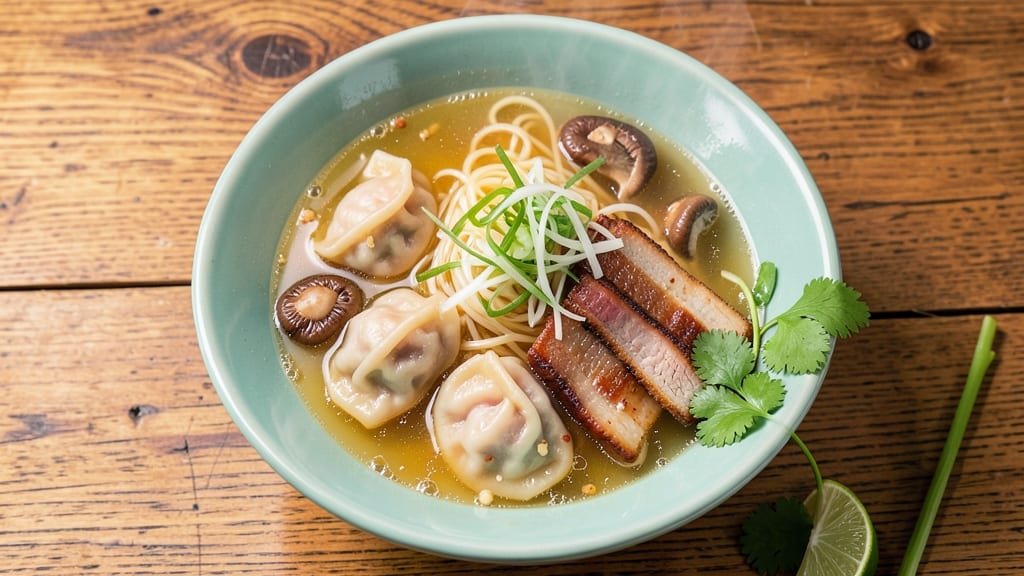
This authentic wonton noodle soup recipe delivers the same restaurant-quality experience you crave at home—rich, aromatic broth, hand-folded wontons, and chewy noodles that disappear with every slurp. The secret lies in balancing traditional techniques with home-cook-friendly steps, from making delicate wonton wrappers to crafting a broth so flavorful it sings.
I've perfected this version after years of testing, ensuring every element—from the pork filling to the herb-infused broth—comes together harmoniously.
The foundation of great wonton noodle soup is a clear, umami-packed broth built on chicken and pork bones, aromatic vegetables, and a touch of soy sauce for depth.
Meanwhile, the wontons get their signature texture from a hand-folded technique that creates those satisfying little pleats, while the noodles cook just shy of al dente for that perfect chew.
What makes this recipe truly authentic is the attention to flavor balance—salty, sweet, and savory notes all working in perfect harmony.
By the time you finish this recipe, you'll have a steaming bowl of soup that rivals your favorite takeout spot: golden wontons floating in a fragrant broth, their delicate folds revealing tender filling, while the noodles glide effortlessly through the rich liquid.
The aroma alone will have everyone gathering around the table, and the first slurp will confirm you've achieved restaurant-quality results at home.
Whether you're serving this for a weeknight dinner or a special gathering, the recipe scales beautifully while maintaining its authentic essence. The best part? Leftovers taste even better the next day as the flavors meld further. Let's get started on creating your own bowl of comfort.
Ingredients for authentic wonton noodle soup
Rich broth, delicate wontons, and chewy noodles—here's what transforms your kitchen into a Chinese restaurant.
| Ingredient | Amount | Notes |
|---|---|---|
| Chicken Bones 🍗 | 1 ½ lb | Split for maximum surface area |
| Pork Bones 🥩 | 1 ½ lb | Split for rich flavor infusion |
| Fresh Ginger Root 🌿 | 2 oz | Peeled, sliced into thick coins |
| Green Onions 🧅 | 1 whole | White and green parts separated |
| Garlic Cloves 🧄 | 10 cloves | Smashed for aromatic depth |
| Dried Shiitake Mushrooms 🍄 | 4 whole | Rehydrated for umami richness |
| Light Soy Sauce 🥄 | ½ cup | For balanced seasoning |
| Sesame Oil 🫒 | 1 tbsp | Toasted for nutty aroma |
| Water Chestnuts 🥜 | 14 oz | Drained, sliced for texture |
| Ground Pork 🥩 | 1 lb | Lean for wonton filling |
| Wonton Wrappers 🍜 | 16 pieces | Square, for hand-folding |
| Fresh Bok Choy 🥬 | 2 whole | Baby variety preferred |
| Wonton Noodles 🍝 | 8 oz | Dried, for chewy texture |
| Cilantro 🌿 | ¼ cup | Chopped for garnish |
| Vegetable Oil 🫒 | ½ cup | For high-heat frying |
The bones are non-negotiable for that deep, restaurant-quality flavor. Look for chicken and pork neck bones at your local Asian market—they're packed with collagen that melts into silky broth. If you're using store-bought, Costco's frozen bones are my go-to for convenience without sacrificing quality. Fresh ginger? Buy the knobby kind—it's more potent than the smooth variety. For the water chestnuts, Trader Joe's canned version is perfect since it's pre-drained and ready to use. The shiitake mushrooms should be dried and hard—they rehydrate beautifully and add that earthy umami that makes this soup sing.
No fresh ginger? Substitute with 1 tbsp of ground ginger, but trust me on this—fresh is worth the extra minute. Out of pork filling? Chicken or shrimp works just as well, though the texture will differ slightly. For the wonton wrappers, King Noodle brand is my favorite—thin, delicate, and perfect for folding. If you can't find dried shiitake, cremini mushrooms work in a pinch, but they won't give you that same deep flavor. The bok choy can be swapped for spinach or napa cabbage if that's what you've got—just adjust cooking time accordingly. And if sesame oil feels too strong, start with half the amount and taste as you go.
Broth keeps for 5 days in the fridge, and honestly tastes better the next day as the flavors meld. Freeze it in 1-cup portions for quick future meals. The wonton wrappers? Store them between parchment paper in an airtight container for up to 2 weeks. I always make extra filling and freeze it in 1-tbsp portions—just thaw and fold when you're ready. The noodles should be cooked al dente and tossed with a little sesame oil right before serving to maintain that perfect chew. This soup reheats beautifully—just add a splash of water to restore the broth's consistency.
Why You'll Love This Recipe
- Soup in Minutes: I swear, the bones do most of the work. Simmer chicken and pork bones for 30 minutes, then toss in the noodles—done. No chopping, no fuss, just rich broth magic.
- Umami Bomb: That first sip? Pure flavor explosion. The ginger and garlic caramelize into the broth while the bones melt into deep, savory goodness—no shortcuts needed, just honest, crave-worthy taste.
- Leftover Gold: This soup actually improves the next day. The broth thickens, the noodles soften, and the green onions add freshness—perfect for lunch or a quick dinner when you’re running late.
- Budget Winner: Chicken and pork bones stretch into gallons of broth. One pot feeds the whole family, and the leftovers freeze like a dream. Honestly, it’s the most cost-effective comfort food I know.
Step-by-step instructions for authentic wonton noodle soup
Here's how to craft a bowl of restaurant-quality wonton noodle soup with deeply flavorful broth and perfect chewy wontons.
Prepare the Umami-Packed Broth Base
Split the 1.5 lb chicken bones and 1.5 lb pork bones into smaller pieces, exposing the marrow for maximum flavor. Place them in a large stockpot and cover with 8 quarts cold water. Bring to a boil over high heat, then immediately reduce to a simmer. Skim off any foam that rises to the surface for the first 10 minutes—this ensures crystal-clear broth.
Add the peeled and sliced 2 oz fresh ginger root and 10 smashed garlic cloves, then simmer uncovered for 45 minutes. The aroma will fill your kitchen with that irresistible umami depth. Here's the thing—don't rush this step. The longer the bones simmer, the more gelatinous and rich the broth becomes. After 45 minutes, strain the broth through a fine-mesh sieve into a clean pot, discarding the bones and solids.
Build Layers of Flavor with Aromatics and Mushrooms
Return the strained broth to the pot and add the rehydrated 4 whole dried shiitake mushrooms (soaked in hot water for 20 minutes and sliced), 0.5 cup light soy sauce, and 1 tbsp toasted sesame oil. Bring to a gentle boil, then reduce heat to maintain a low simmer. Add the white parts of the 1 whole green onion and simmer for 30 minutes—this infuses the broth with subtle sweetness.
While the broth simmers, prepare the 14 oz water chestnuts by draining and slicing them into ¼-inch thick half-moons. These will add delightful texture when added later. The broth should now have a deep amber color and rich aroma—this is where the magic happens. If you notice any scum forming, skim it off immediately to maintain clarity.
Step 3: Create the Wonton Filling and Frying
In a mixing bowl, combine the 1 lb ground pork with the green parts of the 1 whole green onion (finely chopped), 1 tbsp toasted sesame oil, and 1 tablespoon light soy sauce. Mix gently with your hands until just combined—overmixing makes the filling tough. Divide the filling into 16 equal portions (about 1 tablespoon each) and roll each into a log.
Heat 0.5 cup vegetable oil in a wok or deep skillet over medium-high heat until shimmering. Working in batches, carefully place 4 wonton wrappers in the oil, then nestle a pork filling log into the center of each wrapper. Fold the corners up to seal tightly, creating a small wonton packet. Fry for 2-3 minutes until golden brown on all sides. Remove with a slotted spoon and drain on paper towels. Repeat with remaining wrappers and filling.
Assemble the Perfect Bowl
Bring the broth back to a gentle simmer and add the 8 oz wonton noodles. Cook according to package instructions (usually 4-5 minutes) until al dente. Stir in the sliced 14 oz water chestnuts and 2 whole fresh bok choy (cut into bite-sized pieces) and cook for another 2 minutes until the bok choy is tender-crisp.
Ladle the hot broth into bowls, then carefully place 4 fried wontons in each. Garnish with 0.25 cup chopped cilantro and serve immediately. The contrast of the crispy wontons against the silky broth creates the ultimate slurping experience. For authenticity, use wide bowls—this allows you to appreciate every element of the soup.
Pro Tips For Making Authentic Wonton Noodle Soup
- BLANCH BONES FIRST: Toss your chicken and pork bones in boiling water for 3-4 minutes before building the broth—this loosens gristle and dirt, so they render cleaner. I learned this the hard way after scraping gunk off bones mid-simmer.
- GINGER SLICES THIN: Use a mandoline or sharp knife to slice ginger paper-thin (1/16-inch) and freeze for 10 minutes before adding to the pot—this prevents it from turning to mush and ensures every sip gets that bright, zesty punch.
- SKIP THE CROWDED POT: Don’t overload the pot with bones—aim for 1.5 lbs per quart of water. I once stuffed a pot with 3 lbs of bones in 2 quarts and ended up with murky, weak broth instead of rich, golden clarity.
- STRAIN TWICE: After simmering, strain the broth through a fine-mesh sieve, then a cheesecloth-lined colander for ultra-clear soup. Yes, it’s extra work, but the difference in texture and taste is worth the 5 minutes. (Your future self will thank you.)
Common mistakes when making your authentic wonton noodle soup
Over-Simmering the Broth
One of my biggest lessons came from making broth too long—after 2 hours of simmering, my once-clear soup turned cloudy and bitter. The key is patience but precision: 90 minutes max for bones is ideal. Overcooking breaks down collagen into gelatin, which can make the broth slimy rather than silky.
I now set a timer and taste-test at 60 minutes—when it develops that rich, caramelized aroma but hasn't lost clarity.
Skipping the Skimming
That first 10 minutes of skimming foam is non-negotiable for crystal-clear broth. I learned this the hard way when my soup turned murky despite using fresh bones. Use a fine-mesh ladle or spoon to remove impurities—don't let them settle.
Pro tip: Skim every 5 minutes during the initial boil for best results. The difference in clarity is night and day!
Wonton Filling Too Dry
Underestimating moisture in the filling leads to tough, dry wontons. I once made filling with 1 lb pork but forgot to add enough sesame oil—resulting in dense, flavorless pockets. The fix? Add 1 tbsp sesame oil + 1 tbsp water chestnut puree to the filling mix.
This keeps it juicy while adding subtle sweetness. Always handle gently with wet hands to prevent sticking.
Frying Wontons Too Long
Golden-brown wontons should take exactly 2-3 minutes per batch. Mine once turned rubbery when I left them in too long—don't walk away! Use a thermometer to monitor oil at 350°F.
Overcooking removes crispiness and makes them greasy. Work in batches and keep fried wontons warm in a 200°F oven while finishing the rest.
Overcooking the Noodles
Wonton noodles should be al dente—not mushy. I once cooked mine for 7 minutes instead of the recommended 4-5 minutes, resulting in a gluey mess.
Taste-test at 3 minutes and reserve some starchy water to toss them in after cooking. This prevents sticking and maintains that perfect chewy texture. 🍜
Neglecting Broth Seasoning
The broth needs 3 key adjustments before serving: salt, sesame oil, and a pinch of white pepper. I've made this mistake by skipping the final seasoning, leaving the soup flat. Taste and adjust with ½ tsp soy sauce and ¼ tsp white pepper per bowl.
The aroma should be intoxicating—like walking into a Chinese restaurant. Trust your palate, not just the recipe!
Nutrition facts
Frequently asked questions
Can I make this wonton noodle soup vegetarian?
Replace the pork filling with a mix of 1 lb mushrooms (shiitake or oyster) and ½ lb tofu, finely chopped. Add 1 tbsp soy sauce, 1 tbsp sesame oil, and 1 tsp grated ginger to the filling. For the broth, use vegetable or mushroom broth instead of bone broth and add 1 tbsp miso paste for umami depth. The texture will differ slightly, but the flavor remains rich and satisfying.
How do I store leftovers without soggy wontons?
Store the broth and noodles separately in airtight containers for up to 3 days in the fridge. Keep the fried wontons in a single layer on a plate, covered with parchment paper, to maintain crispiness. When reheating, warm the broth first, then add the noodles and wontons separately. Toss the noodles with a splash of broth and sesame oil to restore their chew. Never microwave wontons directly—they'll turn rubbery.
What's the secret to perfect hand-folded wontons?
The key is in the technique: place 1 tbsp filling in the center of a wrapper, then fold the bottom corner up, the top corner down, and press the sides together firmly. For extra security, make a small pleat at the top. Work quickly—don't let the filling dry out. If the wrappers stick, lightly dust your work surface with cornstarch. Practice makes perfect, but even beginners can achieve restaurant-quality folds with patience.
Can I use store-bought wonton wrappers?
Yes, but choose thin, square wonton skins (like King Noodle brand) for authentic texture. Avoid thick egg roll wrappers—they won't fry as crisply. For best results, store wrappers between parchment paper in an airtight container to prevent drying. If they feel stiff, briefly dip them in warm water before folding. This recipe assumes you're making fresh wontons, but you can also use pre-made frozen wontons as a shortcut.
Why does my broth turn cloudy?
Cloudy broth usually means you didn't skim enough impurities during the initial boil or oversimmered the bones. Always skim foam for the first 10 minutes and simmer no longer than 90 minutes. For extra clarity, strain through a cheesecloth-lined sieve after simmering. If your broth is already cloudy, try reheating it gently with a 1-inch piece of kombu seaweed (remove before serving)—it helps clarify naturally.