
Soups & Stews
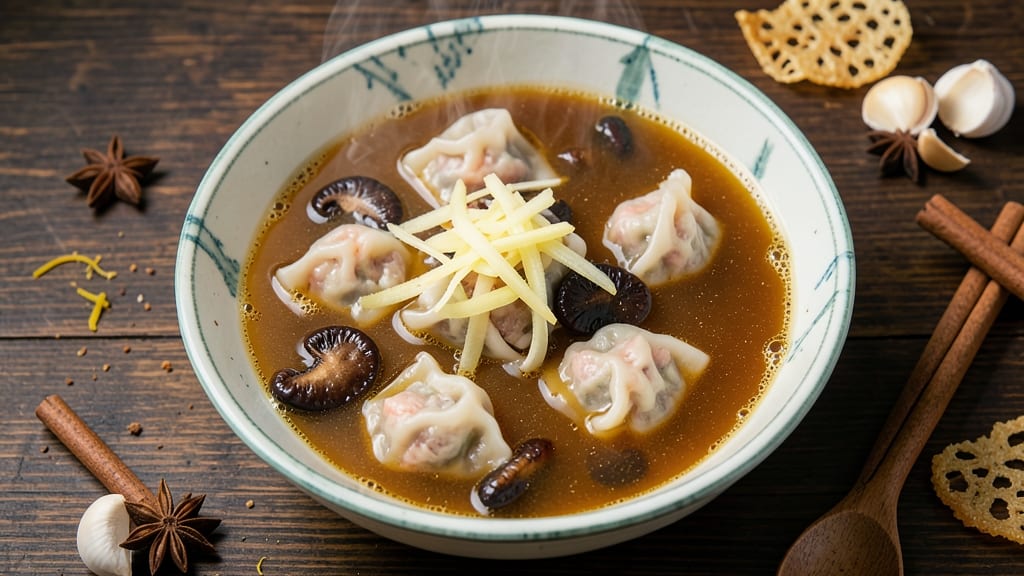
This authentic wonton soup recipe from scratch brings the warmth of a bustling Chinese kitchen to your home, where delicate wontons float in a fragrant broth that carries the essence of ginger, garlic, and star anise. ✨ The secret lies in making the wrappers from scratch—thin, pliable, and packed with flavor—while the broth simmers for hours to develop that deep, umami-rich character that defines this classic dish.
What sets this recipe apart is the balance between tradition and approachability. While the process requires patience—especially when rolling the wontons by hand—each step builds toward a bowl of soup that’s both comforting and impressive.
The broth starts with a simple combination of pork bones, aromatics, and mushrooms, but it’s the slow simmering that transforms these ingredients into something truly special.
By the time you’re ready to serve, you’ll have tender wontons filled with seasoned pork and vegetables, bobbing in a clear, golden broth that’s rich without being heavy. The aroma alone will draw everyone to the table, and the first spoonful delivers that perfect harmony of textures and flavors.
This is the kind of recipe that feels like a hug in a bowl.
The best part? You can adapt it to your preferences—add shrimp for a seafood twist, swap the pork for chicken, or even make vegetarian wontons. Let’s get started on creating a bowl that tastes like home.
Ingredients for authentic wonton soup recipe from scratch
Pork bones, mushrooms, and fresh ginger—this is the soul of authentic wonton soup.
| Ingredient | Amount | Notes |
|---|---|---|
| Pork Shoulder Bones 🍖 | 3 lb | Split for maximum surface area |
| Dried Shiitake Mushrooms 🍄 | ½ cup | Rehydrated, stems reserved |
| Fresh Ginger Root 🧄 | 2 tbsp | Thinly sliced, peeled |
| Garlic Cloves 🧄 | 8 cloves | Crushed, not minced |
| Star Anise Pods 🌟 | 4 whole | Lightly crushed |
| Cinnamon Sticks 🍃 | 2 whole | 2-inch pieces |
| Dried Tangerine Peel 🍊 | 1 tbsp | Finely chopped |
| Green Onions 🧅 | 2 whole | White and green parts separated |
| Wonton Wrappers 🍱 | 24 whole | Square, 3-inch size |
| Ground Pork 🥩 | 1 ½ lb | 80/20 fat ratio |
| Shiitake Mushroom Caps 🍄 | ½ cup | Finely chopped |
| Wood Ear Mushrooms 🍄 | ½ cup | Rehydrated, chopped |
| Light Soy Sauce 🥄 | ½ cup | Kikkoman preferred |
| Shaoxing Wine 🍷 | ¼ cup | Substitute dry sherry |
| Sesame Oil 🫒 | 1 tbsp | Toasted, for finishing |
| Vegetable Oil 🫒 | 2 tbsp | High smoke point |
| Salt 🧂 | 1 tsp | Adjust to taste |
| White Pepper 🌶️ | ½ tsp | Freshly ground |
The pork shoulder bones are non-negotiable—they give that deep, meaty flavor. Ask your butcher to split them for maximum surface area, or buy pre-split at Costco or H Mart. Dried shiitake mushrooms are a must—they add earthy depth. Rehydrate them in hot water for 20 minutes, then chop the caps and reserve the soaking liquid for the broth. Fresh ginger is better than powdered—peel and slice thinly so it infuses without turning bitter. For star anise and cinnamon, lightly crush the pods to release their aroma without turning the broth bitter. I grab mine from the bulk section at Trader Joe's—cheaper and fresher than pre-packaged.
No shiitake mushrooms? Cremini or oyster mushrooms work in a pinch, but they lack that umami punch. Running out of Shaoxing wine? Dry sherry or even a splash of rice vinegar will do—just add a pinch more salt. For the wonton filling, ground pork with 20% fat gives the best texture. If you're vegetarian, swap the pork for finely chopped tofu or mushrooms. The wrappers? Store-bought is fine—just make sure they're square and about 3 inches across. If they're too small, fold them in half to make larger wontons. And trust me, don't skip the sesame oil—that last drizzle is what ties the whole bowl together.
Broth keeps for 5 days in the fridge or 3 months in the freezer. Make a double batch—it's worth it. Portion the wontons in a single layer on a tray before freezing so they don't stick. Reheat the broth gently on the stove—never microwave, or it gets cloudy. Wontons can be steamed fresh or frozen—just drop them straight into simmering broth when ready to serve. The aroma alone will have everyone rushing to the table.
Why You'll Love This Recipe
- No-Chop Start: The pork shoulder bones do all the work—just sear and simmer. I toss in whole star anise and dried shiitakes (no soaking required) while the broth builds itself, leaving me free to chop garlic and ginger in under five minutes.
- Umami Bomb: That first sip? Pure flavor payoff. The shiitakes add deep earthiness, star anise gives a subtle licorice warmth, and the pork fat renders into a velvety broth that makes store-bought cans feel like a joke.
- Weeknight to Dinner Party: Same soup, endless uses. Slurp it up with wontons for a lazy Tuesday, or dress it up with fresh herbs and a drizzle of chili oil for guests—no extra effort, just extra wow.
- Broth Goldmine: Make a double batch—this stuff freezes like a dream. I pull out a pot of pre-made broth on busy mornings for congee or noodles, and the star anise keeps it tasting fresh even after weeks. Budget hack? The bones are cheaper than pre-packaged broth, and every bite tastes homemade.
Step-by-step instructions for authentic wonton soup from scratch
Here's how to build real Chinese restaurant-style wonton soup with homemade dumplings and deep, aromatic broth.
🔥 Step 1: Build the Fragrant Broth Base
Split the 3 lb pork shoulder bones into 2-inch pieces for maximum surface area. Rinse them well under cold water to remove any impurities, then place in a large stockpot. Add the 0.5 cup dried shiitake mushrooms (rehydrated in hot water for 30 minutes), 2 tbsp sliced fresh ginger, 8 crushed garlic cloves, 4 lightly crushed star anise pods, 2 cinnamon stick pieces, and 1 tbsp chopped dried tangerine peel. Cover with cold water by 2 inches.
Bring to a boil over high heat, then immediately reduce to a gentle simmer. Skim off any foam that rises to the surface during the first 15 minutes—this ensures a clear, clean broth. The broth should smell like a mix of ginger, garlic, and warm spices. Simmer uncovered for 3 hours, then strain through a fine-mesh sieve into a clean pot, pressing on the solids to extract maximum flavor.
👨🍳 Step 2: Prepare the Wonton Filling
In a large bowl, combine the 1.5 lb ground pork, 0.5 cup chopped shiitake mushroom caps, 0.5 cup chopped wood ear mushrooms, 2 tbsp sliced green onion whites, 0.5 cup light soy sauce, 0.25 cup shaoxing wine, 1 tsp salt, and 0.5 tsp white pepper. Mix gently with your hands until just combined—overworking makes the filling tough. The mixture should be moist but not sticky.
Taste and adjust seasoning. I usually add a pinch more salt here because the dumplings will absorb some of the broth's flavor later. Cover and refrigerate for 30 minutes to let the flavors meld. This chilling step also makes the filling easier to work with when stuffing the wrappers.
🥘 Step 3: Assemble and Cook the Wontons
Bring a large pot of water to a rolling boil. Working with one wrapper at a time, place 1 teaspoon of filling in the center. Dip your finger in water, then wet the edge of the wrapper. Fold the wrapper diagonally to form a triangle, pressing the edges firmly to seal. Repeat until all 24 wrappers are filled.
Drop the wontons into the boiling water in batches (don't overcrowd). They're done when they float to the surface, about 3-4 minutes. Remove with a slotted spoon and drain well. Keep them warm in a bowl of hot water while you finish the soup—this prevents them from drying out.
🍳 Step 4: Finish the Broth and Combine
Return the strained broth to the pot and bring to a gentle simmer. Add the 2 tbsp vegetable oil and 2 tbsp sliced green onion greens. Taste and adjust seasoning—you might need a splash more soy sauce or a pinch of salt. The broth should be rich but not salty. Keep it at a bare simmer while you prepare to serve.
To serve, ladle 2 cups of hot broth into each bowl, then add 4 wontons per bowl. Drizzle with 1 tbsp toasted sesame oil and garnish with extra green onions. The soup should be hot and fragrant, with the wontons floating in a clear, aromatic broth that carries all those warm spice notes.
Pro Tips For Making Authentic Wonton Soup Recipe From Scratch
- Blister the Bones First: Hit those pork shoulder bones with a screaming-hot dry sear for 5–7 minutes before adding water—this caramelizes the collagen and turns your broth from "meh" to "deep, rich flavor." I used to skip this, and my soup always tasted like it needed more salt.
- Soak Shiitakes Cold: Toss dried shiitakes in cold water for at least 20 minutes before using them—hot water makes them tough as boots. After soaking, slice the stems thin (they’re meatier than the caps) and toss them in early with the bones.
- Smash the Star Anise: Crack open those star anise pods with the flat side of a knife before dropping them in—this releases their oils and aromatics faster. Whole pods just float around like decorative placeholders.
- Skim Early, Skim Often: After the first 20 minutes of simmering, skim off the foam that rises to the top with a fine-mesh strainer. I know it’s tedious, but it keeps your broth silky instead of cloudy—no one wants to eat soup that looks like swamp water.
Common mistakes when making this dish
Broth Over-Skimmed
Skimming the broth too aggressively can strip away essential flavors and aromatics. Focus on removing only the thick foam that forms in the first 15 minutes—this is mostly impurities, not flavor. I’ve seen beginners skim so much they end up with a broth that lacks depth.
Save the skimmed foam in a small bowl and discard it—don’t let it linger in the pot. 🌟
Wonton Filling Too Dry
If your filling feels dry or crumbly, it’s likely missing moisture. The 1.5 lbs of ground pork should be combined with enough soy sauce and Shaoxing wine to create a sticky, pliable mixture.
Add 1-2 teaspoons of water if needed, but don’t overdo it—too much liquid makes sealing the wontons difficult. I’ve learned this the hard way when my first batch fell apart while cooking!
Under-Sealing Wontons
Wontons that leak or fall apart during cooking usually suffer from poor sealing. Wet your finger and the wrapper’s edges thoroughly before folding—this creates a strong bond. Press firmly along the edges as you fold to trap the filling inside.
If you’re struggling, practice with a few plain wrappers first. A well-sealed wonton should hold its shape even when dropped into boiling water. 💡
Broth Too Salty
Adjusting the seasoning of the broth is tricky because wontons absorb flavors as they cook. Taste the broth before adding the wontons and adjust with a pinch of salt or a splash of water if needed.
If you’ve already added the wontons and realize it’s too salty, don’t panic—serve it with extra green onions or a drizzle of sesame oil to balance the flavors. Prevention is key: start with slightly less salt and taste as you go.
Overcrowding Wontons
Dropping too many wontons into the boiling water at once lowers the temperature, causing them to cook unevenly or stick together. Cook in small batches of 6-8 wontons at a time. Use a slotted spoon to remove them as soon as they float—usually 3-4 minutes.
Keeping them in a bowl of hot water while you finish cooking the rest ensures they stay tender and warm. 🔥
Skipping the Broth Rest
Letting the broth rest after simmering is crucial for clarity and flavor development. After straining, let it sit uncovered at room temperature for 10-15 minutes before serving. This allows any remaining impurities to rise to the surface, making the broth crystal clear.
I’ve noticed a huge difference in texture and taste when I skip this step—don’t make that mistake!
Nutrition facts
Frequently asked questions
Can I make the wonton wrappers from scratch?
Traditional wonton wrappers are made with 1 cup all-purpose flour, 1/2 cup water, and a pinch of salt. Mix into a dough, knead for 5 minutes, then roll thin with a pasta roller. Rest for 30 minutes before using. Store extras wrapped in plastic in the fridge for 3 days or freeze for 3 months.
What's the best way to store leftover wonton soup?
Store the broth in an airtight container in the fridge for 5 days or freeze for 3 months. Keep wontons separate—steam them fresh when reheating or drop straight into simmering broth. Never microwave the broth directly; reheat gently on the stove to preserve clarity. The aroma alone will remind you why it's worth making!
Can I make this vegetarian?
Yes! Swap the pork for 1.5 lbs finely chopped tofu or 1 lb shiitake mushrooms in the filling. Use 1 tbsp vegetable oil instead of pork fat and add 1 tsp nutritional yeast for umami depth. The broth remains the same—just omit the pork bones and use 4 cups vegetable broth instead. The result is just as flavorful!
How do I make the broth clearer?
For crystal-clear broth, skim foam for 15 minutes only, then strain through a cheesecloth-lined sieve after simmering. Let the strained broth rest 10-15 minutes uncovered before serving—this allows impurities to rise. If it's still cloudy, try adding 1 egg white to the simmering broth (strain again before serving). Patience is key!
What's the secret to perfect wonton sealing?
Wet your finger and the wrapper's edge thoroughly before folding—this creates a strong bond. Press firmly along the edges while folding diagonally. For extra security, pinch the sealed edge gently. Practice with a few plain wrappers first. A well-sealed wonton should hold its shape even when dropped into boiling water!