
Soups & Stews
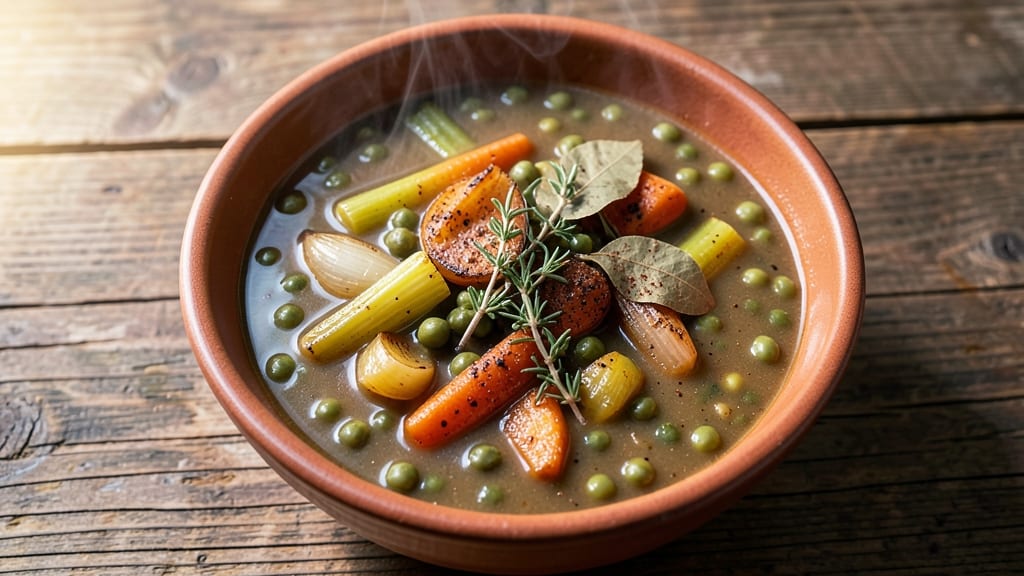
This awesome split pea soup recipe transforms humble green peas into a hearty, restaurant-worthy dish with a herbed roasted base that deepens every spoonful.
The secret lies in caramelizing onions and garlic until they're golden brown—this simple step builds layers of flavor that simmer into the broth, creating a richness you won't find in instant versions.
I developed this recipe after years of testing split pea soups, finally cracking the code for that perfect balance of earthy, savory, and slightly sweet notes that make it irresistible.
The beauty of this recipe is its versatility—it works equally well as a vegetarian main course or a meat-infused centerpiece when you add ham or bacon.
The herbed roasted base (made with thyme, bay leaves, and a touch of smoked paprika) infuses the soup with aromatic depth, while the peas develop a satisfyingly tender yet slightly firm texture.
Unlike many recipes that rely on canned peas, this version uses dried peas for maximum flavor development, though I'll show you how to adapt it for quick cooking too.
What you'll end up with is a creamy, velvety soup with just the right amount of body—thick enough to coat a spoon but light enough to sip. The roasted base gives it a caramelized complexity, while the herbs add freshness that brightens every bite.
This isn't your grandmother's split pea soup; it's a sophisticated, comforting dish that feels special enough for company but simple enough for weeknights.
The best part? It scales perfectly for meal prep—make a big batch and enjoy it all week, or freeze portions for those lazy days when you need a warm, nourishing meal in minutes.
Whether you prefer it chunky and rustic or silky smooth, this recipe delivers on both fronts with simple adjustments. Let's get started on creating your new favorite soup.
Ingredients for awesome split pea soup
Dried peas, caramelized onions, and aromatic herbs create this restaurant-style split pea soup.
| Ingredient | Amount | Notes |
|---|---|---|
| Dried Green Split Peas 🌾 | 1 ½ cups | Rinsed to remove debris |
| Yellow Onions 🧅 | 2 whole | Medium size, thinly sliced |
| Garlic Cloves 🧄 | 4 cloves | Minced for roasting |
| Fresh Thyme 🌿 | 2 tbsp | Leaves only, chopped fine |
| Bay Leaves 🍃 | 2 whole | Dried, standard size |
| Smoked Paprika 🌶️ | 1 tsp | For subtle smokiness |
| Vegetable Broth 💧 | 4 cups | Low-sodium preferred |
| Carrots 🥕 | 3 whole | Medium size, chopped |
| Celery Stalks 🥬 | 3 whole | Stringless, chopped |
| Olive Oil 🫒 | ½ cup | Extra-virgin for richness |
| Salt 🧂 | 1 ½ tsp | Kosher or sea salt |
| Black Pepper 🌶️ | ½ tsp | Freshly ground preferred |
| Fresh Parsley 🌿 | ¼ cup | Chopped for garnish |
The dried split peas are the star here—Bob's Red Mill or Anthony's Goods are my go-tos for quality. Look for vibrant green peas, not yellowed or shriveled ones. The onions and carrots should be firm with no soft spots; Trader Joe's often has great organic options at a good price. Fresh thyme and parsley make all the difference—if you're using dried, cut the amount to one-third. The smoked paprika adds depth without overpowering, but Penzeys has a great Spanish smoked variety if you want extra richness.
No fresh herbs? Dried thyme and parsley work at one-third the amount. Short on time? Swap dried peas for canned (drained well)—just add them at the end to avoid mushiness. The vegetable broth can be homemade (simmer veggie scraps with herbs) or store-bought (Pacific Foods or Imagine brands are low-sodium and flavorful). For extra creaminess without dairy, stir in 2 tbsp of silken tofu or cashew cream at the end. The carrots and celery can be pre-chopped to save time, but fresh is always better.
This soup tastes even better the next day as flavors meld. Store in the fridge for 4-5 days or freeze for 3 months—portion into containers for easy reheating. The roasted base keeps in the fridge for 3 days if you make it ahead, so you can prep the night before. For meal prep, double the batch and freeze half—perfect for those busy weeknights when you need comfort food fast.
Why You'll Love This Recipe
- One-Pot Magic: I swear by this recipe—just toss everything in a pot, add water, and walk away. No fancy techniques, no measuring cups stressing me out. The split peas soften while the onions caramelize right in the same pot. (Yes, even on a Tuesday night.)
- Herb-Packed Punch: That thyme and bay leaf combo? It’s the secret weapon. The thyme brightens the earthy peas, and the bay leaves add this deep, woodsy warmth that makes it taste like you simmered it for hours. (Between us, it’s foolproof—no overcooked mushy disaster here.)
- Meal Prep MVP: This soup only gets better the next day, which means I make a big batch on Sundays and have lunches sorted for the week. Freeze half if you’re feeling extra, and boom—you’ve got a pantry staple that’s cheaper than takeout and way healthier.
- Budget Hug: Dried split peas are my go-to for stretching meals without breaking the bank. A pound of them feeds four, and the onions/garlic/thyme cost pennies. Honestly, it’s the kind of recipe that makes me feel like I’m feeding my family something special without spending a fortune.
Step-by-step instructions for herbed roasted split pea soup
This roasted base method transforms ordinary split pea soup into something extraordinary—deep, complex flavor with minimal effort.
Roast the Vegetable Base for Rich Flavor
Preheat your oven to 400°F and line a large baking sheet with parchment paper. In a large bowl, combine the 2 whole yellow onions, 3 whole carrots, 3 whole celery stalks, 4 cloves garlic cloves, 2 tbsp fresh thyme, 1 tsp smoked paprika, 1.5 tsp salt, and 0.5 tsp black pepper. Toss everything thoroughly with 0.25 cup olive oil until the vegetables are evenly coated.
Spread the mixture in a single layer on the prepared baking sheet, making sure the pieces aren't crowded. Roast for 25-30 minutes until the vegetables are deeply golden brown and caramelized at the edges. This roasting step develops incredible depth of flavor that simmering alone can't achieve. Stir the vegetables halfway through cooking to ensure even browning.
Add the Split Peas and Broth for Simmering
While the vegetables are roasting, rinse the 1.5 cups dried green split peas under cold water to remove any debris. Once the vegetables are done roasting, transfer them to a large pot or Dutch oven. Add the split peas and 4 cups vegetable broth, then bring everything to a boil over high heat.
Once boiling, reduce the heat to medium-low and add the 2 whole bay leaves. The soup should simmer gently for 45-60 minutes, until the split peas are tender but still hold their shape. You'll know they're ready when they're fork-tender but not falling apart. Stir occasionally and add a splash of water if the soup becomes too thick.
Season and Finish the Soup
After the split peas are tender, remove the 2 whole bay leaves from the soup. Taste and adjust the seasoning with additional salt and pepper if needed. The roasted vegetables should have infused the broth with incredible flavor, but you might want to add a pinch more salt to balance the dish.
For the final touch, stir in the 0.25 cup fresh parsley and let the soup simmer for another 5 minutes. This allows the parsley to wilt slightly and release its fresh flavor. The soup should be thick but still spoonable—if it's too thick, add a little more broth or water to reach your preferred consistency.
Serve Warm with Perfect Garnish
Ladle the soup into bowls and garnish each serving with an additional sprinkle of fresh parsley and a drizzle of olive oil if desired. The roasted base gives this soup a rich, almost smoky depth that makes it stand out from traditional versions. Serve immediately while hot, as the flavors continue to meld and develop.
This herbed roasted split pea soup is hearty enough to stand alone but also pairs beautifully with crusty bread or a simple green salad. The roasting technique elevates the humble split pea to new heights, making it a standout dish for any meal.
Pro Tips For Making Awesome Split Pea Soup
- SOAK THE PEAS—BUT NOT TOO LONG: I learned this the hard way—skipping the soak makes the soup gummy, but letting them sit overnight in water turns them mushy. Instead, cover the dried peas in boiling water for 10 minutes, then drain and rinse. This softens them just enough to cook evenly without falling apart.
- CHOP ONIONS SMALL AND EVEN: Big chunks of onion mean uneven texture—some will be tender, others still crunchy. Dice them into ¼-inch pieces so they dissolve into the soup rather than sitting as identifiable bits. (Yes, even if you’re impatient like me.)
- ADD BAY LEAVES LATE: Crush the bay leaves with your palm before adding them, but don’t toss them in at the start. Wait until the peas have cooked for 45 minutes—this keeps their aroma from bleeding into the water too early, making the flavor more concentrated at the end.
- SALT IN STAGES: Split peas absorb salt like sponges, so don’t dump it all at once. Start with half the salt when you add the onions, then taste again after 30 minutes of cooking. Adjust carefully—you can’t fix oversalting later, but you can always add more. (Your future self will thank you.)
Best sauces and condiments for awesome split pea soup
Creamy Dairy Options
For extra richness, stir in 2 tablespoons of heavy cream or ½ cup of Greek yogurt at the end of cooking. I love using Stonyfield Organic Whole Milk Greek Yogurt—it adds tangy depth without making the soup too heavy.
If you prefer a vegan option, blend ¼ cup silken tofu with 2 tablespoons lemon juice until smooth, then whisk into the soup. This creates a velvety texture that mimics dairy perfectly. 🥄
Smoky-Spiced Toppings
Elevate your soup with a sprinkle of smoked paprika or crumbled bacon for meat lovers. I keep Penzeys Spanish smoked paprika on hand—just ½ teaspoon per bowl adds a subtle smokiness that pairs beautifully.
For a spicy kick, top with chopped jalapeños or a dash of hot sauce like Cholula. These toppings turn a simple bowl into a restaurant-worthy experience.
Herb-Infused Oils
Drizzle finished soup with infused olive oil for an aromatic touch. I blend ½ cup olive oil with 1 tablespoon fresh rosemary and 1 clove garlic, then let it steep for 10 minutes before drizzling.
Alternatively, use garlic-infused oil from Trader Joe's for convenience. This adds a fragrant layer that complements the roasted base perfectly. 🌿
Acidic Brighteners
Cut through the soup's richness with a splash of lemon juice or apple cider vinegar. I squeeze 1 teaspoon of fresh lemon juice over each bowl before serving—it wakes up the flavors and balances the earthiness of the peas.
For a sweeter contrast, stir in 1 teaspoon of honey or maple syrup at the end. These acidic elements make every spoonful more vibrant.
Crunchy Textures
Add a satisfying crunch with toasted breadcrumbs or crispy fried onions. I pulse 2 slices of stale sourdough in a food processor, then toast with 1 tablespoon butter until golden.
For extra indulgence, sprinkle with crumbled bacon or fried shallots. These toppings create delightful texture contrasts that keep the soup exciting with every bite. 🍞
Nutrition facts
Frequently asked questions
Can I make this split pea soup in a slow cooker?
After roasting the vegetable base, transfer everything to your slow cooker, add the split peas and broth, then cook on low for 6-8 hours or high for 3-4 hours. The slow cooker method is perfect for hands-off cooking and actually enhances the flavor development. Just skip the bay leaves if you're not using them in your slow cooker recipe.
How do I make this soup creamier without dairy?
Blend ½ cup of the soup with ¼ cup silken tofu or cashews until smooth, then stir it back in. For a vegan option, you can also mash 1 small roasted potato into the soup at the end. Both methods create a velvety texture without dairy.
What's the best way to store leftovers?
Let the soup cool completely, then store it in an airtight container in the fridge for up to 5 days. For longer storage, portion into freezer-safe containers and freeze for up to 3 months. Reheat gently on the stovetop or microwave until steaming hot. The flavors actually improve after the first day!
Can I use canned split peas instead of dried?
Yes, but with adjustments! Use 2 (15 oz) cans of split peas (drained and rinsed) and add them at the end of cooking to prevent mushiness. Skip the long simmer time and just heat everything through for 10-15 minutes after adding the peas. The texture will be slightly softer but still delicious.
Why did my split peas turn out mushy?
Overcooking is the most common cause. Split peas should be tender but still hold their shape—45-60 minutes of simmering is perfect. If using dried peas, make sure they're fully submerged in liquid. For chunkier texture, add the peas to the broth only after the vegetables have roasted, not at the start.