
Soups & Stews
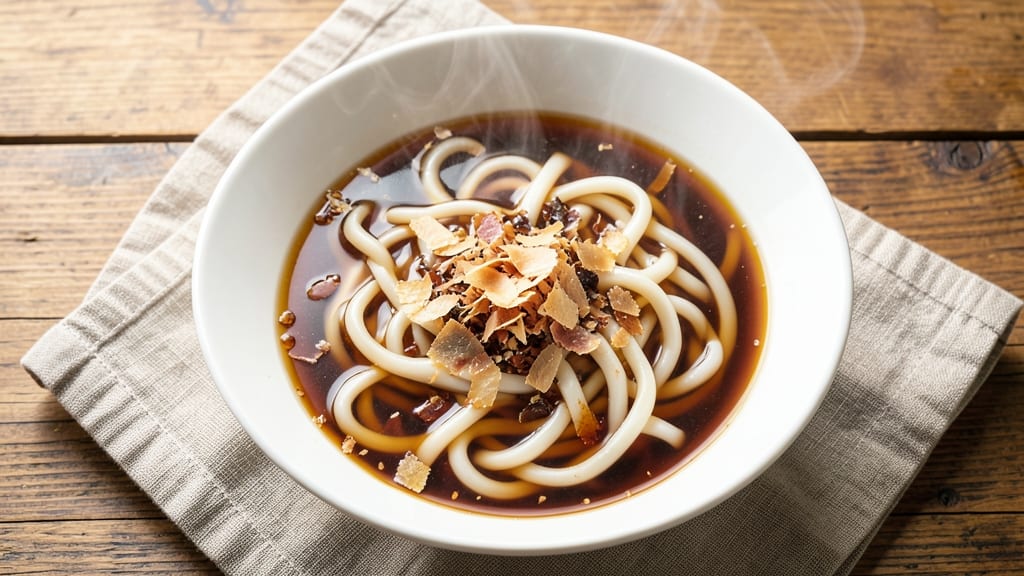
This basic udon soup recipe delivers the comforting essence of Japanese home cooking with minimal effort. The foundation lies in a fragrant dashi broth—light yet deeply savory—where delicate udon noodles transform into silky strands that melt in your mouth.
What makes this recipe special is its balance: simple ingredients combine to create a dish that feels both rustic and refined, perfect for weeknight dinners or cozy gatherings.
The secret to authentic flavor begins with the broth, where kombu (dried kelp) and bonito flakes infuse the water with umami depth. Udon noodles, thicker than ramen but lighter than spaghetti, cook in just 5 minutes to achieve that signature tender-chewy texture.
This recipe skips complicated techniques, focusing instead on letting the broth and noodles shine through their natural qualities.
By the time you serve it, you'll have a steaming bowl of silky udon floating in a fragrant, golden broth.
The aroma alone—warm, slightly briny, with hints of soy—invites you to take that first spoonful, where each bite offers perfect harmony between the noodles' gentle bite and the broth's comforting embrace. Garnish with green onions and a sprinkle of sesame seeds for added freshness and texture.
This udon soup adapts beautifully to your preferences—add soft-boiled eggs for extra richness or stir in mushrooms for earthy depth. The recipe serves 2 to 3 as a main dish, making it ideal for light meals or as a starter before a heartier Japanese feast.
Let's create this comforting classic together.
Ingredients for basic udon soup
Simple ingredients transform into a fragrant udon broth with deep umami flavor.
| Ingredient | Amount | Notes |
|---|---|---|
| Dried Kombu 🍃 | 1 piece | 4x6-inch sheet, rinsed |
| Bonito Flakes 🐟 | ½ cup | High-quality, unsalted |
| Udon Noodles 🍜 | 6 oz | Fresh or dried, cut into 6-inch strands |
| Water 💧 | 4 cups | Filtered preferred |
| Soy Sauce 🍶 | 1 tbsp | Light or regular, not low-sodium |
| Mirin 🍶 | 1 tbsp | Sweet rice wine, not imitation |
| Green Onions 🧅 | 2 whole | Thinly sliced, white and green parts |
| Toasted Sesame Seeds 🥜 | 1 tsp | For garnish |
| Neutral Oil 🫒 | 1 tbsp | Avocado or vegetable oil |
| Salt 🧂 | ½ tsp | Kosher or sea salt |
| Dried Shiitake Mushrooms 🍄 | 2 whole | Optional, rehydrated |
| Soft-Boiled Eggs 🥚 | 2 whole | Optional garnish |
The kombu and bonito flakes are the heart of this broth. Look for kombu sheets at Asian markets—they should be dark, slightly oily, and free of holes. Koyo-Den or Marukome brands are reliable choices. Bonito flakes should be light golden, not grayish—Nitramin or Katsuo no Sujiko are top-tier options. If you can't find them, dried bonito chunks work too, just crush them yourself. The udon noodles? Fresh is ideal (they cook in 2-3 minutes), but dried works in a pinch—just soak for 5 minutes before boiling.
No mirin? Substitute 1 tbsp sugar plus 1 tbsp sake—it won't be identical, but close enough. The soy sauce can be swapped for tamari for gluten-free, though traditional soy sauce gives that classic depth. Skipping the mushrooms? Add a dash of mushroom powder (1/4 tsp) for umami. The green onions are non-negotiable for freshness—frozen won't cut it. For the sesame seeds, toast them in a dry pan for 1-2 minutes until fragrant. If you're feeling lazy, store-bought toasted sesame oil works in a pinch, but fresh is better.
This broth keeps for 3 days in the fridge—reheat gently and add fresh noodles. The kombu and bonito flakes can be stored separately for up to 6 months in an airtight container. For extra flavor, save the kombu sheet after the first use—it can be rehydrated and reused once. Udon noodles? Fresh last 3 days in the fridge wrapped tightly in plastic; dried keep indefinitely. Make a double batch of broth—it's even better the next day as the flavors meld.
Why You'll Love This Recipe
- Five-Ingredient Magic: I swear, this is the kind of recipe where you open the pantry and boom—dinner’s ready. No chopping, no measuring cups, just Kombu soaking in hot water while you crack open a bag of udon. That’s it. The broth builds itself.
- Umami Bomb: Honestly, the moment those bonito flakes hit the simmering water? My mouth waters. The Kombu adds this deep, oceanic richness, while the flakes dissolve into a smoky, salty cloud—like someone sprinkled liquid happiness over your noodles. One spoonful and you’ll forget takeout exists.
- Lunchbox Hero: Between us, this is my go-to for meal prep. Cook a big batch on Sunday, and you’ve got three days of satisfying lunches. Toss in a soft-boiled egg or quick-pickled veggies for variety, but even plain? It’s still spot-on. My kids pack it like it’s gourmet.
- Pocketbook Win: Here’s what sold me—the cost. A single sheet of Kombu and a bag of udon feed four people for under $5. No fancy ingredients, no waste, and the leftovers? Just as good reheated as they were fresh. Budget-friendly doesn’t get much better than this.
Step-by-step instructions for silky udon soup
This method delivers a perfectly balanced udon soup with rich dashi broth and tender noodles.
Prepare the Dashi Broth
Place the rinsed 1 piece dried kombu in a clean pot and add the 4 cups water. Bring to a gentle simmer over medium heat until small bubbles form around the edges. Immediately remove the kombu using tongs—it should float to the surface. The broth should smell faintly of seaweed and taste subtly sweet.
Return the broth to a full simmer and sprinkle in the 0.5 cup bonito flakes. You'll see the flakes foam and dissolve completely within 1-2 minutes. Remove from heat and let steep for 5 minutes to develop maximum umami flavor. Strain through a fine-mesh sieve into a clean pot, discarding the kombu and any settled particles. This clear, aromatic broth forms the foundation of your soup.
Cook the Udon Noodles
In a separate pot, bring 2 cups fresh water to a rolling boil and add the 6 oz udon noodles. Cook according to package instructions until al dente—typically 2-3 minutes for fresh noodles or 4-5 minutes for dried. Drain immediately and rinse briefly under cold water to stop cooking and remove excess starch.
Transfer the noodles to a large serving bowl. While still hot, drizzle with 1 tablespoon neutral oil and toss gently to prevent sticking. The oil helps maintain silky texture and prevents the noodles from clumping during assembly.
Assemble the Soup Base
Return the strained dashi broth to the pot and add 1 tablespoon soy sauce, 1 tablespoon mirin, and 0.5 teaspoon salt. Bring to a gentle simmer over low heat for 3 minutes to allow flavors to meld. If using, rehydrate the 2 whole dried shiitake mushrooms in hot water for 10 minutes, then slice and add to the broth now.
Pour the seasoned broth over the oiled noodles in the serving bowl. The broth should cover the noodles completely but not overflow. Taste and adjust seasoning—you may need an additional ½ teaspoon soy sauce or ¼ teaspoon salt depending on your preference. Keep warm over low heat while you prepare the remaining components.
Prepare Garnishes and Final Assembly
Slice the 2 whole green onions into ¼-inch rings, separating white and green portions. Toast the 1 teaspoon sesame seeds in a dry skillet over medium heat for 1 minute until fragrant. If using, prepare the 2 whole soft-boiled eggs by simmering in water for 6 minutes, then cooling in ice water before peeling.
To serve, ladle the hot udon soup into individual bowls. Arrange the white onion rings along the edge of each bowl, followed by the green onion rings. Place the soft-boiled eggs on top if using, then sprinkle with toasted sesame seeds. The contrast of textures—silky noodles, creamy eggs, crisp mushrooms—creates a perfect balance in every bite.
Pro Tips For Making Basic Udon Soup
- SOAK KOMBU FIRST: Tear the kombu into thirds and drop it in cold water 10 minutes before boiling—this pulls out more umami flavor than dumping it in hot. I used to skip this, and the broth always tasted flat.
- STIR BONITO FLAKES: Once the broth reaches a rolling boil, turn off the heat and sprinkle bonito flakes on top, then stir for 30 seconds. This prevents clumping and lets the flakes infuse without burning—yes, even if you’re impatient like me.
- SALT THE WATER: Add 1 teaspoon of salt to the water before boiling the kombu—it deepens the broth’s flavor and cuts through the soy sauce’s heaviness later. I learned this the hard way when my first batch tasted one-note.
- COOK NOODLES SEPARATELY: Boil udon in a separate pot for 2–3 minutes (check package time) and drain before adding to the broth. This keeps them from turning mushy and lets you control the texture—no soggy noodles here.
Common mistakes when making this dish
Overcooking Noodles
Udon noodles are delicate—cooking them for even 1 minute too long turns them mushy and unappetizing. Fresh udon should cook in 2-3 minutes; dried takes 4-5 minutes. Always test one strand by biting it—it should have a slight bite, not be soft like overcooked pasta. 🍜
Skipping the Kombu Rinse
Never skip rinsing your kombu sheet before simmering—it removes dirt and sand that can make your broth cloudy. A quick rinse under cold water ensures a crystal-clear, elegant broth.
I’ve seen home cooks skip this, and the difference in texture is noticeable. The kombu should smell fresh and oceanic, not stale.
Ignoring the Broth Steep
The 5-minute steep after adding bonito flakes is crucial for maximum umami development. Skipping it leaves your broth flat and underseasoned. Think of it like steeping tea—patience pays off. If you’re in a rush, steep for at least 3 minutes, but don’t rush it.
Using Low-Quality Bonito
Cheap bonito flakes with a grayish tint or fishy smell will overpower your broth with bitterness. Invest in high-quality bonito flakes like Nitramin or Katsuo no Sujiko—they dissolve cleanly and add depth without harshness. Your broth’s clarity and aroma depend on this step.
Forgetting the Oil Toss
Drizzling 1 tablespoon neutral oil over hot noodles before adding broth prevents clumping and keeps them silky. Without it, noodles stick together like glue. This is a pro trick I learned from Japanese chefs—it’s non-negotiable for restaurant-quality texture.
Overcrowding the Pot
Cooking udon in a pot that’s too small causes the noodles to tangle and steam unevenly. Use a pot large enough to hold the noodles in a single layer.
I double the pot size when cooking udon to avoid this common mistake. A crowded pot = mushy noodles every time. 💡
Nutrition facts
Frequently asked questions
Can I make this udon soup vegetarian?
Yes! Replace the bonito flakes with 1 tablespoon dried shiitake powder or 1 teaspoon kombu extract for umami depth. Use vegetable broth instead of water and add 1 teaspoon soy sauce plus 1 teaspoon mushroom powder to compensate for lost flavor. The texture will be slightly different but still delicious.
How do I store leftover udon soup?
Store broth separately in an airtight container for 3 days in the fridge. Reheat gently and add fresh, cooked udon noodles when serving. For longer storage, freeze the broth (up to 3 months) and cook fresh noodles when ready. Never freeze cooked udon—it becomes gummy when reheated.
What's the best way to cook dried udon noodles?
Soak dried udon in warm water for 5 minutes first to rehydrate, then boil for 4-5 minutes until tender. Rinse briefly in cold water to stop cooking. For extra flavor, add a pinch of salt to the boiling water. Fresh udon cooks faster (2-3 minutes)—always check package instructions.
Can I make this soup spicier?
Add ½ teaspoon chili oil or ½ teaspoon gochujang to the broth before serving. For heat lovers, stir in 1 teaspoon sriracha or ½ teaspoon red pepper flakes when assembling. Balance with a splash of mirin to keep the flavors harmonious.
Why does my broth look cloudy?
Cloudiness usually means the kombu wasn't rinsed properly or the bonito flakes were low quality. Strain through a fine-mesh sieve again for clarity. For extra smoothness, chill the broth overnight—the fat rises to the top and can be skimmed off. Fresh kombu and high-quality bonito are key for a crystal-clear broth.