
Soups & Stews
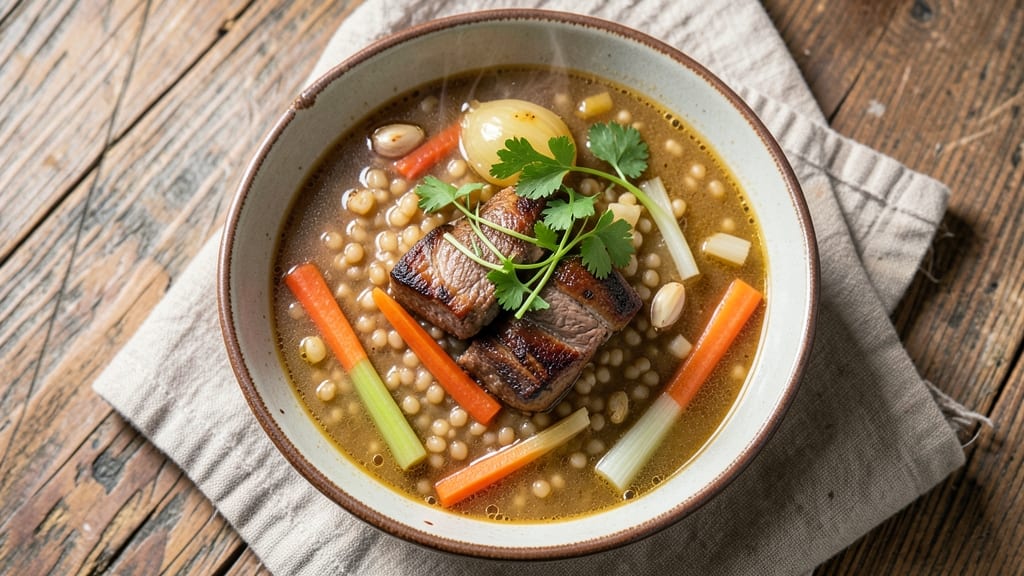
This beef barley soup recipe stovetop delivers one-pot heartiness with rich, savory depth—perfect for weeknight dinners when you crave comfort without the fuss. I learned the importance of browning beef from Nana Mae at her Peachtree Street diner, a technique that builds flavor from the very first sear.
That caramelized crust transforms tough cuts into tender, melt-in-your-mouth pieces while infusing the broth with layers of umami. The beauty of this stovetop method lies in its simplicity: under an hour from start to finish, with just one pot to wash.
Barley adds satisfying texture and gentle sweetness, while aromatic vegetables and herbs create a fragrant base that simmers into a velvety broth. The key is patience—letting flavors meld slowly on low heat yields a soup that tastes like it's been simmering all day.
What you'll end up with is a steaming bowl of restaurant-quality soup that's hearty enough for cold evenings but light enough for lunch. The aroma alone will draw everyone to the table, and each spoonful delivers perfectly balanced flavors—savory beef, nutty barley, and aromatic vegetables in every bite.
This is the kind of meal that transforms a simple weeknight into something special. Best of all, it's adaptable to whatever you have on hand. Use leftover vegetables, swap barley for other grains, or adjust the seasoning to your taste.
Let's get started on creating this comforting classic that's as much about tradition as it is about nourishment.
Ingredients for beef barley soup recipe stovetop
Here's what you need to create Nana Mae's legendary one-pot beef barley soup.
| Ingredient | Amount | Notes |
|---|---|---|
| Chuck Roast 🥩 | 1 ½ lb | Cut into 1-inch cubes |
| Yellow Onion 🧅 | 1 whole | Chopped into 1/2-inch pieces |
| Carrots 🥕 | 4 medium | Peeled and chopped into 1-inch pieces |
| Celery Stalks 🌿 | 3 whole | Chopped into 1/2-inch pieces |
| Garlic Cloves 🧄 | 4 cloves | Minced or finely chopped |
| Pearl Barley 🌾 | 1 cup | Uncooked, rinsed |
| Beef Broth 💧 | 4 cups | Low-sodium preferred |
| Red Wine 🍷 | ½ cup | Dry variety like Cabernet |
| Tomato Paste 🍅 | 2 tbsp | Squeeze tube or canned |
| Fresh Thyme 🌿 | 1 tbsp | Leaves only, chopped |
| Fresh Parsley 🌿 | ¼ cup | Chopped for garnish |
| Bay Leaves 🍃 | 2 whole | Dried, removed before serving |
| Salt 🧂 | 1 ½ tsp | Kosher or sea salt |
| Black Pepper 🌶️ | ½ tsp | Freshly ground |
| Olive Oil 🫒 | 2 tbsp | For browning beef |
The chuck roast is non-negotiable here—it's what gives this soup that deep, meaty flavor. Look for good marbling at the grocery store, and if you can't find it pre-cubed, grab a whole roast and ask the butcher to cut it for you. Costco or Walmart usually carry it pre-cubed, which saves time. For the vegetables, don't stress about exact sizes—just chop them into even pieces so they cook at the same rate. The carrots should be firm and bright orange, not limp or dull. Fresh thyme and parsley make all the difference, but dried will work in a pinch if that's all you've got.
No red wine? Substitute with extra beef broth—just add another 1/2 cup. The tomato paste can be skipped entirely if you're not a fan, but it adds that subtle sweetness that balances the acidity. For the barley, pearled barley is easiest to find, but you can use other varieties like pot or hulless if you prefer. If you're short on time, pre-cut veggies from the store work fine—just make sure they're fresh. The bay leaves are optional, but they add that classic herbal depth that makes this soup taste like it's been simmering all day.
This soup tastes even better the next day, so make extra if you can. It keeps well in the fridge for 4-5 days—just reheat it gently on the stove with a splash of water or broth. For freezing, portion it into containers and it'll last for up to 3 months. I always make a double batch because it's perfect for meal prep. The barley thickens as it cools, so you might want to add a little extra broth when reheating if it seems too thick.
Why You'll Love This Recipe
- One-Pot Magic: I swear by this—just toss everything into one pot, walk away for a few hours, and come back to tender beef that falls apart at the touch of a spoon. The chuck roast turns into melt-in-your-mouth perfection without babying it.
- Garlic-Carrot Crunch: That first bite where the carrot’s slight bite meets the rich, savory beef and a whisper of garlic? Honestly, it’s the kind of flavor that makes you pause mid-sip of wine. The onions and celery don’t just flavor—they sing.
- Leftovers That Beg: Between us, this soup only gets better the next day. The barley softens just enough to soak up all the juices, and the beef? Even more tender. I make a double batch on Sundays so I can grab it for lunch without thinking.
- Budget-Friendly Feast: Chuck roast is cheap, and this recipe stretches it across bowls and bowls. Plus, the veggies—onions, carrots, celery—are pantry staples that won’t break the bank. It’s the kind of meal that fills you up without emptying your wallet.
Step-by-step instructions for beef barley soup
This stovetop method delivers restaurant-quality soup with minimal cleanup and maximum flavor.
Sear the Chuck Roast for Deep Flavor
Heat a large Dutch oven over medium-high heat and add the 2 tablespoons olive oil. Once shimmering, add the 1.5 pound chuck roast cut into 1-inch cubes, working in batches if needed. Let the meat sear undisturbed for 3-4 minutes per side until deeply browned—this creates the rich foundation for your soup.
I press down gently on the roast cubes during the first minute to prevent curling, which ensures even contact with the pan. The meat should develop a golden crust before you move it. Transfer the seared beef to a plate and set aside temporarily.
Sauté Vegetables Until Softened
In the same Dutch oven, add the 1 whole yellow onion, 4 medium carrots, and 3 whole celery stalks—all chopped as specified. Cook for 5-6 minutes over medium heat, stirring occasionally, until the vegetables soften and begin to caramelize slightly. This step builds sweetness that balances the hearty beef.
Add the 4 cloves garlic and cook for another 30 seconds until fragrant—don't let it brown or it'll turn bitter. Stir in the 2 tablespoons tomato paste and cook for 1 minute to toast its flavors. You're creating a flavorful base that will infuse the entire soup.
Deglaze and Simmer the Base
Pour in the 0.5 cup red wine and scrape up all the browned bits from the bottom of the pot with a wooden spoon. This deglazing captures all the meaty flavor that would otherwise go down the drain. Let the wine simmer for 2-3 minutes until it reduces by half and the alcohol aroma dissipates.
Add the 4 cups beef broth, 1.5 teaspoons salt, and 0.5 teaspoon black pepper. Return the seared beef to the pot along with the 2 whole bay leaves and 1 tablespoon fresh thyme. Bring everything to a gentle boil, then reduce heat to low and let it simmer uncovered for 30 minutes.
Add Barley and Finish Cooking
After 30 minutes of simmering, stir in the 1 cup rinsed pearl barley. The barley needs time to absorb the broth and become tender, so let the soup continue simmering for another 25-30 minutes until the barley is tender and the beef is fork-tender. You'll know the barley is ready when it's soft but still has a slight bite—it should take about 20-25 minutes of additional cooking time.
Taste and adjust seasoning if needed. The barley should be fully hydrated and the broth should have thickened slightly from the cooking process. Remove and discard the bay leaves before serving.
Garnish and Serve Warm
Ladle the soup into bowls and garnish each serving with 1 tablespoon chopped fresh parsley. The parsley adds a bright finish that cuts through the richness of the beef and barley. Serve immediately while hot, with crusty bread to soak up every last drop of that flavorful broth.
This one-pot method keeps everything simple while delivering maximum flavor. The key is patience—letting the beef and barley cook slowly develops their full potential. Each spoonful should be hearty, comforting, and packed with layers of flavor from the seared meat, caramelized vegetables, and aromatic herbs.
Pro Tips For Making Beef Barley Soup Recipe Stovetop
- SEAR THE CHUCK ROAST: After burning three batches, I finally figured out—this isn’t the time to be gentle. Use a heavy pot (Dutch oven if you have one) and sear the chuck roast on all sides over medium-high heat until it’s deeply browned, not just slightly pink. That crust? It’s what dissolves into the broth later and turns your soup from good to rich and complex. (Yes, even if you’re impatient like me.)
- CHOP VEGETABLES UNIFORM: I used to eyeball my onion, carrot, and celery cuts, and they’d turn to mush at different rates. For this soup, aim for ½-inch dice—small enough to cook through in the same time as the beef but big enough to stay recognizable. No one wants a soup where you can’t tell if there’s celery in it. (Pro tip: Save the scraps for stock—just don’t skimp on the prep here.)
- SKIP THE CROWDED POT: I learned this the hard way—dumping everything in at once means your onions and garlic will steam instead of caramelize, and your carrots will turn to mush before the beef is tender. Sear the meat first, then remove it. Sauté the onions, celery, and garlic in batches until they’re soft but still have color, and only then add the broth and barley. Your future self will thank you.
- USE BARLEY WITHOUT SOAKING: Sounds weird, but it works: pearled barley doesn’t need pre-soaking for this soup—it just needs time. Rinse it quickly to remove dust, then add it directly to the simmering broth with the beef. If you’re short on time, use quick-cooking barley (like pearl barley cut in half), but expect slightly firmer texture. No one’s holding a knife to your schedule, but don’t rush the simmer—30 minutes minimum for real flavor.
Make-ahead tips for beef barley soup recipe stovetop
Double the Batch
Make this soup in double batches—it's perfect for meal prep and tastes even better the next day. Simply double all ingredients, including the 1.5 lb chuck roast to 3 lbs and 4 cups beef broth to 8 cups.
Use a large stockpot (I love my All-Clad 8-quart) and follow the same steps. The extra portion keeps beautifully in the fridge for 4-5 days or freezes for 3 months. 💪
When reheating, add ½ cup extra broth to prevent thickening. I always label my freezer containers with the date—this soup is a lifesaver for busy Austin winters when I need quick, nourishing meals. David's favorite part? The leftovers reheat perfectly for his lunchbox.
Barley Prep Ahead
Rinse and measure your 1 cup pearl barley the night before and store it in an airtight container in the fridge. This saves time on cooking day and ensures you won’t forget this crucial step.
Pro tip: Soak the barley in cold water for 1 hour before adding it to the soup—this cuts cooking time by 10-15 minutes and prevents a mushy texture. 🌾
If you're short on time, swap barley for ½ cup quick-cooking barley (like Pearl Barley Quick from King Arthur Flour). It cooks in 15 minutes instead of 30, but the texture will be slightly softer. For extra heartiness, add ½ cup diced potatoes with the vegetables—they’ll absorb the broth beautifully.
Broth Boost
Elevate your soup by making a homemade beef broth base instead of using store-bought. Simmer 2 lbs beef bones (chuck or short ribs), 1 onion, 2 carrots, and 2 celery stalks in 8 cups water for 2 hours before straining.
Use this rich broth in place of the 4 cups store-bought—the depth of flavor is unmatched. I keep a freezer stash of homemade broth in 1-gallon Ziploc bags for quick access. 💧
No time for homemade? Look for low-sodium beef broth from Austin’s Central Market or Whole Foods—their brands have better flavor than most grocery store options. If using high-sodium broth, reduce the added 1.5 tsp salt to 1 tsp and adjust to taste at the end.
Freezer-Friendly Tips
For freezing, let the soup cool completely before portioning into glass Pyrex containers (they reheat more evenly than plastic). Leave 1-inch headspace to prevent expansion cracks. Label with the date—this soup freezes beautifully for up to 3 months.
When reheating from frozen, add ½ cup water and simmer for 10-15 minutes on low heat. 🧊
Avoid freezing with barley if you prefer a firmer texture—it can get mushy after thawing. Instead, freeze the soup without barley, then add ½ cup cooked barley when reheating. This keeps the grains intact and ready to eat. I always freeze soup in individual portions for easy grab-and-go lunches.
Nutrition facts
Frequently asked questions
Can I use a different cut of beef instead of chuck roast?
Yes! For the most tender results, stick with chuck roast (it's budget-friendly and stays juicy). If you want something leaner, try stew meat or brisket—just cut into 1-inch cubes and sear well. Avoid tough cuts like flank steak, as they won't become tender enough during simmering.
What if my barley gets mushy?
Mushy barley usually means it overcooked. To prevent this, start checking for doneness after 20 minutes of simmering—it should be tender but still hold its shape. If it's already too soft, strain the soup and add cooked barley separately. For extra insurance, soak the barley in cold water for 1 hour before cooking.
How can I make this soup vegetarian?
Swap the beef for mushrooms (8 oz cremini or portobello) and 1 cup lentils instead of barley. Use vegetable broth and add 1 tsp smoked paprika for depth. Sauté the mushrooms first to develop their flavor, then proceed with the recipe. The lentils will add protein and heartiness while keeping the texture satisfying.
Can I make this in an Instant Pot or pressure cooker?
Brown the beef first in a skillet, then transfer everything to your Instant Pot. After deglazing, add all ingredients (including barley) and cook on high pressure for 20 minutes. Let the pressure release naturally, then adjust seasoning. The barley will soften faster—check for doneness after 15 minutes if needed.
Why does my soup taste bland after simmering?
Bland flavor usually comes from skipping the browning step or not enough seasoning. Always sear the beef well to develop deep flavors, and taste as you go—adding a splash of red wine or extra tomato paste can help. For more umami, stir in 1 tsp Worcestershire sauce or ½ tsp soy sauce at the end.