
Soups & Stews
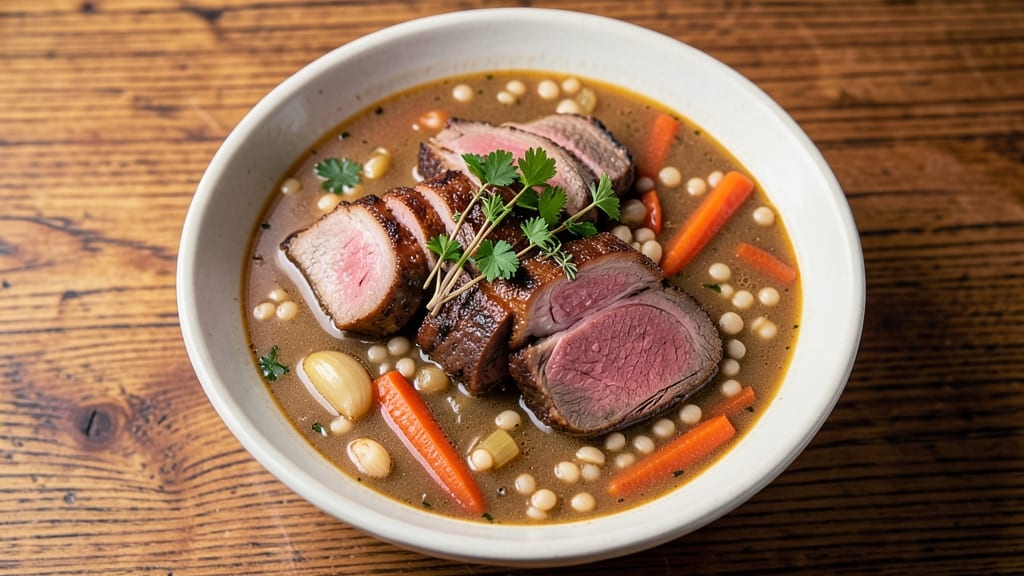
Transforming leftover prime rib into beef barley soup is one of those foolproof techniques that turns dinner leftovers into tomorrow's comfort dish.
The rich, savory depth of prime rib elevates standard barley soup into something restaurant-worthy, with tender shreds of beef that melt in your mouth and barley that soaks up all the flavor. I've been perfecting this method for years—especially after realizing how much prime rib often goes to waste.
The beauty of this recipe lies in its simplicity: you'll use just a few pantry staples to create a soup that's hearty enough for a cold evening but quick enough for a busy weeknight.
The key is letting the barley cook until it's tender but still holds its shape, while the prime rib shreds effortlessly, adding layers of umami that make every spoonful satisfying. This isn't just soup—it's a way to give your leftovers a second life without sacrificing quality.
What you'll end up with is a steaming bowl of soup that's packed with flavor—golden barley, tender beef, and a broth so rich it feels like a hug in a bowl.
The aroma alone will have everyone gathering around the table, and the texture is perfect: chewy barley, tender meat, and a smooth broth that coats every bite. This is the kind of meal that makes you feel like you've earned a break after a long week.
Serve it with crusty bread for dipping or a simple side salad to balance the richness. The leftovers reheat beautifully too, making this recipe perfect for meal prep or feeding a crowd. Let's turn those prime rib scraps into something extraordinary—here's how.
Ingredients for beef barley soup recipe with leftover prime rib
Just a handful of ingredients to transform prime rib leftovers into restaurant-quality beef barley soup.
| Ingredient | Amount | Notes |
|---|---|---|
| Leftover Prime Rib 🥩 | 1 ½ lb | Shredded or cubed for texture |
| Pearl Barley 🌾 | 1 cup | Uncooked, rinsed thoroughly |
| Yellow Onion 🧅 | 1 whole | Diced, medium size preferred |
| Carrots 🥕 | 4 medium | Peeled, sliced into rounds |
| Garlic Cloves 🧄 | 4 cloves | Minced for aromatic depth |
| Beef Broth 💧 | 6 cups | Homemade or quality store-bought |
| Tomato Paste 🍅 | 2 tbsp | For rich, concentrated flavor |
| Dried Thyme 🌿 | 1 tsp | Or 1 tbsp fresh thyme leaves |
| Bay Leaves 🍃 | 2 whole | Removed before serving |
| Salt 🧂 | 1 ½ tsp | Kosher or sea salt preferred |
| Black Pepper 🌶️ | ½ tsp | Freshly ground for best flavor |
| Olive Oil 🫒 | 2 tbsp | For sautéing onions and garlic |
| Fresh Parsley 🌿 | ¼ cup | Chopped, for garnish (optional) |
The prime rib is the star here—look for scraps with good marbling and flavor, not just dry ends. Costco or Whole Foods often have prime rib sales where you can grab extra for this purpose. Pearl barley is key: it holds its shape better than other varieties, giving that satisfying chewy bite. If you can't find pearl barley, pot barley works in a pinch, but it'll be softer. The carrots can be baby carrots or regular—just make sure they're uniform so they cook evenly. Organic carrots have better flavor, but regular works fine too.
No beef broth? Chicken broth plus 1 tbsp soy sauce gets you close, though you'll lose some depth. Fresh thyme is ideal, but dried at one-third the amount works too. Stuck with pre-minced garlic? Toast it first in the olive oil to deepen the flavor. The tomato paste is non-negotiable—it's what gives that rich, umami punch. If you're short on time, Trader Joe's has those little squeeze tubes that make this step effortless. And for the parsley? Fresh is best, but dried oregano at half the amount won't ruin the dish.
This soup actually tastes better the next day as flavors meld. Keeps 4-5 days in the fridge, freezes beautifully for up to 3 months. I always double the batch—one for dinner, one for lunches. Store in airtight containers with a splash of broth on top to keep it moist. The barley absorbs a lot of liquid, so if it seems too thick, just add a little warm broth when reheating. Perfect for meal prep or feeding a crowd—just scale up the broth and barley proportionally.
Why You'll Love This Recipe
- Zero-Waste Hero: I swear by this trick—leftover prime rib isn’t just scraps, it’s the star. That rich, tender meat falls apart in the broth, turning what could’ve been a sad sandwich into a hearty, restaurant-quality bowl. No food waste, just pure flavor upgrade.
- One-Pot Magic: Honestly, this is the kind of soup where you dump everything in and walk away. Pearl barley soaks up the juices while the onions and carrots caramelize—no stirring required. By the time the garlic cloves hit that simmer, the house smells like a cozy Sunday, and the effort? Less than 15 minutes of actual work.
- Crowd-Pleaser Flex: Between us, this soup works for every mood. Weeknight dinner? Check. Holiday potluck? Even better. My college-aged son brings it to game nights, my mom freezes it for "sick days," and my partner eats it straight from the pot. It’s the one dish that doesn’t get pushed aside.
- Budget Booster: That prime rib feels fancy, but here’s the secret: it stretches into three meals. The barley adds bulk, the veggies stretch the dollars, and the leftovers? Even better the next day. I’ve turned a $50 cut into a week’s worth of lunches—no takeout needed.
Step-by-step instructions for beef barley soup with leftover prime rib
Transform your leftover prime rib into a rich, comforting soup that warms the soul.
Sauté the Aromatics for Flavor Foundation
Heat the 2 tablespoons olive oil in a large pot over medium heat. Add the diced yellow onion and cook for 5-6 minutes until softened and translucent. You'll notice the onions release moisture and begin to caramelize slightly at the edges—that's when you know they're ready.
Add the 4 cloves minced garlic and the 2 tablespoons tomato paste, stirring constantly for 1-2 minutes until fragrant. The tomato paste will deepen the soup's rich color and add a subtle sweetness that balances the beef's savory notes. This aromatic base is what makes the soup truly sing.
Build the Soup with Hearty Ingredients
Increase the heat to medium-high and add the 4 sliced carrots and 1 cup pearl barley. Stir for 2 minutes to lightly toast the barley and carrots, which enhances their natural sweetness and prevents a gummy texture later. This step is crucial—it develops the barley's nutty flavor and ensures your soup has the perfect texture.
Pour in the 6 cups beef broth, then add the 1.5 teaspoons salt, 0.5 teaspoon black pepper, 1 teaspoon dried thyme, and 2 whole bay leaves. Bring everything to a rolling boil, then reduce heat to low-medium and let it simmer gently for 10 minutes to allow the flavors to meld together. This initial simmer helps break down the vegetables and infuse the broth with their essence.
Add the Prime Rib and Simmer to Perfection
Add the 1.5 pounds shredded or cubed leftover prime rib to the pot. Stir gently to distribute it evenly throughout the soup. The prime rib will infuse the broth with its deep, beefy flavor, creating a luxurious base that makes this soup feel like a special occasion. Let the soup simmer uncovered for 30-40 minutes on low heat, stirring occasionally.
You'll know it's ready when the pearl barley is tender but still holds its shape (it should be slightly firm to the bite) and the carrots are fork-tender. The prime rib should be heated through but still retain its texture. If the soup reduces too much, add ½ cup water or broth to maintain the right consistency. This slow simmer is where all the flavors come together beautifully.
Finish and Serve with Fresh Herbs
Remove the 2 bay leaves from the soup and discard them. Taste and adjust the seasoning with additional salt or pepper if needed. The soup should be rich, savory, and well-balanced—not too salty or bland. This is your chance to fine-tune the flavors to your liking.
Ladle the soup into bowls and garnish with ¼ cup chopped fresh parsley for a pop of color and freshness. The parsley not only looks beautiful but also adds a bright, herbal note that cuts through the richness of the beef and barley. Serve immediately while warm, with crusty bread on the side to soak up every last drop of that comforting broth.
Pro Tips For Making Beef Barley Soup Recipe With Leftover Prime Rib
- CHOP PRIME RIB SMALL: Cut your leftover prime rib into 1-inch cubes—no smaller, or they’ll turn to mush. I learned this the hard way after serving a soup where the beef dissolved into the broth like a sad stew.
- SOAK BARLEY 30 MINUTES: Skip the dry barley and soak it in cold water for 30 minutes first—this cuts cooking time by half and prevents that gummy texture we all hate. (Yes, even if you’re impatient like me.)
- BROWN ONIONS FIRST: Get those onions deep golden brown before adding anything else—this builds flavor that no amount of bouillon can replace. I used to rush this, and the soup always tasted flat.
- USE THE FAT: Don’t drain the prime rib drippings—render them in the pot first to create a rich, caramelized base. That’s where half the flavor hides, and it’s the one thing that separates good soup from great.
Pro cooking tips for this recipe
Prime Rib Prep
Shredding prime rib properly makes all the difference. Use two forks to pull the meat into ¼-inch thick shreds—this ensures even cooking and a tender bite. If you have any larger chunks, cut them into ½-inch cubes so they cook through without drying out.
I always save the best pieces with good marbling, as they’ll infuse the broth with the most flavor. 🥩
Barley Texture Secrets
Pearl barley needs 40-45 minutes of simmering to reach perfect tenderness while staying chewy. Start checking at 35 minutes—it should be fork-tender but not mushy. If your barley cooks too fast, add ½ cup water and simmer another 10 minutes.
Pro tip: Rinse the barley before adding it to the pot to remove excess starch and prevent gumminess. 🌾
Broth Boost
For extra depth, deglaze the pot with ¼ cup red wine after sautéing the onions—simmer for 2 minutes before adding broth. The alcohol burns off, leaving behind rich, complex flavors.
If you’re using store-bought broth, choose one with at least 1.5g sodium per serving (like Kitchen Basics) to avoid blandness. A splash of beef drippings from your prime rib roast adds another layer of umami. 💧
Simmer Control
Keep the heat at a gentle simmer—you should see just a few bubbles breaking the surface. Too high a heat causes the barley to split and the broth to reduce too quickly.
I use a 6-quart Dutch oven for this recipe because it maintains even heat distribution. If your pot is too small, the barley will overcook before the broth flavors develop properly. ⏰
Flavor Balancing
The tomato paste adds sweetness, but if your prime rib is already rich, reduce it to 1 tablespoon. For a deeper flavor, toast the thyme leaves in the olive oil for 30 seconds before adding them to the pot.
This releases their essential oils and intensifies their aroma. Taste the broth before adding the prime rib—adjust salt and pepper now to avoid over-seasoning later. 🌿
Make-Ahead Magic
This soup actually improves overnight as the flavors meld. Let it cool completely, then store in an airtight container in the fridge for up to 5 days. Reheat gently on the stove with a splash of water to restore moisture.
For freezing, portion into quart-sized freezer bags and thaw in the fridge overnight. The texture holds up beautifully—just add a little extra broth when reheating. ✨
Nutrition facts
Frequently asked questions
Can I use regular barley instead of pearl barley?
Pearl barley is ideal because it holds its shape better, giving that satisfying chewy texture. Regular barley (pot barley) will cook faster and become softer, but you can use it if that's all you have. Just reduce simmering time to 30-35 minutes and check for doneness earlier. The flavor will be similar, though slightly less robust.
What if my leftover prime rib is dry or tough?
Don't let dry or tough prime rib ruin your soup! Cut it into smaller pieces (½-inch cubes) so they cook through faster. Add ½ cup extra beef broth and simmer for an additional 10-15 minutes to rehydrate the meat. The long simmer will make it tender and flavorful again.
Can I make this soup in an Instant Pot or pressure cooker?
Sauté the onions, garlic, and tomato paste as directed, then add all ingredients except the prime rib. Seal the lid and cook on high pressure for 12 minutes. Quick-release the pressure, stir in the prime rib, and cook on sauté mode for 5 minutes to heat through. The barley will be perfect without overcooking.
How do I make this soup vegetarian?
Replace the prime rib with 1.5 pounds mushrooms (cremini or portobello) and ½ cup lentils (for protein). Use vegetable broth instead of beef broth, and add 1 teaspoon soy sauce for umami depth. The barley and carrots will still provide hearty texture, while the mushrooms add a meaty flavor.
Can I add potatoes to this recipe?
Yes, but adjust the cooking time. Add 2 diced potatoes (peeled) with the carrots and barley. Since potatoes cook faster, they'll be ready in 25-30 minutes—check for tenderness before the barley is fully done. If needed, remove the potatoes early and reheat them separately when serving.