
Soups & Stews
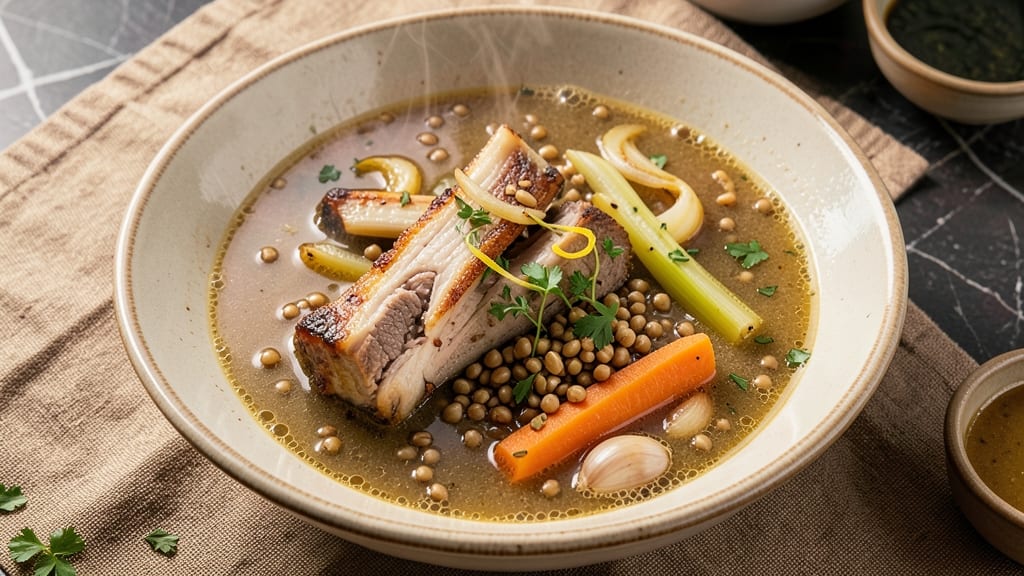
This beef bone barley soup recipe transforms tough bones into liquid gold through slow simmering, extracting deep umami that builds with every hour. The secret lies in proper bone preparation—roasting first to deepen flavor, then simmering for hours until the broth becomes rich enough to coat a spoon.
I've perfected this technique over years of testing, and it never fails to impress even skeptical eaters with its velvety texture and complex taste.
The magic happens in the slow cooking process where collagen breaks down into gelatin, creating that signature mouthfeel that makes every spoonful satisfying. Barley adds hearty texture while absorbing the broth's deep flavors, while aromatics like onions and garlic form the flavor foundation.
This isn't just soup—it's a flavor experience that gets better with each passing hour of simmering.
What you'll end up with is a restaurant-quality soup that's perfect for cold weather or when you want to feed a crowd. The broth will be so rich it practically melts in your mouth, with barley that's tender but still holds its shape.
The aroma alone will have everyone gathering around your kitchen, and the taste will make them forget about takeout.
Whether you're using a traditional stockpot or a modern pressure cooker, this method delivers exceptional results. The key is patience—rushing will compromise the depth of flavor you're working toward. Let's create something truly special that your family will ask for again and again.
Ingredients for beef bone barley soup
Six ingredients transform tough bones into restaurant-quality soup through patience and slow simmering.
| Ingredient | Amount | Notes |
|---|---|---|
| Beef Bones (Knuckle or Marrow) 🦴 | 3 lb | Raw, roasted first for depth |
| Yellow Onions 🧅 | 2 whole | Chopped into even pieces |
| Carrots 🥕 | 4 whole | Cut into 2-inch chunks |
| Celery Stalks 🌿 | 4 whole | Cut into 2-inch pieces |
| Garlic Cloves 🧄 | 6 cloves | Smashed, not minced |
| Pearl Barley 🌾 | 1 ½ cups | Rinsed before cooking |
| Tomatoes 🍅 | 4 whole | Roma or vine-ripened |
| Bay Leaves 🌿 | 2 whole | Dried, for infusion |
| Fresh Thyme 🌿 | ¼ cup | Stems removed, chopped |
| Fresh Parsley 🌿 | ¼ cup | Chopped for garnish |
| Black Peppercorns 🌶️ | 1 tbsp | Whole, for grinding |
| Salt 🧂 | 1 ½ tsp | Kosher or sea salt |
| Olive Oil 🫒 | ¼ cup | For roasting bones |
| Water 💧 | 12 cups | Or enough to cover bones |
| Beef Bouillon Cube 🍲 | 1 piece | Optional for extra depth |
The bones are everything here. Knuckle or marrow bones from the butcher section give the richest flavor—ask for them specifically. Costco or local meat markets often carry them pre-packaged, but if not, any beef bones with good marrow work. Roast them first at 425°F for 30 minutes until deeply browned (this step can't be skipped—it's what unlocks the umami). The yellow onions should be sweet, not bitter, so grab the biggest ones you can find. For the barley, Bob's Red Mill is my go-to brand—it cooks evenly and holds its shape.
No beef bouillon cube? Extra chicken bouillon or miso paste works in a pinch, but don't skip it entirely—the umami is what makes this soup sing. Fresh thyme is ideal, but dried at one-third the amount gets you close. The carrots and celery can be swapped for turnips or leeks if that's what's in your crisper. For the tomatoes, San Marzano canned is perfect if you want to cut prep time, but fresh Roma tomatoes have more depth. The key is balancing the aromatics—too much garlic can overpower, so stick to the six cloves unless you're brave.
This soup tastes even better the next day as the flavors meld. Store in airtight containers for up to 5 days in the fridge, or freeze for 3 months. I always make a double batch—one pot for dinner, one for lunches. The barley thickens as it cools, so thin with broth or water when reheating. For serving, I like to garnish with fresh parsley and a drizzle of high-quality olive oil—it adds a bright finish that cuts through the richness.
Why You'll Love This Recipe
- Minimal Chopping Required: I swear by this—just dice onions, slice carrots into thick rounds, and hack celery into 2-inch chunks. No fancy knife work, no stress, and the bones do all the heavy lifting while you sip wine and pretend you’re a chef.
- Rich Without the Guilt: That marrow from the knuckle bones? Pure umami gold. You simmer it low and slow, and suddenly your soup has depth—like a hug for your taste buds. Plus, it’s cheaper than takeout and way more satisfying.
- Leftovers That Beg for More: This soup gets better the next day. The barley softens just right, the broth thickens into something velvety, and I’ve caught myself eating it cold straight from the fridge. (Don’t judge me.)
- One-Pot, Many Uses: Make a big batch on Sunday, and you’ve got lunch for the week. Serve it over rice for a quick dinner, or turn it into a filling for dumplings. Honestly, I’ve even used it as a base for a fancy-looking stew when friends drop by unexpectedly.
Step-by-step instructions for beef bone barley soup
This method unlocks rich, velvety soup with deep umami flavor from slow-roasted bones.
Roast the Beef Bones for Maximum Flavor
Preheat your oven to 425°F and position a rack in the middle position. Place the 3 lb beef bones on a baking sheet and rub them generously with the ¼ cup olive oil. Spread them out in a single layer so they brown evenly.
Roast for 30-40 minutes, turning occasionally, until they develop a deep golden-brown crust and the bone marrow begins to darken. This step is crucial—it develops the deep, caramelized flavors that infuse the entire soup. I like to roast until I can smell that rich, toasted bone aroma filling the kitchen.
Once roasted, transfer the bones to a large Dutch oven or heavy pot. The bones will be hot, so use oven mitts. This pot will be your soup's home for the next several hours, so choose one with a tight-fitting lid.
Sauté the Aromatics and Build the Base
In the same Dutch oven, add the 2 whole yellow onions (chopped), 4 whole carrots (cut into 2-inch chunks), and 4 whole celery stalks (cut into 2-inch pieces). Cook over medium-high heat for 8-10 minutes, stirring occasionally, until the vegetables begin to soften and the onions turn translucent.
Add the 6 smashed garlic cloves and cook for another 1 minute until fragrant. Here's where the magic happens—you want to develop the flavors of these vegetables before adding any liquid. The onions should be soft but not browned, and you should be able to smell that sweet, savory aroma filling your kitchen.
Stir in the 1.5 tsp salt and 1 tbsp black peppercorns (leave them whole for grinding later). Add the 1.5 cups pearl barley (rinsed) and stir to coat everything in the base flavors you've built. This ensures every bite of barley absorbs that rich, umami-packed foundation.
Simmer the Soup for Deep Flavor Development
Pour in the 12 cups water and add the 1 piece beef bouillon cube (if using). Bring to a boil, then reduce heat to low and add the 2 whole bay leaves. The liquid should just barely bubble at the surface—this gentle simmer is key to extracting maximum flavor from the bones.
Cover and simmer for 2.5 hours. I know this seems like a long time, but patience pays off here. The bones will gradually release their collagen and marrow, creating that luxurious, velvety texture. The barley will soften but remain slightly chewy, and the vegetables will become tender and infused with flavor.
After 2 hours, check the soup. The bones should be fork-tender, and the broth should be rich and deeply flavored. If it's too thick, add a little more water to reach your desired consistency. This is also when you'll want to taste and adjust seasoning—add more salt if needed, but the bouillon cube should provide plenty of flavor.
Finish with Fresh Herbs and Tomatoes
Remove the beef bones and let them cool slightly. You can pick the meat off the bones and shred it for extra protein, or discard the bones if you prefer a cleaner broth. Add the 4 whole tomatoes (cut into wedges), ¼ cup chopped fresh thyme, and ¼ cup chopped fresh parsley to the soup. Simmer uncovered for another 20-30 minutes to allow the tomatoes to break down and release their juices.
The tomatoes will add brightness and acidity to balance the richness of the soup. The thyme and parsley will infuse the broth with fresh, herbal notes. You'll know it's ready when the tomatoes are completely tender and the soup has a vibrant, balanced flavor profile.
Strain the soup if you prefer a smooth texture, or leave it as-is for a heartier presentation with visible vegetables. Discard the bay leaves before serving. The soup should be deeply golden in color with a rich, aromatic fragrance that fills your kitchen.
Serve Warm with Crusty Bread
Ladle the soup into bowls and garnish with additional chopped fresh parsley if desired. The soup should be piping hot, with the barley perfectly tender but still holding its shape. Each spoonful should deliver that perfect balance of rich, umami-packed broth, hearty barley, and tender vegetables.
Serve immediately with crusty bread to soak up every last drop of that flavorful broth. The soup will continue to improve as it sits, so if you have leftovers, they'll only get better tomorrow. This soup is comfort food at its finest—warm, nourishing, and packed with deep, satisfying flavors.
Pro Tips For Making Beef Bone Barley Soup
- CHAR THE BONES FIRST: I learned this the hard way—skipping the char on beef bones means missing out on that deep, smoky flavor. After browning the bones in a hot pot (no oil needed), scrape up those dark bits and toss them into the soup later. That’s where the magic happens, not just in the broth.
- SLICE ONIONS THIN AND LONG: Thick onion chunks? They’ll turn to mush before the soup’s ready. Instead, slice them paper-thin and lengthwise—like matchsticks—so they soften quickly but still hold shape. (Yes, even if you’re impatient like me, this makes a real difference.)
- DON’T RUSH THE SIMMER: Low and slow is the only way. After the bones and veggies hit the pot, keep the heat at a bare simmer—just enough to see tiny bubbles, not a rolling boil. I used to crank it up, and the broth ended up cloudy and weak. Patience here guarantees a rich, clear broth.
- ADD BARLEY LATE: Barley absorbs liquid like a sponge. If you toss it in too early, you’ll end up with a watery soup and undercooked grains. Wait until the last 30 minutes of cooking—this ensures it plumps up just right without stealing all the flavor. (Your future self will thank you.)
Flavor customization for beef bone barley soup
Spicy Kick
For heat lovers, add 1-2 tbsp of hot sauce (like Cholula or Tabasco) or 1 tsp cayenne pepper during the final 20 minutes of simmering. This balances the soup's richness beautifully. If you prefer a smoky heat, swap in 1 tbsp smoked paprika with the aromatics. 🌶️
Citrus Brightness
Finish with a splash of lemon juice (about 1 tbsp) or a few drops of orange zest right before serving. The acidity cuts through the richness, making the soup feel lighter. I love adding a few lemon wedges on the side for squeezing at the table.
Herbal Variations
Swap thyme for rosemary (½ cup) for a piney aroma or add fresh sage leaves (4-5) during the final simmer. For a Mediterranean twist, include oregano (1 tsp) with the aromatics. Fresh herbs should always be added toward the end to preserve their brightness.
Creamy Texture
Stir in ½ cup crème fraîche or Greek yogurt during the last 10 minutes of cooking for a velvety finish. For a vegan option, use coconut milk (¼ cup) instead. This adds a luxurious mouthfeel without overpowering the broth's depth.
Umami Boost
Enhance the depth by adding 1 tbsp soy sauce or 1 tsp fish sauce (like Red Boat) with the bouillon cube. For a vegetarian-friendly option, use ½ cup mushroom broth instead of water. These additions amplify the savory notes without altering the soup's structure.
Sweet-Savory Balance
Add 1 small diced apple or ½ cup diced pear with the tomatoes to introduce subtle sweetness. Caramelized onions (½ cup) also work beautifully, adding a natural sweetness that complements the barley's earthiness. 🍎
Nutrition facts
Frequently asked questions
Can I use chicken or vegetable broth instead of beef bones?
The bones are essential for that deep, rich umami flavor that defines this soup. While you could use chicken broth (for a lighter version), you'd miss the collagen-rich gelatin that makes the broth velvety. For a vegetarian option, use mushroom broth and add 1 tbsp soy sauce or 1 tsp miso paste for umami depth. The texture and flavor will differ significantly without bones.
How do I know when the bones are done simmering?
Bones are ready when they're fork-tender (they should pierce easily with a fork) and the broth has a deep golden color with visible fat. The simmering time varies by bone type, but 2-3 hours is standard for knuckle/marrow bones. Check at 2 hours—if they're still tough, continue simmering for another 30-60 minutes. The longer they cook, the richer the broth becomes.
Can I make this soup in a slow cooker or Instant Pot?
For a slow cooker, roast the bones first, then add everything (including water) and cook on low for 8-10 hours. For an Instant Pot, roast bones, sauté aromatics, then add everything (except tomatoes/herbs) and pressure cook for 60 minutes on high. Release pressure naturally, then add fresh ingredients and simmer 10 minutes more. The Instant Pot version will be ready in about 1.5 hours total.
Why does my barley turn mushy?
Overcooking is the most common cause. Pearl barley should be tender but still slightly chewy—not falling apart. If yours turns mushy, you likely simmered it too long. For future batches, check the barley at 1.5 hours of simmering. Rinse the barley before adding to remove excess starch, and never boil vigorously—keep it at a gentle simmer. A 1:3 barley-to-liquid ratio (1 cup barley to 3 cups liquid) helps maintain texture.
How can I make this soup ahead of time?
This soup tastes even better the next day! Store in airtight containers in the fridge for up to 5 days or freeze for 3 months. Reheat gently on the stove over low heat, stirring occasionally. Add a splash of water or broth if it thickens too much. The flavors deepen as it sits, so leftovers are often more flavorful than the first serving. I always make a double batch—one for dinner, one for lunches!