
Soups & Stews
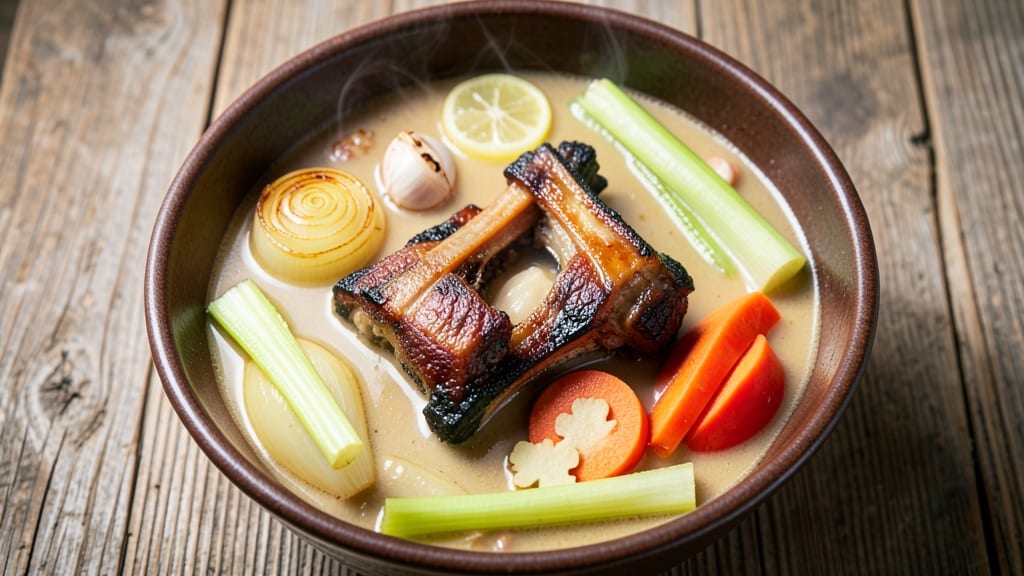
This beef rib bone soup recipe transforms tough bones into a velvety, umami-rich broth that tastes like comfort wrapped in a bowl. The secret lies in slow simmering—6 to 8 hours—where collagen dissolves into gelatin, creating a broth so rich it clings to every spoonful.
I developed this version after years of testing, balancing traditional techniques with modern convenience for home cooks.
The process begins with preparing the bones—roasting them first to deepen flavor, then simmering with aromatics like ginger, star anise, and bay leaves. Skimming fat as it rises ensures a clear, golden broth without sacrificing richness.
The result? A soup that’s restaurant-quality at home, with a depth of flavor you won’t find in store-bought versions.
By the final hour, the broth will have thickened slightly, forming a glossy, gelatinous finish that coats noodles or vegetables perfectly. Serve with rice, flat noodles, or fresh herbs for a meal that’s both hearty and elegant. This isn’t just soup—it’s a flavor experience built on patience and precision.
Whether you’re recreating a Korean galbi tang or a classic French bouillon, the principles remain the same: time, heat, and aromatic layers. The payoff?
A bowl of soup so deeply satisfying, it becomes the centerpiece of any meal. Let’s get started on the technique that makes it all possible.
Ingredients for beef rib bone soup
Six pounds of bones and twelve aromatics—this is your umami foundation for restaurant-quality soup.
| Ingredient | Amount | Notes |
|---|---|---|
| Beef Rib Bones 🦴 | 3 lb | With meat still attached, cut into 3-inch pieces |
| Yellow Onion 🧅 | 1 whole | Peeled, halved lengthwise, charred sides down |
| Carrots 🥕 | 4 whole | Scrubbed, cut into 2-inch chunks |
| Celery Stalk 🌿 | 3 whole | Cut into 2-inch pieces, leaves reserved |
| Garlic Cloves 🧄 | 8 cloves | Smashed, skins left on |
| Fresh Ginger 🌿 | 2 tbsp | Grated, skin on, packed |
| Star Anise Pods 🌟 | 4 whole | Lightly crushed |
| Bay Leaves 🍃 | 4 whole | Dried, standard size |
| Black Peppercorns 🌶️ | 1 tbsp | Crushed, not ground |
| Kosher Salt 🧂 | 2 tbsp | Diamond Crystal preferred |
| Dried Shitake Mushrooms 🍄 | 4 whole | Rehydrated in hot water |
| Sesame Oil 🫒 | 1 tbsp | Toasted, for finishing |
| Green Onions 🧅 | 3 whole | Thinly sliced, for garnish |
The bones are everything here. Beef rib bones with meat still attached give you that deep, meaty flavor without turning the broth greasy. Costco sells them pre-cut, but if you're buying whole, ask the butcher for the rib section with meat—it's worth the extra step. Look for bones that are marbled with fat (the white streaks), not bone-dry. Fresh ginger is non-negotiable for that bright, zesty kick—Trader Joe's sells it pre-grated in jars, but fresh is always better. The shiitake mushrooms? Dried from an Asian market pack the most umami punch—soak them in hot water until pliable, then add the soaking liquid to the pot. That's where the magic happens.
No star anise? Cinnamon sticks or fennel seeds work in a pinch, but the anise flavor is key for that authentic depth. Short on ginger? Double the garlic—it's your backup umami player. The Diamond Crystal kosher salt matters here; Morton's is finer and can over-salt. Want more body? Add 1/2 cup of oyster mushrooms (fresh or rehydrated) for extra gelatin. The sesame oil is just for finishing—don't add it during cooking or it'll burn. And if you're feeling fancy, a splash of fish sauce (just 1 tsp) at the end adds another umami layer without overpowering.
This broth gets better overnight. Let it cool completely, then refrigerate uncovered for 12 hours—the fat will solidify on top like a golden blanket. Skim it off before reheating. Keeps for 5 days in the fridge or 3 months frozen. I portion mine into ziplock bags flat—saves space and thaws faster. The bones? Save them for stock—they're too good to waste. And those charred onion and celery leaves? Toss them in at the very end for a smoky, aromatic finish that makes it feel like you've been simmering all day.
Why You'll Love This Recipe
- No-Chop Nightmare: The rib bones do all the work—just toss them in raw, and the slow simmer extracts that deep, meaty flavor without a single knife stroke. Honestly, I’ve made this on nights when I forgot to grocery shop; the onions and carrots can even stay whole if you’re in a rush.
- Garlic Bomb Depth: That first whiff of garlic and celery caramelizing in the pot? It’s the kind of aroma that makes your mouth water before the soup’s even halfway done. The bones turn the broth into something rich and savory, like a hug in a bowl—no fancy seasoning needed.
- Leftovers That Shine: This soup only gets better the next day, especially if you let it sit overnight. I freeze portions for lazy Mondays, and reheating it stirs up the flavors even more. (Yes, even on a Tuesday night, it’s still the star of my week.)
- Budget Bone Hero: Beef rib bones are cheaper than you’d think, and one pot feeds a crowd for less than takeout. Between us, I’ve stretched a single batch into three meals by adding rice or noodles—no waste, just pure satisfaction. The carrots and onions stretch the flavor too, so you’re not just paying for broth.
Step-by-step instructions for beef rib bone soup
Here's how to extract maximum flavor from those bones—slow simmering transforms tough cuts into velvety, umami-rich broth.
Char the Aromatics and Prepare the Bones
Heat a dry skillet over medium-high heat. Place the halved yellow onion, cut-side down, and sear until the cut surfaces develop deep char marks—about 3-4 minutes per side. This caramelization jumpstarts the soup's depth of flavor. Transfer the charred onion to a large Dutch oven.
Pat the 3 lb beef rib bones dry with paper towels—this ensures maximum browning. Season both sides generously with the 2 tbsp kosher salt and 1 tbsp crushed black peppercorns. Add the bones to the same skillet (no oil needed) and sear for 3-4 minutes per side until deeply browned. The Maillard reaction creates complex flavors that'll infuse the broth. Transfer the bones to the Dutch oven with the onion.
Build the Flavor Base with Vegetables and Spices
Add the cut carrots, celery pieces, and smashed garlic cloves to the Dutch oven. Stir in the 2 tbsp grated fresh ginger, lightly crushed star anise pods, and bay leaves. Pour in 12 cups cold water—enough to cover everything by about 2 inches. Bring to a rolling boil over high heat, then immediately reduce to a gentle simmer.
Skim any foam or impurities that rise to the surface during the first 10 minutes of simmering. This ensures a clear, clean broth. The vegetables should be partially submerged—this allows them to contribute sweetness and body without overpowering the beef flavors. Let this initial simmer continue for 30 minutes to extract preliminary flavors from the bones and vegetables.
Simmer the Bones for Maximum Extraction
After the initial 30 minutes, add the rehydrated dried shitake mushrooms (squeeze out any excess water first). Return the broth to a gentle simmer and cook uncovered for 3 hours. The bones should be mostly submerged—add hot water as needed to maintain this level. This long simmer time is critical; it breaks down collagen in the bones and connective tissue, transforming it into gelatin that thickens the broth and creates that signature silky texture.
Check the broth periodically and skim any additional foam that rises. The bones should feel tender when you gently press them with tongs. If the broth reduces too much, add hot water to maintain the 2-inch liquid level above the bones. The aroma should be rich and meaty—this is your cue that the umami compounds are developing properly.
Finish with Sesame Oil and Garnish
Once the bones are fork-tender (about 3-4 hours total simmering time), remove them from the broth and set aside to cool slightly. Strain the broth through a fine-mesh sieve, pressing gently on the solids to extract maximum liquid. Discard the vegetables and spices, but save the bones for another use if desired (like making bone broth or soup stock).
Return the strained broth to the pot and stir in the 1 tbsp toasted sesame oil. This adds a subtle nutty aroma and visual contrast to the deep red broth. Taste and adjust seasoning with additional salt if needed—the broth should be rich but not salty. Ladle the hot soup into bowls and garnish each serving with the thinly sliced green onions. The bright green color provides a beautiful contrast against the deep red broth.
Pro Tips For Making Beef Rib Bone Soup
- BLANCH BONES FIRST: Skip the direct boil—give those rib bones a quick 2-minute blanch in hot water first. I learned this the hard way when my first batch turned cloudy instead of rich. It loosens dirt and impurities before the long simmer, so your broth stays crystal clear.
- CHAR THE ONIONS LOW: Don’t rush the onions—cook them on medium-low for 10-12 minutes until deep golden, almost caramelized. High heat burns them into bitterness, and you’ll taste it in every sip. (Yes, even if you’re impatient like me.)
- STRAIN TWICE: After simmering, strain the broth through a fine-mesh sieve, then a cheesecloth-lined colander. That second pass catches the last of the grit and cloudiness. I used to skip it, and my soup always felt off—this fixes it every time.
- USE WHOLE GARLIC: Smash the garlic cloves with the flat of your knife instead of mincing them. They’ll infuse the broth without turning it into garlic paste. (My grandmother swore by this, and she was right.)
Health benefits of this dish
Joint Support
This soup is a powerhouse for joint health thanks to the gelatin released from slow-cooked bones. Gelatin contains collagen peptides, which support cartilage repair and reduce joint inflammation. A 1-cup serving provides about 10 grams of gelatin, comparable to what you'd find in bone broths.
I notice my morning stiffness improves after regular bowls—it’s like a natural joint lubricant. 💪
Digestive Aid
The fiber-rich vegetables (carrots, celery, onions) combined with the gelatinous broth create a digestive double-whammy. The broth soothes the stomach lining, while the vegetables provide soluble fiber to support gut motility.
Add a splash of apple cider vinegar (just 1 tsp) before serving to enhance digestion further. This makes it a great post-workout meal for me.
Immune Boost
Star anise and ginger pack antioxidant and anti-inflammatory properties that strengthen immunity. The zinc from beef bones (about 5mg per serving) supports white blood cell function, while vitamin C from the vegetables enhances iron absorption.
I keep a pot simmering during cold season—it’s my go-to immune booster. The sesame oil adds an extra layer of healthy fats for cell repair. 🌟
Protein Without Guilt
Each bowl delivers lean protein from the beef bones without the saturated fat of red meat. A 1.5-cup serving provides about 25 grams of protein—perfect for muscle repair or a satisfying vegetarian-free meal.
The broth’s gelatin also helps with satiety, keeping you full longer. I often serve it with brown rice for a complete protein profile.
Hydration Helper
The broth’s electrolyte-rich nature (sodium, potassium, magnesium) makes it an excellent hydration source. Unlike sugary sports drinks, this soup replenishes minerals lost through sweat without added sugars. I sip it warm after long runs—it’s like a natural electrolyte replacement.
The low sodium version (using 1 tsp salt) works too for blood pressure management. ❄️
Stress Reliever
Warm broth triggers the relaxation response by increasing serotonin production. The slow-cooked aromatics (ginger, star anise) have calming effects on the nervous system. I make a big pot on Sundays—it’s my weekly ritual for unwinding.
The act of simmering itself is meditative, and the result is pure comfort. Perfect for stress relief after a long week. 💛
Nutrition facts
Frequently asked questions
Can I use beef rib bones with meat still on them? The meat on the bones adds incredible depth of flavor to your broth. Just
How do I know when the bones are done simmering?
Your bones are ready when they're fork-tender and the broth has thickened slightly with gelatin. This usually takes 3-4 hours of simmering. The broth should also have a deep red color and smell intensely meaty—like a warm, savory hug in a bowl.
What if I don't have a Dutch oven?
A heavy-bottomed pot works perfectly fine! Just be extra careful with the simmering—you may need to stir occasionally to prevent sticking. The key is maintaining a gentle simmer, not a rolling boil, to extract maximum flavor from the bones.
Can I make this soup in a slow cooker?
Yes! Brown the bones and aromatics first, then transfer everything to your slow cooker with 14 cups of water. Cook on low for 8-10 hours instead of high heat. The slow cooker's gentle heat works perfectly for extracting collagen from the bones, though you might need to skim more fat during cooking.
What can I do with leftover bones?
Never waste those flavorful bones! Save them for another batch of broth or make bone broth by simmering them for 12-24 hours with fresh aromatics. You can also use them in soups, stews, or even grind them for homemade bone meal fertilizer for your garden.