
Soups & Stews
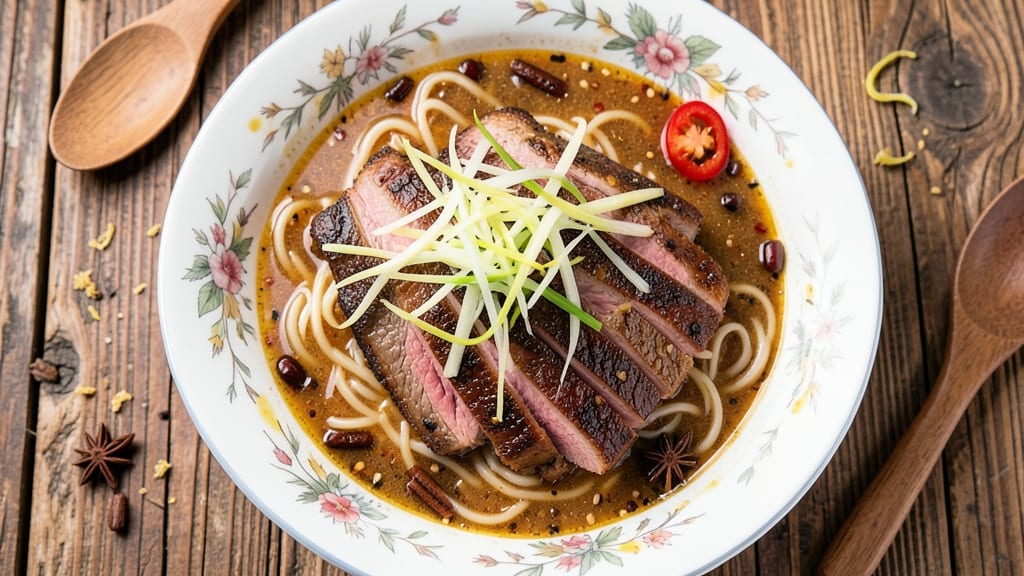
This beef rice noodle soup recipe delivers the perfect balance of rich, aromatic broth and tender beef over silky rice noodles—inspired by both Vietnamese phở and Thai kuay teow reua traditions.
The secret lies in a five-spice-infused broth that simmers for hours, extracting deep umami from brisket or flank steak while keeping the noodles perfectly tender.
I’ve streamlined the process without sacrificing authenticity, so you get restaurant-quality results in under 2 hours—ideal for a comforting weeknight dinner or a crowd-pleasing meal.
The fragrant broth starts with charred aromatics—ginger, garlic, and shallots—then builds layers of warmth with star anise, cinnamon, and cloves. Thinly sliced beef cooks low and slow until fork-tender, while wide rice noodles soak up the flavor without turning mushy.
Garnish with fresh herbs and lime for brightness, and you’ve got a bowl that’s reassuringly familiar yet elevated—perfect for anyone craving a soul-warming, texturally satisfying soup.
Ingredients for beef rice noodle soup
Fourteen ingredients for a bowl that tastes like a fragrant hug from a bustling Asian street market.
| Ingredient | Amount | Notes |
|---|---|---|
| Brisket or Flank Steak 🥩 | 1 ½ lb | Thinly sliced against the grain |
| Wide Rice Noodles 🍜 | 8 oz | Flat, medium-width (like pho noodles) |
| Star Anise Pods 🌿 | 2 whole | Whole, not ground |
| Cinnamon Sticks 🌿 | 2 whole | 1-inch pieces |
| Cloves 🌿 | 4 whole | Lightly crushed |
| Fresh Ginger 🧄 | ½ cup | Unpeeled, julienned |
| Garlic Cloves 🧄 | 6 cloves | Smashed, not minced |
| Shallots 🧅 | 2 whole | Thinly sliced |
| Fish Sauce 🍶 | 2 tbsp | Red Boat preferred |
| Soy Sauce 🥄 | 2 tbsp | Light or all-purpose |
| Beef Broth 💧 | 6 cups | Homemade or high-quality |
| Lime Wedges 🍋 | 2 whole | For serving |
| Fresh Thai Basil 🌿 | ½ cup | Chopped, stems removed |
| Green Onions 🧅 | 4 whole | Thinly sliced, white and green parts |
| Sesame Oil 🫒 | 1 tbsp | For finishing |
The beef is non-negotiable—brisket for deep flavor or flank steak for tenderness. Slice it thinly against the grain, and Costco or Whole Foods often carry pre-sliced versions. For the five-spice blend, Penzeys has pre-mixed versions, but whole spices toasted in a dry pan first add complexity. Ginger and garlic should be fresh—those jarred versions won’t cut it. The Red Boat fish sauce makes all the difference, but any reputable brand works. I always grab extra Thai basil—half goes in the pot, half gets torn over the top for that restaurant touch.
No fish sauce? Soy sauce plus a dash of Worcestershire (check for anchovies if vegan) gets you close. Swap star anise for 1 tsp ground cinnamon and 1 tsp ground cloves if needed. The noodles? Rice vermicelli works, but they’ll be thinner—soak them longer. For the broth, homemade is best, but Swanson or Pacific Foods brands are solid shortcuts. The lime should be fresh—bottled juice lacks the bright punch. No Thai basil? Cilantro or Italian basil—just add a pinch of sugar to mimic the sweetness.
This soup tastes even better the next day—reheat gently so the noodles don’t turn to mush. Store broth in the fridge for up to 5 days or freeze for 3 months. Keep the fresh herbs separate until serving—wrap them in damp paper towels in a sealed container. The beef can be pre-cooked and refrigerated for 2 days, then reheated in the broth. Garnishes like sesame oil and lime should be added right before serving—they’re the finishing flourishes that make it sing.
Why You'll Love This Recipe
- One-Pot Magic: I swear by this recipe after burning a pot of ramen—just slice the steak, simmer with star anise and cinnamon, and the broth builds itself. No chopping, no fuss, just deep flavor with minimal effort.
- Warm Spice Hug: That first sip of broth—star anise and cloves turn this into a cozy hug in a bowl. The beef stays tender while the noodles soak up the aromatic richness like a sponge.
- Lunchbox Hero: Between us, this is my go-to for meal prep. Toss cold noodles and beef into containers, and it’s a satisfying lunch the next day—no reheating required. (Yes, even on a Tuesday night.)
- Budget Stretch: A pound of flank steak and a bag of noodles feed four for less than takeout. The spices cost pennies, and leftovers taste just as good reheated—proof that simple ingredients can feel special.
Step-by-step instructions for beef rice noodle soup
Here's how to create a fragrant, five-spice-infused broth with tender beef and silky noodles.
Prepare the Five-Spice Broth Base
In a large pot, combine the 6 cups beef broth, 2 whole star anise pods, 2 whole cinnamon sticks, and 4 whole cloves. Bring to a gentle boil over medium-high heat until the broth reaches a rolling simmer. This aromatic blend will infuse the broth with warm, earthy notes that define this dish.
While the broth heats, add the 0.5 cup fresh ginger and 2 whole shallots that have been thinly sliced. Let them simmer for 10 minutes until the ginger softens and the shallots become translucent. The broth should now smell rich and complex—this is your foundation. Keep the heat at a steady simmer to maintain the aromatic oils.
Sear and Slice the Beef
While the broth simmers, pat the 1.5 lb brisket or flank steak dry with paper towels. Using a sharp knife, slice the meat thinly against the grain into ¼-inch thick strips. This ensures tender bites every time. Keep the sliced beef in the fridge until ready to use—it'll stay fresher longer.
Heat 1 tablespoon sesame oil in a separate skillet over medium-high heat. Add the sliced beef in a single layer and sear for 2-3 minutes per side until the edges turn lightly browned and the beef loses its raw color. The high heat will create a subtle caramelization that adds depth to the dish. Remove the beef and set aside.
Build the Flavor Layers
Return the seared beef to the simmering broth along with the 6 smashed garlic cloves. Let everything simmer together for 15-20 minutes until the beef becomes fork-tender and easily pulls apart. You'll notice the broth deepens in color and flavor—this is when the magic happens.
Stir in the 2 tablespoons fish sauce and 2 tablespoons soy sauce, allowing them to meld into the broth for 5 minutes. Taste and adjust seasoning if needed—you're aiming for a balance of umami, saltiness, and subtle sweetness. The broth should coat the back of a spoon with a velvety texture.
Cook the Noodles and Finish
In a separate pot, bring 4 cups of water to a boil. Add the 8 oz wide rice noodles and cook according to package instructions until al dente—usually 2-3 minutes. Drain immediately and rinse under cold water to stop the cooking process. This prevents the noodles from becoming mushy when added to the hot broth later.
Divide the cooked noodles among bowls. Ladle the hot beef broth and tender beef over the noodles, ensuring each serving gets a generous portion. Garnish with 0.5 cup chopped fresh Thai basil, 4 thinly sliced green onions, and a squeeze of 2 lime wedges. Drizzle with an extra ½ tablespoon sesame oil for a glossy finish.
Serve Immediately
This soup is best enjoyed fresh while the noodles are still warm and the broth maintains its rich, aromatic qualities. Stir each bowl gently before serving to distribute the flavors evenly. The combination of silky noodles, tender beef, and fragrant broth creates a harmonious balance that's both comforting and deeply satisfying.
For an extra touch, serve with additional lime wedges on the side so each diner can adjust the acidity to their preference. The contrast between the bright citrus and the savory broth elevates every spoonful.
Pro Tips For Making Beef Rice Noodle Soup
- SEAR THE STEAK FIRST: Don’t skip this step—get your brisket or flank steak screaming hot in a dry pan with oil until it’s deep brown on all sides. I used to rush the broth and wondered why my soup tasted flat; that crust carries the flavor. Use medium-high heat and resist moving it too soon—wait for those 3-4 minutes of noisiness before flipping.
- SOAK NOODLES JUST BEFORE SERVING: Wide rice noodles turn mushy if prepped too early. Instead, keep them dry in a bowl until you’re ready to serve, then pour boiling broth over them for 3-5 minutes. I learned this the hard way—my first batch turned to glue after sitting in cold water for "just a few minutes." Hot broth rehydrates them perfectly without overcooking.
- CRUSH WHOLE SPICES GENTLY: Star anise, cinnamon sticks, and cloves add depth, but whole spices need a light hand. Lightly crush or bruise them with the side of a knife before adding to the broth—this releases flavor without turning the soup gritty. I was skeptical until I tried it; the aroma is richer, and the texture stays smooth.
- USE COLD WATER FOR BROTH: Start your beef broth cold—never hot water—to avoid cloudiness and help extract more collagen from the meat. After searing the steak, add cold water (or ice cubes) to the pot, then bring to a boil. This trick makes the broth clearer and richer, and it’s the thing that matters most for that restaurant-quality look.
Best sauces and condiments for this recipe
Fish Sauce Magic
This umami bomb is the soul of your beef rice noodle soup. I always use Red Boat fish sauce—it has the perfect balance of saltiness and funk without overpowering. Start with 2 tablespoons and taste as you go; you can always add more but can't take it out.
For a vegetarian version, substitute with 2 tablespoons soy sauce plus 1 teaspoon Worcestershire sauce (check for anchovies if avoiding fish). The key is letting it simmer into the broth for at least 5 minutes to fully integrate those deep, savory flavors.
Sesame Oil Finish
A drizzle of sesame oil at the end adds a nutty aroma and glossy sheen that makes your soup look (and taste) restaurant-worthy. I use ½ tablespoon per bowl—just enough to coat the surface without overwhelming the delicate balance.
Toast the oil first by heating it in a small pan over low heat for 30 seconds to enhance its flavor before drizzling. This step is optional but transforms a good soup into an exceptional one with minimal effort. 🌟
Spicy Chili Oil
For heat lovers, a spoonful of chili oil (store-bought or homemade) adds a fiery kick that cuts through the richness. I recommend Lao Gan Ma chili crisp for its perfect balance of heat and crunch. Add 1 teaspoon per bowl right before serving so the heat doesn't dissipate.
If you're making it from scratch, combine ¼ cup neutral oil, 1 tablespoon chili flakes, and 1 teaspoon sugar, then fry until fragrant. Let it cool before using to preserve the heat.
Lime and Herbs
Fresh lime wedges and Thai basil are non-negotiable for brightness and freshness. I always serve lime on the side so diners can squeeze it to taste—some prefer it tangy, others mild. For the basil, use ½ cup chopped leaves per bowl, torn rather than chopped to release more flavor.
If Thai basil isn't available, cilantro or Italian basil work in a pinch, though they lack the anise-like sweetness. A pinch of sugar on the herbs mimics the natural sweetness of Thai basil and balances the acidity. 💛
Sweet Bean Sauce
For a sweeter, richer variation, stir in 1 tablespoon sweet bean sauce (like Lee Kum Kee) when adding the fish sauce. This adds a subtle caramelized depth that pairs beautifully with the beef. I recommend using it sparingly—just enough to enhance, not dominate.
It's particularly effective if your broth needs a touch more complexity without adding salt. The sauce also works as a dipping sauce for extra noodles on the side.
Hoisin Swirl
A drizzle of hoisin sauce adds a thick, slightly sweet contrast that's especially popular in Thai-style beef noodle soups. I use 1 teaspoon per bowl, swirled gently into the broth before serving. For extra richness, warm the hoisin slightly in a small pan to soften its texture.
This sauce also pairs wonderfully with the sesame oil finish, creating a perfect balance of sweet, salty, and nutty flavors. Keep it on the side if you prefer to control the amount per serving.
Nutrition facts
Frequently asked questions
Can I use regular rice noodles instead of wide rice noodles?
Yes, but the texture will differ! Regular rice noodles (like vermicelli) are thinner and cook faster, so they'll absorb the broth more quickly. For best results, use 12 oz of vermicelli instead of 8 oz wide noodles and cook them for just 1-2 minutes—they'll soften faster in the hot broth. The wider noodles hold up better to long simmering and create a more satisfying bite.
How do I make the broth less salty if I used too much fish sauce?
Add ½ cup cold water or beef broth to dilute the saltiness, then taste again. If it's still too strong, stir in 1 teaspoon sugar or honey to balance the flavors. For a more dramatic fix, skim some of the broth off the top (where salt concentrates) before serving. The key is to adjust gradually—you can always add more broth, but you can't remove salt.
Can I prepare this soup ahead of time?
The broth and beef can be made 1 day ahead and stored in the fridge. Reheat gently over low heat until warm, then add the noodles just before serving. For even better results, refrigerate the broth separately from the beef (which can be pre-cooked and stored in the fridge for 2 days). The noodles should always be cooked fresh to maintain their perfect texture.
What’s the best cut of beef for this recipe?
Brisket or flank steak are ideal—they’re flavorful and tender when sliced thinly against the grain. For extra tenderness, use chuck roast (slow-cooked until fork-tender) or shank (rich in collagen for a thicker broth). Avoid lean cuts like sirloin, as they can turn tough. If you prefer convenience, pre-sliced beef from Asian markets works perfectly—just check for thin, even slices.
Why did my noodles turn mushy?
This usually happens if the noodles cooked too long in hot broth. Always rinse them under cold water after boiling and drain well before adding to the soup. For extra insurance, soak the noodles in ice water for 1 minute after draining. Also, avoid reheating the entire soup with noodles—add them fresh to maintain their texture. The broth should be simmering gently, not boiling, when you add the noodles.