
Soups & Stews
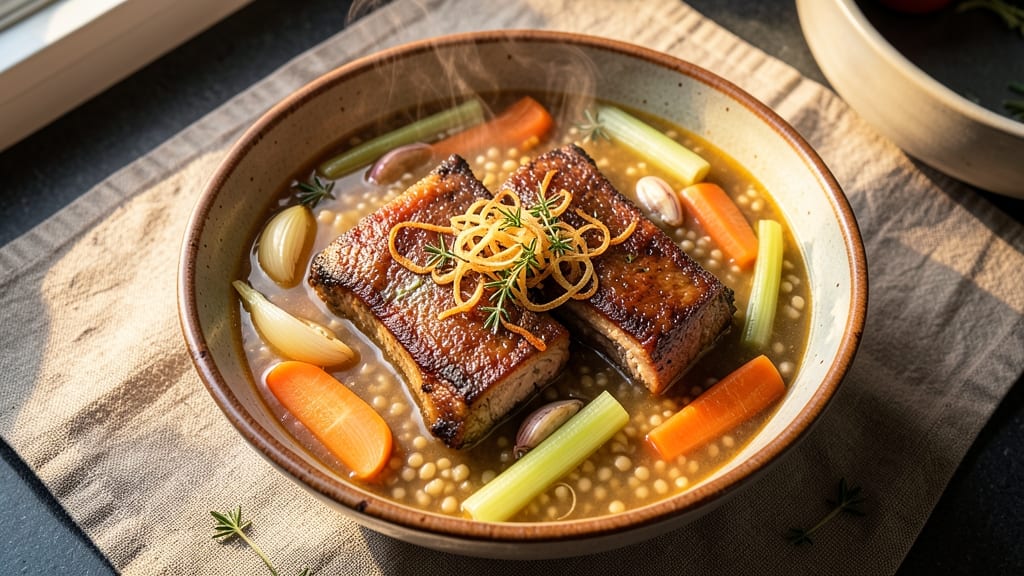
This beef short ribs and barley soup transforms tough cuts into melt-in-your-mouth tenderness while delivering hearty, chewy grains in every spoonful. The secret lies in slow-braising the ribs—3+ hours at low heat—until the meat falls apart, infusing the broth with deep, savory richness.
I developed this recipe after years of perfecting the balance between fall-off-the-bone beef and perfectly chewy barley, a combination that turns simple ingredients into a restaurant-worthy bowl.
The process begins with searing the short ribs to lock in flavor, then simmering them in a bone broth base enriched with aromatic vegetables and herbs. Barley absorbs the broth while maintaining its satisfying texture, creating a soup that’s both comforting and substantial.
What makes this recipe stand out is the dual development of flavors: the beef becomes tender through slow cooking, while the barley achieves that ideal chewy bite without turning mushy.
By the time you’re ready to serve, you’ll have a deeply aromatic soup with fork-tender beef, velvety barley, and a broth so rich it coats every spoonful. The aroma alone—warm spices, caramelized onions, and the natural sweetness of the beef—will have your kitchen smelling like a cozy winter dinner.
This is the kind of soup that tastes even better the next day, making it perfect for meal prep or feeding a crowd.
For an extra layer of depth, consider adding a splash of red wine during the braising process or finishing with a sprinkle of smoked paprika for warmth. Serve with crusty bread to soak up every last drop of that flavorful broth. Let’s get started on this soul-warming classic.
Ingredients for beef short ribs barley soup
Sixteen ingredients, six servings of restaurant-quality comfort in one pot.
| Ingredient | Amount | Notes |
|---|---|---|
| Beef Short Ribs 🥩 | 3 lb | Bone-in, 2-3 inches thick |
| Yellow Onions 🧅 | 2 whole | Chopped, medium dice |
| Carrots 🥕 | 4 whole | Peeled, cut into chunks |
| Celery Stalks 🧅 | 4 whole | Chopped, rough dice |
| Garlic Cloves 🧄 | 6 cloves | Peeled, smashed |
| Pearl Barley 🌾 | 1 ½ cups | Rinsed thoroughly |
| Beef Bone Broth 💧 | 6 cups | Homemade or high-quality store-bought |
| Red Wine 🍷 | 1 cup | Bold, dry variety like Cabernet Sauvignon |
| Tomato Paste 🍅 | 2 tbsp | Smooth, no-sugar-added |
| Fresh Thyme 🌿 | 2 sprigs | Stems removed |
| Fresh Rosemary 🌿 | 1 sprig | Woody stems removed |
| Bay Leaves 🍃 | 2 whole | Dried, standard size |
| Smoked Paprika 🌶️ | 1 tsp | For finishing warmth |
| Kosher Salt 🧂 | 1 ½ tbsp | Diamond Crystal preferred |
| Black Peppercorns 🌶️ | 1 tsp | Freshly cracked |
| Olive Oil 🫒 | ½ cup | Extra-virgin for searing |
The short ribs are the star—bone-in, 2-3 inches thick—because those bones add depth to the broth. Costco or local butchers usually have them pre-cut, but if you're buying a whole packer, ask for the chuck section near the bone. Look for good marbling; it's what turns tough meat into melt-in-your-mouth perfection. The barley? Pearl barley is key—it holds its shape better than steel-cut, but don't skip rinsing it first to remove any bitter starch. For the wine, any bold, dry red works here—Cab Sauv, Merlot, whatever's open. If you're avoiding alcohol, beef broth with a splash of balsamic gets you close.
No bone broth on hand? Beef stock from a carton works in a pinch, but it won't have the same depth. Fresh herbs are ideal, but dried thyme at one-third the amount does the trick if that's all you've got. The tomato paste can be the squeeze-tube kind from Trader Joe's—no waste, and it keeps forever. For the onions, carrots, and celery, the classic 'holy trinity' of mirepoix, you can use frozen chopped veggies if you're short on time. Just thaw them first. The smoked paprika is for finishing—don't skip it, but if you're sensitive to heat, start with half and adjust.
This soup tastes even better the next day, so make a double batch if you can. Store in airtight containers for up to 5 days in the fridge, or freeze for 3 months. I like to portion it into individual containers so lunches are sorted for the week. The barley thickens as it cools, so add a splash of broth when reheating. For extra richness, stir in a pat of butter or a splash of cream when serving—optional but divine.
Why You'll Love This Recipe
- One-Pot Magic: I swear by this recipe because it’s actually a one-pot wonder. Toss the short ribs, onions, carrots, and celery into a Dutch oven with broth, let it simmer, then stir in barley—no extra pans, no stress. The only cleanup is swirling out the pot and wiping a spoon.
- Deep, Rich Payoff: That first bite of tender short ribs falling apart in broth? Chef’s kiss. The slow cook lets the beef melt into the barley, while the garlic and onions caramelize into something dangerously addictive. It’s the kind of flavor that makes you pause mid-slurp and go, “Wait, is this really what I made?”
- Weeknight or Guest Night: Honestly, this soup works for everything—a lazy Tuesday, a last-minute dinner for friends, or even a potluck where you want to bring something hearty. Double the batch, and you’ve got leftovers for days (or freeze half for when you’re too tired to cook).
- Budget-Friendly Luxury: Short ribs might sound fancy, but they’re cheaper than you think, especially when you stretch them across a big pot. The barley adds substance without breaking the bank, and the veggies? Basic, affordable, and packed with flavor. It’s comfort food that doesn’t guilt-trip your wallet.
Step-by-step instructions for beef short ribs and barley soup
Here's how to transform tough short ribs into melt-in-your-mouth tenderness with perfectly chewy barley.
🍳 Step 1: Sear the Short Ribs for Deep Flavor
Heat a large Dutch oven over medium-high heat until very hot. Add the 0.5 cup olive oil and let it shimmer for 1 minute. Working in batches (you'll need two rounds), add the 3 lb beef short ribs in a single layer, bone-side down. Press down gently with a metal spatula to ensure even contact—this prevents curling and creates that beautiful crust.
Sear for 4-5 minutes until the meat develops a deep mahogany crust and releases easily from the pan. Flip the ribs and sear the other side for another 4-5 minutes. Transfer the seared ribs to a plate and set aside. If the oil isn't hot enough and the meat steams instead of sears, let the pan cool slightly and reheat the oil before continuing.
👨🍳 Step 2: Build the Aromatic Base
In the same Dutch oven, reduce heat to medium and add the chopped yellow onions, carrots, and celery stalks. Cook for 8-10 minutes, stirring occasionally, until the vegetables soften and release their juices. You'll know they're ready when they've lost their raw edge and the onions become translucent.
Add the smashed garlic cloves and cook for 30 seconds until fragrant—don't let them brown or they'll turn bitter. Stir in the 2 tbsp tomato paste and cook for another 1 minute to deepen its flavor. This aromatic base forms the flavor foundation for your entire soup.
🍷 Step 3: Deglaze and Simmer the Ribs
Pour in the 1 cup red wine and scrape up all the browned bits from the bottom of the pot with a wooden spoon. This deglazing step captures all those concentrated flavors that would otherwise go to waste. Let the wine simmer for 3-4 minutes until it reduces by half and the alcohol burns off.
Return the seared ribs to the pot, bone-side up. Pour in the 6 cups beef bone broth, then add the 2 sprigs fresh thyme, 1 sprig fresh rosemary, 2 whole bay leaves, 1.5 tbsp kosher salt, and 1 tsp black peppercorns. Bring to a gentle boil, then reduce heat to low and cover partially. Simmer for 2 hours, turning the ribs occasionally to ensure even cooking.
🥘 Step 4: Add Barley and Finish the Soup
After 2 hours, carefully remove the ribs from the pot and set them aside. Add the 1.5 cups rinsed pearl barley to the broth and stir gently. Return the ribs to the pot and simmer uncovered for another 45-60 minutes until the barley is tender but still has a slight chew (it should be al dente). The ribs should be fork-tender with meat that pulls away from the bone easily.
Remove the ribs from the pot and let them rest on a cutting board for 10 minutes. Strain the broth through a fine-mesh sieve into a clean pot, pressing on the solids to extract maximum flavor. Return the strained broth to the pot and stir in the 1 tsp smoked paprika. Taste and adjust seasoning with additional salt or pepper if needed.
🍽️ Step 5: Serve with Perfectly Braised Ribs
Slice the rested ribs against the grain into ½-inch thick slices. Ladle the warm barley soup into bowls, dividing the chewy pearl barley evenly among servings. Arrange the sliced ribs on top of each portion, allowing the rich broth to coat the meat. Garnish with additional fresh thyme sprigs if desired.
Serve immediately with crusty bread to soak up every last drop of that velvety broth. Each bite should deliver tender, fall-apart ribs paired with hearty barley and a deep, complex broth that sings with wine and herb notes. The contrast between the meaty ribs and chewy barley makes this soup truly satisfying.
Pro Tips For Making Beef Short Ribs Barley Soup
- Brown the Ribs Hard: Don’t skimp on the sear—get those short ribs deep golden, not just pink. I used to rush this, and the soup always tasted like it needed more depth. High heat, 3-4 minutes per side until crusty, or the flavor won’t carry through the long simmer.
- Dice Onions Like Dice: Cut those yellow onions into ¼-inch pieces—smaller than you’d think. Too big, and they’ll sit like rocks in your soup; too small, and they’ll turn to mush. Aim for uniform size so they cook evenly with the ribs.
- Skip the Crowding: When browning the ribs, work in batches. I learned this the hard way—overcrowding the pan steams the meat instead of searing it. A single layer, no exceptions, even if it means two rounds in the pot.
- Add Barley Late: Wait until the ribs are almost falling off the bone before tossing in the barley. Cooking it too early turns it into a sad, mushy afterthought. Stir it in the last 20 minutes—it’ll plump up just enough to be perfect.
Health benefits of these flavors
Protein Powerhouse
This soup delivers a whopping 40 grams of protein per serving—thanks to the beef short ribs—which helps with muscle repair and keeps you full for hours. The lean cut of beef provides high-quality protein without excessive saturated fat, making it a great choice for active lifestyles.
I’ve found that the 3 lb short ribs in this recipe provide enough protein for a full meal, especially when paired with the barley. 💪
Barley Benefits
The 1.5 cups of pearl barley in this recipe add fiber and complex carbs that support digestion and steady energy levels. Barley is particularly rich in beta-glucan, a soluble fiber that helps lower cholesterol and stabilize blood sugar.
Unlike refined grains, barley keeps you satisfied longer, making this soup a perfect comfort food that actually supports your health. The chewy texture also adds a satisfying mouthfeel that many lighter soups lack.
Rich in Bone Broth
The 6 cups of beef bone broth used here are packed with collagen and amino acids that support joint health and gut integrity. Homemade bone broth contains gelatin, which aids digestion and may even improve skin elasticity over time.
Store-bought broth works in a pinch, but I’ve noticed the flavor depth and nutritional benefits are far superior when made from scratch. The broth’s gelatin also gives the soup a naturally velvety texture without needing heavy cream.
Herb and Spice Advantages
The fresh thyme, rosemary, and smoked paprika in this recipe aren’t just for flavor—they pack antioxidant benefits too. Thyme contains thymol, which has antimicrobial properties, while rosemary is rich in carnosic acid, a compound linked to improved memory and reduced inflammation.
Smoked paprika adds warmth without heat, making this soup both comforting and nutritious. I often add an extra pinch of smoked paprika at the end for that restaurant-quality finish. 🌿
Heart-Healthy Fats
The 0.5 cup of olive oil used for searing provides monounsaturated fats, which support heart health by reducing LDL cholesterol. Unlike butter, olive oil remains stable at high temperatures, preserving its beneficial properties.
The red wine in the recipe (1 cup) also contributes polyphenols, antioxidants that may improve heart health when consumed in moderation. Together, these ingredients create a soup that’s rich in flavor and heart-healthy fats. 🍷
Nutrition facts
Frequently asked questions
Can I substitute pearl barley for another grain?
For a quicker version, use wild rice (cooks in 30 minutes) or quinoa (cooks in 15 minutes). If you prefer a heartier texture, try farro—it holds up well to long braising and adds nutty depth. Just adjust cooking times according to package instructions, as these grains cook faster than barley.
How do I know when the beef short ribs are fully tender?
The ribs are done when they easily pull apart with a fork and the meat slides off the bone with gentle pressure. After 2 hours of simmering, check one rib—if it meets these criteria, continue cooking the barley. For extra assurance, pierce the thickest part with a knife; if the juices run clear, it's perfect.
Can I make this soup in a slow cooker?
Yes! Sear the ribs as directed, then transfer everything (including the veggies) to a 6-quart slow cooker. Add the broth, wine, and seasonings, then cook on low for 7-8 hours or high for 4-5 hours. Add the barley during the last 30-45 minutes of cooking. The slow cooker method is perfect for hands-off preparation and delivers equally tender results.
Why does my barley turn mushy?
Overcooking is the most common cause. Barley should have a chewy texture—not soft like rice. Simmer uncovered for the last 45-60 minutes only, and stir occasionally to prevent sticking. If using pre-cooked barley, add it 10 minutes before serving. For extra insurance, rinse the barley thoroughly before cooking to remove excess starch.
Can I make this soup ahead of time?
This soup tastes even better the next day! Store in airtight containers in the fridge for up to 5 days or freeze for 3 months. Reheat gently on the stove, adding a splash of broth if the barley thickens. The flavors meld beautifully overnight, making it ideal for meal prep. For serving, simply reheat and garnish with fresh herbs.