
Soups & Stews
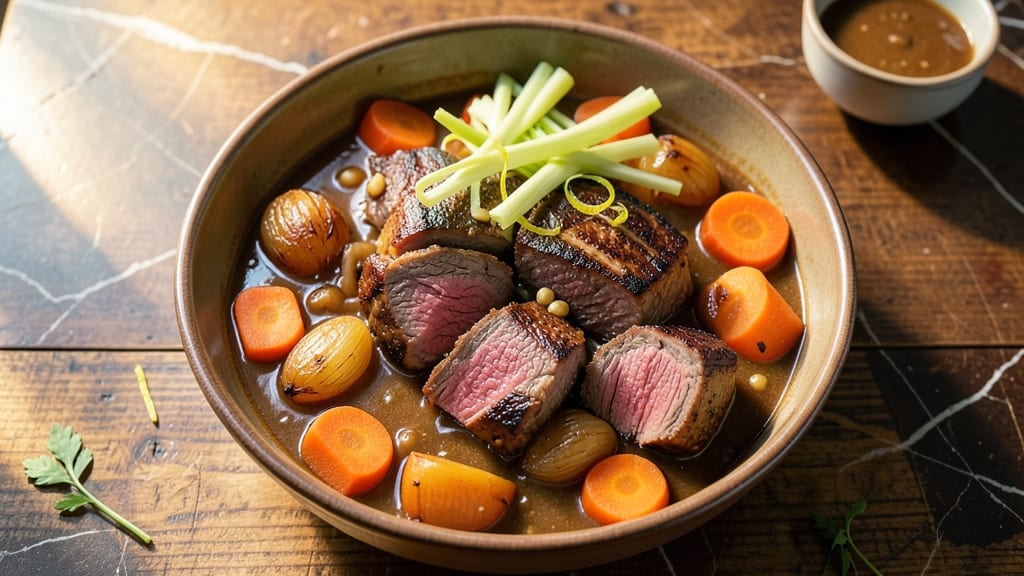
This beef stew and onion soup recipe delivers the ultimate comfort food experience—tender beef braised in rich broth alongside caramelized onions that form the base for a golden, cheesy topping.
The secret lies in slow-cooking the beef until fork-tender while building deep, savory flavors, then transforming those same onions into a velvety soup with a crispy, bubbling crust.
I developed this recipe after years of perfecting both components separately, and together they create a meal that feels like a warm hug on a chilly evening.
The beef stew begins with a deep brown sear to develop rich flavors, followed by slow simmering in a flavorful broth until the meat practically melts in your mouth. Meanwhile, the onion soup transforms simple yellow onions into sweet, caramelized layers that form the heart of the soup.
What makes this recipe special is the harmony between the two—using the same onions for both the stew and soup ensures maximum flavor efficiency, while the slow-cooked beef infuses the broth with depth that elevates the entire dish.
By the time you're done, you'll have a steaming bowl of beef stew brimming with tender meat and hearty vegetables, paired with a second bowl of creamy onion soup topped with melted Gruyère and toasted bread.
The contrast between the robust stew and delicate soup creates a perfect balance, making this a meal that satisfies every craving. This recipe is designed to be your go-to for cold weather gatherings or cozy weeknight dinners—where every spoonful delivers restaurant-quality comfort.
Whether you're serving this to a crowd or treating yourself to a solo dinner, the combination of slow-cooked beef and caramelized onion soup creates a meal that's both impressive and deeply comforting.
The best part? Leftovers reheat beautifully, making this a perfect make-ahead option for busy schedules. Let's get started on creating this heartwarming masterpiece.
Ingredients for beef stew onion soup
Six hearty ingredients for the stew and eight for the soup—simple but spectacular.
| Ingredient | Amount | Notes |
|---|---|---|
| Chuck Roast Beef 🥩 | 3 lb | Trimmed of excess fat |
| Yellow Onions 🧅 | 4 whole | Yellow or red variety |
| Carrots 🥕 | 4 whole | Medium size, peeled |
| Celery Stalks 🌿 | 4 whole | Fresh, trimmed |
| Garlic Cloves 🧄 | 6 cloves | Freshly minced |
| Tomato Paste 🍅 | ½ cup | Canned, smooth |
| Dry Red Wine 🍷 | 1 ½ cups | Bold variety like Cabernet |
| Beef Broth 💧 | 4 cups | Low-sodium preferred |
| Bay Leaves 🍃 | 2 whole | Fresh or dried |
| Thyme Sprigs 🌿 | 4 whole | Fresh, stems removed |
| Black Peppercorns 🌶️ | 1 tbsp | Freshly cracked |
| Salt 🧂 | 1 ½ tsp | Kosher or sea salt |
| Heavy Cream 🥛 | 2 cups | Full-fat for richness |
| Gruyère Cheese 🧀 | 1 ½ cups | Freshly grated |
| Baguette 🍞 | 1 whole | Crusty, sliced thin |
| Olive Oil 🫒 | ¼ cup | For caramelizing onions |
| Sugar 🍚 | 1 tbsp | For caramelizing onions |
The chuck roast is non-negotiable—it's the secret to that melt-in-your-mouth texture. Costco sells it pre-cut in huge chunks, which saves time, but any grocery store has it. Look for good marbling—those little fat streaks are what make the meat tender. The onions? Yellow or red, doesn't matter, but avoid sweet onions like Vidalia—they won't caramelize right. I always buy a big bag of organic carrots from Trader Joe's because they're sweeter and more flavorful. Fresh thyme and bay leaves make all the difference—don't skip the fresh if you can get it, but dried works in a pinch.
No red wine? Beef broth with a splash of balsamic works just as well. For the caramelized onions, sugar isn't mandatory—just be patient and let them cook low and slow. Gruyère is ideal for the soup topping, but Swiss or Emmental work too. The baguette should be crusty—French-style if you can find it, but any good bread will toast nicely. Pre-shredded cheese? Skip it. It's full of anti-caking agents and won't melt the same way. The tomato paste can be from a can or one of those little squeeze tubes—Trader Joe's has great ones that last forever.
The stew reheats even better the next day—just add a splash of broth if it's too thick. Store it in the fridge for 4-5 days or freeze portions for up to 3 months. The onion soup is best served fresh, but you can prep the base ahead and just add the cream and cheese when ready to eat. For the caramelized onions, make extra—they're perfect on toast, in sandwiches, or even just eaten with a spoon. The baguette stays fresh for 2-3 days if you wrap it well, but it's best toasted fresh.
Why You'll Love This Recipe
- One-Pot Magic: I swear by this recipe when I’m too tired to wash pots. Chuck roast and onions simmer together—no extra dishes, just deep flavor in one pot. The celery and carrots soften just enough to melt into the broth, while the beef stays tender. Honestly, my lazy Sundays thank me every time.
- Rich, Deep Umami: That slow-cooked chuck roast? It falls apart like a dream, soaking up all the caramelized onion and garlic goodness. The onions get sweet and jammy, while the garlic cloves add a punch that lingers. Between us, this isn’t just soup—it’s a full-flavored hug in a bowl.
- Weeknight to Party Fix: I make this for busy nights, but it also impresses at dinner parties. The aromatics build all day, so it tastes even better reheated—perfect for meal prep. Serve it with crusty bread, and suddenly, you’re hosting a cozy gathering without the stress.
- Budget-Friendly Feast: A chuck roast stretches for days, and the veggies are cheap staples. I’ve fed my whole family (plus a couple friends) for under $15, and we all leave happy. Leftovers? Even better cold the next day—just add a splash of broth to loosen it up. My wallet and my freezer both win.
Step-by-step instructions for slow-cooked beef stew with caramelized onions
Here's how to create a deeply flavorful beef stew with melt-in-your-mouth caramelized onions.
Prepare the Chuck Roast for Perfect Tenderness
Pat the 3 lb chuck roast beef completely dry with paper towels—this helps develop that beautiful crust later. Season both sides generously with the 1.5 tsp salt and freshly cracked 1 tbsp black peppercorns. I like to press the seasoning into the meat so it sticks, especially in those meaty pockets. Let it sit at room temperature for 30 minutes while you prepare the vegetables.
Here's the thing—chuck roast needs to come to room temperature before cooking. If you put cold meat in a hot pot, the outside will cook too fast while the inside stays cold, leading to tough results. Trust me, this 30-minute wait makes all the difference in the final texture.
Caramelize Onions Until Deep Golden Brown
Heat the 0.25 cup olive oil in a large Dutch oven over medium-low heat. Add the 4 whole yellow onions that have been peeled and cut into even wedges (including the root end for stability). Sprinkle with the 1 tbsp sugar and stir to coat. Cook for 30-40 minutes, stirring occasionally, until the onions turn a deep golden brown and the sugar has completely dissolved.
This is where the magic happens—the slow caramelization develops complex sweetness that forms the base of our stew. Don't rush this step. You'll know it's ready when the onions are soft enough to pierce with a fork but still hold their shape, with a rich, amber color. If they start to brown too quickly, reduce the heat slightly.
Build the Flavor Base with Wine and Aromatics
Add the 4 whole carrots cut into chunks, 4 whole celery stalks chopped into bite-sized pieces, and 6 cloves garlic cloves minced to the Dutch oven. Stir everything together and cook for 5 minutes until the vegetables soften slightly. Add the 0.5 cup tomato paste and stir to combine, letting it cook for 2 minutes to deepen the flavor.
Now pour in the 1.5 cups dry red wine and scrape up all those delicious browned bits from the bottom of the pot—this is called deglazing, and it captures all the flavor that would otherwise be lost. Let the wine simmer for 3-4 minutes until reduced by about half. This step builds the rich foundation that makes our stew so satisfying.
Slow Cook the Beef Until Fork-Tender
Add the seasoned chuck roast beef to the Dutch oven along with the 4 cups beef broth, 2 whole bay leaves, and 4 whole thyme sprigs. Bring everything to a gentle simmer, then reduce heat to low and cover. Let it cook for 2.5 to 3 hours, checking occasionally to ensure there's always some liquid in the pot. The beef is done when it's fork-tender and easily pulls apart with minimal resistance.
Here's my secret for perfect texture—I like to check the internal temperature with a meat thermometer. When it reaches 195°F, that's when you'll know the collagen has broken down and turned into gelatin, creating that irresistibly tender texture. If the stew reduces too much, add a little more broth or water to maintain the right consistency.
Finish with Cream and Cheese for Richness
Remove the beef from the stew and let it rest on a cutting board. Strain the broth through a fine-mesh sieve to remove any herbs or vegetables you prefer not to serve. Return the strained broth to the pot and stir in the 2 cups heavy cream and 1.5 cups freshly grated Gruyère cheese. Let it simmer gently for 5 minutes until the cheese melts completely and the sauce thickens slightly.
Slice the beef against the grain into ½-inch thick pieces and return it to the pot. Taste and adjust seasoning with additional salt or pepper if needed. The stew should be rich, velvety, and packed with deep beef flavor. Serve immediately with slices of the 1 whole baguette for dipping, or let it cool slightly before serving—either way, it's pure comfort in a bowl.
Pro Tips For Making Beef Stew Onion Soup
- BROWN THE MEAT FIRST: Skip the slow start—sear the chuck roast in batches over medium-high heat until it’s deep brown on all sides. That crust locks in flavor and prevents the stew from tasting bland later, no matter how long you simmer.
- CHOP ONIONS UNIFORM: Cut yellow onions into even ½-inch slices instead of random chunks. They’ll cook at the same rate, so you won’t end up with some mushy and others still crunchy by the end.
- DON’T RUSH THE SIMMER: After adding liquid, bring it to a boil once to dissolve any surface crust, then drop the heat to a low simmer. Let it bubble gently—hard boiling turns tough meat and makes the broth cloudy.
- SAUTE VEGETABLES SEPARATELY: Cook carrots, celery, and garlic in a separate pan with a splash of water until softened before adding them to the stew. This keeps the onions from turning into mush while everything else gets tender.
Storing and reheating this dish
Refrigerator Storage
Your beef stew will keep beautifully in the fridge for 4-5 days when stored in an airtight container—I use glass Pyrex with snap-on lids for best results.
Let it cool completely before transferring to avoid condensation. The flavors actually deepen overnight as the spices meld together, making it taste even better the next day. 💪
For the onion soup base (without the cream and cheese), store it separately in the fridge for 3-4 days. The caramelized onions stay flavorful for up to 5 days, but I recommend using them within 3 days for peak texture.
Keep the baguette wrapped in a beeswax wrap or paper towel-lined bag to maintain crispness.
Freezer Storage
Both components freeze exceptionally well—this is where the beef stew truly shines! Portion the stew into quart-sized freezer bags (leave 1 inch of headspace for expansion) and freeze for up to 3 months.
Thaw overnight in the fridge before reheating. The onion soup base (without cream) freezes for 2 months—just add fresh cream and cheese when ready to eat.
For the caramelized onions, spread them on a baking sheet before freezing to prevent sticking. Once frozen, transfer to a labeled freezer bag. Thaw at room temperature before using in recipes—they'll be slightly softer but still packed with flavor. The baguette freezes for 1 month if wrapped tightly in foil.
Stovetop Reheating
For the beef stew, transfer to a pot over medium-low heat and warm through gently. If it's too thick after reheating, add ¼ cup beef broth at a time until you reach your desired consistency.
Stir frequently to prevent sticking—this is where a heavy-bottomed pot like All-Clad really pays off. The stew should reach 165°F internal temperature before serving.
For the onion soup, reheat the base first, then stir in the cream and cheese off the heat to prevent curdling. If the bread topping gets soggy, toast fresh slices before serving.
I like to reheat the stew and soup separately to control temperatures—this keeps both components at their best. ✨
Microwave Reheating
Use this method for quick servings, but with caution—the microwave can make stews rubbery if overdone. Transfer to a microwave-safe bowl, cover with a damp paper towel, and heat in 1-minute intervals on 70% power, stirring between each interval.
The stew is ready when it reaches 165°F—about 3-4 minutes total.
For the onion soup, reheat just the base first, then stir in the cream and cheese at the end. If the soup seems too thick after reheating, thin it with a splash of warm milk or broth.
The microwave method works best for individual portions—never reheat the entire batch at once, as it can create hot spots. 🔥
Make-Ahead Tips
Prep the caramelized onions 2 days ahead—they actually taste better after resting! Store the stew components separately: raw beef (seasoned and refrigerated), cooked vegetables, and broth in separate containers. When ready to cook, simply brown the beef and combine everything. This saves 2-3 hours of active cooking time.
For the onion soup, make the base ahead and store it in the fridge. On serving day, just reheat and add the cream and cheese.
The baguette can be sliced and toasted fresh, or you can prep the toasted slices ahead and store them in an airtight container for up to 2 days. This is my go-to strategy for busy weeknights! ⏰
Nutrition facts
Frequently asked questions
Can I make this recipe in a slow cooker?
Brown the beef first in a skillet, then transfer it to your slow cooker with all the vegetables, wine, and broth. Cook on low for 8 hours or high for 5 hours. The caramelized onions can be made separately in a pan while the stew cooks. Just add the cream and cheese to the stew during the last 30 minutes of cooking to prevent curdling.
What if I don't have red wine?
No problem! Substitute with 1.5 cups beef broth plus 2 tbsp balsamic vinegar for depth, or use 1.5 cups apple cider for a sweeter touch. The key is to maintain the same amount of liquid. For extra richness, add 1 tbsp soy sauce to enhance umami flavors.
How do I get the perfect crispy bread topping?
Toast the baguette slices in the oven at 375°F for 5-7 minutes until golden and crisp. Place them directly on the onion soup just before serving so they stay perfectly crunchy. For extra crispiness, broil for 1-2 minutes at the end. Never toast too far ahead—they lose crispness quickly!
Can I make this recipe gluten-free?
Yes! Use gluten-free beef broth and substitute the baguette with gluten-free bread or gluten-free breadcrumbs mixed with olive oil for the topping. For extra richness, add 1 tbsp cornstarch to the onion soup base to help thicken it without gluten. All other ingredients are naturally gluten-free.
Why did my caramelized onions burn?
Caramelizing onions requires patience—heat too high and they'll burn before reaching sweetness. Keep the heat at medium-low and stir occasionally. If they start browning too quickly, reduce the heat further. The onions are done when they're soft, golden, and smell irresistibly sweet—this takes 30-40 minutes.