
Soups & Stews
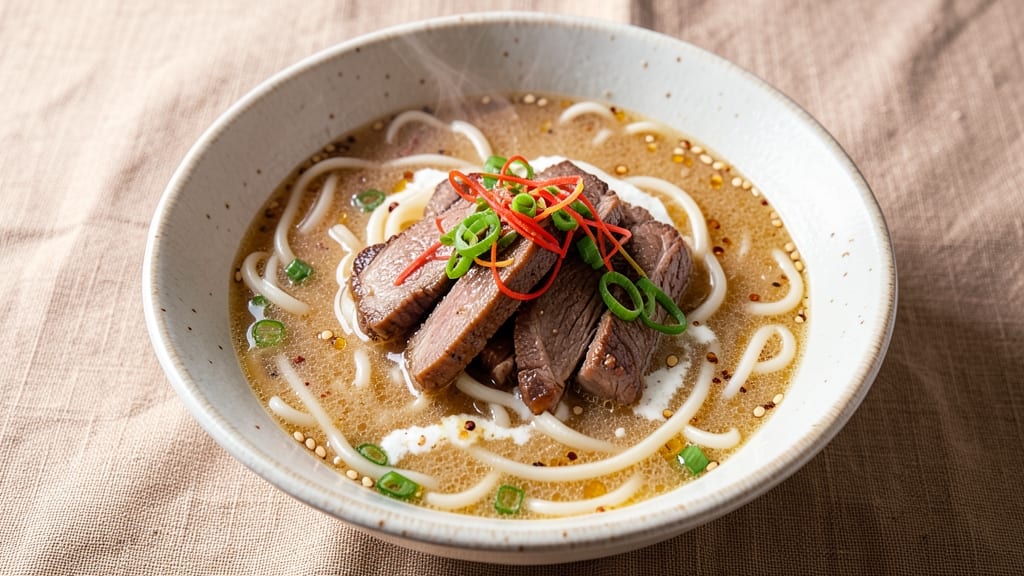
This beef udon miso soup recipe delivers restaurant-quality depth in just 30 minutes—where silky udon noodles float in a velvety miso broth infused with tender beef and aromatic dashi.
The secret lies in balancing fermented miso paste with umami-rich dashi stock, creating a broth that’s both savory and subtly sweet, while thinly sliced beef and quick-cooking udon transform a simple weeknight meal into something extraordinary.
No advanced techniques required, just patience for simmering and a few essential ingredients that work together seamlessly.
The foundation of this soup is the broth: a dashi-based miso blend that builds layers of flavor as it simmers.
While traditional recipes call for homemade dashi, a high-quality instant version works just as well for modern kitchens—simply dissolve it in hot water and let it infuse with the miso paste until fully integrated.
Meanwhile, the beef (thinly sliced for quick cooking) absorbs the broth’s depth, while the udon noodles—preferably fresh or dried—soak up the rich flavors without turning mushy. Garnishes like green onions and sesame seeds add brightness and texture, elevating the dish from comforting to impressive.
What sets this recipe apart is its versatility and balance—creamy yet light, hearty yet refreshing. The miso paste provides that signature fermented tang, while the dashi adds a clean, oceanic umami that rounds out the dish.
Served with a sprinkle of chili oil or a side of pickled ginger, it becomes a complete experience. Whether you’re feeding a crowd or treating yourself to a cozy solo meal, this soup delivers restaurant-quality results without the fuss. The best part?
Every bowl tastes like it was handcrafted, even if you’re working with shortcuts.
For those watching their dietary needs, this recipe adapts easily: swap regular udon for gluten-free noodles, use vegetable dashi for a plant-based broth, or opt for leaner beef cuts without sacrificing flavor.
The technique remains the same—simmer, season, and savor—proving that even the most comforting dishes can be both foolproof and extraordinary. Let’s get cooking.
Ingredients for beef udon miso soup
Silky udon noodles and tender beef meet a velvety miso broth infused with aromatic dashi and umami depth.
| Ingredient | Amount | Notes |
|---|---|---|
| Udon Noodles (dried) 🍜 | 8 oz | Thick wheat noodles, fresh preferred |
| Thinly Sliced Beef (ribeye or sirloin) 🥩 | ½ lb | Marinated 15 mins in soy sauce |
| White Miso Paste 🧈 | ¼ cup | Fermented soybean paste, high quality |
| Instant Dashi Granules 🍜 | 2 tbsp | High-quality, umami-rich granules |
| Green Onions 🧅 | 3 whole | Sliced thin for garnish |
| Sesame Seeds 🌾 | 1 tbsp | Toasted for nutty aroma |
| Dried Shiitake Mushrooms 🍄 | 2 whole | Rehydrated for earthy depth |
| Garlic Cloves 🧄 | 3 cloves | Minced for aromatic base |
| Ginger (fresh) 🌿 | 1 tbsp | Grated, for aromatic balance |
| Soy Sauce 🍶 | ¼ cup | For umami depth in broth |
| Mirin 🍶 | 2 tbsp | Sweet rice wine for balance |
| Sake 🍶 | ¼ cup | Dry sake for clarity |
| Neutral Oil (vegetable or canola) 🫒 | 1 tbsp | For high-heat searing |
| Chili Oil (optional) 🌶️ | 1 tbsp | For finishing heat |
| Pickled Ginger (optional) 🍋 | 2 tbsp | For palate cleansing |
The white miso paste is non-negotiable here—Honten or Marukome brands deliver the richest fermented depth. Look for thick, vibrant paste with no separation, indicating freshness. Instant dashi granules from Hondashi streamline the process while maintaining authenticity; avoid powdered versions with artificial flavors. For the beef, ribeye or sirloin slices should be ¼-inch thick—any thicker and they’ll overcook. If using pre-sliced beef from an Asian market, pat it dry before marinating to ensure proper searing. Dried shiitake mushrooms should be hydrated in hot water for 20 minutes—discard the soaking liquid to avoid bitterness.
No instant dashi? Vegetable dashi works for a lighter broth, though it lacks the oceanic umami. Mirin substitutes like sweet rice wine or even a touch of honey (though honey isn’t traditional) can bridge the flavor gap. Fresh ginger is ideal, but powdered works at half the amount—just toast it briefly in a dry pan to wake up the flavor. The udon noodles should be fresh if possible—dried noodles require 3-4 minutes of cooking time before adding to the broth. For a gluten-free version, swap udon for rice noodles and ensure your miso is certified gluten-free.
This soup tastes even better the next day as flavors meld—portion into containers with a thin layer of broth to prevent sogginess. Store for up to 3 days in the fridge, but freeze the broth separately for up to 3 months if you plan to reheat. The chili oil and pickled ginger should be added fresh before serving—no substitutions here, as they’re purely for texture and contrast. For batch cooking, double the broth ingredients and freeze in ice cube trays—just thaw and reheat with fresh noodles and beef.
Why You'll Love This Recipe
- No-Fuss Simplicity: I swear by this recipe when I’m too tired to chop much—just slice the beef paper-thin (or buy pre-sliced), toss the udon in boiling water for 5 minutes, and stir in the miso and dashi. That’s it. The hardest part is waiting for the noodles to soften.
- Umami Bomb: The miso and dashi combo is where this dish actually shines—deep, savory, and slightly sweet without tasting like anything’s missing. Add that first bite of beef, still holding its edge, and it’s like a warm hug for your taste buds.
- Leftover Goldmine: This soup only gets better the next day. The flavors meld even more, and the beef stays tender. I portion it into containers for lunches, or reheat it with a splash of water—no one ever complains, and I always save money.
- Budget Meal Magic: A single package of udon, a small block of beef, and miso stretch into four hearty bowls. Honestly, it’s my go-to when groceries are tight but I still want something satisfying—no sad salads or boring rice here.
Step-by-step instructions for beef udon miso soup
This method delivers restaurant-quality depth in under 30 minutes—silky udon, rich umami broth, and tender beef.
Prepare the Aromatic Base
Heat the 1 tablespoon neutral oil in a large pot over medium-high heat until shimmering. Add the 3 cloves minced garlic and 1 tablespoon grated ginger, cooking for 30 seconds until fragrant but not browned. The aroma should fill your kitchen—this is where the soup's complexity begins.
Add the 2 whole dried shiitake mushrooms (previously soaked in hot water for 20 minutes and drained) and the 0.5 pound thinly sliced beef. Stir briefly to coat the beef in the aromatic oil, then pour in the 0.25 cup soy sauce and 0.25 cup sake. Let this mixture simmer uncovered for 3 minutes—you'll see the beef begin to change color as it releases its natural juices into the pot.
Build the Umami-Rich Broth
Add 4 cups water to the pot and bring to a gentle boil. Reduce heat to medium-low and stir in the 2 tablespoons instant dashi granules and 2 tablespoons mirin. The broth should begin to develop a deep, savory aroma—this is your umami foundation. Simmer for 5 minutes to allow the flavors to meld.
In a small bowl, dissolve the 0.25 cup white miso paste in ½ cup hot broth removed from the pot. Once smooth, pour this miso mixture back into the pot and stir gently. The miso should disperse completely, creating a velvety texture. Avoid boiling vigorously after adding miso—high heat can destroy its delicate flavors.
Cook the Udon Noodles
While the broth simmers, prepare the 8 ounces dried udon noodles according to package instructions—typically 4-5 minutes in boiling water. Drain immediately and rinse briefly under cold water to stop cooking. The noodles should be al dente with a slight bite.
Add the cooked udon noodles to the pot and stir gently to distribute them evenly. Simmer for an additional 2 minutes to allow the noodles to absorb some of the broth's flavor without becoming mushy. The soup should have a luxurious, silky appearance with the noodles floating just below the surface.
Finish and Serve
Remove the pot from heat and let it sit for 2 minutes to allow the flavors to settle. Taste and adjust seasoning if needed—you may want to add a splash more soy sauce for saltiness or a touch of mirin for sweetness. Ladle the soup into bowls, dividing the 3 sliced green onions and 1 tablespoon toasted sesame seeds among them.
For serving, drizzle each bowl with 1 tablespoon chili oil (if using) and offer the 2 tablespoons pickled ginger on the side. The contrast of the cooling pickled ginger with the warm, rich soup creates a perfect balance. Serve immediately while the noodles are still hot and the broth maintains its velvety texture.
Pro Tips For Making Beef Udon Miso Soup
- Sear the Beef First: I learned this the hard way—adding raw beef to simmering broth turns it into mushy gray sludge. Instead, hit a hot, dry pan with a splash of oil and sear the slices for 30 seconds per side until they’re browned but still slightly pink inside. That crust is what carries the flavor through the soup.
- Dissolve Miso Slowly: White miso is delicate—dumping it in all at once makes the soup bitter and clumpy. Instead, whisk the paste into a small cup of hot broth first, then stir it into the pot. Let it sit for 30 seconds before adding noodles, so it melts smoothly into the broth without lumps.
- Prep Noodles Last: Udon noodles release starch like crazy when cooked too early, turning your broth cloudy and gluey. Keep them dry in a bowl until the very end, then add them to the simmering soup and cook for just 2-3 minutes—no more, or they’ll turn to mush. Drain if needed, but I usually leave a little broth clinging to them.
- Upgrade with Aromatics: Instant dashi is fine, but a quick prep step makes this soup sing. Sauté 1 minced garlic clove and ½ teaspoon grated ginger in the pan before adding broth—just enough to perfume the liquid without overpowering. Skip this, and the soup tastes flat; do it, and it’s restaurant-quality.
Regional styles of this dish
Japanese Home-Style
In Japan, this dish is often called "udon nabe" when made with a lighter broth, or "kake udon" when served with a dipping-style miso sauce. The key difference? Japanese home cooks frequently use red miso instead of white for a deeper, slightly sweeter flavor.
I’ve made this version with Honten red miso and added a splash of yuzu juice (or lemon) at the end for brightness. Serve with pickled plum (umeboshi) on the side—a classic pairing that cuts through the richness. 🍶
Korean-Inspired Twist
Korean-style "udon jjigae" transforms this soup into a heartier stew by adding gochujang (Korean chili paste) and tofu for texture. I blend 1 tablespoon gochujang into the miso broth and stir in ½ cup cubed soft tofu during the final simmer.
Top with thinly sliced Korean pear (or apple) for natural sweetness and a fried egg for extra indulgence. The result? A fusion of umami and spicy depth that’s irresistibly comforting. 🌶️
Taiwanese Night Market Style
Taiwanese street vendors elevate udon miso soup with char siu (Chinese BBQ pork) and wood ear mushrooms for a smoky, savory kick. Swap the beef for ½ lb thinly sliced char siu and add 2 dried wood ear mushrooms (rehydrated) to the broth.
Finish with a drizzle of dark soy sauce and crushed peanuts for crunch. Serve with scallions and cilantro for freshness—a dish so flavorful, it’s worth the late-night craving. 🗺️
Modern Western Adaptation
For a Western-friendly version, I’ve replaced sake with dry white wine and added roasted garlic (instead of raw) for a deeper, caramelized flavor. Use gluten-free udon noodles and a vegetable-based dashi to keep it allergen-friendly.
Garnish with crispy fried shallots and a sprinkle of fresh thyme for a subtle herbal note. This version works perfectly as a weeknight dinner—elegant enough for guests but simple enough for weeknights. ✨
Okinawan Comfort Version
Okinawa’s version is all about pork and bitter greens—swap the beef for ½ lb thinly sliced pork belly and add 1 cup chopped bitter melon or spinach to the broth.
Use awamori (Okinawan liquor) instead of sake for a unique depth, and finish with toasted sesame seeds and bonito flakes for a smoky aroma. The bitterness of the greens balances the richness beautifully, making this a true island-inspired comfort dish. 🌊
Nutrition facts
Frequently asked questions
Can I substitute beef with another protein?
For a vegetarian version, use thinly sliced tofu or shiitake mushrooms instead. If you prefer seafood, try shrimp or scallops—they cook quickly and add a delicate sweetness. For a heartier option, swap in chicken thighs (boneless, skinless) and adjust cooking time to 5-6 minutes instead of 3. The key is keeping the protein thinly sliced for quick cooking in the broth.
Why does my miso broth taste bitter?
Bitterness usually means the miso paste was exposed to too much heat or wasn't dissolved properly. Always dissolve miso in a small amount of hot broth first, then gently stir it back into the pot. Avoid boiling after adding miso—keep the heat at medium-low to preserve its delicate flavors. If bitterness persists, balance it with a splash of mirin or a pinch of sugar.
How do I make this soup gluten-free?
Replace traditional udon noodles with rice udon or gluten-free wheat-free noodles (like those made from brown rice or buckwheat). For the broth, use a vegetable-based dashi instead of traditional dashi granules, and ensure your miso paste is certified gluten-free. The flavor profile will still be rich and umami-packed, just adapted for dietary needs.
Can I prepare this ahead of time?
Yes! Make the broth up to 2 days ahead and store it in the refrigerator. Reheat gently on the stove, then add fresh udon noodles and beef just before serving. For longer storage, freeze the broth in ice cube trays—thaw and reheat with fresh ingredients. The noodles should always be cooked fresh to maintain their perfect texture.
What's the difference between white and red miso?
White miso is fermented for 3-6 months, resulting in a mild, sweet flavor perfect for soups. Red miso is fermented longer (1-2 years) and has a deeper, richer taste with more complexity. For this recipe, white miso works best—it blends smoothly without overpowering the delicate beef and udon flavors. Try red miso for a bolder version, but reduce the amount by 20% to avoid bitterness.