
Soups & Stews
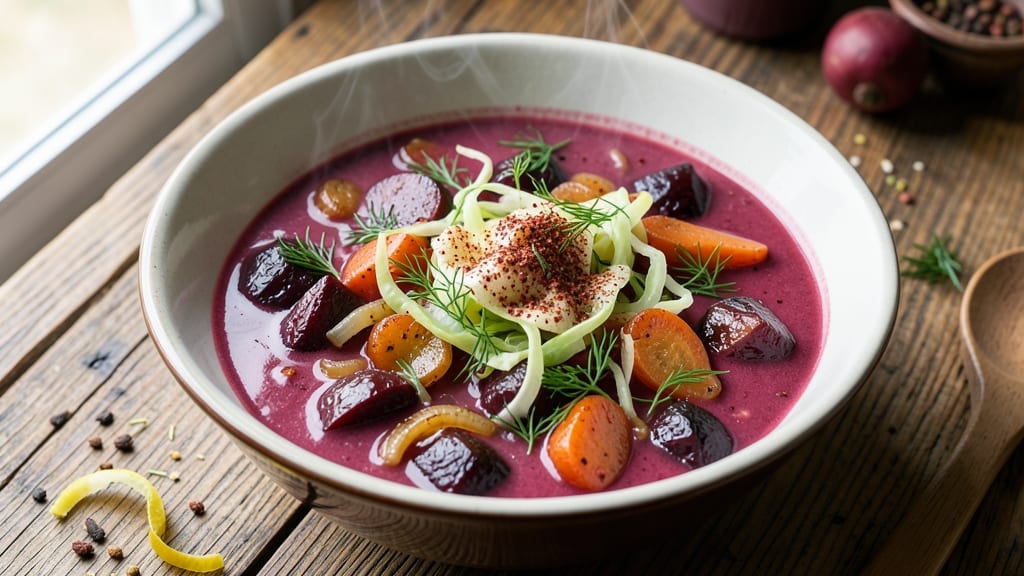
This vegan beet and cabbage borscht soup delivers the rich, earthy depth of traditional Eastern European flavors without a single drop of meat or dairy. The secret lies in slow-cooked beets and cabbage, simmered with aromatic vegetables until the broth develops a velvety texture and deep ruby hue.
Unlike many modern versions, this recipe stays true to its roots—using vinegar for brightness, dill for freshness, and beet greens for an extra layer of earthy complexity.
The process begins with sautéing onions and garlic until golden, then adding cabbage and carrots to build a flavorful base before introducing the beets. A blend of vegetable broth and vinegar creates the signature tangy-sweet balance, while simmering transforms the vegetables into a harmonious, hearty soup.
The result is a vibrant, comforting bowl that’s as nourishing as it is delicious—perfect for chilly days or cozy weeknight dinners.
What sets this recipe apart is its authentic technique: layering flavors through careful simmering and balancing sweet, sour, and umami notes. The final touch—a swirl of vegan sour cream (or traditional sour cream for non-vegan versions)—adds a creamy contrast that ties everything together.
Serve it with crusty pampushky or a simple side salad for a complete meal.
This borscht isn’t just a soup; it’s a celebration of Eastern European tradition, reimagined for modern plant-based palates. The instructions walk you through every step—from sautéing to blending—to ensure restaurant-quality results at home. Ready to make a bowl that tastes like comfort?
Ingredients for beet and cabbage borscht soup
Earthy beets, crisp cabbage, and aromatic vegetables create this vibrant vegan borscht—rich in tradition yet plant-based.
| Ingredient | Amount | Notes |
|---|---|---|
| Medium Beets 🍠 | 2 whole | Roasted or boiled for tenderness |
| Green Cabbage 🥬 | ½ head | Shredded, core removed |
| Yellow Onions 🧅 | 1 large | Sliced into half-moons |
| Carrots 🥕 | 3 medium | Sliced into rounds |
| Garlic Cloves 🧄 | 4 cloves | Minced for depth |
| Fresh Dill 🌿 | ¼ cup | Chopped, stems removed |
| Vegetable Broth 💧 | 4 cups | Low-sodium preferred |
| Apple Cider Vinegar 🍏 | 2 tbsp | For tangy brightness |
| Tomato Paste 🍅 | 2 tbsp | Smooth texture preferred |
| Russet Potatoes 🥔 | 1 medium | Diced for heartiness |
| Olive Oil 🫒 | ¼ cup | Extra-virgin for richness |
| Salt 🧂 | 1 ½ tsp | Diamond Crystal preferred |
| Black Peppercorns 🌶️ | ½ tsp | Freshly cracked |
| Vegan Sour Cream 🧀 | ¼ cup | For creamy finish |
| Beet Greens 🌱 | 2 cups | Chopped, stems removed |
The beets are the soul of this soup—organic beets from Whole Foods or your local farmers' market deliver the deepest flavor. Look for firm, unblemished roots with vibrant color; smaller beets roast more evenly. For beet greens, young leaves have the most delicate flavor. If you can't find fresh dill, dried dill at one-third the amount works, though fresh is ideal. The cabbage should be crisp with no yellowing leaves—green or purple varieties both work, but green is more traditional for borscht. Carrots should be firm and bright orange; avoid any with soft spots or sprouting tops.
No apple cider vinegar? White vinegar or lemon juice works in a pinch, though apple cider adds subtle sweetness. Substituting vegetable broth for water is essential—low-sodium versions like Imagine or Pacific Foods ensure flavor without excess salt. For the potatoes, Russet or Yukon Gold provide the best texture; red potatoes can turn mushy. The tomato paste can be thickened with a splash of broth if needed. If you're short on beet greens, spinach or Swiss chard adds a similar earthy note. For extra richness, a splash of vegan Worcestershire sauce enhances umami depth.
Store cooked borscht in airtight containers for 4-5 days in the fridge, where flavors deepen overnight. Freezes beautifully for up to 3 months—portion into single servings before freezing for easy reheating. The vegan sour cream adds a luxurious finish, so add it fresh just before serving. For meal prep, make a double batch and freeze half; thaw overnight in the fridge before reheating. The soup reheats best slowly on the stove, stirring occasionally to prevent scorching.
Why You'll Love This Recipe
- One-Pot Magic: I swear by this recipe because it’s actually one-pot—no chopping boards overflowing, no pans to scrub. Toss the raw beets, shredded cabbage, and onions right into the pot with the broth, and let the garlic and carrots caramelize while you stir. (Yes, even on a Tuesday night.)
- Earthy Umami Bomb: The roasted beets and caramelized onions hit differently—deep, almost sweet, with that sharp cabbage crunch. Add a splash of vinegar or a dollop of sour cream, and it’s like a cozy hug in a bowl. Honestly, the garlic cloves sizzling at the end? That’s the secret.
- Leftovers That Beg: This soup only gets better the next day. The flavors meld into something richer, and reheating it stirs up that comforting steam. I’ll be real: my freezer’s got at least three containers of it right now, and no one complains when I pull it out for lunch.
- Budget Brightener: Cabbage and beets are the ultimate pantry stretchers—cheap, hardy, and packed with color. A single onion and a few carrots round it out without breaking the bank. Between us, this is the soup I make when I’ve got a half-bag of veggies I need to use up.
Step-by-step instructions for earthy beetroot and sour cream borscht
A rich, layered approach ensures deep flavor and perfect texture in every bowl.
Prepare and Roast the Vegetables for Depth
Preheat your oven to 400°F. Peel the 2 whole medium beets and cut them into 1-inch cubes. Toss them with 1 tablespoon of the olive oil and spread them on a baking sheet. Roast for 30-35 minutes until tender and caramelized at the edges—this roasting develops their natural sweetness and earthy notes.
While the beets roast, peel and dice the 1 medium russet potato into ½-inch cubes. Peel and slice the 3 medium carrots into ¼-inch rounds. Peel and slice the 1 large yellow onion into ½-inch half-moons. Core and shred the ½ head green cabbage into ¼-inch strips, removing any tough outer leaves. Chop the 2 cups beet greens and set aside.
Build the Flavor Base with Aromatics and Broth
Heat the remaining 1 tablespoon olive oil in a large Dutch oven over medium heat. Add the sliced onions and cook for 5 minutes until soft and translucent. Add the minced 4 cloves garlic and cook for 30 seconds until fragrant—don't let it brown, or it will turn bitter.
Stir in the 2 tablespoons tomato paste and cook for 1 minute to deepen its flavor. Pour in the 4 cups vegetable broth and bring to a gentle simmer. Add the roasted beets, potatoes, carrots, and cabbage. Season with 1.5 teaspoons salt and ½ teaspoon cracked black peppercorns. Cover and simmer for 20-25 minutes until all vegetables are fork-tender.
Balance and Finish with Tangy and Creamy Elements
Once the vegetables are tender, stir in the 2 tablespoons apple cider vinegar and the chopped 2 cups beet greens. Simmer uncovered for 5 minutes to allow the greens to wilt and the vinegar to brighten the flavors. Taste and adjust seasoning—you may need a pinch more salt to balance the acidity.
Remove the soup from heat and stir in the 0.25 cup chopped fresh dill. Let it steep for 2 minutes to infuse the dill's fresh aroma. Finally, gently fold in the 0.25 cup vegan sour cream just before serving to maintain its creamy texture without curdling.
Serve with Crisp Garnishes for Contrast
Ladle the borscht into bowls and garnish with an extra drizzle of vegan sour cream, a sprinkle of fresh dill, and a pinch of cracked black pepper. Serve immediately while the vegetables retain their vibrant colors and the broth is steaming hot.
Each spoonful should deliver a harmonious blend of earthy beets, crisp cabbage, creamy sour cream, and the bright tang of vinegar. The contrast between the roasted beets' sweetness and the vinegar's acidity creates a balanced, satisfying bite that defines this classic dish.
Pro Tips For Making Beet And Cabbage Borscht Soup
- Cook beets separately: Peeling and roasting beets at 400°F (200°C) for 45-50 minutes before adding them to the soup keeps their texture tender and flavor concentrated. I learned this the hard way—boiling them directly in the pot turns them mushy and watery, no matter how long you simmer.
- Shred cabbage finely: Use a sharp knife or mandoline to cut cabbage into paper-thin strips—this ensures it softens evenly without turning to mush. My grandmother swore by this, and she was right: thick slices always end up either crunchy or overcooked.
- Salt the water aggressively: When boiling beets (if you skip roasting), add 2 tablespoons of salt to the water—this prevents them from absorbing too much liquid and keeps their natural sweetness. I used to skip this, and my soup always tasted bland, no matter how much vinegar or sour cream I added later.
- Deglaze with vinegar: After sautéing onions and carrots, splash in 2 tablespoons of apple cider vinegar while stirring—this lifts stuck-on bits and adds depth right away. Sounds weird, but it works: the acid cuts through the sweetness of the beets and brightens the whole pot.
Regional styles of this dish
Ukrainian Borscht
This is the classic version you'll find in Ukrainian homes, where beets are boiled whole and grated for a velvety texture. The key difference is using beet broth—simmering the beets in water with a bay leaf and carrot until deeply concentrated.
I like to add potato starch (1 tbsp) when blending to create that signature thick, glossy consistency. Serve with pampushky (garlic bread) and a dollop of traditional sour cream. 🌟
Russian Schi
Russian borscht, or schi, often includes sour cream and smoked sausage (like kielbasa), but this vegan version swaps those for vegan smoked paprika (½ tsp) and mushroom broth instead of vegetable. The cabbage is cooked longer—40 minutes—until tender but still holding shape.
A splash of lemon juice at the end brightens the earthy flavors. For authenticity, garnish with hard-boiled egg slices (use vegan eggs if needed).
Polish Barszcz
Polish borscht, or barszcz, is lighter and often served as a starter. The beets are boiled and strained to create a clear, ruby-red broth, then the vegetables are cooked separately. Add dried juniper berries (2-3) while simmering for a piney depth.
Serve with pierogi or rye bread. The Polish version also includes a pinch of cloves (¼ tsp) for warmth. 💛
Lithuanian Šaltibarščiai
This cold version is a summer staple, using raw beets grated into a bright pink broth with sour cream and hard-boiled eggs. The cabbage is quick-pickled in vinegar (2 tbsp) and sugar (1 tbsp) for 10 minutes before adding.
Chill for 4 hours to let flavors meld. Garnish with fresh dill and chopped chives. The texture is refreshing yet hearty—perfect for picnics! ❄️
Jewish Delicatessen Style
In Jewish delis, borscht is often thicker and sweeter, with caramelized onions and apples (½ diced) added to the broth. Use apple cider vinegar (3 tbsp) for extra tang and a pinch of cinnamon (¼ tsp) for warmth.
Top with toasted breadcrumbs and vegan matzo meal for crunch. This version is richer and perfect for cold winter nights. 🔥
Nutrition facts
Frequently asked questions
Can I make this borscht without roasting the beets?
For a quicker version, boil the beets whole for 45-60 minutes until tender, then peel and chop them before adding to the soup. The flavor will be slightly less caramelized but still delicious. Roasting develops deeper sweetness, but boiling works perfectly for a traditional approach.
What makes this recipe vegan-friendly?
This version skips meat and dairy entirely, using vegetable broth instead of beef or chicken broth, and vegan sour cream for the creamy finish. The umami comes from tomato paste, garlic, and beet greens rather than meat. For extra richness, add 1 teaspoon nutritional yeast when simmering.
How can I adjust the thickness of the soup?
For a thicker texture, simmer uncovered for 10-15 extra minutes to reduce the broth. If it's too thin, stir in 1 teaspoon cornstarch mixed with 2 tablespoons cold water and simmer for 2 minutes until it thickens. Avoid over-thickening—traditional borscht should be velvety but still spoonable.
Can I use frozen cabbage instead of fresh?
Yes, but thaw and drain it first to prevent watering down the soup. For best results, use fresh cabbage—it holds its texture better and adds a brighter flavor. If using frozen, add it 5 minutes earlier than fresh cabbage to ensure it softens completely.
What's the best way to store leftovers?
Store in an airtight container in the fridge for 4-5 days, or freeze for up to 3 months. Reheat gently on the stove over low heat, stirring occasionally to prevent scorching. The flavors actually improve overnight! Add a splash of water or broth if it thickens too much.