
Soups & Stews
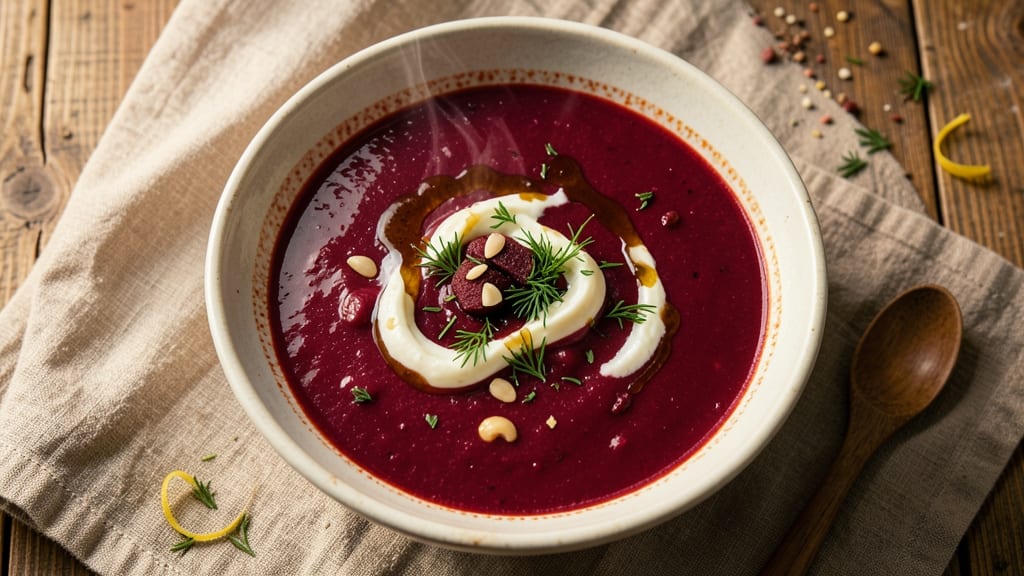
This vegan beet soup recipe delivers deep, earthy sweetness without relying on cream or dairy—just roasted beets, aromatic spices, and a velvety cashew base. The secret lies in roasting the beets until tender and caramelized, which intensifies their natural sweetness and transforms them into a luscious, creamy texture without dairy.
This method also eliminates the need for excessive blending, preserving the soup's rustic charm while achieving a silky finish.
The beauty of this recipe is its simplicity: no complicated techniques, just a few key steps that build layers of flavor. You'll start by roasting the beets until they're fork-tender, then blend them with vegetable broth, garlic, and a touch of apple cider vinegar for brightness.
The cashew cream adds richness without heaviness, while fresh herbs and a pinch of smoked paprika elevate the soup to restaurant-quality depth. It's the kind of recipe that feels both comforting and sophisticated.
What you'll end up with is a vibrant, vegan beet soup that's creamy yet light, sweet yet savory, and packed with earthy, umami-rich flavors. The roasted beets give it a naturally sweet profile, while the cashew cream adds a velvety texture that's impossible to resist.
This soup is hearty enough to stand alone but versatile enough to pair with crusty bread, a sprinkle of toasted nuts, or a dollop of vegan yogurt for extra creaminess.
Perfect for chilly evenings or as a nourishing meal prep option, this beet soup is also a great way to use up seasonal produce. The roasting step can be done ahead of time, making it a convenient recipe for busy weeknights.
Whether you're a long-time vegan or just looking to explore plant-based meals, this soup proves that rich, satisfying flavors don't require dairy or cream. Let's get cooking!
Ingredients for beet soup recipe vegan
Roasted beets, aromatic spices, and velvety cashew cream create this vegan soup's rich, earthy depth.
| Ingredient | Amount | Notes |
|---|---|---|
| Medium Beets 🧅 | 4 whole | Organic preferred, tops trimmed |
| Extra-Virgin Olive Oil 🫒 | 2 tbsp | For roasting beets |
| Vegetable Broth 💧 | 4 cups | Low-sodium preferred |
| Raw Cashews 🥜 | ½ cup | Soaked 2 hours for cream |
| Garlic Cloves 🧄 | 3 cloves | Peeled, for depth |
| Apple Cider Vinegar 🍎 | 1 tbsp | Brightens flavor |
| Fresh Thyme Leaves 🌿 | ¼ cup | Or 1 tsp dried thyme |
| Smoked Paprika 🌶️ | ½ tsp | For umami depth |
| Salt 🧂 | 1 tsp | Sea salt preferred |
| Black Pepper 🌶️ | ¼ tsp | Freshly ground |
| Lemon Juice 🍋 | 1 tbsp | Freshly squeezed |
| Fresh Parsley 🌿 | 0.1 cup | Chopped for garnish |
| Water 💧 | ½ cup | For cashew soaking |
The beets are the foundation—organic, medium-sized with their tops trimmed for easy handling. Roasting them until fork-tender brings out their natural sweetness. I always grab mine from Whole Foods or the organic section at Trader Joe's—they hold up better during roasting. For extra flavor, don't peel them before roasting; just scrub and trim. The cashews should be raw and unroasted—Trader Joe's sells them in bulk, which is cost-effective for frequent use. Soak them in warm water for at least 2 hours to ensure a silky texture when blended.
No cashews on hand? Silken tofu or blended white beans work as cream substitutes, though texture will differ slightly. Swap smoked paprika for regular paprika if unavailable, but you'll lose that subtle smokiness. Fresh thyme is ideal, but dried thyme at one-third the amount works in a pinch. The apple cider vinegar adds brightness—if you don't have it, lemon juice at double the amount will do. For a deeper umami profile, add a pinch of nutritional yeast when serving. The vegetable broth should be low-sodium to avoid overpowering the natural flavors of the beets.
Roasted beets keep well in the fridge for 5 days if stored in an airtight container. The cashew cream can be prepped ahead and stored for 3 days in the refrigerator. For meal prep, assemble the soup and reheat gently on the stove—never microwave, as it can break down the texture. This soup freezes beautifully for up to 3 months, though the beets may soften slightly upon thawing. I always make a double batch—leftovers taste even better the next day as the flavors meld.
Why You'll Love This Recipe
- No Fuss Roasting: I just toss the beets in olive oil, salt, and roast them at 400°F for 45 minutes—that’s it. No peeling required if you’re in a hurry, and the oven does all the work while you chop garlic or pour broth.
- Creamy Without Dairy: Between us, the soaked cashews blend into the smoothest, richest vegan cream you’d swear was made with butter. That earthy-sweet beet flavor? It’s ridiculously good when balanced by the nutty depth—like a hug in a bowl.
- Leftover Goldmine: This soup only gets better after a day or two in the fridge. The flavors meld, and the cashew cream thickens just enough to make it perfect for quick lunches or even a hearty breakfast with toasted sourdough.
- Budget Bright Spot: Beets are cheap, cashews stretch far, and broth lasts for weeks. Honestly, I make this when I’m pinching pennies—it’s filling, packed with nutrients, and still feels special enough for company, even if it’s just my cat judging me from the counter.
Step-by-step instructions for vegan beet soup with creamy cashew base
This method transforms humble beets into a velvety, earthy soup without dairy or cream.
🔥 Step 1: Roast Beets for Deep Sweetness and Texture
Preheat your oven to 400°F. Wrap each of the 4 whole medium beets tightly in aluminum foil, leaving the tops exposed. Place them on a baking sheet and roast for 45-50 minutes until tender when pierced with a knife. The foil traps steam while the oven's dry heat caramelizes their natural sugars—this creates that signature deep sweetness you can't achieve by boiling.
Once roasted, let the beets cool slightly before handling. When cool enough to touch, peel off the skins using a paring knife—they should slip off easily now that they've been tenderized. Cut each beet into ½-inch cubes and set aside. This roasting step is non-negotiable; it develops the beets' natural sweetness and creates a texture that holds up beautifully in the finished soup.
🍳 Step 2: Build the Creamy Cashew Base
While the beets roast, prepare the cashew cream by draining the 0.5 cup raw cashews (previously soaked in 0.5 cup water for 2 hours) and rinsing them briefly. In a high-speed blender, combine the drained cashews, 0.25 cup fresh thyme leaves, 1 tbsp apple cider vinegar, 1 tbsp lemon juice, 0.5 tsp smoked paprika, 1 tsp salt, and 0.25 tsp black pepper. Blend until completely smooth, scraping down the sides as needed—this ensures no gritty texture remains in your finished soup.
The cashew blend should be thick but pourable, like heavy cream. If it's too thick, add 1-2 tablespoons of water at a time until you reach the right consistency. This blend forms the velvety base that replaces traditional dairy, providing both creaminess and depth of flavor. Taste as you go—you want the seasoning to be vibrant but balanced, with the thyme and smoked paprika adding complexity.
🥘 Step 3: Simmer the Soup for Maximum Flavor
In a large pot, heat 2 tbsp extra-virgin olive oil over medium heat. Add the 3 peeled garlic cloves and sauté for 30 seconds until fragrant—this prevents the garlic from overcooking and turning bitter. Add the roasted beet cubes and cook for 2 minutes, stirring occasionally, until they begin to soften slightly.
Pour in the 4 cups vegetable broth and bring to a gentle boil. Reduce heat to medium-low and let it simmer for 10 minutes, allowing the flavors to meld. Then, gradually whisk in the cashew cream mixture in a slow stream—this prevents the soup from curdling. The soup should thicken slightly as it simmers, developing a rich, earthy aroma with hints of thyme and lemon.
⏰ Step 4: Finish and Garnish for Freshness
Continue simmering the soup for another 5-7 minutes until it reaches your desired consistency. If it's too thick, add 2-4 tablespoons of water to loosen it. Taste and adjust seasoning—you may need a touch more salt or lemon juice to balance the flavors. The soup should be vibrant, with the sweetness of the beets complementing the earthy cashew cream.
Remove from heat and stir in the 0.1 cup chopped fresh parsley. Ladle the soup into bowls and garnish with additional parsley if desired. The parsley adds a bright contrast to the deep flavors, while its freshness cuts through the richness of the cashew base. Serve immediately while warm, as the flavors continue to develop as the soup sits.
🍽️ Step 5: Optional Crispy Topping (For Texture Contrast)
For an extra layer of texture, heat 1 tbsp olive oil in a small skillet over medium heat. Add 2 tbsp chopped fresh parsley and cook for 1-2 minutes until the edges begin to crisp slightly. Sprinkle this over each serving just before eating—the crispy parsley adds a delightful contrast to the creamy soup.
This soup keeps well in the refrigerator for up to 3 days, though the flavors are best enjoyed within the first 24 hours. The cashew cream may thicken when chilled, so simply whisk in a splash of broth or water when reheating. The roasted beets and cashew base make this a hearty, satisfying dish that's perfect for chilly days or as a comforting starter.
Pro Tips For Making Beet Soup Recipe Vegan
- ROAST BEETS UNTIL TENDER: I learned this the hard way—raw beets stay stubbornly firm. Wrap whole beets in foil, roast at 400°F (200°C) for 45-55 minutes until a knife slips in like butter. Overcooked beets turn mushy; undercooked ones taste like they’re still fighting you.
- SOAK CASHEWS 30 MINUTES: Skip the soaking? Your soup will taste like you forgot the cream. Toss ½ cup raw cashews with hot water for 30 minutes—no blender drama later. Drain well before blending, or you’ll end up with gluey soup.
- SALT THE BROTH EARLY: Vegetable broth is usually bland, and adding salt at the end won’t fix it. Taste the broth before simmering and adjust—even if it means extra salt now. The flavor builds as it cooks, and you’ll thank yourself when the cashew cream doesn’t taste like watered-down almond milk.
- BLITZ GARLIC WITH OIL: Sautéing garlic in olive oil until fragrant is non-negotiable, but don’t rush it. Mince 3 cloves very fine (or use a press) and cook them in 1 tablespoon oil on low heat for 3-4 minutes. Burnt garlic ruins everything, and you’ll smell it before anyone else does.
Make-ahead tips for beet soup recipe vegan
Roast Beets Ahead
Roast your beets 1-2 days in advance and store them in an airtight container in the fridge. The flavors deepen as they sit, making them even sweeter when reheated. I like to roast a big batch—6-8 beets—so I can use them in multiple meals throughout the week.
The skins will peel off more easily after refrigeration, too. 💫
Cashew Cream Prep
Make the cashew cream 24 hours ahead and store it in a sealed jar in the fridge. It thickens slightly when chilled, so whisk in 1-2 tablespoons of water when ready to use. I often double the batch and use it in other dishes like pasta or curries.
For extra flavor, add ½ tsp maple syrup to the cashew blend before blending—it enhances the natural sweetness of the beets. ✨
Broth Base Prep
Simmer your vegetable broth ahead of time and store it in the freezer. Use low-sodium broth to control the seasoning better when assembling the soup. I keep a big batch on hand for all my soups and stews—it’s a timesaver and adds consistency to every recipe.
If you’re short on time, even canned low-sodium broth works in a pinch. 💧
Assemble Soup in Stages
For meal prep, roast the beets and make the cashew cream separately, then store them in separate airtight containers. When ready to serve, simply sauté the garlic, add the beets and broth, and whisk in the cashew cream.
This keeps the soup fresh-tasting for up to 3 days in the fridge. The flavors meld beautifully when reheated gently on the stove. 🔥
Freezer-Friendly Option
This soup freezes exceptionally well for up to 3 months. Assemble the soup completely (including the cashew cream) and let it cool before transferring to freezer-safe containers. Leave 1-inch headspace for expansion.
When reheating, thaw overnight in the fridge, then warm on the stove over low heat, stirring occasionally. The texture may soften slightly, but the flavors stay rich and comforting. ❄️
Reheating Tips
Never microwave this soup—it can make the cashew cream grainy. Instead, reheat on the stove over medium-low heat until warm. If the soup thickens too much, whisk in 1-2 tablespoons of water or broth to loosen it.
For extra freshness, garnish with crispy toasted nuts or a sprinkle of nutritional yeast after reheating. The contrast of textures makes it feel like a fresh batch every time. 💡
Nutrition facts
Frequently asked questions
Why do I need to roast the beets instead of boiling them?
Roasting beets caramelizes their natural sugars, creating a deeper, sweeter flavor that boiling can't match. The dry heat also tenderizes them perfectly without making them waterlogged. This method transforms their earthy taste into a rich, velvety base that forms the heart of your vegan beet soup. Plus, roasted beets hold their shape better when reheated!
Can I make this soup without cashews?
Swap the cashews for ½ cup silken tofu or ½ cup cooked white beans blended with 2 tbsp water. For a nut-free option, try ¼ cup coconut cream (unsweetened) mixed with 1 tbsp lemon juice. Each alternative will give slightly different textures—beans add heartiness, while tofu creates a lighter creaminess. The key is balancing the fat content to maintain the soup's velvety quality.
How can I make this soup spicier?
Add ½-1 tsp cayenne pepper or 1 tbsp hot sauce when blending the cashew cream. For smoky heat, increase the smoked paprika to 1 tsp. To add depth, stir in 1 tsp gochujang (Korean chili paste)> or ½ tsp chili flakes> during the simmering step. Always taste as you go—start with less and adjust gradually to avoid overpowering the beets' natural sweetness.
Will this soup be too sweet for adults?
Not at all! The natural sweetness comes from roasting, not added sugar. The apple cider vinegar and lemon juice balance the flavors beautifully. For a more savory profile, add 1 tsp soy sauce> or ½ tsp miso paste> when simmering. The cashew cream's earthiness also helps temper any perceived sweetness. Trust the recipe—it's designed to please both kids and adults alike!
Can I use canned beets instead of fresh?
Fresh beets are ideal for their superior texture and flavor, but you can use canned in a pinch. Drain and rinse the beets thoroughly, then pat them dry before using. For best results, roast them at 375°F for 20 minutes> (they're already cooked) to concentrate their flavors. The soup will be slightly softer, but the taste will still be delicious. Just reduce the simmering time by 5 minutes> since canned beets break down faster.