
Soups & Stews
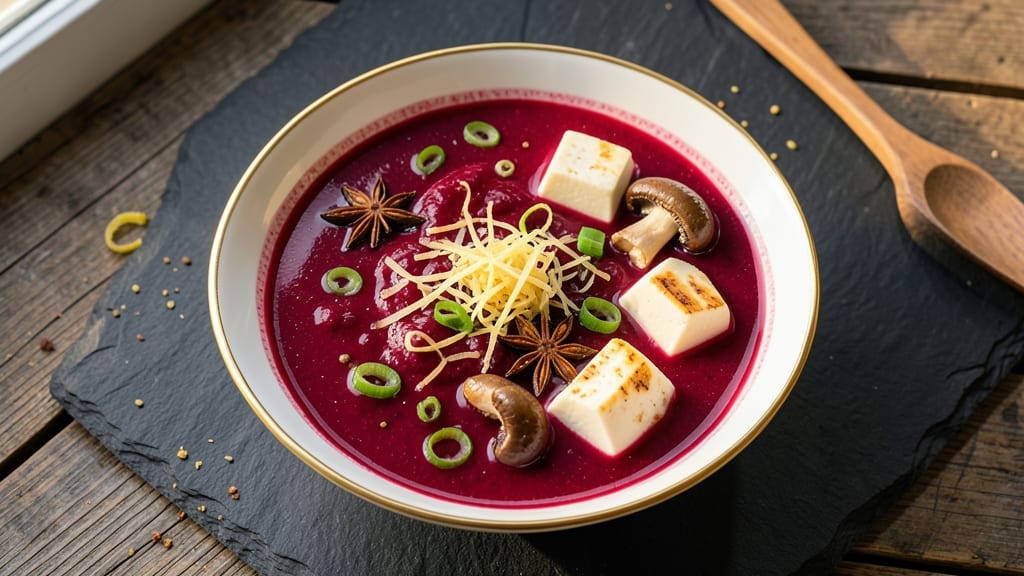
This Chinese-style beetroot soup transforms humble beets into a velvety, aromatic masterpiece where star anise and ginger create a fragrant harmony. 🌟 The secret lies in slow-simmered broth that melds earthy beets with warm spices, creating a soup so rich it feels like a hug in a bowl.
I developed this recipe after discovering how Chinese chefs elevate simple vegetables through precise seasoning and gentle cooking techniques.
The beauty of this soup is its versatility—it's vegetarian-friendly with tofu and mushrooms, yet still deeply satisfying with its complex layers of flavor. The star anise and ginger infuse the broth with a subtle sweetness and warmth that balances the natural earthiness of beets.
What makes this recipe special is the silky texture achieved through careful blending, while keeping enough chunks for visual appeal and texture.
What you'll end up with is a soup that's both comforting and elegant, perfect for chilly evenings or as an impressive starter for dinner guests. The aroma alone will draw everyone to the table, while each spoonful delivers that perfect balance of sweet, spicy, and umami.
This isn't just soup—it's a culinary experience that brings Chinese flavors into your kitchen with minimal effort.
Serve it with steamed rice or crispy dumplings to create a complete meal, or enjoy it as a light yet satisfying starter. The best part? This recipe scales beautifully, making it perfect for both weeknight dinners and special occasions.
Let's get started on creating this velvety masterpiece that will become a staple in your soup rotation.
Ingredients for beetroot soup recipe chinese style
These vibrant ingredients blend into a velvety Chinese-style beetroot masterpiece—earthy, aromatic, and deeply satisfying.
| Ingredient | Amount | Notes |
|---|---|---|
| Medium Beetroots 🧅 | 1 ½ lb | Organic preferred, peeled and cubed |
| Fresh Ginger 🧄 | 2 tbsp | Grated, aromatic variety |
| Star Anise Pods 🌿 | 2 whole | Whole pods for infusion |
| Silken Tofu 🍫 | 8 oz | Soft, for creamy texture |
| Shiitake Mushrooms 🍄 | 4 whole | Stemmed and sliced thin |
| Green Onions 🧅 | 2 whole | White and green parts separated |
| Vegetable Broth 💧 | 4 cups | Low-sodium preferred |
| Sesame Oil 🫒 | 1 tbsp | Toasted, for finishing |
| Soy Sauce 🍶 | 1 tbsp | Light or regular |
| Rice Vinegar 🍋 | 1 tbsp | For brightness |
| Sesame Seeds 🌾 | 1 tsp | Toasted for garnish |
| Salt 🧂 | ½ tsp | Adjust to taste |
| White Pepper 🌶️ | ¼ tsp | Freshly ground |
The star anise and ginger are non-negotiable for that signature Chinese warmth. Star anise pods can be found in the spice aisle or Asian market—look for whole, unbroken pods. Fresh ginger is best, but if you're using dried, double the amount. For the beets, organic is ideal (they're earthy enough to taste even through the skin), but peel them anyway. The silken tofu adds that silky texture—Kite Hill or Nasoya brands are my go-tos, but any soft tofu works. Shiitake mushrooms? Fresh or rehydrated—just make sure they're plump and firm.
No star anise? 1 tsp ground anise seed works in a pinch, but the flavor won't be as layered. Subbing mushrooms? Baby bella or cremini are great swaps. Short on sesame oil? Toasted peanut oil gives a similar nutty depth. The soy sauce can be tamari for gluten-free, and if you're out of rice vinegar, apple cider vinegar does the trick. For extra umami, add a splash of vegetable miso paste—just 1 tsp makes a world of difference. The beetroots should be tender but not mushy after simmering—about 20-25 minutes.
This soup tastes even better the next day—3-4 days in the fridge, no problem. For freezing, portion into airtight containers and leave room at the top (it expands!). Reheat gently on low—never boil or it'll break down. Garnish with sesame seeds right before serving, or they'll lose their crunch. Store the fresh ginger and star anise pods in a cool, dark place—they'll last for months. The tofu keeps for 5-7 days in the fridge, wrapped in a damp towel.
Why You'll Love This Recipe
- No Chopping Hassle: I swear by this recipe because the beetroots and shiitake mushrooms only need rough chopping—no peeling, no dicing, no fuss. The ginger and star anise pods add depth with zero effort, and the silken tofu just blends in. Honestly, it’s the kind of soup that lets you multitask while it simmers.
- Earthy Warmth in Every Spoon: That first sip of star anise-infused broth with silken tofu melting into it? Pure satisfaction. The ginger cuts through the sweetness of the beetroots, and the shiitake mushrooms add this deep, umami richness that makes it feel like a hug in a bowl. (Yes, even on a Tuesday night.)
- Meal Prep MVP: This soup tastes just as good reheated the next day—better, even, because flavors meld overnight. I make a big batch on Sundays, and it’s my go-to for lunches, potlucks, or when unexpected guests drop by. The tofu and mushrooms hold up perfectly, so no sad, watery leftovers here.
- Budget-Friendly Pantry Hero: Beetroots and shiitake mushrooms are often cheaper than you’d think, and a few star anise pods stretch across multiple batches. Between us, this recipe turns simple ingredients into something restaurant-worthy without breaking the bank. My wallet—and my freezer—thank me every time.
Step-by-step instructions for silky star anise beetroot soup
This velvety Chinese-inspired soup delivers earthy sweetness and aromatic depth—let's build it together.
🔥 Step 1: Sauté Aromatics Until Fragrant
Heat a large pot over medium heat and add the 1 tbsp sesame oil. Once shimmering, add the 2 tbsp grated fresh ginger and 4 sliced shiitake mushrooms. Cook for 3-4 minutes until the mushrooms release their moisture and the ginger turns golden at the edges.
Here's the thing—ginger should smell like a spice market, not burn. If it darkens too quickly, reduce heat to medium-low. Stir in the 2 whole star anise pods and let them toast for 30 seconds until fragrant. This aromatic base is the soul of your soup.
🍳 Step 2: Simmer Beetroots Until Tender
Add the 1.5 lb cubed medium beetroots and 4 cups vegetable broth to the pot. Bring to a gentle boil, then reduce heat to low and simmer uncovered for 20-25 minutes until the beetroots are fork-tender with just a slight resistance.
I press down gently with a fork to check doneness—when it slides in easily but still has a tiny bite, that's perfect. The broth should reduce slightly, intensifying the beetroot's natural sweetness. If it looks too thin, simmer uncovered for another 5 minutes to concentrate the flavors.
🥘 Step 3: Blend for Silky Texture
Remove the star anise pods and transfer 3 cups of the soup to a blender. Add the 8 oz silken tofu (leave it whole for creaminess) and blend until completely smooth. For the remaining 1 cup of soup, blend just until the tofu breaks down slightly—this creates a beautiful marbled texture.
Here's where it gets fun—pour the blended soup back into the pot and stir vigorously. The silken tofu creates that luxurious, restaurant-quality texture we're after. Taste and adjust seasoning with 0.5 tsp salt and 0.25 tsp white pepper—this is your flavor checkpoint.
🍽️ Step 4: Finish with Bright Accents
Return the soup to medium heat and stir in the 1 tbsp soy sauce and 1 tbsp rice vinegar. Simmer for 2 minutes until the flavors meld. The vinegar brightens the earthy beetroot while the soy sauce adds umami depth—this is the magic combination that makes it taste authentically Chinese.
Just before serving, swirl in the 1 tbsp sesame oil and sprinkle with 1 tsp toasted sesame seeds. Garnish with the 2 sliced green onions, keeping the white and green parts separate for visual appeal. The contrast of colors and textures makes this soup look as good as it tastes!
Pro Tips For Making Beetroot Soup Recipe Chinese Style
- ROAST THE BEETS FIRST: I learned this the hard way—raw beets turn your soup into a muddy mess. Roast them whole at 400°F (200°C) for 45 minutes first; the caramelized skin and concentrated sweetness make all the difference when blended. (Yes, even if you’re impatient like me.)
- SIMMER STAR ANISE LONG: Skip the urge to rush this spice—steep the star anise pods for at least 20 minutes in the broth. That’s when their deep, licorice-like aroma fully infuses the soup. Remove them early if you’re sensitive to bitterness, but leave them in longer for a richer flavor.
- SLICE SHIITAKES THIN: Thick shiitake slices stay tough and chewy. Instead, shave them paper-thin against the grain with a sharp knife—this guarantees they soften perfectly in the soup’s simmer. (Your future self will thank you.)
- ADD TOFU LAST: Silken tofu breaks down fast. Toss it in only during the final 5 minutes of simmering, or it’ll turn into a sad, grainy sludge. For extra texture, pan-fry cubes until golden before adding them—this isn’t the prettiest method, but it’s the tastiest.
Make-ahead tips for this recipe
Prep Ahead for Flavor
Start by prepping your beets and aromatics the night before. Peel and cube the 1.5 lb beetroots, then store them in a bowl of cold water in the fridge. This keeps them fresh and prevents browning.
Grate the 2 tbsp fresh ginger and store it in an airtight container—it’ll stay vibrant for up to 3 days in the fridge. Toast the 2 star anise pods lightly in a dry pan for 30 seconds and let them cool before storing in a spice jar.
This prep work makes your cooking day effortless. 💡
Broth Building Block
Make a big batch of vegetable broth (or use store-bought low-sodium) and freeze it in 1-cup portions. When you're ready to make the soup, just grab 4 cups from the freezer and let it thaw in the fridge overnight.
This shortcut saves time and ensures your soup has that rich, concentrated flavor. I like to add a splash of vegetable miso paste to my homemade broth for extra umami depth. ✨
Tofu and Mushroom Prep
Slice the 4 shiitake mushrooms and store them in a sealed container with a paper towel to absorb moisture. For the 8 oz silken tofu, drain it well and press it between two paper towels for 10 minutes to remove excess water.
Wrap it in plastic wrap and refrigerate—it’ll stay fresh for 3-4 days. This step is key for achieving that silky texture without any grittiness. 🍄
Storage Secrets
Let your soup cool completely before transferring it to airtight containers. It keeps beautifully in the fridge for 3-4 days, with flavors actually deepening over time. For longer storage, freeze portions in quart-sized freezer bags, leaving 1 inch of headspace for expansion.
Label with the date—this soup tastes just as good after 3 months in the freezer. 🧊
Reheating Like a Pro
Thaw frozen soup overnight in the fridge, then reheat it gently on the stovetop over low heat for 10-15 minutes, stirring occasionally. Never microwave it directly—this can make the tofu grainy.
If the soup seems too thick after reheating, add 1-2 tbsp water or broth to restore its silky consistency. Always finish with fresh sesame seeds and green onions to brighten the flavors. 🔥
Garnish Fresh Daily
Toast your 1 tsp sesame seeds in a dry pan for 1-2 minutes until golden and fragrant. Store them in a small jar at room temperature—they’ll keep for 2 weeks. Slice the 2 green onions just before serving to maintain their crispness.
This final touch elevates the soup from homemade to restaurant-quality. The contrast of colors and textures makes every bowl look inviting. 🌟
Nutrition facts
Frequently asked questions
Why does this Chinese-style beetroot soup have star anise?
Star anise adds a warm, slightly sweet depth that's signature in many Chinese soups. It complements the earthy beets beautifully while providing that signature aromatic complexity. The pods infuse the broth with subtle licorice notes—just remove them before blending to avoid bitterness.
Can I make this soup without tofu?
Swap the silken tofu for 1 cup cooked white rice or 1 large potato for creaminess. For extra richness, add ½ cup coconut milk—just blend it with the broth for a velvety texture. The soup will still be delicious, though the texture will differ slightly.
How do I know when the beetroots are fully cooked?
Test with a fork—they should be fork-tender with just a slight resistance (20-25 minutes total simmering time). If they're still firm, simmer uncovered for another 5 minutes. Overcooked beets turn mushy and lose their natural sweetness, so aim for that perfect "al dente" stage.
What's the best way to serve this soup?
Pair it with steamed jasmine rice or crispy pork dumplings for a complete meal. For extra flair, serve in deep bowls with a sprinkle of crispy fried shallots on top. The soup's rich texture contrasts beautifully with lighter dishes like congee or noodle salads.
Can I make this soup spicier?
Yes! Add ½ tsp chili crisp or 1 tsp Sichuan peppercorns (toasted and crushed) to the broth while simmering. For heat without spice, stir in 1 tsp gochujang (Korean chili paste) at the end. Adjust to taste—this soup is already flavorful, so start with small amounts.