
Soups & Stews
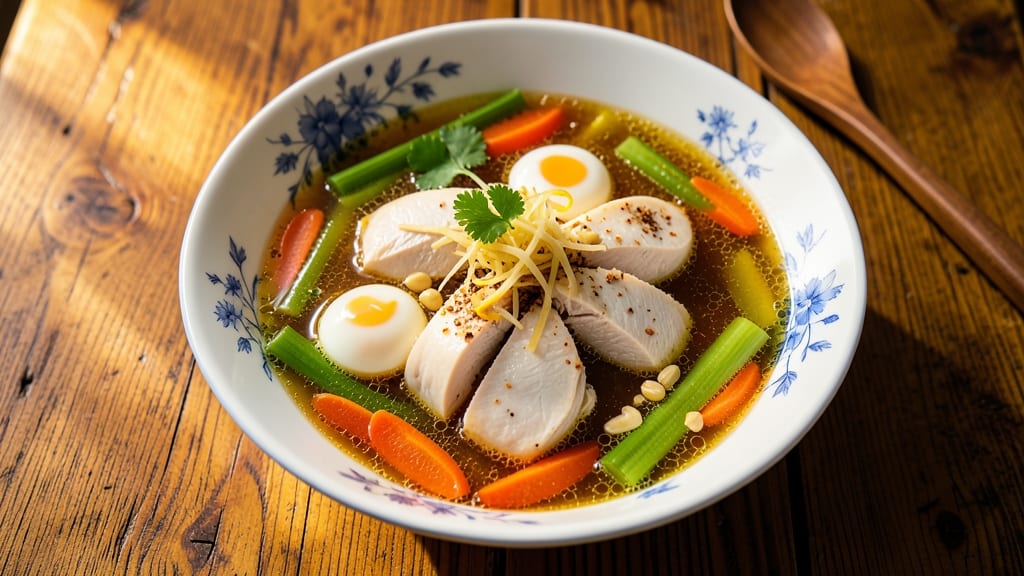
This Chinese chicken soup recipe delivers the best of traditional comfort food—fragrant ginger-garlic broth, silky egg ribbons, and tender vegetables that transform a simple meal into something extraordinary.
The secret lies in slow-simmered aromatics that infuse every spoonful with deep, warming flavors, while the egg ribbons add a delicate, cloud-like texture that elevates the dish to restaurant-quality.
What sets this recipe apart is the balance of technique and simplicity. You'll start with a ginger-garlic base that builds layers of aroma, then simmer chicken and vegetables until they're fork-tender.
The broth reduces to a rich, velvety consistency, while the egg ribbons—made by swirling beaten eggs into the hot broth—create an elegant, melt-in-your-mouth finish. It's the kind of soup that feels like a hug in a bowl, especially on chilly days.
The result is a dish that's both foolproof and deeply satisfying—perfect for feeding a family or meal prepping for the week. Each bite delivers tender chicken, crisp-tender vegetables, and a broth so flavorful it disappears quickly.
This isn't just soup; it's a restaurant-quality experience you can recreate at home with just a few key techniques.
Serve it with steamed rice or alongside dumplings for the full Chinese dining experience. The leftovers, if there are any, reheat beautifully, making this a go-to recipe for busy weeks. Let's get started on creating this comforting classic.
Ingredients for best chinese chicken soup recipe with vegetables
Fragrant aromatics, tender chicken, and silky egg ribbons—this soup delivers restaurant-quality comfort in every bowl.
| Ingredient | Amount | Notes |
|---|---|---|
| Chicken Breast 🍗 | 1 ½ lb | Boneless, skinless, cut into 1-inch pieces |
| Fresh Ginger Root 🌿 | 2 tbsp | Grated, peeled, fresh preferred |
| Garlic Cloves 🧄 | 6 cloves | Peeled, minced finely for aroma |
| Carrots 🥕 | 3 medium | Peeled, cut into 1-inch chunks |
| Celery Stalks 🧅 | 3 whole | Trimmed, cut into 1-inch pieces |
| Large Eggs 🥚 | 4 whole | Fresh, beaten for egg ribbons |
| Green Onions 🧅 | 4 whole | Trimmed, sliced for garnish |
| Dried Shiitake Mushrooms 🍄 | 4 whole | Rehydrated, sliced for depth |
| Low-Sodium Chicken Broth 💧 | 6 cups | Homemade or quality store-bought |
| Sesame Oil 🫒 | 1 tbsp | Toasted, for finishing aroma |
| Soy Sauce 🍶 | 2 tbps | Light or dark, for umami |
| Cornstarch 🌾 | 1 tbsp | Dissolved in 2 tbsp water |
| Salt 🧂 | 1 ½ tsp | Diamond Crystal kosher salt |
| Black Pepper 🌶️ | ½ tsp | Freshly ground for finish |
The ginger and garlic are absolute game-changers here—fresh is non-negotiable. Whole Foods or your local Asian market carry the best ginger with vibrant color and firm texture. For garlic, Penzeys or bulk bins ensure peak freshness. The shiitake mushrooms? Dried is best—rehydrate them first to deepen the umami. Chicken breast stays tender when cut into even pieces; 1-inch chunks work perfectly. Celery and carrots should be crisp—avoid wilting stalks at all costs.
No fresh ginger? Powdered works at half the amount, but it lacks that bright punch. Short on shiitake? Cremini mushrooms add earthiness, though not the same depth. Soy sauce substitutes: coconut aminos for lighter flavor, fish sauce for extra umami (if not vegetarian). The cornstarch slurry is key for thickening—make it ahead to save time. Egg ribbons require fresh eggs; older eggs won't swirl properly.
Broth reheats beautifully—simmer gently to avoid skin. Store in airtight containers for 4-5 days or freeze for 3 months. The egg ribbons? Make them fresh when serving—they deflate when reheated. Garnish with green onions and a drizzle of toasted sesame oil right before eating. Leftovers taste even better the next day as flavors meld.
Why You'll Love This Recipe
- No-Chop Night: I swear by the celery and carrot sticks—just slice them into thick batons, no fancy dicing. The chicken breast stays in one piece (no shredding until the end), and the ginger? A quick grating while you wait for the water to boil. Honestly, this is the kind of soup that lets you multitask—check emails, fold laundry, whatever—while the magic happens in the pot.
- Ginger-Garlic Magic: That first whiff of fresh ginger and garlic sizzling in the oil? Pure flavor payoff. The ginger adds a bright, warm kick, while the garlic deepens into this buttery, aromatic punch. And when the chicken breast comes out tender with a crisp edge? That’s the moment you’ll want to take a second bowl.
- Office Lunch Hero: Between us, this soup is my go-to for meal prep. Taste even better the next day—those flavors meld into something richer, and the veggies hold up perfectly. Pack it in a thermos for work, or reheat a portion for a lazy afternoon. (Yes, even on a Tuesday night when takeout sounds tempting.)
- Budget-Friendly Powerhouse: Chicken breast and seasonal veggies stretch into four servings without breaking the bank. I’ve made this for under $10 for a full pot—no fancy ingredients, just smart staples. And leftovers? They’re my secret weapon for busy mornings or when I just can’t face cooking again.
Step-by-step instructions for fragrant Chinese chicken soup
This soup delivers restaurant-quality depth with aromatic ginger, silky egg ribbons, and tender vegetables.
Prepare the Aromatic Base
In a large pot, combine the 1.5 lb chicken breast cut into 1-inch pieces, the 2 tbsp grated fresh ginger root, and 6 cloves minced garlic. Add 6 cups low-sodium chicken broth and bring to a rolling boil over high heat. Once boiling, reduce to a medium simmer and let cook uncovered for 15 minutes to extract maximum flavor from the aromatics.
I like to skim any foam that rises to the surface during this time—it ensures a cleaner, more refined broth. The ginger and garlic should be fully incorporated, infusing the broth with their bright, pungent aromas. This foundational step is where the soup's signature fragrance develops, so don't rush it.
Add Vegetables and Simmer
Add the 3 medium peeled carrots cut into 1-inch chunks, 3 whole celery stalks cut into 1-inch pieces, and the 4 whole dried shiitake mushrooms that you've rehydrated and sliced. Stir gently and simmer for 10-12 minutes until the vegetables are tender but still hold their shape—you want them to stay vibrant, not mushy.
Here's the thing—Chinese soups often balance textures, so I avoid overcooking the vegetables. They should be fork-tender but still offer a slight bite. If you notice the broth reducing too quickly, add ½ cup hot water to maintain the proper consistency. The mushrooms will absorb some liquid, so keep an eye on the level.
Season and Thicken the Broth
In a small bowl, whisk together the 1 tbsp cornstarch with 2 tbsp cold water until smooth. Slowly ladle in ¼ cup of the hot broth while whisking vigorously to prevent lumps. Once fully dissolved, return the slurry to the pot and stir continuously for 2-3 minutes until the broth thickens slightly—it should coat the back of a spoon.
Add the 2 tbps soy sauce and 1.5 tsp salt, stirring well to distribute. Taste and adjust seasoning—you want a balance of umami from the soy sauce and saltiness that enhances without overpowering. The broth should now have a glossy sheen and a velvety texture. If it's too thick, add 2-3 tbsp hot water to reach your desired consistency.
Create Silky Egg Ribbons
In a separate bowl, beat the 4 whole large eggs until just combined—no need to overbeat, as this can make the ribbons tough. Slowly drizzle in ½ cup of the hot broth while whisking constantly to create a smooth, custard-like mixture. This step is crucial for achieving those signature silky strands.
Carefully pour the egg mixture into the simmering soup while stirring gently in one direction with a long spoon. The residual heat from the broth will cook the eggs into delicate ribbons. Keep stirring for 1-2 minutes until the eggs are fully set but still silky. If the soup looks too thick, add 2-3 tbsp hot broth to loosen it.
Finish and Serve
Remove the pot from heat and let it sit for 2-3 minutes to allow the flavors to meld. Stir in the 1 tbsp toasted sesame oil and 0.5 tsp freshly ground black pepper, then divide the soup among bowls. Garnish each serving with 4 whole sliced green onions for freshness and color.
Serve immediately while the egg ribbons are still silky and the broth is steaming hot. The contrast of the warm soup against the cool egg ribbons is what makes this dish so satisfying. For extra depth, I like to serve it with a side of steamed jasmine rice to soak up every last bit of that fragrant broth.
Pro Tips For Making Best Chinese Chicken Soup Recipe With Vegetables
- SEAR CHICKEN IN BATCHES: I learned this the hard way—crowding the pan turns your soup into a sad, steamed mess. Cut the chicken into even 1-inch cubes, then sear in two batches over medium-high heat. The Maillard reaction needs space, and you’ll taste the difference in that deep, savory base.
- JULIENNE GINGER AND GARLIC: Thinly sliced ginger and garlic (about 1/8-inch) infuse faster and dissolve without bitterness. Use a mandoline if you’re impatient, but a sharp knife works—just keep your fingers tucked. This isn’t the prettiest method, but it’s the tastiest.
- SIMMER VEGETABLES SEPARATELY: Hard veggies (carrots, celery) need 15–20 minutes to soften, while softer ones (like bok choy or mushrooms) cook in 8. Add the carrots and celery first, then pull them out 10 minutes before the end. Reheat them in the broth—this keeps textures perfect.
- USE COLD CHICKEN BROTH: Sounds weird, but it works: Start with cold broth instead of hot. The chicken won’t poach immediately, and you’ll avoid a cloudy, starchy mess. Bring it to a boil after adding the ginger and garlic—this locks in flavor and clarity. (Yes, even if you’re impatient like me.)
Essential equipment for best chinese chicken soup recipe with vegetables
Wok for Aromatics
Your 14-inch carbon steel wok is the secret weapon for building deep, aromatic flavors. I swear by a Made In wok from Amazon—it heats evenly and develops a natural non-stick patina over time.
The sloped sides help you stir-fry ginger and garlic at high heat without burning, which is crucial for extracting their maximum flavor. If you don't have a wok, a heavy-bottomed stainless steel pot with high sides works too—just preheat it for 5 minutes on medium-high before adding ingredients. 🔥
Immersion Blender
An immersion blender saves time and effort when creating silky egg ribbons and puréeing the broth. I use a Ninja CB1001—it handles hot liquids safely and blends the egg mixture into delicate strands without overworking. For a budget option, the Oster PowerSteam works well too.
If you don't have one, whisk the egg mixture vigorously by hand, but be ready for slightly thicker ribbons. The key is to blend or whisk while the broth is still simmering.
Fine-Mesh Strainer
A fine-mesh strainer is essential for skimming foam and straining the broth if you prefer a clearer liquid. I keep a 3-inch stainless steel strainer from OXO in my kitchen—it's durable and gets the job done.
Use it after the initial 15-minute simmer to remove any foam or impurities before adding vegetables. For extra clarity, line the strainer with a cheesecloth or double layer of paper towels. This step ensures your broth is smooth and free of bits.
Measuring Spoons Set
Precision matters in Chinese cooking, especially with spices and sauces. Invest in a stainless steel measuring spoon set with ¼-teaspoon increments—I recommend the Westmark 10-Piece set from Williams Sonoma.
These spoons help you measure 2 tbsp grated ginger, 1 tbsp cornstarch, and ½ tsp black pepper accurately. A good set also lasts for years, so it's a one-time investment that pays off in every dish. 💡
Wooden Spoon
A long-handled wooden spoon is a must for stirring the soup without scratching your pot or wok. I prefer a bamboo spoon from Amazon Basics—it's heat-resistant and gentle on cookware. Use it to stir the broth, create egg ribbons, and even skim foam.
Wood also helps distribute heat evenly, preventing hot spots that can burn your ingredients. Keep it handy for the entire process, especially when adding the egg mixture to the simmering broth.
Lid for Simmering
A fitting lid is non-negotiable for maintaining consistent heat while simmering. I use a stainless steel lid designed for my wok, but a glass or metal pot lid works just as well. The lid helps trap steam, which infuses the broth with more flavor and prevents excessive evaporation.
If your lid doesn't fit snugly, prop it slightly ajar to allow steam to escape—this keeps the broth from reducing too quickly. A well-fitted lid also makes cleanup easier by keeping splatters contained. ✨
Nutrition facts
Frequently asked questions
Can I use chicken thighs instead of breast for more flavor?
Chicken thighs add richer flavor and stay juicier during simmering. Use 1.5 lb bone-in, skin-on thighs instead, and reduce the simmering time to 10 minutes instead of 15 to prevent overcooking. The skin will render fat that enhances the broth, but remove it before serving if preferred.
What if I don't have dried shiitake mushrooms?
Fresh shiitake or cremini mushrooms work well—use 8 oz total (about 6-8 mushrooms) and skip the rehydration step. For extra umami, add 1 tsp fish sauce or ½ tsp MSG when seasoning. The texture will be slightly meatier but still delicious.
How do I make the egg ribbons work without an immersion blender?
Whisk the egg mixture vigorously by hand for 2-3 minutes until frothy, then pour it into the simmering broth while stirring continuously in one direction with a long spoon. For better results, use a heatproof spatula to gently fold the eggs into delicate strands. The key is patience—keep stirring for 1-2 minutes until fully set.
Can I make this soup ahead of time?
Yes! Prepare everything up to the egg ribbons, then store the broth and cooked ingredients separately in airtight containers for 2-3 days in the fridge. When ready to serve, reheat the broth and ingredients separately, then add the eggs fresh. The egg ribbons should always be made fresh—they won't reheat properly.
Why did my egg ribbons turn out lumpy instead of silky?
Lumpy ribbons usually mean the eggs weren't properly incorporated or the broth wasn't hot enough. First, ensure the broth is simmering (not boiling) when adding eggs. Second, whisk the egg mixture until completely smooth before pouring. For extra silkiness, add the eggs to the broth in a thin, steady stream while stirring vigorously in one direction. If it still happens, try using slightly older eggs—they blend more easily than ultra-fresh ones.