
Soups & Stews
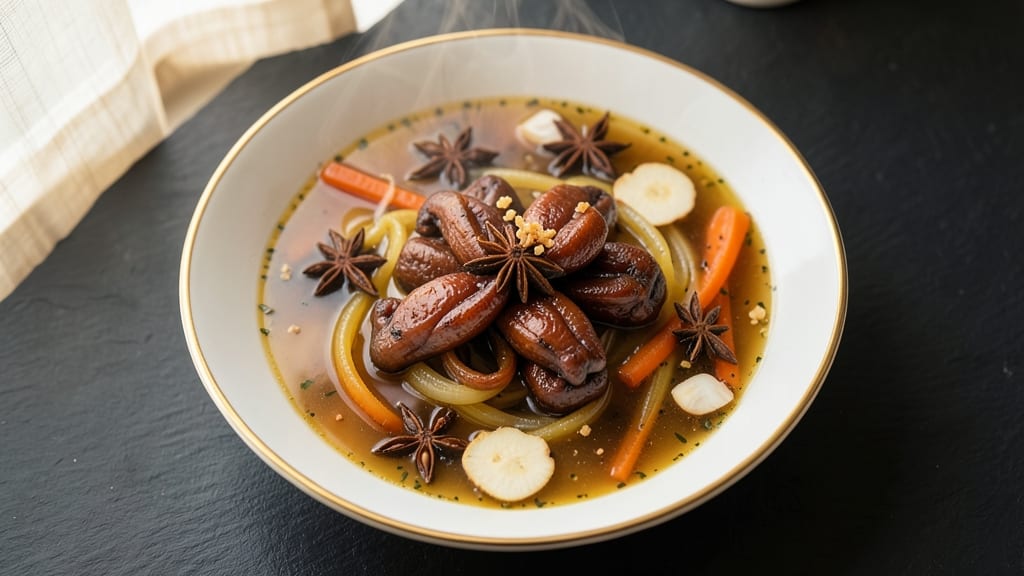
This bird tongue soup recipe transforms humble ingredients into a luxurious, collagen-rich broth that's both nourishing and deeply satisfying. The secret lies in slow-simmering the bird tongue (or substitute) until it becomes tender and infused with flavor, creating a silky texture that's impossible to resist.
What makes this dish extraordinary is how simple ingredients—like aromatic vegetables, ginger, and star anky—elevate into something restaurant-worthy with just time and patience.
The broth develops a rich, umami depth from the collagen released during the long simmer, while silky egg ribbons add a delicate contrast. This recipe bridges tradition and convenience, offering a dish that's both comforting and impressive enough for special occasions.
The key is balancing the simmering time—too short, and the tongue remains chewy; too long, and the broth loses its clarity.
By the time you're done, you'll have a steaming bowl of golden broth with tender, melt-in-your-mouth tongue and delicate egg ribbons floating on top.
The aroma alone is enough to draw everyone to the table, but the first bite delivers a harmony of textures and flavors that feels like a culinary revelation. Perfect for warming up chilly evenings or celebrating with loved ones.
Whether you're preparing this as a traditional dish or modernizing it with your own twists, the result is always a testament to the magic of slow cooking.
The broth can be made ahead, allowing the flavors to deepen over time, while the egg ribbons add a fresh, elegant touch when served. This is the kind of soup that turns a simple meal into an experience.
Ingredients for bird tongue soup
Find these ingredients at any grocery store—just don’t skip the star anise.
| Ingredient | Amount | Notes |
|---|---|---|
| Bird Tongues 🐦 | 1 ½ lb | Cleaned and trimmed |
| Yellow Onions 🧅 | 2 whole | Peeled and halved |
| Carrots 🥕 | 4 whole | Scrubbed and cut into chunks |
| Fresh Ginger 🌿 | 2 tbsp | Grated, peeled |
| Star Anise Pods 🌟 | 4 whole | Lightly crushed |
| Garlic Cloves 🧄 | 6 cloves | Peeled and smashed |
| Cinnamon Sticks 🌿 | 2 whole | Lightly cracked |
| Large Eggs 🥚 | 4 whole | Fresh and cold |
| Dried Bay Leaves 🍃 | 2 whole | Crushed between palms |
| Black Peppercorns 🌶️ | 1 tbsp | Crushed |
| Sea Salt 🧂 | 1 ½ tsp | Kosher preferred |
| Vegetable Oil 🫒 | 2 tbsp | For searing |
| Chicken Stock 💧 | 6 cups | Homemade or quality store-bought |
Bird tongues are the star, but they’re tricky to find. Check specialty butchers or Asian markets—they often carry them frozen. If you can’t find them, oxtail or chicken feet work as substitutes (they add collagen too). The star anise and cinnamon are non-negotiable—they give that deep, aromatic backbone. Penzeys has great whole spices if your grocery store’s selection is sad. For the ginger, fresh is best, but powdered works in a pinch (use half the amount). The carrots and onions can be any variety—no need to splurge, but avoid wilted or bruised veggies.
No chicken stock? Vegetable broth or even water with extra salt will work, though the flavor won’t be as rich. Fresh bay leaves are ideal, but dried is fine too—just add them whole and remove before serving. The egg ribbons need very fresh eggs (within a week of the pack date), or they’ll turn into scrambled eggs instead of silky strands. For the bird tongues, if they’re frozen, thaw overnight in the fridge—never under running water, or they’ll turn mushy. The oil? Any neutral oil works, but avocado oil has a higher smoke point for searing.
This broth tastes even better the next day—make a double batch and freeze half. The egg ribbons? Use within 2 hours of making, or they’ll get rubbery. Store the broth in airtight containers for up to 5 days or freeze for 3 months. For the egg ribbons, keep them submerged in cold water until ready to serve. The tongues? Eat them within 2 days if not using immediately—they keep well in the fridge but dry out fast.
Why You'll Love This Recipe
- Minimal Ingredient Hunt: I swear by this recipe because my pantry already has onions, carrots, and ginger—no last-minute grocery run needed. The star anise and bird tongues might sound exotic, but they’re often in Asian markets or freezer sections, and once you’ve got them, the rest is just simmering.
- Umami Bomb: That first bite? The bird tongues soak up the ginger and star anise like a sponge, turning them into this deep, savory punch. Honestly, the carrots almost feel like an afterthought—they just hold the broth together while the real stars shine.
- Weeknight to Potluck: I make this when I’m too tired for fussing, but it also shows up at dinner parties like it belongs there. Serve it over rice for a quick weeknight meal, or ladle it into bowls with noodles for guests—no one will guess how little effort it took.
- Leftovers That Don’t Let You Down: Between us, this soup improves the next day. The flavors meld even more, and the bird tongues get tender enough to pull apart with a spoon. I’ve reheated portions for three days straight—no one’s complained, and my wallet hasn’t either.
Step-by-step instructions for bird tongue soup
Here's how to transform tough bird tongues into a luxurious, collagen-rich broth with delicate egg ribbons.
Sear the Bird Tongues for Deep Flavor
Heat the 2 tablespoons vegetable oil in a large Dutch oven over medium-high heat until shimmering. Pat the 1.5 lb bird tongues completely dry with paper towels—this ensures a proper sear. Working in batches if needed, brown the tongues on all sides for 3-4 minutes per side until deeply golden. You're looking for a rich, caramelized crust that will dissolve into the broth later.
As they sear, the collagen in the tongues begins to break down, releasing its rich, gelatinous essence. Don't crowd the pan—this keeps the heat consistent. Once all tongues are browned, transfer them to a plate and set aside. You'll notice the oil will be quite dark from the Maillard reaction—this is exactly what we want for maximum flavor.
Build the Aromatic Base
In the same Dutch oven, add the 2 whole yellow onions (halved) and 4 whole carrots (cut into chunks). Cook for 5-6 minutes, stirring occasionally, until the onions soften and begin to caramelize slightly at the edges. This step develops the soup's sweet, complex foundation.
Add the 2 tablespoons fresh ginger (grated), 6 cloves garlic (smashed), 4 whole star anise pods (lightly crushed), 2 whole cinnamon sticks (lightly cracked), 2 whole dried bay leaves (crushed), and 1 tablespoon black peppercorns. Stir everything together and cook for another 2 minutes until the spices are fragrant and the garlic begins to turn golden. The spices will infuse the broth with warm, earthy notes that balance the richness of the tongues.
Simmer the Collagen-Rich Broth
Pour in the 6 cups chicken stock and sprinkle with 1.5 teaspoons sea salt. Bring the mixture to a gentle boil, then immediately reduce heat to low and add the seared bird tongues. The liquid should just barely bubble at the edges—this slow simmer is crucial for extracting collagen without breaking down the tongues into mush.
Cover the Dutch oven and simmer for 2-2.5 hours, maintaining a gentle simmer. The tongues will gradually soften and release their collagen into the broth, creating a naturally thick, velvety texture. Stir occasionally, but avoid vigorous stirring which can break down the tongues. You'll know it's ready when the tongues are fork-tender and the broth has thickened noticeably.
Create Silky Egg Ribbons
While the soup simmers, prepare the egg ribbons by whisking the 4 whole large eggs in a bowl until fully combined. The eggs should be cold—this prevents them from cooking too quickly when added to the hot broth. Have a fine-mesh strainer ready for this step.
When the tongues are tender, carefully ladle about 1 cup of the hot broth into the egg mixture, whisking constantly to create a custard-like texture. Then, slowly pour this egg mixture back into the simmering soup while stirring gently. The residual heat will cook the eggs into delicate, silky ribbons that float throughout the broth. If the soup thickens too much, add a splash of hot water to maintain the perfect consistency.
Finish and Serve
Strain the soup through a fine-mesh sieve into a clean pot, pressing gently on the solids to extract maximum flavor. Discard the solids or use them for another purpose. Return the strained broth to the pot and bring it to a gentle simmer. Taste and adjust the seasoning if needed—you might need a bit more salt to balance the richness.
To serve, ladle the hot soup into bowls and garnish with additional egg ribbons if desired. The result should be a luxurious, collagen-rich broth with tender bird tongues and delicate egg strands that melt in your mouth. This soup is best enjoyed immediately while the egg ribbons maintain their silky texture, but the broth itself keeps well in the refrigerator for up to 3 days.
Pro Tips For Making Bird Tongue Soup
- BLANCH FIRST, SIMMER LATER: Bird tongues need a quick blanch—just 2-3 minutes in boiling water—to remove any bitterness before simmering. I learned this the hard way: skipping it left my soup tasting metallic, no matter how long I cooked it afterward.
- PEEL GINGER THINLY: Fresh ginger loses its punch when it turns to mush, so slice it paper-thin—about 1/16-inch thick—so it infuses flavor without gumming up the broth. My grandmother swore by this, and she was right: thick slices just sit there, underused.
- DON’T CROWD THE POT: Star anise pods and carrots need room to breathe, or they’ll steam instead of caramelize. Use a wide pot and spread them out—even if it means two batches. I used to jam everything in and wondered why my soup tasted flat.
- SALT THE WATER HOT: Add salt to the simmering broth after the water reaches a full boil—otherwise, the bird tongues will absorb too much salt before they’re ready. This isn’t the prettiest method, but it’s the tastiest. Trust the process.
Perfect pairings for these flavors
Classic Steamed Buns
Serve your bird tongue soup with steamed buns (baozi) for the ultimate Chinese comfort pairing. These soft, pillowy buns soak up the rich broth beautifully—stuff them with a bit of pork and chive filling or leave them plain.
I like using King Arthur Flour for the dough, which yields a tender crumb. Steam them fresh alongside the soup so they stay warm and fluffy. 🥟
Jasmine Rice
A bed of jasmine rice transforms this soup into a full meal. Cook 1 cup jasmine rice with 1.5 cups water and a pinch of salt until tender. The subtle floral aroma of the rice complements the earthy spices in the soup.
For extra luxury, use Daybreak brand jasmine rice—it’s consistently fragrant and fluffy. Serve the soup over the rice for a satisfying, hearty combination.
Pickled Vegetables
Add a tangy contrast with quick-pickled vegetables like radishes or daikon. Thinly slice 1 cup radishes or ½ cup daikon, then soak in a mixture of ½ cup rice vinegar, 1 tbsp sugar, and ½ tsp salt for at least 30 minutes.
The bright acidity cuts through the richness of the broth, balancing the dish perfectly. I love using Mae Ploy rice vinegar for its clean, crisp flavor.
Fresh Herbs
Finish with a sprinkle of fresh cilantro or Thai basil for a burst of freshness. Chop ¼ cup cilantro or 2 tbsp Thai basil finely and scatter over the soup just before serving.
The herbs add a bright, aromatic note that elevates the dish without overpowering the delicate flavors. For a garnish with color, add a few edible flowers like nasturtiums or pansies.
Spicy Chili Oil
For those who love heat, drizzle the soup with homemade chili oil. Simmer ½ cup neutral oil with 2 tbsp dried red chili flakes and 1 tsp Sichuan peppercorns until fragrant, then strain.
The oil adds a smoky, spicy kick that pairs wonderfully with the collagen-rich broth. I like to make a big batch and store it in a dark glass bottle to preserve its potency. 🌶️
Nutrition facts
Frequently asked questions
Can I substitute bird tongues if they're hard to find?
For a similar collagen-rich texture, use oxtail (1.5 lb) or chicken feet (2 lb). These ingredients add depth to the broth while keeping the dish hearty. If you prefer a lighter option, shitake mushrooms (1 lb) work well for umami without the same texture. Just adjust simmering time—oxtail needs 1.5 hours while mushrooms are ready in 30 minutes.
Why does the egg ribbon technique fail sometimes?
Egg ribbons turn out rubbery or scrambled when eggs aren't cold enough or the broth isn't hot enough. Always use very fresh eggs (within 1 week) and chill them for 30 minutes before whisking. The broth must simmer at 180°F (low heat)—if it's too hot, the eggs cook too fast. For extra silkiness, add a splash of cold water to the broth before mixing in the eggs.
How can I make this soup vegetarian?
Replace bird tongues with king oyster mushrooms (1.5 lb) or firm tofu (2 blocks) for texture. Boost umami with 1 tbsp soy sauce and 1 tsp miso paste in the broth. For collagen, add 1 cup dried shiitake stems (soaked first). The star anise, cinnamon, and ginger will still shine—just reduce simmering time to 1 hour for mushrooms or 45 minutes for tofu.
Can I prepare this soup ahead of time?
Yes! Make the broth 1 day ahead—it tastes even better after flavors meld. Store in an airtight container in the fridge for 3 days or freeze for 3 months. Reheat gently on low heat and add egg ribbons fresh when serving. For extra richness, strain and reduce the broth by 25% before reheating. The tongues will be even more tender after resting!
What's the secret to balancing the rich flavors?
Acidity is key! Add 1 tsp rice vinegar or ½ tsp lemon juice per bowl to cut through richness. For brightness, serve with quick-pickled veggies (radishes or cucumbers). The star anise and cinnamon need balancing too—if they're too strong, add fresh cilantro or mint at the end. Always taste the broth before adding eggs to adjust seasoning.