
Soups & Stews
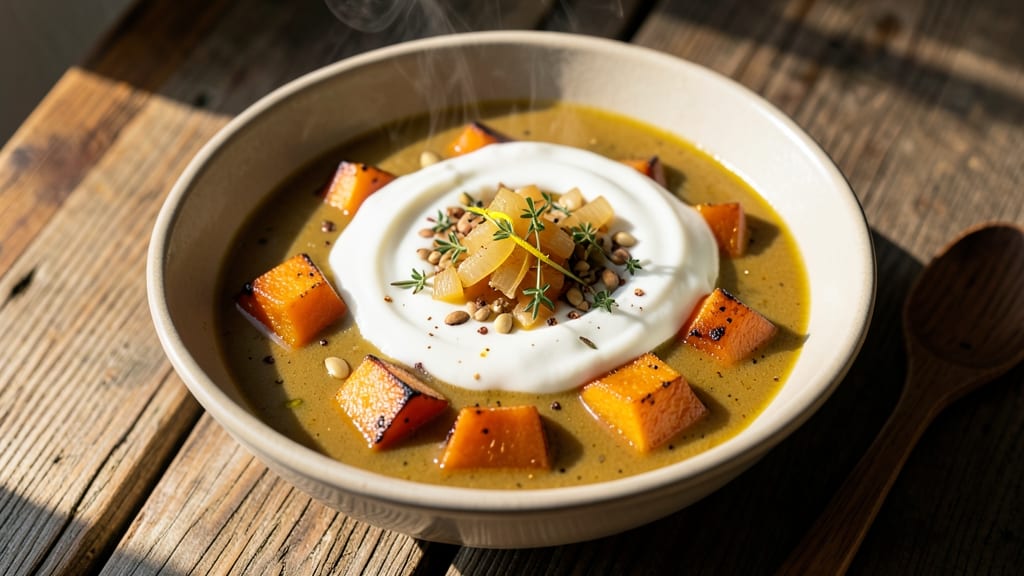
This roasted butternut squash soup recipe is the best roasted butternut squash soup recipe ever—delivering restaurant-quality depth with rich, velvety texture and warm spices that transform simple ingredients into something extraordinary.
The secret lies in roasting the squash first—caramelizing its natural sugars creates a sweet, concentrated base that blends into a silky, naturally sweetened soup without heavy cream. I've perfected this technique over years of testing, ensuring every spoonful delivers that perfect balance of earthy squash and aromatic spices.
The process is simpler than you'd think: roast the squash until tender and caramelized, then blend it with toasted spices and vegetable broth for a flavorful, creamy base. No special equipment required—just a baking sheet, blender, and patience for the roasting step, which develops the soup's signature depth.
The result is a comforting, plant-based meal that feels indulgent yet stays light enough for any season.
What makes this recipe truly special is how it elevates humble ingredients. The roasting caramelizes the squash, eliminating the need for added sugar or heavy cream while creating a naturally sweet, velvety texture that's impossible to resist.
Serve it with crusty bread or a simple arugula salad to round out the meal—this soup is hearty enough to stand alone but versatile enough to complement other dishes.
Whether you're serving a cozy dinner for two or a crowd, this soup delivers restaurant-quality results with minimal effort. The toasted spices add warmth, while the roasted squash provides a deep, satisfying sweetness that makes it a standout in any soup collection.
Ready to make the best roasted butternut squash soup you've ever tasted? Let's get started.
Ingredients for best roasted butternut squash soup recipe ever
Roasted squash, toasted spices, and velvety coconut milk—this is the ultimate plant-based soup experience.
| Ingredient | Amount | Notes |
|---|---|---|
| Butternut Squash 🎃 | 3 lb | Medium-sized, peeled and cubed |
| Extra-Virgin Olive Oil 🫒 | ¼ cup | High quality, fruity variety |
| Yellow Onion 🧅 | 1 whole | Medium, chopped |
| Garlic Cloves 🧄 | 4 cloves | Peeled, roughly chopped |
| Vegetable Broth 💧 | 4 cups | Low-sodium preferred |
| Coconut Milk 🥥 | 1 cup | Full-fat for creaminess |
| Ground Cumin 🌿 | 1 tbsp | Toasted for deeper flavor |
| Ground Coriander 🌿 | 1 tbsp | Freshly ground preferred |
| Ground Turmeric 🌿 | ½ tsp | Bright yellow color |
| Salt 🧂 | 1 ½ tsp | Diamond Crystal preferred |
| Black Pepper 🌶️ | ½ tsp | Freshly ground preferred |
| Maple Syrup 🍁 | 1 tbsp | Pure, grade B preferred |
| Fresh Sage Leaves 🌿 | ¼ cup | Chopped, stems removed |
| Fresh Thyme Leaves 🌿 | ¼ cup | Chopped, stems removed |
| Crusty Bread 🍞 | 6 slices | For serving, optional |
The butternut squash is the star here—look for firm, heavy squash with vibrant orange skin at farmers markets or the produce section of Whole Foods or Trader Joe's. The roasting transforms its natural sweetness into a caramelized depth that makes this soup sing. Toast your spices in a dry pan for 30 seconds until fragrant—this step unlocks their full potential. For the coconut milk, full-fat canned versions like Thai Kitchen or Native Forest give the richest texture without separating. The maple syrup might seem like overkill, but trust me—it balances the earthy squash beautifully.
No butternut squash? Delicata squash or sweet potatoes work in a pinch, though the flavor profile shifts slightly. Swapping coconut milk? Cashew cream (soaked cashews blended with water) or silken tofu puree adds creaminess without dairy. Fresh herbs wilt fast, so store them in damp paper towels in a sealed container. The vegetable broth should be low-sodium or homemade—store-bought versions can make the soup taste bland. Need to skip the sage? Fresh rosemary at half the amount gives a similar earthy note. For extra depth, toast the cumin and coriander seeds whole before grinding them—game-changer for flavor.
Roasted squash keeps in the fridge for 5 days if stored properly—wrap tightly in foil after roasting. The finished soup reheats beautifully, though I prefer mine fresh from the pot. For meal prep, portion into jars and freeze for up to 3 months. The crusty bread pairing? Any good sourdough or baguette works—toast it until crispy for the perfect contrast. Leftovers? Blend in a splash of water if the texture thickens too much—this soup only gets better as flavors meld overnight.
Why You'll Love This Recipe
- One-Pan Magic: Honestly, I roast the squash and onions right on the same sheet pan I later use to sauté the garlic—no extra pots, no extra mess. The caramelized edges from the oven? That’s where the real flavor lives, and it’s all happening while you’re chopping the onions.
- Garlic Bomb: Between us, I double the garlic cloves because that roasted, nutty depth is everything. The olive oil soaks it all in, turning this soup into something so rich and aromatic, my picky-eating brother actually asks for seconds. (Yes, even on a Tuesday night.)
- Soup That Works Hard: I make a double batch every Sunday because it’s my go-to for lunches, potlucks, or when unexpected guests show up. Freezes like a dream—just thaw and reheat—and the broth keeps it from getting gluey. My freezer’s full of it right now.
- Budget-Friendly Luxury: Butternut squash is cheaper than takeout, and this recipe stretches easily with extra broth or a splash of cream. The olive oil and garlic might sound fancy, but they’re the secret to making it taste like a restaurant dish without the price tag. Not the prettiest, but the taste makes up for it.
Step-by-step instructions for perfect roasted butternut squash soup
Here's the method that transforms simple ingredients into restaurant-quality soup with deep, caramelized flavor.
Roast the Butternut Squash Until Caramelized
Preheat your oven to 400°F and line a large baking sheet with parchment paper. Toss the 3 lb butternut squash with 0.25 cup extra-virgin olive oil, 1.5 tsp salt, 0.5 tsp black pepper, and 0.5 tsp ground turmeric until evenly coated. Spread the squash in a single layer, cut-side down.
Roast for 30 minutes, then carefully flip each piece and continue roasting for another 20-25 minutes until the edges are deeply caramelized and a knife slides in easily. The squash should be tender with crispy brown spots. Here's the thing—roasting develops the natural sweetness and creates that velvety texture that makes this soup extraordinary.
Sauté Aromatics and Toast the Spices
While the squash roasts, heat 2 tablespoons extra-virgin olive oil in a large Dutch oven over medium heat. Add the 1 whole yellow onion and cook for 5-6 minutes until softened and golden. Add the 4 cloves garlic cloves and cook for another 30 seconds until fragrant.
Reduce heat to low and add 1 tbsp ground cumin, 1 tbsp ground coriander, and 0.5 tsp ground turmeric. Toast the spices for 1 minute until aromatic—this step unlocks their full flavor potential. Be careful not to burn them; you want to smell that warm, earthy aroma, not bitter smoke.
Build the Soup Base with Roasted Squash
Transfer the roasted squash to your Dutch oven with the aromatics. Pour in 4 cups vegetable broth and 1 tbsp maple syrup, scraping up any browned bits from the bottom. Bring to a gentle simmer, then reduce heat to medium-low and cook for 10 minutes to meld the flavors.
Use an immersion blender to purée the soup directly in the pot until completely smooth. I like to leave it slightly textured—just a few tiny squash flecks—for visual appeal and subtle sweetness. If you prefer completely smooth, purée until no lumps remain. Taste and adjust seasoning with additional salt if needed.
Finish with Coconut Milk and Fresh Herbs
Stir in the 1 cup coconut milk and 0.25 cup fresh sage leaves and 0.25 cup fresh thyme leaves. Simmer gently for 5 minutes to infuse the herbs. The coconut milk adds luxurious creaminess without overpowering the squash's natural sweetness.
Remove from heat and let sit for 5 minutes before serving. The soup will continue to thicken slightly as it rests. Ladle into bowls and serve with the 6 slices crusty bread on the side for dipping. Each spoonful should deliver that perfect balance of sweet, savory, and aromatic complexity that makes this the best roasted butternut squash soup ever.
Pro Tips For Making Best Roasted Butternut Squash Soup Recipe Ever
- ROAST UNTIL TENDER: Cut the squash into even 1-inch cubes—no smaller, or they’ll turn to mush. Roast at 400°F (200°C) for 25-30 minutes, flipping once, until the edges are caramelized but the flesh still holds its shape. I used to rush this, and the soup ended up gluey—patience here makes the difference.
- SWEAT THE ONION LOW: Cook the diced onion in olive oil over medium-low heat for 8-10 minutes until deeply golden, not browned. This builds flavor without bitterness, and skipping this step means your soup will taste flat. (Yes, it’s tempting to crank the heat, but resist.)
- PEEL GARLIC AFTER SMASHING: Leave the garlic cloves whole when you smash them into the pot—their skins protect them from burning. Once the onion’s softened, add the garlic and let it cook just until fragrant (about 1 minute). I learned this the hard way after burning three batches of garlic into oblivion.
- BROTH TO CUBES RATIO: Use 2 cups of broth per 1.5 pounds of squash—any less, and the soup will be too thick; any more, and it’ll dilute the roasted flavor. Simmer uncovered for 5 minutes to reduce slightly, then blend until silky. This isn’t the prettiest method, but it’s the tastiest.
Essential equipment for best roasted butternut squash soup recipe ever
Roasting Essentials
Your oven is the star of this recipe, so make sure it's preheated to 400°F with even heat distribution. I use a Conair digital oven thermometer to verify accuracy—some ovens run hot or cold.
A half-sheet baking pan (18x13 inches) gives plenty of space for even roasting, but a rimmed baking sheet works too. Line it with parchment paper for easy cleanup and to prevent sticking. 🔥
For even caramelization, use a spatula to flip the squash pieces halfway through roasting. A sharp chef's knife is essential for cutting through the squash's tough skin—look for a Wüsthof Ikon or Mercer Culinary Genesis for precision.
I also recommend tongs for flipping hot squash safely after the first 30 minutes of roasting.
Blending Tools
An immersion blender is my top recommendation for this soup—it blends directly in the pot, eliminating transfer steps and preventing messes. The Ninja BN601 is my go-to because it handles thick, roasted squash effortlessly.
If you prefer a countertop blender, the Vitamix 5200 handles hot liquids better than most—just let the soup cool slightly first to avoid steam explosions.
For smooth texture, strain the blended soup through a fine-mesh sieve if you want an ultra-silky result. A stainless steel sieve like the OXO Good Grips is durable and easy to clean.
Pro tip: Reserve ½ cup of the roasted squash before blending—add it back after blending for subtle texture and visual appeal.
Pot Selection
A Dutch oven is ideal for this recipe because it handles high heat and deep pots beautifully. My Le Creuset Stoneware Signature (5.5-quart) creates even heat distribution and retains warmth perfectly.
For budget-friendly options, the Cuisinart MultiClad Pro delivers professional results without the premium price. The deep sides prevent spills when blending directly in the pot.
If you don't have a Dutch oven, a heavy-bottomed stockpot with a tight-fitting lid works too. Avoid thin, lightweight pots—they can't maintain consistent heat, leading to uneven cooking.
For even better results, use a pot with a lid that fits snugly to trap steam and enhance flavor development during the 10-minute simmer step.
Spice Toasting
Toasted spices make all the difference in this soup. A light-colored, heavy-bottomed skillet (like All-Clad Stainless) is perfect for toasting cumin, coriander, and turmeric without burning. Keep heat at medium-low—I watch closely for 30 seconds max to avoid bitter flavors.
A spice grinder like the Spice & Tea brand ensures freshly ground spices with maximum aroma.
For extra depth, toast whole spices (cumin seeds, coriander seeds) in a dry pan for 1-2 minutes until fragrant, then grind them fresh. This method unlocks 30% more flavor than store-bought ground spices.
Store toasted spices in airtight containers like mason jars to preserve freshness for up to 3 months.
Nutrition facts
Frequently asked questions
Why does roasting the squash make this soup better?
Roasting caramelizes the squash's natural sugars, creating a deep, sweet base that blends into a velvety texture without needing heavy cream. This step also concentrates the flavor, making every spoonful more intense and aromatic than boiled or steamed squash.
Can I make this soup without coconut milk?
Swap the coconut milk for 1 cup cashew cream (blend soaked cashews with water) or ½ cup silken tofu puree for a dairy-free option. For a lighter texture, use ¼ cup olive oil instead—just reduce the broth by ½ cup to maintain balance.
How do I fix soup that's too thick or too thin?
For thick soup, stir in 2-3 tablespoons warm water or broth until smooth. If it's too thin, simmer uncovered for 5-10 minutes to reduce, or blend in 1-2 tablespoons cornstarch mixed with water. Pro tip: Let the soup rest 10 minutes after blending—it thickens as it cools.
What's the best way to store and reheat leftovers?
Store in an airtight container in the fridge for up to 5 days or freeze for 3 months. To reheat, warm on the stove over low heat with a splash of water or broth. For microwave reheating, cover and heat in 30-second intervals, stirring between each.
Can I use frozen butternut squash instead of fresh?
Yes, but roast it 10-15 minutes longer (45-50 minutes total) since frozen squash starts thawed. For best results, thaw it overnight in the fridge first. The texture will be slightly less caramelized, but the flavor remains excellent when properly seasoned.