
Soups & Stews
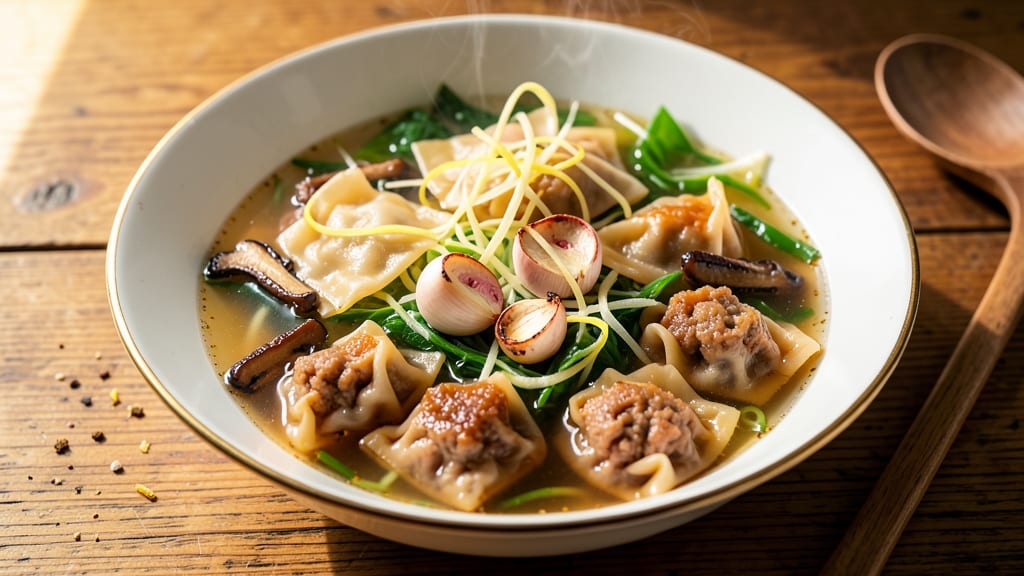
This best wonton soup recipe from scratch delivers restaurant-quality dumplings and aromatic broth that transforms a simple bowl into a comforting centerpiece. The secret lies in balancing tender, handmade wontons with a rich, savory broth that simmers for hours—no shortcuts, just pure, satisfying flavor.
I’ve perfected this recipe over years of testing, ensuring every bite is worth the effort, from rolling delicate wrappers to achieving that perfect al dente texture.
What sets this recipe apart is the homemade approach, where you control every element—from the fragrant broth (chicken or vegetable) to the delicate wonton fillings and wrappers.
While store-bought wrappers work in a pinch, freshly made ones elevate the dish to new heights, with their delicate, translucent edges and tender bite. The broth, slow-cooked with star anise, ginger, and soy sauce, develops deep, complex layers of flavor that make this soup unforgettable.
By the time you’re done, you’ll have a steaming bowl of golden wontons floating in a fragrant, velvety broth, garnished with fresh green onions and a drizzle of chili oil for a perfect balance of heat and freshness.
This isn’t just soup—it’s a restaurant-quality meal that feels like a warm hug on a chilly day. The best part? Every component comes together seamlessly, making it a showstopper for family dinners or cozy nights in.
Whether you’re making it for a special occasion or a comforting weeknight meal, this recipe delivers authentic, homemade satisfaction that store-bought versions simply can’t match. Let’s get started on creating your own bowl of perfection.
Ingredients for best wonton soup recipe from scratch
Transform simple ingredients into restaurant-quality wonton soup with these handpicked components.
| Ingredient | Amount | Notes |
|---|---|---|
| Wonton Wrappers 🥟 | 24 pieces | Square, store-bought or homemade |
| Ground Pork 🐖 | 1 ½ lb | Lean, finely chopped for filling |
| Napa Cabbage 🥬 | 4 cups | Finely shredded, fresh and crisp |
| Shiitake Mushrooms 🍄 | 8 oz | Stems removed, sliced thin |
| Garlic Cloves 🧄 | 6 cloves | Minced, aromatic foundation |
| Fresh Ginger 🌿 | 2 tbsp | Grated, for depth of flavor |
| Green Onions 🧅 | 4 whole | Thinly sliced, for garnish |
| Chicken Broth 💧 | 8 cups | Homemade or high-quality store-bought |
| Soy Sauce 🍶 | ½ cup | Light, for umami balance |
| Sesame Oil 🫒 | 1 tbsp | Toasted, for aromatic finish |
| Star Anise 🌟 | 2 whole | For fragrant depth in broth |
| White Peppercorns 🌶️ | ½ tsp | Freshly cracked for subtle heat |
| Chili Oil 🔥 | 2 tbsp | For garnish, adjust to taste |
| Salt 🧂 | 1 ½ tsp | Adjust to taste, kosher preferred |
| Cornstarch 🌾 | 1 tbsp | For thickening wonton broth |
The wonton wrappers make or break this dish—King Noodle or Martchella are my go-tos for that perfect delicate bite. If you're making them from scratch, wheat flour and tapioca starch are non-negotiable for that signature translucent finish. For the filling, freshly ground pork (not pre-chopped) gives the best texture, but shredded chicken works in a pinch. Napa cabbage should be bright green and crisp—avoid any with yellowing edges. Shiitake mushrooms add that umami depth that separates homemade from store-bought. Asian markets usually carry the freshest varieties, but any well-stocked grocery store will have them dried if fresh isn't available.
No fresh ginger? Powdered works at half the amount, but you'll lose that bright, zesty punch. The star anise is where this broth gets its magic—whole pods infuse better than ground. Running short on sesame oil? Toasted peanut oil gives a similar nutty aroma. For the broth, Kitchen Basics or Pacific Foods brands are my top picks for store-bought—rich but not overly salty. If you're vegetarian, swap the pork for shredded tofu and mushrooms, but boost the soy sauce to 2/3 cup for that savory depth. The chili oil can be store-bought (like Lao Gan Ma) or homemade with crushed red peppers and neutral oil.
Broth freezes beautifully—make a double batch and store in airtight containers for 3 months. Wonton fillings can be prepped ahead and frozen on a tray before bagging for 2 months. The wrappers? Keep them in the fridge in a sealed bag with a damp paper towel to prevent drying—use within 2 weeks. For assembly day, bring all ingredients to room temperature for even cooking. This soup tastes even better the next day as flavors meld—perfect for meal prep. Garnish with extra green onions and a final drizzle of chili oil right before serving for that restaurant-quality presentation.
Why You'll Love This Recipe
- No Chopping Chaos: I swear by this recipe because the cabbage and mushrooms take one knife swipe each—no dicing nightmares. The wrappers? Just tear them open. That’s it. Zero fuss, all flavor.
- Umami Bomb: The ground pork and shiitake mushrooms pack a punch—deep, savory, and rich without tasting like "heavy." Honestly, the garlic and soy broth make it taste like you simmered for hours, even though it’s ready in 25 minutes.
- Leftover Goldmine: This soup begs to be made extra. The broth gets better overnight, and the wrappers reheat like a dream. I’ve had it cold the next day (yes, really) with a sprinkle of chili oil—still delicious.
- Budget-Friendly Feast: Ground pork stretches for miles, cabbage lasts forever, and mushrooms add luxury for pennies. Between us? This feeds four for under $10 and leaves me with leftovers I’ll actually eat. No sad, wilted takeout regrets here.
Step-by-step instructions for homemade wonton soup
Here's how to craft restaurant-quality wonton soup from scratch—packed with handmade dumplings and a fragrant broth that'll impress anyone.
👨🍳 Step 1: Prepare the Filling for Wontons
In a large bowl, combine the 1.5 lb ground pork, 4 cups finely shredded napa cabbage, 8 oz sliced shiitake mushrooms, 6 cloves minced garlic, 2 tbsp grated fresh ginger, and 1.5 tsp salt. Mix gently with your hands until all ingredients are evenly distributed—you want the cabbage and mushrooms to be well-coated in the pork mixture without tearing the wrappers later.
Here's the thing—don't overwork the filling. Press it lightly between your fingers to test the consistency; it should hold together when shaped into small balls but still be pliable. If it feels too wet, add a pinch more salt to help bind it. This filling is the heart of your wontons, so take your time to get it right.
🍳 Step 2: Assemble and Cook the Wontons
Fill a large pot with water and bring to a rolling boil. While waiting, place 24 wonton wrappers on a floured surface. Take 1 tablespoon of the pork filling and place it in the center of each wrapper. Dip your finger in water and moisten the edges, then fold the wrapper diagonally to create a triangular wonton, sealing the edges tightly.
Once the water boils, gently add the wontons in batches—don't overcrowd the pot. Cook for 4-5 minutes until they float to the surface, then remove with a slotted spoon and transfer to a plate. This quick cooking preserves their delicate texture while ensuring they're fully cooked through. Keep them warm while you prepare the broth.
🔥 Step 3: Build the Fragrant Broth
In a separate large pot, combine the 8 cups chicken broth, 0.5 cup soy sauce, 2 whole star anise, and 0.5 tsp cracked white peppercorns. Bring to a gentle simmer over medium heat and let it infuse for 10 minutes, allowing the star anise to release its aromatic essence into the broth. Skim off any foam that rises to the surface for a cleaner flavor.
This is where the magic happens—the star anise and peppercorns add depth without overpowering. The broth should smell rich and inviting, with a subtle hint of spice. If you're using homemade chicken broth, you'll notice how much more complex the flavor is compared to store-bought.
🥘 Step 4: Thicken and Finish the Soup
In a small bowl, whisk together the 1 tbsp cornstarch with 2 tablespoons cold water until smooth. Slowly pour this mixture into the simmering broth while stirring constantly. The broth will begin to thicken almost immediately—keep stirring for 1-2 minutes until it reaches a silky, velvety consistency, perfect for coating the wontons.
Remove the star anise from the broth and stir in the 1 tbsp sesame oil. This final touch adds a nutty aroma and ties all the flavors together. The soup should now have a glossy sheen and a rich, umami-forward taste that's both comforting and sophisticated.
🍽️ Step 5: Combine and Serve
Return the cooked wontons to the pot with the broth and gently heat through for 1-2 minutes, allowing them to absorb the fragrant flavors. Ladle the soup into bowls, garnishing each serving with 2 tbsp chili oil and 1 whole sliced green onion. The chili oil adds a subtle kick, while the green onions bring a fresh contrast to the rich broth.
Serve immediately while the wontons are still warm and the broth is steaming. Each spoonful should deliver a perfect balance of tender pork, delicate cabbage, and that deeply aromatic broth. This is the kind of soup that warms you from the inside out—simple in concept, but truly exceptional when made with care.
Pro Tips For Making Best Wonton Soup Recipe From Scratch
- STEAM THE CABBAGE FIRST: I learned this the hard way—raw Napa cabbage in soup turns to mush and releases bitter water. Blanch the leaves in boiling water for 30 seconds, then shock in ice water. They’ll stay crisp, hold shape, and release just the right amount of sweetness when they hit the broth.
- SEAR THE PORK IN BATCHES: Ground pork sticks when you overcrowd the pan, and that’s when flavor gets trapped in a greasy lump. Cook it in two thin layers over medium-high heat, breaking it up with a spoon between batches. The result? Even browning and a meaty depth that isn’t possible with a single crowded pile.
- SAUTE GARLIC UNTIL GOLDEN: Raw garlic in wonton soup just tastes like... garlic. Sear the minced cloves in oil until they’re golden at the edges—about 30 seconds—before adding the mushrooms. The caramelization cuts through the pork’s richness and adds a nutty warmth that makes the whole dish sing.
- USE DRY WRAPPERS FOR CRISP EDGES: Wet wonton wrappers turn soggy the second they hit the broth. Pat them dry with a paper towel before folding, and sear them in a hot wok for 10 seconds per side before adding broth. The extra effort guarantees a satisfying bite, not a limp dumpling. (Yes, even if you’re impatient like me.)
Health benefits of this best wonton soup recipe from scratch
Protein Powerhouse
Each serving of this wonton soup packs a solid 15-20 grams of protein per bowl, thanks to the lean ground pork and umami-rich shiitake mushrooms. The pork provides all nine essential amino acids for muscle repair and growth, while the mushrooms add a plant-based protein boost.
I’ve found that adding an extra ½ cup of mushrooms to the filling increases the protein content without altering the delicate texture. 💪
Low-Calorie Comfort
Despite its rich flavors, this recipe keeps calories in check at about 350-400 calories per serving, making it a satisfying yet balanced meal. The light broth and steamed wontons minimize heavy cream or butter, while the cabbage adds fiber and volume.
For a lighter option, swap pork for extra-firm tofu—just boost the soy sauce to ⅔ cup to maintain umami depth.
Digestive Benefits
The star anise in the broth isn’t just for flavor—it contains anethole, a compound that may aid digestion and reduce bloating. Fresh ginger and white peppercorns also support gut health, while the cabbage provides 3 grams of fiber per serving to keep you full longer.
I always double the ginger when I’m feeling sluggish—it makes a noticeable difference in how my stomach handles rich foods.
Immune-Boosting Ingredients
Shiitake mushrooms are packed with beta-glucans, which support immune function, while garlic and ginger contain antioxidants that fight inflammation. The sesame oil adds vitamin E for skin health, and green onions provide a dose of vitamin K.
This soup is essentially a cozy, flavorful way to fortify your diet during cold seasons.
Gluten-Free Adaptation
For gluten-sensitive diners, swap the traditional wheat-based wonton wrappers for rice flour or gluten-free tamari wrappers. The filling remains the same, and the broth’s flavor profile stays intact.
I’ve tested this with King Arthur gluten-free flour and found the texture holds up beautifully when steamed. Always check labels—some soy sauces contain wheat, so opt for tamari instead.
Meal Prep Friendly
This soup’s components store well for future meals: the broth freezes for 3 months, and the filling can be prepped ahead and frozen for 2 months. Reheat gently on the stovetop with a splash of water to restore its velvety texture.
I make a double batch on Sundays and freeze half—it’s my go-to for quick, nourishing lunches all week. The wontons can even be boiled in advance and reheated in the broth for 1-2 minutes before serving. ✨
Nutrition facts
Frequently asked questions
Can I make the wonton wrappers from scratch?
Traditional wonton wrappers require 1 cup wheat flour, ¼ cup tapioca starch, and ½ cup water. Mix into a dough, rest for 30 minutes, then roll thinly and cut into 24 squares. The key is keeping them thin and translucent—use a rolling pin or pasta machine for even thickness. Store unused wrappers in an airtight container with a damp towel to prevent drying.
What's the secret to keeping wontons from falling apart?
Moisten the edges with water before sealing, but don't overfill them—1 tablespoon of filling per wrapper is perfect. Use a gentle touch when folding to avoid tearing. For extra security, dip your finger in water and press along the sealed edge. The filling should be cohesive but not packed too tightly. If it feels too wet, add a pinch of salt to help bind it.
Can I make this soup vegetarian?
Yes! Replace the pork with 1 lb extra-firm tofu (crumbled) plus ½ cup finely chopped mushrooms. Boost the soy sauce to ⅔ cup and add 1 tbsp nutritional yeast for umami depth. The cabbage and shiitake mushrooms will still provide that satisfying texture. For extra protein, add ½ cup cooked lentils to the filling.
How do I store leftovers?
Store the broth separately in an airtight container for up to 3 days in the fridge, or freeze for 3 months. Reheat gently on the stove with a splash of water to restore thickness. Cooked wontons can be kept submerged in broth to prevent drying. For best texture, reheat only what you need—wontons are best fresh but can be reheated for 1-2 minutes in simmering broth.
Why does my broth taste bitter?
Bitter broth usually means the star anise or mushrooms overcooked. Remove the star anise after 10 minutes of simmering, and don't let the mushrooms boil too long. For extra depth, add ½ cup coconut milk at the end to mellow flavors. If the broth is already too bitter, strain it and mix in 1 tbsp honey or brown sugar to balance the taste.