
Soups & Stews
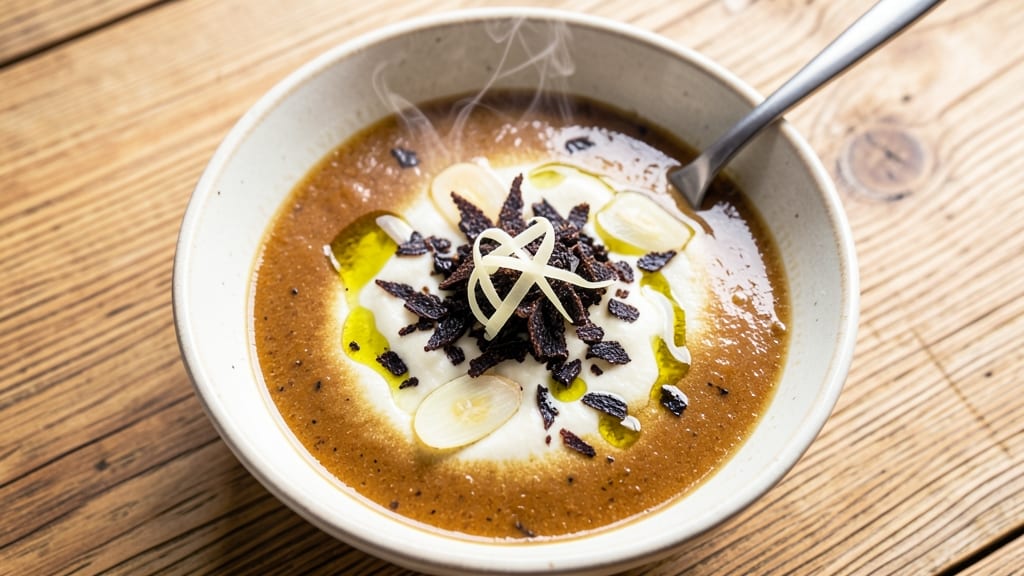
A black truffle soup recipe transforms an ordinary meal into an earthy, luxurious experience that feels like dining at a Michelin-starred restaurant. The secret lies in balancing the soup's rich, velvety texture with the unmistakable aroma of black truffles—nature's most prized ingredient. This recipe delivers depth of flavor without overwhelming complexity, making it perfect for special occasions or when you want to impress guests with minimal effort.
The process begins with sautéing aromatic vegetables like onions, garlic, and shallots until they're golden and fragrant, creating a flavorful base that forms the heart of the soup. A splash of white wine deglazes the pan, lifting those caramelized bits into the broth for maximum umami.
Simmering with vegetable or chicken stock builds a smooth, velvety foundation, while fresh cream adds luxurious body—just before the truffles are incorporated for their signature earthy, nutty punch.
What you'll end up with is a soup that's silky, aromatic, and packed with truffle flavor in every spoonful. The truffles dissolve into the warm broth, releasing their complex, forest-like aroma that lingers long after the last sip.
Garnish with a drizzle of truffle oil, fresh parsley, and a sprinkle of grated Parmesan to elevate the presentation and add another layer of sophistication.
Pair this soup with a crisp white Burgundy or a buttery Chardonnay to complement its earthy richness. Serve with crusty bread for dipping, and watch as everyone at the table savors the luxurious experience. This is the kind of dish that makes ordinary dinners feel extraordinary.
Ingredients for black truffle soup
Earthy luxury begins with these carefully selected, high-quality ingredients designed to elevate ordinary broth into Michelin-worthy black truffle soup.
| Ingredient | Amount | Notes |
|---|---|---|
| Extra-Virgin Olive Oil 🫒 | ½ cup | High-quality, fruity variety |
| Yellow Onion 🧅 | 1 whole | Medium-sized, finely diced |
| Shallots 🧅 | 2 whole | Minced, about 0.25 cup total |
| Garlic Cloves 🧄 | 4 cloves | Peeled, minced finely |
| Fresh Black Truffles 🍄 | 2 oz | Shaved or finely chopped |
| Dry White Wine 🍷 | ½ cup | Sauvignon Blanc preferred |
| Vegetable Stock 💧 | 4 cups | Homemade or high-quality |
| Heavy Cream 🥛 | 1 cup | Full-fat for richness |
| Fresh Parsley 🌿 | ¼ cup | Chopped, for garnish |
| Parmesan Cheese 🧀 | ¼ cup | Freshly grated, for garnish |
| Truffle Oil 🫒 | 1 tbsp | For finishing drizzle |
| Salt 🧂 | 1 tsp | Diamond Crystal kosher |
| Black Pepper 🌶️ | ½ tsp | Freshly ground |
| Fresh Thyme 🌿 | 2 sprigs | For aroma, stems removed |
The truffles are the soul of this dish, so source them from a reputable purveyor—Eataly or specialty gourmet shops carry the finest black truffles, often shaved fresh to order. Organic, French Périgord truffles deliver the most authentic forest aroma, though Italian white truffles offer a slightly sweeter profile. If using whole truffles, shave them just before adding to preserve their delicate aroma. The olive oil should be extra-virgin, cold-pressed—look for Italian or Spanish varieties with high polyphenol content for optimal flavor. Fresh thyme and parsley should be vibrant green with no wilting, signaling peak freshness. Store truffles in a paper-lined container in the fridge for up to 2 weeks—never refrigerate them in plastic.
No fresh truffles? Truffle-infused oil (1 tbsp) can mimic the aroma, though it lacks the complex earthiness. Substitute shallots with 3 green onions if unavailable, but the flavor will be milder. For wine, Sauvignon Blanc or Pinot Grigio work best—their crisp acidity cuts through the soup's richness. Vegetable stock can be swapped for chicken stock, though the flavor profile shifts slightly. Heavy cream may be replaced with cashew cream for a vegan version, though texture will differ. If using pre-minced garlic, toast it first in olive oil to deepen its flavor. The truffle oil should be 100% pure, not blended with other oils—Artusi or La Tourangelle brands are reliable choices.
Fresh truffles should be used immediately after shaving to preserve their aroma. Store the remaining truffle pieces in a paper bag with rice in the fridge for 1-2 days maximum. The soup reheats beautifully—simmer gently on low heat for 5-7 minutes to restore its velvety texture. Garnishes like truffle oil and Parmesan should be added just before serving to maintain their freshness. For optimal flavor, allow the soup to sit for 10 minutes after cooking before serving—this lets the truffle aroma fully infuse. Freeze portions in airtight containers for up to 3 months, though texture may separate slightly upon thawing.
Why You'll Love This Recipe
- No Fuss, Big Payoff: I swear by this soup because it’s the kind of recipe that lets you almost skip chopping. Sauté those shallots and onions in olive oil until they’re golden—no need for perfect dice—then toss in the garlic and truffles. The truffle aroma alone does half the work for you.
- Earthy Luxe in Minutes: That first spoonful? It’s like a whisper of a fancy restaurant, but made in my own kitchen. The truffles bring this deep, umami richness that pairs perfectly with the sweet caramelized onions and garlic. Honestly, I’ve made it for guests who thought it was store-bought.
- Weeknight or Wow Night: This soup is my secret weapon for both lazy Tuesdays and dinner parties. Serve it warm with crusty bread for a cozy night in, or drizzle it over grilled fish for a restaurant-worthy dish. It’s the kind of recipe that adapts without you having to think twice.
- Truffle Leftovers? Yes, Please: Between us, this soup tastes even better the next day. The flavors meld into something richer, and it reheats like a dream. Plus, truffles are pricey, so stretching them across two meals makes this recipe my budget-friendly guilty pleasure.
Step-by-step instructions for black truffle soup
A luxurious yet approachable technique that balances earthy truffle depth with velvety smoothness.
Sauté Aromatics Until Deeply Fragrant
Heat the 0.5 cup extra-virgin olive oil in a large pot over medium heat. Add the 1 whole yellow onion and 2 whole shallots, cooking for 8-10 minutes until softened and translucent. The onions should release their sweetness without browning—this foundational step builds the soup's aromatic complexity.
Add the 4 cloves minced garlic and 2 sprigs fresh thyme, stirring for 1 minute until the garlic becomes fragrant but doesn't color. Here's where the magic begins: fold in the 2 oz finely chopped fresh black truffles, cooking for just 30 seconds—longer risks bitterness. The truffles will release their signature earthy aroma, transforming your kitchen into a gourmet experience. Remove the thyme stems before proceeding.
Deglaze and Simmer the Base
Pour in the 0.5 cup dry white wine, scraping up any browned bits from the pot's bottom. Let it simmer for 2 minutes until reduced by half—this concentrates the flavors. Add the 4 cups vegetable stock, bring to a boil, then reduce heat to medium-low and simmer uncovered for 20 minutes to develop depth. The soup should reduce slightly, intensifying its umami character.
Season with 1 tsp salt and 0.5 tsp black pepper, tasting as you go. Here's the thing—truffles are delicate; you want to preserve their natural flavor rather than overpower it with seasoning. The soup should taste rich but balanced, with the truffle aroma lingering beneath the surface. If needed, adjust seasoning now—it's easier to fix before adding cream.
Finish with Cream and Truffle Oil
Reduce heat to low and stir in the 1 cup heavy cream, letting it warm through without boiling. Add the 1 tbsp truffle oil and simmer gently for 3 minutes—this step emulsifies the cream and amplifies the truffle's luxurious notes. The soup should coat the back of a spoon with a velvety texture. If it thickens too much, whisk in 1-2 tablespoons of water to reach your desired consistency.
Real talk: this is where many home cooks rush, but patience pays off. Let the soup sit off heat for 5 minutes to allow flavors to meld. The truffle oil should integrate smoothly, creating a harmonious blend of earthy and creamy elements. The final temperature should be 185°F—hot enough to serve immediately but not scalding.
Garnish and Serve with Precision
Ladle the soup into bowls, then top each serving with 0.25 cup freshly grated parmesan cheese and 0.25 cup chopped fresh parsley. The parsley adds a bright contrast to the richness, while the parmesan enhances the umami depth. Serve immediately—this soup doesn't wait. The presentation should be clean and elegant, with the truffle's dark shavings visible if you've garnished with any reserved truffle pieces.
For maximum impact, accompany with crusty bread or a simple arugula salad. The contrast of textures and temperatures—warm soup against cool greens—elevates the dining experience. Each spoonful should deliver that signature truffle aroma with every bite, making this a restaurant-quality creation you can recreate at home.
Pro Tips For Making Black Truffle Soup
- Sweat, Don’t Sear: Low and slow is your friend here—after dicing the onion and shallots, cook them in olive oil over medium-low heat until translucent, not golden. I used to rush this and end up with a bitter, caramelized mess that overpowered the truffles. Let them soften for 8-10 minutes, stirring occasionally, so they melt into the soup like silk.
- Slice Truffles Thin: Use a sharp knife to shave the black truffle into paper-thin slices—no need to chop. This maximizes surface area for flavor infusion and keeps the texture elegant. If you’re nervous about wasting it, save the scraps for garnish or a quick pasta toss later.
- Taste Before Blending: After simmering the aromatics with garlic and broth, taste the raw soup before adding truffles. If it’s bland, a pinch of salt or a splash of lemon juice now will fix it—truffle flavor can’t rescue flat broth. I learned this the hard way when I blindly dumped in truffles only to realize the base needed work.
- Upgrade with Truffle Oil: Skip the fresh truffle in the soup (save it for garnish) and stir in 1 teaspoon of high-quality truffle oil at the end. It’s a budget-friendly way to add depth without overpowering, and the aroma alone makes the soup feel luxurious. Just don’t overdo it—1 tsp is plenty for 4 servings.
Regional styles of black truffle soup
French Périgord Tradition
The black truffle soup we know today traces its roots to the Périgord region of France, where black truffles (Tuber melanosporum) grow wild in oak forests.
In 19th-century French cuisine, truffles were considered a delicacy reserved for nobility, and this soup became a staple in Bordeaux and Parisian bistros. The French technique focuses on slow simmering to preserve the truffle's delicate aroma, often finishing with a touch of crème fraîche instead of heavy cream. 🍷
Key to the French style is using homemade vegetable stock infused with herbs like bay leaf and parsley, which complements the earthy truffle. Chefs in Périgord often add a splash of Cognac during deglazing to deepen the umami profile—a technique that adds complexity without overpowering the truffle's natural flavor.
The soup is traditionally served in hand-blown ceramic bowls to highlight its luxurious presentation.
Italian White Truffle Twist
Italy, particularly Piedmont and Emilia-Romagna, puts its own spin on truffle soup using white truffles (Tuber magnatum), which have a sweeter, more floral aroma compared to black truffles.
In Italian versions, you'll often find ricotta or mascarpone swirled into the soup instead of cream, creating a lighter, almost custard-like texture. The Italians also emphasize freshly shaved truffles added at the very end to preserve their aroma, rather than cooking them into the broth. 🍝
Another Italian hallmark is the use of Parmigiano-Reggiano (instead of Parmesan) for garnish, which adds a nuttier depth. Some regional recipes incorporate saffron or nutmeg to complement the truffle's earthiness, creating a soup that's both rich and aromatic.
The Italians also pair this dish with Barolo wine, whose tannins cut through the creaminess beautifully.
Modern American Adaptations
American chefs have embraced black truffle soup as a restaurant staple, often elevating it with techniques like sous vide for the truffles to enhance their flavor before incorporation.
Many modern versions use truffle-infused stock as the base, which allows for a more consistent truffle aroma without relying on fresh truffles. In upscale American kitchens, you might see the soup finished with truffle foam or microgreens for a visually stunning presentation. 🍽️
Another American twist is the addition of smoked elements, such as a dash of smoked paprika or a drizzle of balsamic reduction, to add depth.
Some chefs also experiment with spicy components, like a pinch of cayenne or chili oil, to create a sweet-heat contrast that balances the truffle's earthiness. These adaptations make the soup more approachable for those who find traditional versions too heavy.
Spanish Almond Truffle Fusion
In Spain, particularly Andalusia and Catalonia, truffle soup often incorporates almond milk or ground almonds to create a nutty, creamy base that pairs beautifully with black truffles. This fusion reflects Spain's love for almond-based sauces and the Mediterranean's emphasis on fresh, bright flavors.
The Spanish version also frequently includes roasted red peppers or sherry in the broth, adding a smoky-sweet dimension that complements the truffle. 🌿
Another Spanish technique is to blanch the truffles in hot broth before adding them to the soup, which helps soften their texture while retaining their aroma.
The soup is often finished with a sprinkle of toasted almonds and a drizzle of extra-virgin olive oil, creating a harmonious blend of earthy, nutty, and fruity flavors. This adaptation is lighter than traditional cream-based soups but equally luxurious.
Nutrition facts
Frequently asked questions
Can I substitute fresh truffles with truffle oil?
While truffle oil adds aroma, it won't replicate the depth of fresh truffles. Use 1 tablespoon of high-quality truffle oil plus an extra 1/4 cup heavy cream to compensate. For best results, add the oil just before serving to preserve its flavor. Fresh truffles are irreplaceable for authentic earthiness.
How do I store leftover black truffle soup?
Store in an airtight container in the fridge for up to 3 days. Reheat gently on low heat, stirring occasionally to restore creaminess. For longer storage, freeze portions for up to 3 months, though texture may separate slightly upon thawing. Always reheat to 165°F before serving.
What wine pairs best with black truffle soup?
A crisp white Burgundy or Chardonnay complements the soup's richness perfectly. For red wine lovers, try a light Pinot Noir—its acidity cuts through the creaminess. Avoid heavy reds like Cabernet Sauvignon, which can overpower the delicate truffle flavors.
Why does my soup taste bitter after adding truffles?
Overcooking truffles releases bitterness. Keep them in the pot for only 30 seconds during sautéing. Use fresh, high-quality truffles—older or low-grade truffles develop bitter notes. If bitterness persists, add a pinch of sugar or more cream to balance the flavor.
Can I make this soup dairy-free?
Yes! Replace heavy cream with cashew cream (blend soaked cashews with water) or coconut milk. Use 1 cup total and add the truffle oil at the end. The texture will be lighter but still luxurious. For extra richness, stir in 1 tablespoon nutritional yeast after cooking.