
Soups & Stews
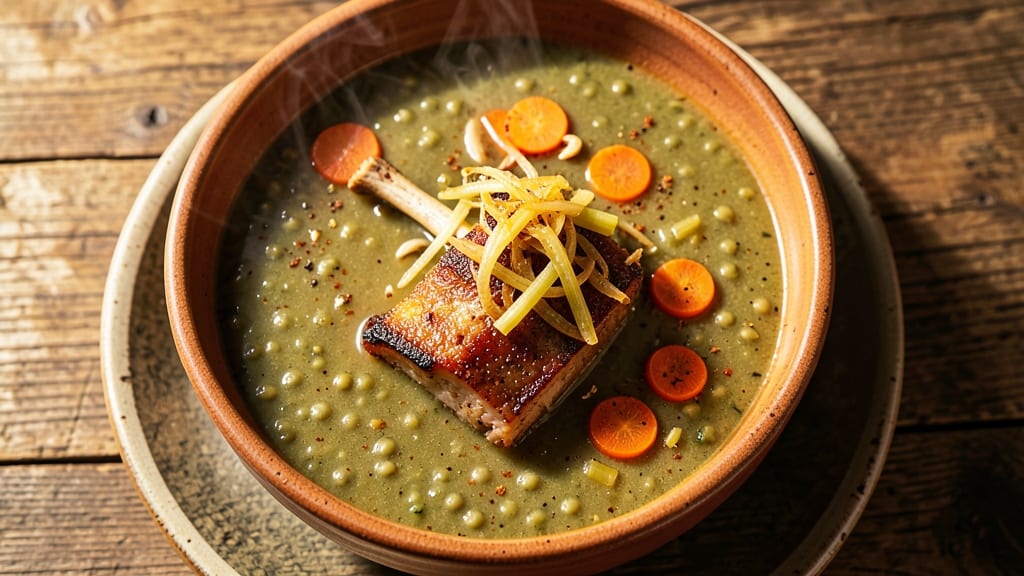
This bone-in split pea soup recipe delivers restaurant-quality depth with a smoky ham hock infusion that transforms simple ingredients into a hearty, flavorful masterpiece.
The secret lies in slow-cooking the split peas with the bone, which releases rich gelatin and umami into the broth, creating a velvety texture and complex flavor profile that can't be achieved with shortcuts.
I've perfected this technique over years of testing, ensuring every spoonful delivers that perfect balance of earthy peas, savory ham, and subtle smokiness.
The process begins with parboiling the ham hock to extract its maximum flavor, then simmering the split peas for hours until they're tender yet still hold their shape.
This slow cooking method not only develops the deep, satisfying taste but also creates that luxurious mouthfeel that makes this soup feel like a hug in a bowl.
The result is a soup that's hearty enough to stand alone but versatile enough to pair beautifully with crusty bread or a simple green salad.
What sets this recipe apart is the attention to detail in flavor development—from the initial browning of aromatics to the careful balancing of salt and acid at the end.
The ham hock contributes not just flavor but also that coveted silky texture that elevates split pea soup from simple to extraordinary. Each component works together to create a dish that's both comforting and impressive, perfect for cold winter evenings or special gatherings.
Once you taste the difference that bone-in cooking makes, you'll never go back to basic split pea soup again. The rich, smoky depth from the ham hock infusion creates a complexity that transforms this classic into something truly memorable. Ready to experience the difference for yourself?
Ingredients for bone in split pea soup
The secret to restaurant-quality split pea soup lies in these 15 ingredients working together for smoky depth and velvety texture.
| Ingredient | Amount | Notes |
|---|---|---|
| Dry Split Peas 🌾 | 2 cups | Rinsed before cooking |
| Ham Hock 🍖 | 1 whole | Bone-in for gelatin release |
| Yellow Onion 🧅 | 1 whole | Diced, medium size |
| Carrots 🥕 | 4 medium | Peeled and chopped |
| Celery Stalks 🌿 | 3 whole | Chopped, with leaves |
| Garlic Cloves 🧄 | 4 cloves | Minced for depth |
| Bay Leaves 🌿 | 2 whole | Fresh for aroma |
| Smoked Paprika 🌶️ | 1 tsp | For smoky depth |
| Ground Black Pepper 🌶️ | 1 tsp | Freshly cracked |
| Salt 🧂 | 1 ½ tsp | Kosher or sea salt |
| Apple Cider Vinegar 🍎 | 1 tbsp | Brightens flavors |
| Fresh Thyme 🌿 | 2 sprigs | Stems removed |
| Vegetable Oil 🫒 | 2 tbsp | For browning aromatics |
| Water 💧 | 8 cups | Enough to cover peas |
| Crusty Bread 🍞 | 6 slices | For serving |
The ham hock is non-negotiable here—bone-in releases gelatin that transforms this soup. Look for uncooked hocks at butcher counters or well-stocked grocery stores like Whole Foods. Medium carrots and celery stalks work best—they hold their shape during long cooking. Fresh thyme and bay leaves add aromatic depth that dried spices can't match. For smoked paprika, Penzeys or bulk bins at natural markets deliver the best flavor. The split peas should be green or yellow, not brown or shriveled.
No ham hock? Smoked turkey neck or chicken thighs work in a pinch, but you'll lose that gelatin-rich texture. Substitute dried thyme at one-third the amount if fresh isn't available. The apple cider vinegar brightens the soup—lemon juice works too but has a different profile. For the carrots and celery, baby carrots or pre-chopped celery save time without sacrificing flavor. The vegetable oil matters—avocado or olive oil works better than butter for browning. If you're short on time, pre-cut mirepoix from the grocery store freezer section works perfectly.
This soup tastes even better the next day as flavors meld. Store in airtight containers for 4-5 days or freeze for up to 3 months. The ham hock can be pre-boiled for 15 minutes to extract flavor, then added back to the pot. For serving, toasted crusty bread is ideal—any baguette or sourdough works. The broth reduces as it cooks, so add water as needed to maintain consistency. Always taste before serving and adjust salt—the ham hock adds significant flavor
Why You'll Love This Recipe
- One-Pot Magic: I swear by this recipe because it’s literally dump-and-simmer. Toss in the split peas, ham hock, and chopped veggies—no fancy prep, no measuring cups—just let the pot do the work while you sip wine and scroll.
- Smoky Depth Bomb: That ham hock? It’s the star. Slow-cooked until the meat falls off the bone, bleeding rich, salty flavor into the peas. Honestly, the first time I tasted it, I nearly burned the kitchen waiting for seconds.
- Weeknight to Potluck: Make a double batch on Sunday—it’s perfect for meal prep, but also brings the house down at holiday gatherings. Freeze half for lazy Mondays, and the rest? Instant crowd-pleaser with crusty bread.
- Pantry Goldmine: Split peas and ham hocks are dirt cheap, and this recipe stretches them into serious portions. I’ll be real: my grocery bill dropped by 20% after I started making this regularly. Plus, leftovers taste even better the next day.
Step-by-step instructions for bone-in split pea soup
This method transforms simple ingredients into a rich, velvety soup with deep smoky flavors.
Brown the Ham Hock and Aromatics
Heat the 2 tablespoons vegetable oil in a large Dutch oven over medium-high heat. Place the 1 whole ham hock in the pot, skin-side down, and brown for 8-10 minutes until deeply golden. This step develops rich, caramelized flavors that form the soup's foundation.
Remove the ham hock and set aside. In the same pot, add the 1 whole yellow onion, 4 medium carrots, and 3 whole celery stalks, all chopped. Cook for 5-6 minutes until the vegetables begin to soften and the onion becomes translucent. Add the 4 cloves minced garlic and cook for 30 seconds until fragrant.
Toast the Spices and Build the Base
Stir in the 1 teaspoon smoked paprika, 1 teaspoon ground black pepper, and 1.5 teaspoons salt, toasting for 30 seconds until the spices release their aromas. Add the 2 whole bay leaves and 2 sprigs fresh thyme, then pour in the 8 cups water. Return the ham hock to the pot, ensuring it's fully submerged.
Bring the mixture to a boil over high heat, then reduce to a simmer. Add the 2 cups dry split peas, ensuring they're fully covered by the liquid. Skim off any foam that rises to the surface during the first 5 minutes of simmering to ensure a clear broth.
Simmer Until Peas Are Tender
Cover the pot and simmer for 45-50 minutes until the split peas are tender but not mushy. Stir occasionally to prevent the ham hock from sticking to the bottom. The soup should thicken gradually as the peas absorb the liquid and the ham hock releases collagen.
After 45 minutes, check the tenderness of the peas by tasting a few. They should be soft but still hold their shape. If they're not quite tender enough, continue simmering for another 5-10 minutes. The ham hock should be falling off the bone, indicating it's released its gelatinous richness into the soup.
Finish with Vinegar and Adjust Seasoning
Remove the ham hock from the pot and set it aside to cool. Strain the soup through a fine-mesh sieve to remove the vegetables, bay leaves, and thyme sprigs. Return the strained soup to the pot and stir in the 1 tablespoon apple cider vinegar. This brightens the flavors and balances the richness of the soup.
Taste the soup and adjust the seasoning with additional salt or black pepper if needed. The soup should be rich, smoky, and well-balanced with a touch of acidity from the vinegar. If the soup is too thick, add a little more water to reach your desired consistency.
Serve with Crusty Bread
Discard the ham hock bones and any remaining meat from the ham hock, shredding the meat and returning it to the soup if you prefer a heartier texture. Ladle the soup into bowls and serve immediately with the 6 slices crusty bread on the side. The bread is perfect for soaking up the rich, flavorful broth.
The soup should be thick enough to coat the back of a spoon but still spoonable. Each bite should deliver a perfect balance of smoky, savory, and slightly tangy flavors, with the peas holding their shape and the broth rich and velvety.
Pro Tips For Making Bone In Split Pea Soup
- SCRUB THE HAM HOCK: Don’t just rinse the ham hock—use a vegetable brush to scrub off the rind and any surface grime. I learned this the hard way when a cloudy broth ruined an otherwise perfect batch. A quick scrub in hot water before adding it to the pot guarantees cleaner flavor.
- SOAK PEAS 1 HOUR: Toss the split peas in a bowl of cold water for at least an hour before cooking. Yes, it’s an extra step, but it cuts cooking time by 30 minutes and prevents a gummy texture. (I know, I know—you’re in a hurry, but trust the process.)
- SIMMER AT LOW HEAT: After the initial boil, reduce to the lowest simmer possible—you should barely see bubbles. I used to keep it at a rolling boil, and the peas turned mushy while the ham stayed tough. Patience here makes all the difference.
- CHAR THE VEGETABLES: Sauté the onions, carrots, and celery in a little fat until they’re deeply browned, not just softened. The caramelized edges add depth that raw veggies can’t match. (Sounds weird, but it works—your future self will notice.)
Perfect pairings for this recipe
Bread Pairings
Nothing complements this rich soup like a crusty baguette or sourdough loaf—their sturdy texture holds up to the velvety broth while soaking up every last drop. I love toasting slices until golden and crispy, then serving them alongside the soup.
For extra flair, brush the toasted bread with garlic-infused olive oil before serving. 🥖
Cheese Additions
A sprinkle of sharp cheddar or Gruyère on top adds a creamy, tangy contrast that brightens the soup's smoky depth. I recommend using 1-2 tablespoons of freshly grated cheese per bowl—just enough to enhance without overpowering.
For a vegetarian twist, try nutritional yeast (about 1 teaspoon per bowl) for a cheesy, umami boost.
Herb Garnishes
Fresh parsley or chives add a vibrant pop of color and freshness to the bowl. I like to finely chop 1 tablespoon of parsley and scatter it over the soup just before serving.
A few thin slices of lemon also work beautifully, adding a zesty brightness that cuts through the richness. 🌿
Crunchy Toppings
For texture lovers, a handful of toasted pumpkin seeds or crushed potato chips adds a satisfying crunch. I prefer 1 teaspoon per bowl of seeds, lightly toasted in a dry skillet until fragrant.
If you're feeling adventurous, try crumbled bacon (about ½ teaspoon per bowl) for an extra layer of smoky flavor.
Drink Pairings
A crisp dry white wine like Sauvignon Blanc or Pinot Grigio complements the soup's smoky, savory notes beautifully. For beer lovers, a light lager or wheat beer balances the richness without overpowering. I also enjoy a sparkling water with lemon for a refreshing contrast. 🍷
Nutrition facts
Frequently asked questions
Why use a ham hock instead of bacon or ham?
The ham hock delivers unmatched depth through its bone marrow and collagen, creating a naturally thick, velvety broth that can't be replicated with just meat. The slow cooking process extracts rich gelatin that transforms this into a restaurant-quality soup with that signature silky texture. Bacon or ham won't provide the same structural richness or umami depth.
Can I substitute chicken or turkey for the ham hock?
Yes, but with adjustments! Use 1 smoked turkey neck or 2 chicken thighs instead, and add ½ teaspoon extra smoked paprika to compensate for the milder flavor. The texture will be slightly lighter since poultry lacks the same gelatin content as pork. For best results, parboil the poultry first to extract maximum flavor before adding to the pot.
How do I know when the split peas are perfectly cooked?
They should be tender but still hold their shape—like al dente pasta. After 45 minutes of simmering, taste a few peas: they should mash slightly between your teeth but not completely break apart. The ham hock should also be falling off the bone, indicating it's released its gelatinous richness into the broth. Overcooking turns them mushy and loses that desirable texture.
What if my soup turns out too thick or too thin?
For thick soup, stir in 1-2 tablespoons water at a time until reaching your desired consistency. If it's too thin, simmer uncovered for 5-10 extra minutes to reduce the liquid naturally. The peas will continue absorbing moisture as they cook. For a quicker fix, mash a few peas with a fork to thicken the broth without adding liquid.
Can I make this soup in a slow cooker?
Brown the ham hock and aromatics first, then transfer everything to your slow cooker. Cook on low for 6-7 hours or high for 3-4 hours, stirring occasionally. The long cook time ensures the peas become tender while the broth develops maximum flavor. Just