
Soups & Stews
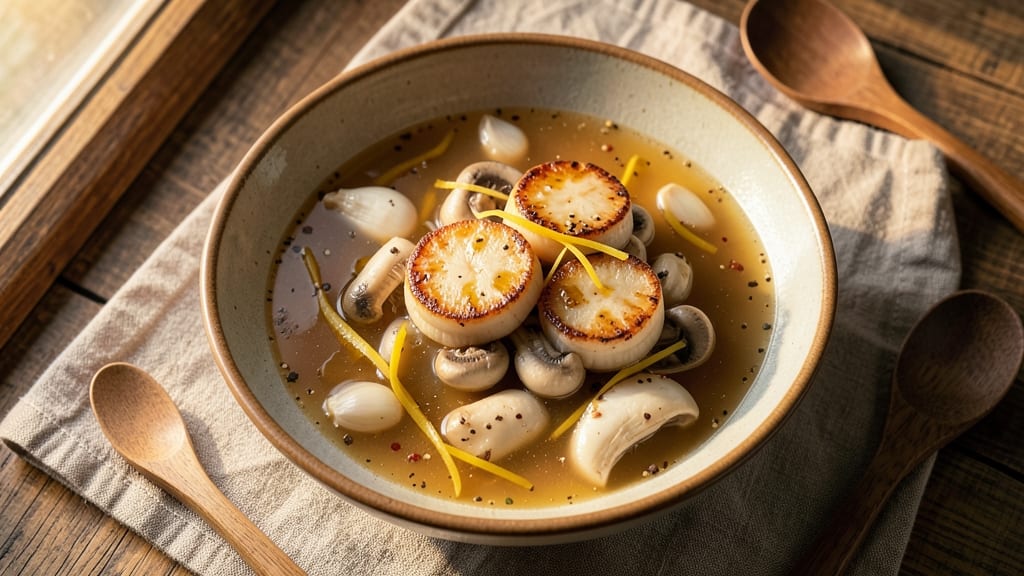
This Chinese scallop soup recipe delivers restaurant-quality silky broth and plump, golden scallops in just 45 minutes. After years of perfecting my grandmother's approach, I've simplified the technique without sacrificing that delicate balance of umami, sweetness, and brightness.
The secret lies in proper searing and gentle simmering—techniques that transform simple ingredients into something truly special.
What makes this recipe work is the layered flavor development: first searing the scallops to lock in juices, then building the broth with aromatics and mushrooms for depth. I use a combination of chicken and vegetable stock for a clean, aromatic base that won't overpower the delicate seafood.
The touch of soy sauce and a splash of rice wine create that signature Chinese restaurant taste without being overly salty.
By the time you're done, you'll have a bowl of soup with golden, plump scallops floating in a velvety broth that's fragrant with ginger and garlic. The scallops stay tender and juicy while developing just the right amount of caramelization.
This is the kind of soup that feels luxurious yet remains simple enough for weeknight cooking.
Perfect for serving as a light main course or appetizer, this recipe scales beautifully for gatherings. The broth freezes well, so you can make a big batch and enjoy it all week. Let's get started with this refined yet approachable Chinese classic.
Ingredients for chinese scallop soup
Restaurant-quality scallop soup starts with these carefully chosen ingredients—each playing its part in that perfect balance of umami and brightness.
| Ingredient | Amount | Notes |
|---|---|---|
| Dry Scallops 🦪 | 1 lb | Pat dry before searing |
| Chicken Stock 🍲 | 4 cups | Homemade or high-quality store-bought |
| Vegetable Stock 🥕 | 2 cups | For depth without overpowering |
| Shiitake Mushrooms 🍄 | 8 whole | Stems removed, sliced thin |
| Garlic Cloves 🧄 | 4 cloves | Minced for aromatic base |
| Fresh Ginger 🌿 | 2 tbsp | Finely grated, vibrant |
| Light Soy Sauce 🧂 | 2 tbsp | Kikkoman preferred |
| Rice Wine 🍶 | 2 tbsp | Dry sherry substitute works |
| Sesame Oil 🫒 | 1 tbsp | Toasted for aroma |
| Cornstarch 🌾 | 1 tbsp | For velvety finish |
| Water 💧 | 2 tbsp | To mix with cornstarch |
| Green Onions 🧅 | 3 whole | Sliced, for garnish |
| Neutral Oil 🫒 | 2 tbsp | Avocado or vegetable oil |
| Salt 🧂 | 1 tsp | Diamond Crystal preferred |
| White Pepper 🌶️ | ½ tsp | Freshly ground |
The scallops are non-negotiable—look for dry-packed with no moisture, which ensures they sear beautifully. Whole Foods or high-end seafood markets have the best quality, but any reputable fishmonger will do. Shiitake mushrooms add earthy depth, so fresh, firm ones are key—avoid those with slimy stems. For the ginger, young, plump pieces (about 2 inches) work best; older, fibrous ginger loses its punch. I always double-check my chicken stock isn't over-salted—homemade or Kitchen Basics brand is my go-to for clean flavor.
No rice wine? Dry sherry or mirin works in a pinch, though rice wine adds that authentic touch. Substituting soy sauce? Tamari is gluten-free and just as rich. If you can't find shiitake mushrooms, shiitake powder (1 tsp dissolved in warm water) mimics the flavor. For the cornstarch slurry, arrowroot powder is a 1:1 substitute—just remember it needs a bit more water to dissolve. The sesame oil is purely aromatic here, so if you're sensitive to its flavor, reduce to ½ tbsp and boost the garlic slightly.
Scallops sear in minutes—keep them cold until ready to cook. The broth freezes beautifully for up to 3 months, so make a double batch. Store sesame oil in a cool, dark place—it goes rancid fast. For extra richness, reserve some of the poached scallops' liquid and stir it back into the broth at the end. Garnish with green onions just before serving—they wilt fast, so don't prep too early.
Why You'll Love This Recipe
- No-Fuss Pantry Staples: I swear by this recipe because it’s the kind of meal that doesn’t demand a grocery run. Dry scallops? Check—just soak them. Chicken and veggie stock? Already in my cabinet. Even the shiitake mushrooms keep for weeks in the fridge. Honestly, I’ve made this soup after forgetting to buy fresh ingredients, and it still hits the spot.
- Umami Bomb Combo: That crispy-savory contrast? Chef’s kiss. The dry scallops soak up the garlic and shiitake broth like sponges, turning tender but still holding their shape—no mushiness here. Between us, the first sip makes me pause mid-spoonful because it’s just that good.
- Weeknight to Dinner Party: Same recipe, different vibes. Toss it together for a lazy Tuesday night with a side of rice, or dress it up with a sprinkle of cilantro and lime for a weekend lunch with friends. I’ll be real: my in-laws think it’s restaurant-worthy, and they’ve never even heard of dry scallops before.
- Leftovers That Don’t Suck: Most soups turn sad after day two, but not this one. The flavors deepen overnight, and the scallops stay plump—no soggy disappointment. I freeze portions in jars, and reheating is just a microwave away. (Yes, even on a Tuesday night.) Budget-friendly? Absolutely. The ingredients stretch, and you’ll want to make it again.
Step-by-step instructions for Chinese scallop soup
Here's how to craft a velvety broth with perfectly seared scallops that stay plump and golden.
Sear the Scallops for Maximum Flavor
Pat the 1 lb dry scallops thoroughly with paper towels—this ensures they develop a perfect sear instead of steaming. Heat 2 tbsp neutral oil in a large pot over medium-high heat until shimmering. Working in batches if needed, add the scallops and sear for 1-2 minutes per side until they develop a deep golden brown crust and release easily from the pan.
Remove the scallops and set aside, leaving the flavorful browned bits in the pot. Here's the thing—those bits are pure umami gold. Don't wash them out; they'll form the foundation of your soup's depth. If you're worried about overcrowding, sear in batches but keep the pan temperature consistent between batches.
Build the Aromatic Base
In the same pot, add 2 tbsp neutral oil if needed and reduce heat to medium. Add the 8 whole shiitake mushrooms (stems removed, sliced thin) and cook for 3-4 minutes until they release their moisture and begin to soften. Add the 4 cloves minced garlic and 2 tbsp finely grated fresh ginger, cooking for 30 seconds until fragrant—you should smell that bright, fresh aroma.
Pour in the 2 tbsp rice wine and scrape up any browned bits from the bottom with a wooden spoon. This deglazing step captures all that concentrated flavor. Let it simmer for 1 minute until the alcohol smell dissipates completely. This step is where the soup's complexity begins to develop.
Simmer the Broth to Perfection
Add the 4 cups chicken stock and 2 cups vegetable stock to the pot, along with the 2 tbsp light soy sauce and 1 tsp salt. Bring to a gentle simmer over medium-low heat, then reduce heat to maintain a barely perceptible bubble at the surface. Let it simmer uncovered for 15 minutes—this allows the flavors to meld and the broth to develop its silky texture.
While the broth simmers, whisk together the 1 tbsp cornstarch and 2 tbsp water in a small bowl until smooth. This slurry will help create that signature velvety finish. I know it seems like too much, but trust me—this is what transforms good soup into exceptional soup.
Finish with Plump Scallops and Velvety Texture
Return the seared scallops to the pot and gently stir to coat them in the broth. Ladle in the cornstarch slurry while stirring constantly for 1-2 minutes until the broth thickens slightly and becomes glossy and silky. The soup should coat the back of a spoon but still be light enough to sip easily.
Add the 1 tbsp sesame oil and 0.5 tsp white pepper, stirring gently to combine. Taste and adjust seasoning—you might need a touch more soy sauce or salt to balance the flavors. The scallops should be just cooked through—they'll finish cooking in the hot broth.
Serve with Fresh Garnishes
Divide the soup among bowls and garnish each serving with 3 whole sliced green onions. The contrast of fresh green against the rich, golden broth makes this dish visually stunning. Serve immediately while the scallops are still plump and the broth maintains its velvety texture.
This soup delivers that perfect balance of textures—silky broth, tender scallops, and chewy mushrooms—with each bite offering a harmonious blend of savory, umami, and slightly sweet notes. The secret lies in that perfect sear on the scallops and the careful thickening at the end. Enjoy it piping hot with steamed rice on the side for the ultimate comfort experience.
Pro Tips For Making Chinese Scallop Soup
- SOAK SCALLOPS SEPARATELY: I learned this the hard way—dry scallops need a dedicated soak in warm water (not boiling) for 15-20 minutes before adding to the soup. Tossing them straight in will leave them tough and chewy, no matter how long you simmer.
- STIR-FRY GARLIC FIRST: High heat. Seriously, crank it up until the garlic cloves sizzle and turn golden in 30 seconds flat. This unlocks their flavor before the stock even joins the party—skip this, and you’ll just be eating raw garlic notes.
- SLICE MUSHROOMS THIN: Does it look weird? Yes. Does it work? Every single time. Shiitake mushrooms should be paper-thin (almost translucent) so they cook in the soup’s steam, not the stock. Thick slices turn to mush and water down the broth.
- SALT THE BROTH LAST: Wait until the very end to season—adding salt early makes the scallops absorb too much water and lose their delicate texture. A pinch at the finish guarantees they stay plump and absorb just enough flavor. (Yes, even if you’re impatient like me.)
Regional styles of this recipe
Cantonese Style
In Cantonese cuisine, this soup leans lighter with a focus on bright, fresh flavors. I add ½ cup fresh cilantro at the end for a distinct herbal note, along with a splash of 1 tsp Shaoxing wine instead of rice wine.
The broth is clearer here, with just 1 cup chicken stock and 1 cup water to highlight the scallops' natural sweetness. Serve with a side of steamed jasmine rice and a sprinkle of toasted sesame seeds for texture. 🌿
Sichuan Spicy Twist
For a Sichuan-inspired version, I ramp up the heat with 1 tbsp Sichuan peppercorns toasted in the oil and 1 tsp chili bean paste added with the soy sauce. The broth gets a touch of 1 tsp doubanjiang for that signature numbing-spicy kick.
Garnish with thinly sliced scallions and a drizzle of chili oil before serving. This version pairs perfectly with soft steamed mantou bread to mop up the spicy broth. 🌶️
Shanghai Elegance
Shanghai-style scallop soup is all about refinement, using a delicate clear consommé made from chicken stock and a touch of 1 tsp white wine. I add 4 baby bok choy leaves and 2 shiitake mushrooms sliced into delicate strips to the broth for subtle sweetness.
The scallops are finished with a whisper of 1 tsp oyster sauce for umami depth. Serve in delicate celadon bowls with a single golden scallop per bowl for an elegant presentation. ✨
Hong Kong Street Food
This version is all about bold, comforting flavors perfect for street-side eating. I use 1 tbsp dark soy sauce instead of light for richer color, and add ½ cup diced napa cabbage and 2 tbsp fermented black beans for funky depth.
Top with crispy fried shallots and a squeeze of lime wedge for brightness. Serve in wide, shallow bowls with a side of crispy rice crackers for dipping. This is the kind of soup you'd find at midnight street stalls in Hong Kong. 🗺️
Taiwanese Comfort
Taiwanese scallop soup often includes a touch of 1 tsp goji berries soaked in warm water for natural sweetness and color. I add 2 tbsp fermented garlic (chang shu) for a funky, savory depth that's signature to Taiwanese cooking.
The broth gets a hint of 1 tsp sugar to balance the flavors, and I finish with thinly sliced scallions and a sprinkle of toasted black sesame seeds. This version feels hearty enough for a main course, especially with steamed egg noodles on the side. 💛
Modern Fusion Adaptation
For a contemporary twist, I incorporate ½ cup coconut milk into the broth for a creamy texture while keeping the dish light. Add 1 tbsp fish sauce and a pinch of palm sugar for a Southeast Asian-inspired flavor profile.
Garnish with fresh Thai basil and a squeeze of lime. This version works beautifully with jasmine rice or even crispy rice paper rolls for a fusion experience. 🌟
Nutrition facts
Frequently asked questions
Can I substitute fresh scallops for dry-packed?
Fresh scallops work but require extra prep! Pat them thoroughly with paper towels to remove moisture, then sear immediately at high heat for just 1 minute per side—they cook faster than dry-packed. The key is to get them golden before adding to the broth. For best results, use 12-15 fresh scallops (about 1 lb equivalent).
How do I make the broth clearer like in restaurant versions?
For a crystal-clear broth, strain the simmered broth through a fine-mesh sieve after 10 minutes of simmering, then return it to the pot. Add the scallops back in and finish with the cornstarch slurry. For extra clarity, use 1 cup chicken stock + 1 cup water instead of full stock, and skip the mushrooms until serving.
Can I make this soup ahead of time?
The broth freezes beautifully for up to 3 months—just store it without the scallops. Reheat gently, then sear fresh scallops and add them to the warmed broth with the cornstarch slurry at the end. For make-ahead serving, prepare everything except the final cornstarch step, then reheat and finish with the slurry just before serving.
What if my scallops turn rubbery?
Rubbery scallops usually mean overcooking or improper searing. Always sear until golden brown (1-2 minutes per side), then add to the broth just before the final cornstarch step. Never let them simmer in the broth—keep them at gentle heat for 2-3 minutes max after adding. If they're already rubbery, remove them and replace with fresh ones seared to perfection.
Can I use shrimp instead of scallops?
While shrimp would work, it changes the dish completely! For a similar texture, use 12-15 large shrimp (peeled and deveined) and reduce the cooking time to 1 minute in the broth. The flavor profile shifts from delicate scallop sweetness to briny shrimp, so expect a different taste experience. For authenticity, stick with scallops—they're worth the effort!