
Soups & Stews
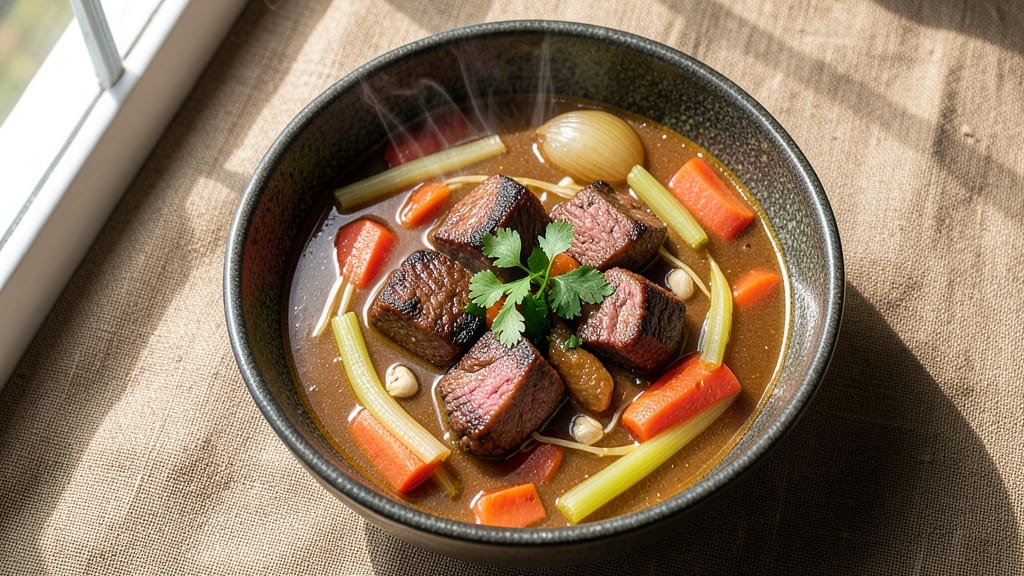
This goat soup recipe delivers rich, velvety depth that transforms simple ingredients into a restaurant-worthy meal. The secret lies in slow-simmered goat meat and bones infused with white wine and aromatic herbs, creating layers of umami that linger long after the first spoonful.
I developed this recipe after years of perfecting the balance between tender meat and robust broth—a technique that elevates humble ingredients into something extraordinary.
The foundation begins with goat meat and bones, which release collagen and gelatin during hours of simmering, creating a naturally thickened broth without added thickeners. A splash of dry white wine cuts through the richness while adding brightness, while fresh herbs like thyme and bay leaf deepen the flavor profile.
The result is a soup that’s both comforting and sophisticated, perfect for chilly evenings or special gatherings.
By the time it’s done, you’ll have tender goat chunks swimming in a glossy, aromatic broth with just the right balance of savory and herbal notes. The wine infusion adds complexity, while the herbs provide freshness that keeps the soup from feeling heavy.
Serve with crusty bread to soak up every last drop of that flavorful liquid gold.
This recipe scales beautifully—ideal for family dinners or intimate gatherings—while remaining approachable for home cooks. The long simmer ensures maximum flavor extraction, making it a dish worth the time and effort. Let’s get simmering!
Ingredients for goat soup
The backbone of this velvety soup starts with goat meat and bones, aromatic vegetables, and a splash of white wine.
| Ingredient | Amount | Notes |
|---|---|---|
| Goat Meat and Bones 🐐 | 3 lb | Cut into 2-inch chunks, bone-in preferred |
| Yellow Onion 🧅 | 1 whole | Chopped, medium dice |
| Carrots 🥕 | 4 whole | Peeled, cut into 1-inch chunks |
| Celery Stalks 🌿 | 4 whole | Cut into 1-inch pieces |
| Garlic Cloves 🧄 | 6 cloves | Peeled, smashed |
| Dry White Wine 🍷 | 1 cup | Sauvignon Blanc or Pinot Grigio |
| Vegetable Stock 💧 | 6 cups | Low-sodium preferred |
| Fresh Thyme 🌿 | ½ oz | Or 1 tbsp dried thyme |
| Fresh Rosemary 🌿 | ¼ oz | Or 1 tsp dried rosemary |
| Bay Leaves 🌿 | 2 whole | Fresh preferred |
| Olive Oil 🫒 | ½ cup | Extra-virgin preferred |
| Tomato Paste 🍅 | 2 tbsp | Smooth, no sugar added |
| Salt 🧂 | 1 ½ tsp | Kosher or sea salt |
| Black Peppercorns 🌶️ | 1 tsp | Freshly cracked |
| Fresh Parsley 🌿 | ¼ cup | Chopped, for garnish |
The goat meat and bones are the stars here. Look for bone-in cuts at specialty butchers—they yield the richest broth. If your store doesn’t carry goat, lamb shoulder or shank works in a pinch, though the flavor will differ slightly. The bones should be clean and white, with minimal meat clinging. Costco or Whole Foods often carry goat in the frozen section, but call ahead. For freshness, aim to use within 24 hours of purchase. The wine matters too—dry whites like Sauvignon Blanc or Pinot Grigio add brightness without overpowering the umami. Avoid sweet varieties.
No goat? Lamb or even beef short ribs can substitute, though the broth will have a different depth. Fresh herbs like thyme and rosemary can be swapped for dried at one-third the amount, but fresh is ideal here. The tomato paste adds umami without bitterness—avoid brands with added sugar. For the vegetables, carrots and celery can be swapped for fennel or leeks, but stick to the classic trio for authenticity. The wine can be reduced by half if you prefer a milder flavor, but don’t skip it entirely—the acidity balances the richness.
This soup tastes even better the next day as flavors meld. Store in an airtight container in the fridge for up to 4 days, or freeze for 3 months. The broth will thicken further upon reheating, so add a splash of water or stock if it seems too dense. For serving, crusty bread or polenta soaks up the flavorful liquid beautifully. Garnish with fresh parsley just before serving to brighten the dish.
Why You'll Love This Recipe
- One-Pot Magic: Honestly, this soup is my secret weapon for when I want to feed a crowd without the cleanup. Just toss the goat meat and bones, onion, carrots, and celery into a Dutch oven, sear them, and let the slow simmer do the work—no extra pots, no fuss.
- Umami Bomb: That dry white wine and tomato paste combo? It’s like a flavor explosion in your mouth. The garlic, thyme, and rosemary deepen it further, making every spoonful packed with rich, savory goodness that’ll have you licking the bowl.
- Feed a Crowd (or Freeze It): I make this for game day, family dinners, or—here’s the truth—when I know I’ll have leftovers. The goat meat stretches far, and it reheats beautifully. Plus, it keeps for up to 4 days in the fridge or 3 months frozen, so you’re never stuck with cold soup.
- Budget-Friendly Luxe: Goat isn’t cheap, but this recipe makes the most of it. The bones add depth, and the vegetables keep costs down while balancing the richness. It’s the kind of dish that feels indulgent but won’t break the bank—perfect for when you want to treat yourself without the guilt.
Step-by-step instructions for goat soup recipe
Here's the method for developing rich, layered flavor through slow simmering.
Sear the Goat Meat for Deep Flavor
Heat the ½ cup olive oil in a large Dutch oven over medium-high heat until shimmering. Working in batches if needed, add the 3 lb goat meat and bones cut into 2-inch chunks. Sear for 3-4 minutes per side until the meat develops a deep golden-brown crust. This step builds foundational flavor through the Maillard reaction.
Remove the seared meat and set aside. In the same pot, add the 1 chopped yellow onion, 4 chopped carrots, and 4 chopped celery stalks. Cook for 5 minutes until the vegetables begin to soften and the onion becomes translucent. This creates a flavorful base that will infuse the soup.
Build the Herb and Wine Base
Add the 6 smashed garlic cloves, 2 tbsp tomato paste, ½ oz fresh thyme, ¼ oz fresh rosemary, and 2 bay leaves to the pot. Stir for 1 minute until fragrant. Pour in the 1 cup dry white wine and scrape up any browned bits from the bottom of the pot - this releases concentrated flavor.
Return the seared goat meat to the pot. Pour in the 6 cups vegetable stock until the meat is just covered. Bring to a gentle boil, then reduce heat to medium-low to maintain a steady simmer. Sprinkle with 1½ tsp salt and 1 tsp freshly cracked black peppercorns, stirring to combine.
Simmer Until Tender and Flavorful
Cover the pot and simmer for 1½ to 2 hours until the goat meat is fork-tender and easily pulls apart. The soup should reduce slightly, allowing flavors to concentrate. Check occasionally and add ½ cup water if needed to maintain the liquid level.
Here's the thing - the longer you simmer, the deeper the flavor develops. I've found that 2 hours yields the most tender meat and richest broth. The meat should separate easily when pierced with a fork, and the liquid should have a deep, aromatic quality.
Finish and Garnish
Once the meat is tender, remove the bay leaves. Stir in the ¼ cup chopped fresh parsley and adjust seasoning if needed. The parsley adds a bright finish that cuts through the richness of the goat.
Ladle the soup into bowls and serve immediately. The soup should have a rich, herbed aroma with visible meat chunks suspended in a flavorful broth. Each spoonful should deliver layers of umami from the wine and tomato paste, herbal notes from thyme and rosemary, and satisfying texture from the tender goat meat.
Pro Tips For Making Goat Soup
- Don’t Rush the Sear: I learned this the hard way—skipping the full 3-4 minutes per side means flavorless meat. The crust from the Maillard reaction is what makes this soup sing, so resist the urge to flip too soon, even if the oil splutters like a firework show.
- Smash That Garlic: Those 6 cloves of garlic aren’t just for looks—they need to bruise and release their oils. A quick smash with the flat side of your knife (not chopping) ensures they infuse the broth properly. I used to mince them, and the soup never had that same depth.
- Scrape the Pot: After adding the wine, grab that wooden spoon and scrape every last browned bit from the bottom. That’s where the flavor hides—like treasure in a crust. I’ve seen people skip this and wonder why their soup tastes flat. Don’t be that person.
- Taste Early, Adjust Late: After the 1½-hour mark, take a sip of the broth before adding the parsley. If it’s bland, the meat needs more time (another 30 minutes, maybe). If it’s too salty, you’re stuck—so taste early, and you’ll save yourself from a sad, over-seasoned bowl.
Make-ahead tips for leftovers
Prep Ahead for Maximum Flavor
I prep all my aromatics—onion, carrots, and celery—the night before and store them in a glass jar with a damp paper towel pressed against the lid. This keeps them crisp for up to 2 days, saving precious prep time on cooking day.
I also sear the goat meat in advance and refrigerate it in an airtight container—I even add a splash of olive oil to prevent drying. The meat stays juicy and ready to return to the pot when you’re simmering. 💡
Freeze the Broth Base
If you’re making this soup for a crowd, freeze the vegetable stock and wine mixture separately before adding the meat. Pour the 6 cups vegetable stock and 1 cup white wine into a freezer-safe container, leaving room at the top.
Once frozen solid, transfer to a quart-sized bag. When ready to cook, thaw overnight in the fridge and proceed with the recipe—this saves hours of simmering time. ❄️
Pre-Chop and Store Herbs
Fresh herbs like thyme and rosemary wilt quickly, so I chop them 1 day ahead and store them in an airtight container with a little water. Cover the container with plastic wrap and refrigerate.
The herbs stay vibrant and ready to stir into the pot when you’re building the herb base. This trick also works for parsley, which I chop and store separately for garnishing. 🌿
Double the Batch for Leftovers
This soup tastes even better the next day, so I always make double the recipe when I know I’ll have leftovers. Portion it into mason jars and refrigerate. The flavors deepen overnight, and the broth thickens slightly, making each spoonful richer.
I’ve even frozen portions for up to 3 months—just reheat gently on the stove with a splash of water. 🔥
Prep the Garnishes Separately
To save time, chop the fresh parsley and store it in a small container with a damp paper towel. Keep it in the fridge until serving. I also toast bread or polenta ahead of time and store it in a warm oven (200°F) with a towel draped over it.
This keeps it crisp and ready to serve alongside the soup. The key is organization—prep everything that can be prepped so you’re not scrambling during the simmer. ✨
Nutrition facts
Frequently asked questions
Can I substitute goat meat in this recipe?
If goat isn't available, bone-in lamb shoulder or shank works beautifully as a substitute. The cooking time may adjust slightly—lamb typically needs 1 hour less simmering than goat to reach tenderness. The flavor will be rich but slightly different, so taste and adjust seasoning as needed.
Why is simmering time so important for this soup?
Simmering for 1½ to 2 hours is key because it allows the collagen in the bones to break down, creating a naturally thick, velvety broth. This slow process also deepens the flavor by melding the wine, herbs, and aromatics into the meat. Skipping this step results in tougher meat and weaker broth—patience pays off!
What if my soup is too thin after simmering?
If the broth seems too watery, reduce it gently on the stove over medium-low heat for 10-15 minutes until it reaches your desired consistency. Alternatively, stir in a 1-2 tbsp tomato paste to thicken naturally. Avoid boiling vigorously, which can make the soup break or curdle. Taste as you go!
Can I make this soup ahead of time?
Yes! This soup actually tastes better the next day. Store it in an airtight container in the fridge for up to 4 days, or freeze portions for 3 months. When reheating, warm gently on the stove with a splash of water or stock to restore moisture. The flavors deepen beautifully with time!