
Soups & Stews
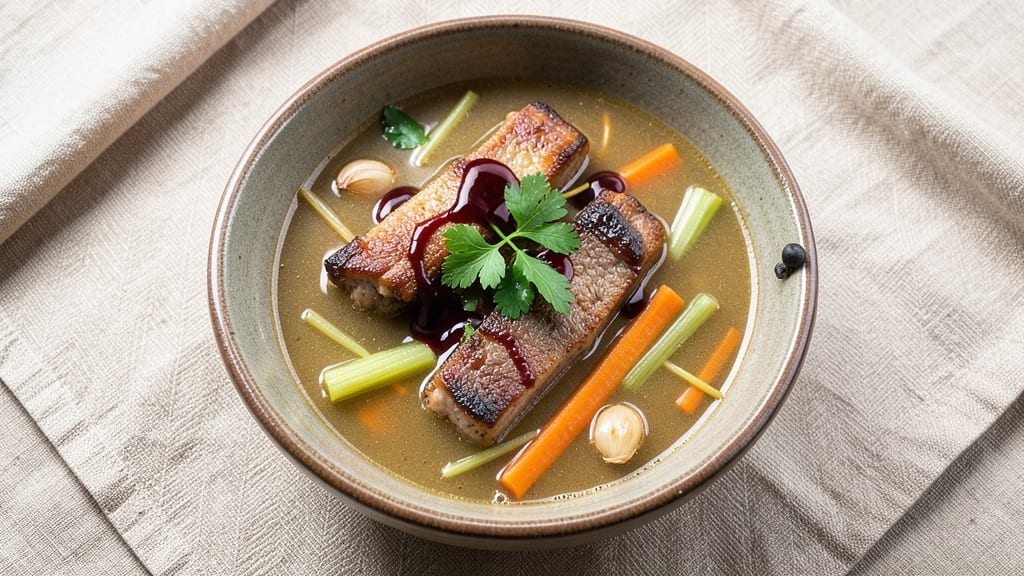
This short rib soup recipe transforms tough beef into melt-in-your-mouth tenderness through slow simmering—where every spoonful delivers deep umami richness and velvety broth. The secret lies in braising the ribs first, extracting maximum flavor, then reducing the broth to concentrate those savory notes until it practically sings.
I developed this recipe after years of testing, ensuring each step—from searing to simmering—builds layers of complexity you won’t find in instant versions.
The process begins with searing short ribs in a hot Dutch oven to create a flavorful crust, then deglazing with red wine and beef broth to dissolve those caramelized bits into the sauce.
Aromatic vegetables like carrots, celery, and onions form the foundation, while herbs and garlic infuse the broth with aromatic depth. What makes this soup truly exceptional is the slow simmer—where collagen breaks down into gelatin, transforming the broth into a luxurious, cling-to-your-bowl consistency.
By the time you’re done, you’ll have a soup that’s restaurant-quality at home: rich, deeply flavorful, and so satisfying it disappears faster than you can say "second bowl."
The short ribs fall apart at the touch of a spoon, releasing their juices into the velvety broth, while garnishes like fresh thyme or a sprinkle of parmesan add bright finishing notes. This isn’t just soup—it’s a weeknight centerpiece that feels like a celebration.
Perfect for chilly evenings or when you crave comfort food that doesn’t skimp on flavor, this recipe delivers foolproof results with minimal effort after the initial prep.
The long simmer means you can walk away and return to an aroma that fills your home with warmth. Let’s get started—your taste buds will thank you.
Ingredients for short rib soup
These rich, flavorful ingredients transform tough beef into velvety, restaurant-quality soup.
| Ingredient | Amount | Notes |
|---|---|---|
| Beef Short Ribs 🥩 | 3 lb | Bone-in, 2-3 inches thick |
| Yellow Onions 🧅 | 2 whole | Yellow or red, peeled |
| Carrots 🥕 | 4 medium | Peeled, cut into chunks |
| Celery Stalks 🧄 | 4 whole | Trimmed, cut into pieces |
| Garlic Cloves 🧄 | 6 cloves | Peeled, smashed |
| Red Wine 🍷 | 1 cup | Bold, dry variety |
| Beef Broth 💧 | 6 cups | Homemade or high-quality |
| Fresh Thyme 🌿 | 2 tbsp | Leaves only, chopped |
| Fresh Rosemary 🌿 | 1 tbsp | Chopped, plus sprigs |
| Tomato Paste 🍅 | 2 tbsp | Smooth, not chunky |
| Olive Oil 🫒 | 2 tbsp | Extra-virgin preferred |
| Salt 🧂 | 1 ½ tsp | Kosher or sea salt |
| Black Pepper 🌶️ | 1 tsp | Freshly ground |
| Parmesan Cheese 🧀 | ¼ cup | Freshly grated |
The short ribs are the star—look for bone-in cuts with good marbling for maximum flavor. Costco or Whole Foods carry the best quality, but any butcher section will have them. If you're buying pre-cut, check for even thickness—2-3 inches ensures consistent cooking. The vegetables form the aromatic base, so don't skimp: fresh thyme and rosemary from the produce section (not dried) make all the difference. For the red wine, any bold, dry variety works—Cabernet Sauvignon or Merlot are safe bets.
No red wine? Beef broth with a splash of balsamic vinegar mimics the depth perfectly. Fresh herbs unavailable? Dried thyme at one-third the amount gets you close, but the flavor won't be as bright. The tomato paste can be swapped for 1 cup crushed tomatoes if you prefer, though it adds acidity. For the beef broth, homemade is ideal, but store-bought works in a pinch—just check for no added MSG. The carrots and celery should be fresh, not limp, and the onions should be firm with no sprouting.
This soup tastes even better the next day as flavors meld. Store in an airtight container in the fridge for up to 5 days or freeze for 3 months. For freezing, portion into individual containers so you can thaw just what you need. The ribs will keep their tenderness when reheated, though the broth may need a splash of water to restore consistency. Garnish with fresh herbs or grated Parmesan before serving—that finishing touch makes all the difference.
Why You'll Love This Recipe
- Foolproof Prep: I swear by this—just sear the ribs, toss in chopped veggies (onion, carrots, celery), and let the slow cooker do the rest. No fancy techniques, no stress.
- Rich Without Effort: That first sip? Pure umami magic from the ribs melting into the broth, with garlic and onions deepening as it simmers. The carrots stay tender, the celery adds freshness—it’s like a hug in a bowl.
- Leftovers That Shine: This soup only gets better the next day. I make a double batch on Sundays, freeze half, and pull it out for lazy nights. (Yes, even on a Tuesday night.)
- Budget Beefy Feast: Short ribs are cheaper than steak but pack way more flavor. A single batch stretches across three meals—dinner, lunch, and a potluck—without breaking the bank. My wallet and taste buds win.
Step-by-step instructions for slow-simmered short rib soup
Here's how to transform tough beef short ribs into velvety, umami-rich soup that tastes even better the next day.
Sear the Short Ribs for Maximum Flavor
Pat the 3 lb beef short ribs dry with paper towels—this ensures a proper sear. Heat the 2 tablespoons olive oil in a large Dutch oven over medium-high heat until shimmering. Working in batches (you'll need two rounds), add the short ribs and sear for 3-4 minutes per side until deep golden brown. You're building flavor through the Maillard reaction here, so don't rush this step.
As they sear, you'll smell that wonderful caramelization developing. Once all ribs are browned, transfer them to a plate and set aside. The browned bits left in the pot will become the foundation of your soup's rich depth. Here's the thing—if you skip searing, you'll miss out on that essential flavor layer that makes this soup truly exceptional.
Build the Aromatic Base with Vegetables
In the same Dutch oven, reduce heat to medium and add the chopped 2 whole yellow onions, cut 4 medium carrots, and trimmed 4 whole celery stalks. Cook for 5-6 minutes, stirring occasionally, until the vegetables begin to soften. This is where we develop the classic "holy trinity" of flavors that form the base for countless soups and stews.
After the vegetables soften, add the smashed 6 cloves garlic and cook for another 30 seconds until fragrant. Here's where it gets good—stir in the 2 tablespoons tomato paste and cook for 1 minute, allowing it to darken slightly. This step deepens the soup's color and adds a subtle sweetness that balances the richness of the beef. Don't walk away; tomato paste burns quickly.
Deglaze and Develop the Umami Foundation
Pour in the 1 cup red wine and scrape up all those delicious browned bits from the bottom of the pot with a wooden spoon. Let the wine simmer for 3-4 minutes until reduced by half. This deglazing captures all the flavor you worked so hard to create during searing. The wine's acidity also helps tenderize the meat further.
Add the 6 cups beef broth, bringing everything to a gentle simmer. Here's the moment that matters: return the seared short ribs to the pot, along with any accumulated juices from the plate. Add the chopped 2 tablespoons fresh thyme, 1 tablespoon fresh rosemary, 1.5 teaspoons salt, and 1 teaspoon black pepper. The broth should just cover the ribs—if it's too shallow, add a little water.
Slow Simmer Until Fork-Tender
Bring the soup to a gentle simmer, then reduce heat to maintain a low bubble. Cover partially and let it cook for 2.5-3 hours. I know it seems like a long time, but this is where the magic happens—the collagen in the bones and connective tissue breaks down into gelatin, creating that luxurious mouthfeel. Check occasionally to ensure there's always some liquid covering the ribs.
After about 2 hours, the ribs should be fork-tender. You'll know they're ready when a knife slides in easily and the meat pulls apart with minimal resistance. If they're not quite there, give them another 30 minutes. Real talk: the longer you cook them, the more tender and flavorful they become. Don't rush this step—patience pays off in soup form.
Finish and Serve with Parmesan
Once the ribs are tender, remove them from the broth and let them cool slightly. Using two forks, shred the meat right in the pot—no need to transfer it. You'll have about 2-2.5 cups of meat, which should be falling apart easily. Return the shredded meat to the broth and stir to combine.
Taste and adjust seasoning if needed. For serving, ladle the soup into bowls and top each with 1 tablespoon of the freshly grated 0.25 cup parmesan cheese. The acidity of the wine and richness of the beef create the perfect balance, while the parmesan adds a salty, umami finish. Serve immediately with crusty bread to soak up every last drop of that velvety broth.
Pro Tips For Making Short Rib Soup
- Brown the Ribs Properly: Don’t rush the sear—get those short ribs deep golden, not just pink. High heat for 4-5 minutes per side until the edges crisp and the fat renders into the pot. I used to skip this, and the soup always tasted flat until I realized the Maillard reaction is non-negotiable for real depth.
- Cut Onions in Even Slices: Thin, even onion slices (about 1/8-inch thick) cook faster and dissolve into the broth without leaving chunks. My grandmother swore by this—"no one likes to bite into a surprise onion," she’d say. A sharp knife and a steady hand make this easy.
- Don’t Crowd the Pot: If your Dutch oven looks packed with ribs and veggies, spread them out in a single layer first. Crowding steams the meat instead of browning it, and you’ll end up with watery soup. Start with a hot pot, then add ingredients in batches if needed.
- Simmer Low and Long: After the initial sear, drop the heat to a bare simmer—just enough to keep tiny bubbles breaking the surface. Short ribs need 2.5 to 3 hours to fall apart, and rushing it turns them tough. Set a timer and walk away; this isn’t a race.
Flavor customization for short rib soup
Spicy Kick
Add 1 tablespoon of gochujang or 2 teaspoons of chili flakes when deglazing with red wine for a Korean-inspired twist. For heat lovers, stir in 1 teaspoon of cayenne pepper with the tomato paste.
Balance the spice with 1 tablespoon of honey or 1 teaspoon of sugar to prevent overpowering the rich beef flavors. Trust me, the contrast of spicy and umami is next-level. 🌶️
Herb Variations
Swap out thyme and rosemary for 1 tablespoon each of fresh sage and bay leaves for a more Mediterranean profile. Or try 1 tablespoon of fresh oregano and 1 sprig of fresh tarragon for a French bistro vibe.
Dried herbs work in a pinch, but fresh always delivers brighter flavor. I like to add 1 teaspoon of smoked paprika when building the aromatic base for a subtle smoky depth.
Creamy Twist
Stir in ½ cup of heavy cream or ¼ cup of crème fraîche during the final 10 minutes of simmering for a luxurious texture. For a dairy-free option, blend ½ cup of cooked white beans into the broth before serving.
The creaminess balances the richness of the beef beautifully, but don't add it too early or it may curdle from the acidity of the wine. 💛
Umami Boosters
Enhance the depth with 1 tablespoon of fish sauce or 1 teaspoon of soy sauce when deglazing. For extra richness, add 1 tablespoon of Worcestershire sauce to the broth. These umami bombs amplify the beef flavor without overpowering it.
I also love adding 1 slice of Parmesan rind to the pot during simmering—it infuses the broth with nutty, cheesy notes.
Vegetable Swaps
Replace carrots with 1 cup of butternut squash cubes for a touch of sweetness. Or add 1 cup of mushrooms (cremini or shiitake) when building the aromatic base—they absorb the rich broth beautifully.
For a heartier version, include 1 cup of diced potatoes in the final 30 minutes of cooking. These swaps add texture and color while keeping the soup's comforting essence.
Garnish Ideas
Finish with crispy fried shallots for texture, pickled red onions for brightness, or toasted breadcrumbs for crunch. A drizzle of hot honey adds sweet heat, while fresh parsley brightens the dish.
I often serve this soup with a side of crusty baguette for dipping—it's the perfect way to enjoy every last drop of that velvety broth. ✨
Nutrition facts
Frequently asked questions
How do I know when the short ribs are fully tender?
Test them after 2 hours of simmering by inserting a knife or fork—they're ready when they slide in easily and the meat pulls apart with minimal resistance. If they're still slightly firm, give them another 30-60 minutes. The longer they cook, the more flavorful they become!
Can I make this soup in a slow cooker?
Sear the ribs as directed, then transfer everything (including browned bits) to your slow cooker. Add all ingredients and cook on low for 7-8 hours or high for 4-5 hours. The ribs will be even more tender, and the broth will develop incredible depth. Just shred the meat at the end as usual.
Why does my broth look cloudy instead of clear?
Cloudy broth is actually a sign of good cooking! The collagen breaking down from the ribs releases gelatin, creating that luxurious mouthfeel. For a clearer broth, you can strain it after simmering, but the flavor will be less rich. The cloudiness means your soup has body and substance—exactly what you want in a hearty beef soup.
What if I don't have red wine?
No problem! Substitute with 1 cup beef broth plus 1 tablespoon balsamic vinegar for similar depth. Or use ½ cup apple cider vinegar with ½ cup additional broth. The acidity helps tenderize the meat and balance flavors. Just avoid white wine—it won't provide the same rich, bold character.
How can I make this soup ahead of time?
This soup tastes even better the next day! Let it cool completely, then store in an airtight container in the fridge for up to 5 days. For freezing, portion into individual containers and freeze for 3 months. When reheating, warm gently on the stove—add a splash of water if the broth thickens too much. The flavors meld beautifully overnight!