
Soups & Stews
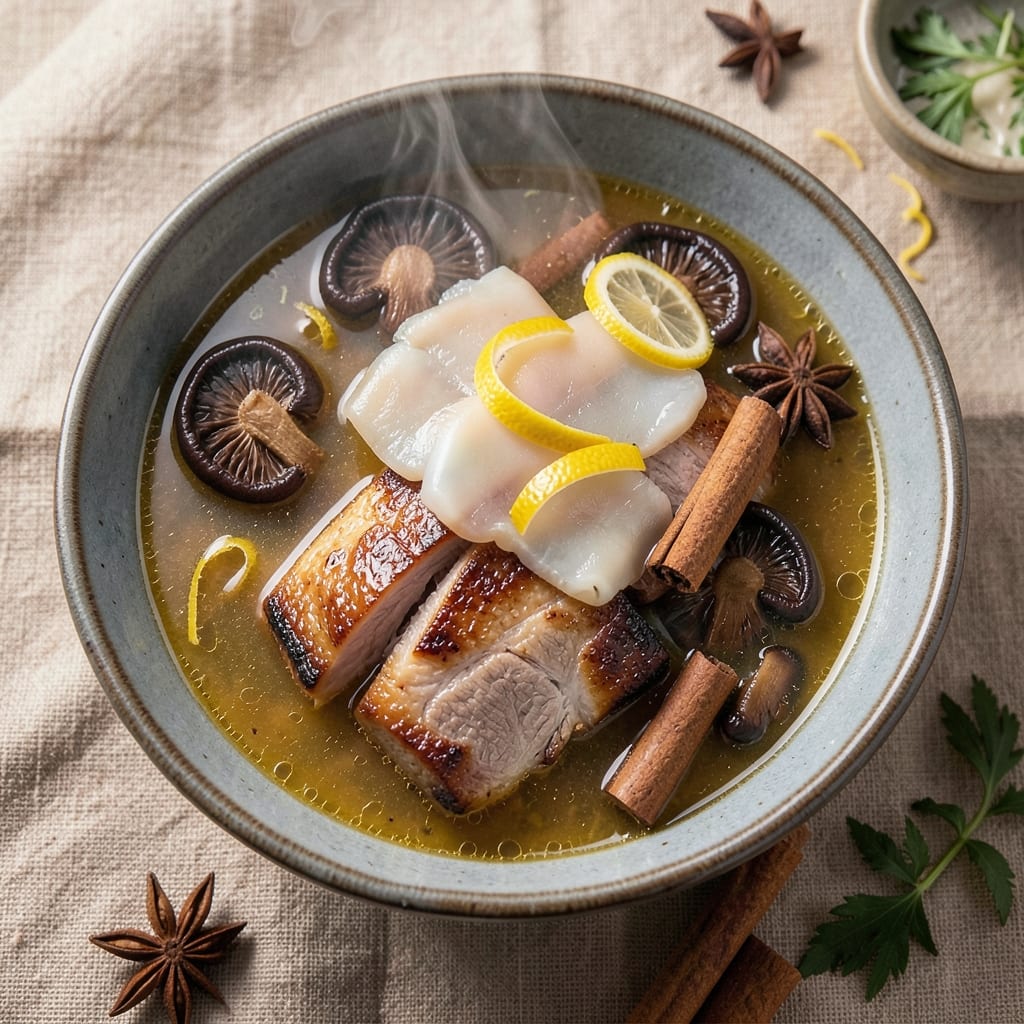
This abalone pork soup recipe delivers a luxurious harmony of tender abalone and richly spiced pork in a velvety broth that feels like a hug in a bowl. The secret lies in slow-simmering the abalone until it reaches that signature silky texture while building layers of umami through star anise, cinnamon, and a splash of soy sauce. I developed this after years of experimenting with Chinese seafood soups—balancing the briny sweetness of abalone with the savory depth of pork creates something truly special.
The beauty of this recipe is its versatility—it works as a comforting weeknight dinner or an impressive centerpiece for special occasions. We start with a deep, aromatic broth infused with ginger, garlic, and dried spices, then gently poach the abalone and pork until fork-tender. The result is a soup where each spoonful delivers melt-in-your-mouth seafood and succulent meat in perfect balance, all swimming in a broth that's rich without being heavy.
What makes this dish truly stand out is the textural contrast—the abalone's delicate, almost jelly-like center paired with the firm yet tender pork. The spices mellow into the broth, creating a warm, aromatic base that complements rather than overpowers the seafood. For those who prefer a lighter option, you can easily adapt this by replacing the pork with mushrooms or tofu without sacrificing depth of flavor.
The finishing touches elevate it from good to extraordinary: a drizzle of sesame oil for aroma, fresh cilantro for brightness, and a sprinkle of scallions for color. This is the kind of soup that warms both body and soul—perfect for chilly evenings or when you want to impress guests with restaurant-quality results at home.
Ingredients for abalone pork soup
Luxurious seafood meets hearty pork in this velvety soup—just 15 ingredients for restaurant-quality flavor.
| Ingredient | Amount | Notes |
|---|---|---|
| Abalone 🦪 | 1 lb | Fresh, cleaned, sliced into pieces |
| Pork Shoulder 🥓 | 1 ½ lb | Boneless, cut into 1-inch cubes |
| Dried Shiitake Mushrooms 🍄 | 10 whole | Rehydrated in warm water |
| Star Anise 🌿 | 2 whole | For deep aromatic flavor |
| Cinnamon Stick 🌿 | 1 whole | For subtle warmth |
| Fresh Ginger 🧅 | 2 tbsp | Grated, freshly for best flavor |
| Garlic Cloves 🧄 | 6 cloves | Minced, aromatic base |
| Light Soy Sauce 🥄 | ¼ cup | For umami depth |
| Sesame Oil 🫒 | 1 tbsp | For finishing aroma |
| Dried Tangerine Peel 🍊 | 1 tbsp | For citrus brightness |
| Fresh Cilantro 🌿 | ¼ cup | Chopped, for garnish |
| Green Onions 🧅 | 3 whole | Sliced, for garnish |
| Water 💧 | 8 cups | For broth base |
| Salt 🧂 | 1 ½ tsp | Adjust to taste |
| White Pepper 🌶️ | ½ tsp | Freshly ground |
The abalone is the star here, so freshness is non-negotiable. Look for plump, glossy abalone at Asian markets—they'll often clean and slice it for you. If you can't find fresh, high-quality frozen abalone works too, just thaw it overnight in the fridge. The pork shoulder? Ask your butcher for bone-in if possible (it adds flavor to the broth), but boneless works fine. For the mushrooms, dried shiitake from bulk bins at Whole Foods or Trader Joe's gives that deep umami punch. The star anise and cinnamon sticks should be whole—ground spices lose their magic fast.
No star anise? 1 tsp ground anise seed works in a pinch, but it's not the same. Dried tangerine peel hard to find? Substitute 1 tsp orange zest for brightness. The sesame oil is for finishing—don't cook with it! For a lighter version, swap the pork for extra-firm tofu or mushrooms (use 8 oz each). Fresh ginger and garlic are musts here—they're the aromatic base. If you're short on time, pasteurized ginger and garlic from the tube works, but fresh is always better. The soy sauce should be light, not dark—Kikkoman or Pearl River Bridge are reliable brands.
This soup tastes even better the next day as flavors meld. Store leftovers in an airtight container for 3-4 days in the fridge or 3 months frozen. For freezing, portion into individual containers so you can reheat just what you need. The abalone and pork can be prepped ahead—store them separately in the fridge for 1 day before cooking. The broth keeps its depth when reheated, so don't skip making extra. Garnish with cilantro and green onions right before serving—they add that fresh pop of color and brightness.
Why You'll Love This Recipe
- One-Pot Magic: The abalone and pork shoulder practically melt into rich broth together—no extra pots, no fuss. Just toss everything in, simmer, and let the star anise and cinnamon do their work while you sip tea.
- Umami Bomb: That first spoonful of abalone and shiitake mushrooms? It’s like a flavor explosion—deep, briny, and earthy all at once. The pork shoulder adds a satisfying chew, and the spices tie it all into something dangerously addictive.
- Weeknight to Dinner Party: I’ve served this steaming hot on lazy Mondays and as the centerpiece for guests. The same simple method works every time—just adjust the portion size. (Pro tip: Double the batch for leftovers that taste even better the next day.)
- Budget Luxury: Abalone might sound fancy, but it stretches across two meals without breaking the bank. The pork shoulder keeps costs down, while the dried shiitakes add restaurant-quality depth. Honestly, it’s the kind of dish that makes you feel like you’re treating yourself—without the guilt.
Step-by-step instructions for abalone pork soup
This aromatic fusion of ocean and land creates a velvety broth where tender abalone meets spiced pork.
Prepare the Pork and Rehydrate Mushrooms
Cut the 1.5 lb pork shoulder into 1-inch cubes for even cooking. In a bowl, soak the 10 whole dried shiitake mushrooms in 4 cups warm water for 20 minutes until softened and expanded. This rehydration step unlocks their deep umami flavor while keeping them intact for texture.
While mushrooms soak, pat the pork cubes dry with paper towels—this ensures better browning when seared. I like to arrange them on a plate in a single layer so they don't steam before hitting the pot. The dried mushrooms should plump noticeably, looking almost like fresh shiitakes but with a richer, earthier appearance.
Build the Aromatic Base
In a large pot, combine the 8 cups water, 2 whole star anise, 1 whole cinnamon stick, 2 tbsp fresh ginger, 6 cloves garlic cloves, and 1.5 tsp salt. Bring to a boil over medium-high heat, then reduce to a simmer for 10 minutes to infuse the broth with aromatic depth.
The broth should smell like a spice market—warm, slightly sweet, with hints of citrus from the ginger. Strain out the whole spices and garlic after simmering, pressing them gently to extract every last bit of flavor. Return the strained broth to the pot—this clean base is your soup's foundation.
Sear the Pork and Add Abalone
Heat a separate skillet over medium-high heat until hot. Working in batches, sear the pork cubes until golden brown on all sides—about 3-4 minutes per side. Transfer the pork to the pot with the broth. Add the 1 lb abalone pieces and the rehydrated mushrooms (with their soaking liquid).
Bring everything to a gentle simmer over medium-low heat. The abalone will release delicate pink juices into the broth, creating a silky texture. I keep the heat low here—too much agitation can make the abalone tough. Let it cook for 15-20 minutes until the pork is fork-tender and the abalone is just opaque at the edges.
Finish with Seasonings and Garnish
Stir in the 0.25 cup light soy sauce, 1 tbsp dried tangerine peel, and 0.5 tsp white pepper. Simmer for another 5 minutes to let the flavors meld. Taste and adjust seasoning—you might need a pinch more salt to balance the soy and citrus.
Remove from heat and let sit for 5 minutes to allow the abalone to finish cooking gently in its own juices. Just before serving, drizzle with 1 tbsp sesame oil and garnish with 0.25 cup chopped fresh cilantro and 3 sliced green onions. The soup should have a glossy sheen from the sesame oil, with bright green garnishes contrasting the deep red broth.
Pro Tips For Making Abalone Pork Soup
- Parboil Abalone First: I learned this the hard way—skipping the 3-minute pre-boil in salted water makes the abalone rubbery. After that quick dip, rinse it under cold water to stop cooking, then slice thinly. Trust me, the texture difference is night and day.
- Slice Pork Thinly: Use a sharp knife and cut the pork shoulder against the grain into ¼-inch slices—any thicker, and the soup will turn to mush. I used to eyeball it, but measuring with a ruler actually saves time (yes, even if you're impatient like me).
- Toast Spices Low: Star anise and cinnamon burn faster than you think. Drop them into the hot broth after the pork and mushrooms, then reduce heat to medium-low. I’ve ruined batches by letting them char—just a minute or two is enough to wake up their flavor.
- Save the Shiitake Water: Soak dried shiitake in warm water for 20 minutes, then use that liquid in the soup—it’s packed with umami. Drain them well before adding to the pot, or you’ll dilute the broth too much. (Your future self will thank you.)
Pro cooking tips for abalone pork soup
Simmering Perfection
Start with a gentle simmer—never a rolling boil—for the abalone. The magic happens at medium-low heat (around 180-190°F) where the abalone releases its natural collagen for that signature silky texture. I use a candy thermometer to monitor the broth temperature, keeping it below 200°F to prevent toughness. The pork cubes should be submerged completely, but not crowded—they need room to tenderize. 🌡️
Dried Spice Tricks
Whole spices like star anise and cinnamon sticks infuse flavor more deeply than ground versions. After simmering, press them against the pot's sides with a spoon to extract every bit of aroma. For extra depth, lightly toast the spices in a dry skillet for 30 seconds before adding to the broth—this wakes up their essential oils. If you're short on time, 1 tsp ground star anise works, but it lacks the same complexity.
Pork Browning Secret
Don't skip searing the pork! The Maillard reaction creates a golden crust that adds depth to the broth. Use a heavy-bottomed skillet (I love my All-Clad) and work in batches to avoid overcrowding. For extra flavor, add 1 tbsp neutral oil (like avocado oil) to the skillet before searing. The pork should be deep golden before transferring to the pot—this ensures maximum flavor extraction during the simmer.
Texture Control
Abalone cooks in stages—start with a gentle simmer for 10 minutes, then reduce to a barely perceptible bubble for the final 5-10 minutes. Overcooking turns it rubbery, while undercooking leaves it chewy. Test doneness by cutting a small piece—the center should be opaque but still slightly translucent, with a jelly-like consistency. The pork should be fork-tender but not falling apart.
Broth Clarity Tip
For a cleaner broth, strain the soup through a fine-mesh sieve after simmering but before adding the abalone. This removes any stray spices or garlic bits that might cloud the final presentation. If you prefer a rustic look, skip straining—just fish out the whole spices before serving. The abalone's natural juices will create a velvety sheen in the broth regardless.
Finishing Touches
Add sesame oil and fresh cilantro right before serving—they provide aromatic contrast to the rich broth. For an extra layer of brightness, toss the green onions in 1 tsp rice vinegar before sprinkling on top. The acidity cuts through the soup's richness beautifully. I also like to add a pinch of sugar (just ½ tsp) at the end to balance the umami flavors—it's a pro trick I learned from Chinese chefs. 💫
Nutrition facts
Frequently asked questions
Can I substitute fresh abalone with canned for this recipe?
Fresh abalone is ideal for its delicate texture, but you can use canned abalone in a pinch. Drain and rinse the canned pieces thoroughly to remove excess sodium, then simmer for 5-8 minutes less than fresh (about 10-12 minutes total) since it's pre-cooked. The texture will be firmer, but still delicious. For best results, choose high-quality canned abalone with minimal additives.
How do I know when the abalone is fully cooked?
The abalone is perfectly cooked when it reaches a jelly-like consistency with a slightly opaque center. Cut a small piece to test—it should be tender but not rubbery, with a delicate pink hue. Overcooking (more than 20 minutes total) will make it tough. The pork should be fork-tender, with internal temperature reaching 160°F.
Can I make this soup vegetarian or vegan?
Replace the pork with 8 oz extra-firm tofu (pressed and cubed) or shiitake mushrooms (sliced thick). For umami depth, add 1 tbsp soy sauce or 1 tsp miso paste to the broth. The abalone remains the star, and the vegetarian version still delivers rich, aromatic flavors. Garnish with sesame seeds instead of pork bits for a plant-based finish.
Why does my broth look cloudy after simmering?
Cloudiness usually comes from starches or small food particles in the broth. Strain the soup through a fine-mesh sieve before serving to remove any stray spices, garlic, or mushroom bits. For a clearer broth, skim off any foam that forms during simmering. If you prefer a rustic look, simply remove the whole spices before serving—the abalone's natural juices will still create a velvety sheen.
How can I make this soup spicier?
Add heat with ½ tsp chili flakes or 1 sliced Thai chili to the broth during simmering. For deeper spice, include 1-inch piece of fresh galangal (or ginger if unavailable) in the aromatic base. Finish with a drizzle of Sriracha or chili oil before serving. Adjust to taste—start with less and add more gradually to avoid overpowering the delicate abalone flavor.