
Soups & Stews
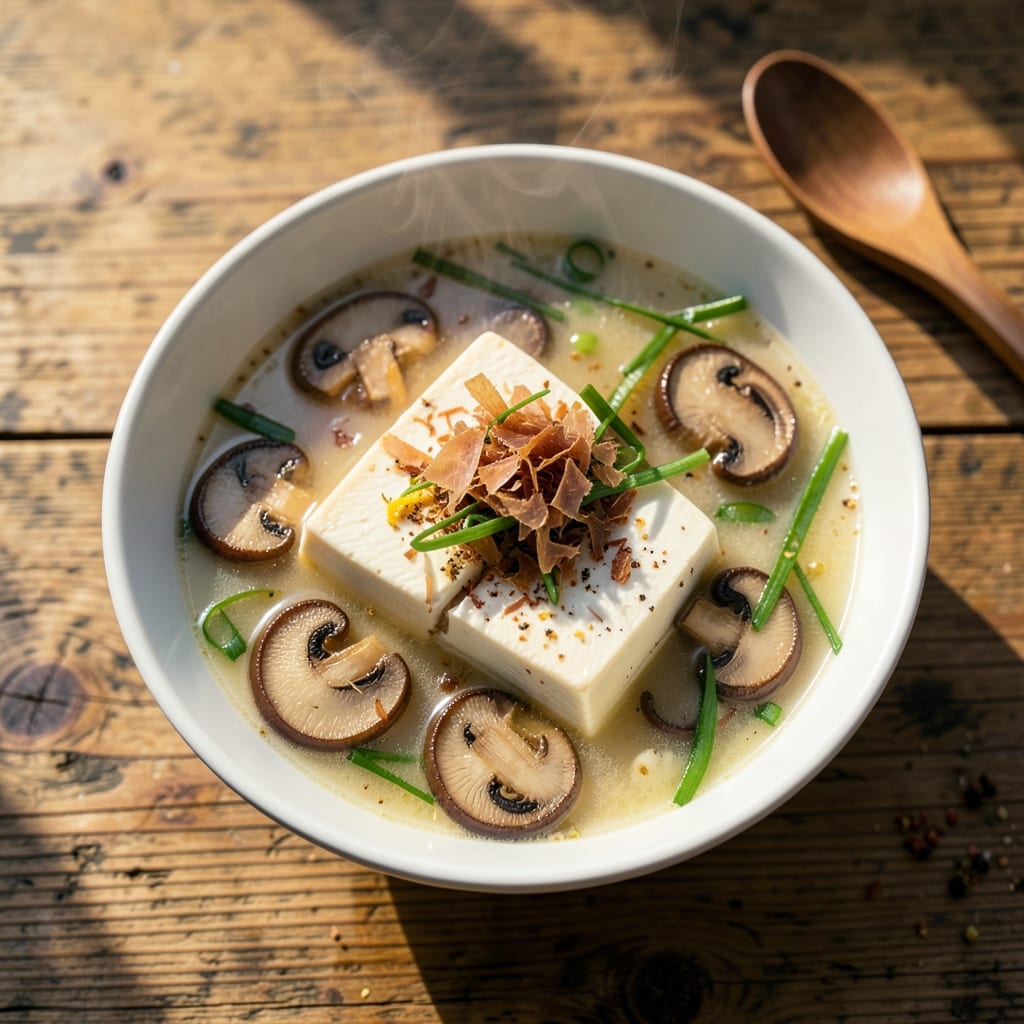
Akadashi miso soup delivers the perfect balance of crispy tofu, delicate mushrooms, and a silky broth that captures Japan's umami essence. This traditional recipe transforms simple ingredients into a harmonious dish where each component plays its part—crispy tofu adds texture, mushrooms deepen flavor, and the miso broth ties everything together in a comforting embrace. The secret lies in the slow simmering process, which develops layers of flavor without overpowering the delicate ingredients.
What sets this akadashi miso apart is its careful balance—salty miso meets fresh dashi stock, while the tofu achieves that signature crispy exterior through a quick sear. The recipe highlights traditional Japanese techniques, such as using kombu and bonito flakes for dashi, which form the aromatic foundation of the soup. Every ingredient, from the mushrooms to the green onions, contributes to the dish's depth and complexity, making it a standout in Japanese cuisine.
The result is a bowl of soup that's both comforting and refined, with crispy tofu that holds its shape, tender mushrooms that soak up the broth, and a silky miso base that's rich yet balanced. The final touch—fresh green onions—adds a bright contrast that elevates the dish. This recipe is perfect for pescatarians or anyone looking to explore the elegance of Japanese home cooking without sacrificing flavor or texture.
Whether you're serving it as a light lunch or a side to a larger meal, this akadashi miso soup will impress with its simplicity and depth. The crispy tofu ensures every bite is satisfying, while the silky broth brings everything together in perfect harmony. Let's create this traditional dish that's as beautiful as it is delicious.
Ingredients for akadashi miso soup
Traditional Japanese ingredients that transform into a silky, umami-rich soup with irresistible crispy tofu.
| Ingredient | Amount | Notes |
|---|---|---|
| Extra-Firm Tofu 🍱 | 1 lb | Pressed and cut into cubes |
| Shiitake Mushrooms 🍄 | 8 whole | Fresh, stems removed |
| White Miso Paste 🧈 | ¼ cup | High-quality, preferably aged |
| Dried Kombu 🌿 | 1 sheet | For dashi stock |
| Bonito Flakes 🐟 | 2 tbsp | For umami depth |
| Green Onions 🧅 | 3 whole | Thinly sliced for garnish |
| Sesame Oil 🫒 | 1 tbsp | For finishing touch |
| Neutral Oil 🫒 | 1 tbsp | For crisping tofu |
| Dried Shiitake Mushrooms 🍄 | 4 whole | Rehydrated for broth |
| Kosher Salt 🧂 | 1 tsp | For seasoning broth |
| Water 💧 | 4 cups | Filtered preferred |
| Dried Bonito Flakes 🐟 | 1 tbsp | Extra for garnish |
| Rice Vinegar 🍶 | 1 tbsp | Balances flavors |
The tofu is non-negotiable—extra-firm holds its shape best. Press it for at least 30 minutes before cubing to remove excess water. Asian grocery stores carry the best quality, but any well-marked package will work. For mushrooms, shiitake adds that deep umami—fresh is ideal, but dried rehydrated works too. The miso paste should be white miso (shiro miso) for that delicate, slightly sweet balance. If you can't find it, red miso at half the amount adds depth but more saltiness.
No kombu? Dried kelp sheets from specialty stores are perfect—just one sheet per batch. Bonito flakes are essential for that authentic dashi flavor, but if you're avoiding fish entirely, mushroom broth with a dash of soy sauce mimics it well. The sesame oil should be toasted—Trader Joe's has a great pre-toasted version. For crispy tofu, heat your oil to 375°F—any lower and it'll steam instead of sear. The rice vinegar balances the richness, so don't skip it, even if it's just a tablespoon.
Tofu keeps 3 days in the fridge after pressing, but use it fresh for best texture. Miso paste lasts 6 months unopened, but once opened, store it in the fridge with oil on top to prevent drying. The kombu sheet can be reused once—simmer it again in fresh water for a second batch of dashi. Freeze any extra broth in ice cube trays for quick future use. Garnish with extra bonito flakes right before serving—they crisp up beautifully and add that final umami punch.
Why You'll Love This Recipe
- No-Chop Needed: I swear by this—just cube the tofu and slice the mushrooms once. The kombu soaks while you boil water, and the miso dissolves in seconds. Even my roommate, who burns toast, nailed it.
- Umami Bomb: That first sip? Pure satisfaction. The white miso’s deep richness pairs with shiitakes’ earthy kick, while bonito flakes add a salty, smoky finish. It’s the kind of flavor that makes you forget to check your phone.
- Weeknight & Meal Prep: I make a big batch on Sundays—it’s my go-to for lunches and quick dinners. The tofu holds up for days, and the broth only gets better as it sits. (Yes, even on a Tuesday night.)
- Budget Magic: Tofu, dried kombu, and mushrooms stretch for days. A single block of miso lasts weeks, and bonito flakes go further than you’d think. Honestly, it’s the most cost-effective soup I’ve ever made—and still feels special.
Step-by-step instructions for akadashi miso soup
This method delivers restaurant-quality crispy tofu and velvety miso broth every time.
Prepare the Dashi Broth Base
In a clean pot, combine the 4 cups water with the 1 sheet dried kombu and 4 whole dried shiitake mushrooms. Bring to a gentle simmer over medium-low heat for 15 minutes, keeping the kombu submerged with a small plate if needed. The broth should develop a delicate, oceanic aroma—this is your umami foundation.
Remove the kombu and dried shiitake mushrooms, then add 2 tablespoons bonito flakes. Simmer for another 2 minutes until the flakes dissolve completely. Strain through a fine-mesh sieve into a clean pot, discarding the solids. This clear, aromatic broth will carry all your flavors beautifully.
Crisp the Tofu to Golden Perfection
Press the 1 lb extra-firm tofu for 30 minutes to remove excess water, then cut into 1-inch cubes. Heat 1 tablespoon neutral oil in a nonstick skillet over medium-high heat until shimmering. Add the tofu cubes in a single layer, being careful not to overcrowd the pan.
Cook undisturbed for 3-4 minutes until deep golden brown on one side—this is where the magic happens. Flip carefully and cook another 3-4 minutes until all sides are crispy. Transfer to a paper towel-lined plate to drain excess oil. The tofu should hold its shape when pressed gently but still feel tender inside.
Build the Miso Broth
Return the strained dashi broth to the same pot and bring to a gentle simmer over medium-low heat. Whisk in the 0.25 cup white miso paste until fully dissolved—this should take about 2 minutes of constant stirring. The broth will develop a rich, creamy texture and deep umami flavor.
Add the 8 whole fresh shiitake mushrooms (stems removed) and 1 teaspoon kosher salt. Simmer for 5-6 minutes until the mushrooms soften slightly. Taste and adjust seasoning with a pinch more salt if needed. The broth should be perfectly balanced—savory but not overpowering.
Finish with Crispy Tofu and Garnishes
Return the crispy tofu cubes to the simmering broth and cook for 1-2 minutes to heat through. The tofu will soften slightly but maintain its crisp edges—this is the perfect texture contrast we're aiming for.
Ladle the soup into bowls and garnish with thinly sliced green onions and a drizzle of 1 tablespoon sesame oil. For an extra umami kick, sprinkle with 1 tablespoon dried bonito flakes and a final touch of 1 tablespoon rice vinegar to brighten the flavors. Serve immediately while the tofu is still crisp and the broth steaming hot.
Master the Timing for Perfect Results
Here's where it all comes together: The tofu should be served immediately after assembly—waiting more than 5 minutes will cause the crisp edges to soften. I like to prepare the broth first while the tofu crisps, then assemble everything at the last moment. This keeps the tofu perfectly textured and the broth piping hot.
For an extra touch of authenticity, serve with steamed rice and a side of pickled vegetables. The contrast of textures and temperatures makes each bite unforgettable. The key to this dish is balance—crispy tofu against silky broth, rich umami with bright acidity from the vinegar.
Pro Tips For Making Akadashi Miso Soup
- TOFU: PREP IT RIGHT: Cut the extra-firm tofu into ½-inch cubes before simmering—thicker pieces stay rubbery, no matter how long you cook them. I used to slice it thin for quick cooking, but the texture turns out bland; thicker cubes hold up better and absorb the broth’s umami deeper.
- KOMBU: SOAK, DON’T BOIL: Tear the dried kombu into strips and soak it in cold water for 10 minutes first—this rehydrates it so it infuses the broth properly. After that, bring it to a gentle simmer (never boil) for 5 minutes, then remove it. Boiling kombu turns it bitter, and skipping the soak means you’re missing half the flavor.
- MISO: DISSOLVE SLOWLY: Stir the white miso paste into the hot (but not boiling) broth last, and do it in two additions—first a spoonful, let it melt completely, then the rest. Dumping it all at once creates clumps, and adding it too early kills the delicate kombu flavor you just built. I’ve ruined batches this way; patience here saves cleanup.
- SHIITAKES: REHYDRATE FAST: Slice the shiitake mushrooms after soaking them in hot water for 5 minutes—this keeps them tender without turning mushy. Drain well, then pat them dry with a paper towel so they sizzle slightly in the broth instead of steaming. Wet mushrooms release too much water, diluting the soup’s richness.
Health benefits of these flavors
Protein Powerhouse
This akadashi miso soup delivers a high-quality plant-based protein punch thanks to the extra-firm tofu, providing about 20 grams of protein per serving. Tofu is a complete protein, containing all nine essential amino acids your body needs for muscle repair and immune function. The crispy texture makes it especially satisfying, perfect for those looking to reduce meat intake without sacrificing protein. 💪
Umami-Rich Flavor
The combination of shiitake mushrooms, white miso paste, and dashi broth creates a flavor bomb of umami—that savory, satisfying taste that makes this soup so addictive. Shiitake mushrooms contain glutamates naturally, while miso adds fermented depth. Together, they create a broth that's rich but not heavy, making this an excellent choice for those seeking bold flavors without excess calories.
Digestive Benefits
Fermented foods like white miso are packed with probiotics, which support gut health by promoting beneficial bacteria in your digestive tract. Regular consumption can improve digestion and may even boost your immune system. The kombu and bonito flakes in the dashi also provide prebiotic fiber, feeding those good bacteria for even better gut health.
Low-Calorie Comfort
At just around 150 calories per serving, this soup is a guilt-free comfort food. The light broth and vegetable-based ingredients keep it nutrient-dense without being calorie-heavy. It's perfect for meal prep—portion it into airtight containers and store for up to 3 days in the fridge, or freeze for later. The crispy tofu maintains its texture when reheated gently, making it a great make-ahead option. ✨
Rich in Antioxidants
Shiitake mushrooms are loaded with antioxidants like ergothioneine, which helps protect your cells from oxidative stress. The sesame oil used for finishing adds vitamin E, another powerful antioxidant. Together, these ingredients create a soup that's not just delicious but also packed with compounds that support long-term health.
Bone-Strengthening Minerals
White miso is surprisingly rich in calcium and magnesium, essential minerals for bone health. A single serving provides about 15% of your daily calcium needs, making this soup a smart choice for maintaining strong bones. The dried kombu also contributes iodine, which supports thyroid function and metabolism. 💡
Nutrition facts
Frequently asked questions
Why does the tofu need to be extra-firm for this recipe?
Extra-firm tofu holds its shape perfectly when crisped, creating that satisfying crunch that makes akadashi miso soup so special. Regular or firm tofu would absorb too much oil and turn soggy during cooking. The pressing step removes excess water so the tofu develops a golden crust instead of steaming.
Can I make this soup without bonito flakes?
Yes! For a vegetarian version, replace bonito flakes with 1 tablespoon soy sauce or 1 teaspoon dried shiitake powder when making the dashi. The umami will still develop, though the flavor will be slightly different. The kombu and mushrooms provide plenty of depth even without fish-based ingredients.
How do I fix miso paste that's too salty?
If your broth tastes too salty, dilute it by adding ½ cup hot water and simmering for 2 minutes to balance the flavor. For a more subtle adjustment, add 1 teaspoon rice vinegar or a pinch of sugar to create contrast. Always taste as you go—miso builds flavor as it cooks!
Can I use instant miso soup mix instead of homemade?
While instant mixes will work in a pinch, they lack the depth of homemade white miso paste. For best results, use ½ cup instant miso mix plus 1 tablespoon extra white miso paste to enhance umami. The homemade version gives you control over salt levels and texture—worth the extra effort for that restaurant-quality taste.
What's the best way to store leftovers?
Store in an airtight container in the fridge for up to 3 days. Reheat gently on the stove with a splash of water to restore silky texture. For crispy tofu, reheat only until piping hot—it won't regain its original crunch. Freeze broth separately for up to 1 month (without tofu) for quick future meals.