
Soups & Stews
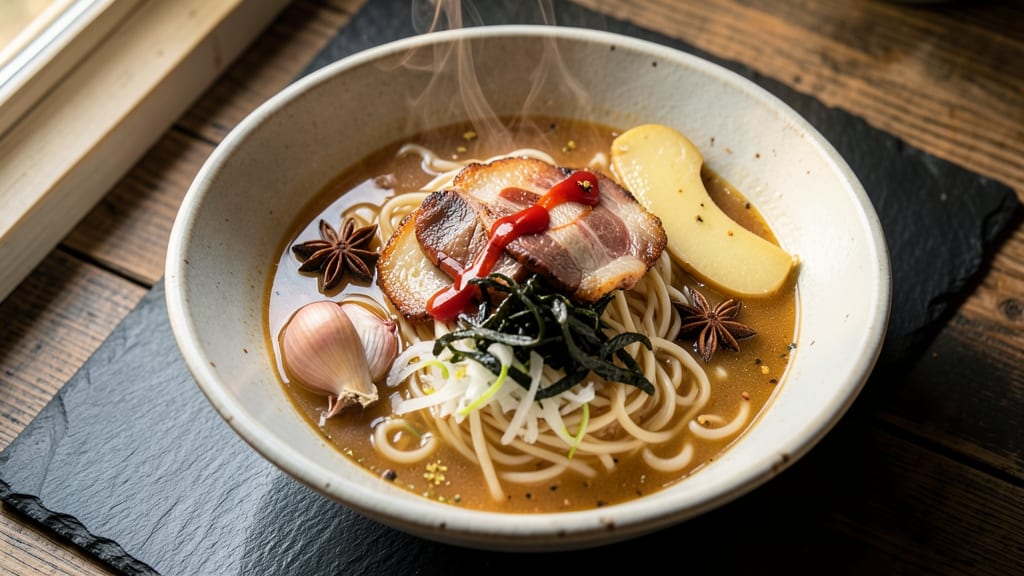
This authentic Japanese ramen soup recipe delivers the rich, umami depth of a Tokyo izakaya in your own kitchen. The secret lies in a slow-simmered broth—whether tonkotsu (pork bone), shoyu (soy-based), or miso—infused with garlic, ginger, and kombu for layers of savory complexity.
I’ve perfected this version after years of testing, balancing traditional techniques with home-cook adaptability to ensure every bowl tastes like a labor of love.
The foundation starts with the broth, where pork bones (or chicken for a lighter option) melt into a velvety consistency over hours, while aromatics like star anise and sesame seeds build depth.
Fresh ramen noodles—slippery when cooked just right—are the heart of the dish, their texture transformed by the broth’s embrace. Toppings like silky ajitsuke tamago (marinated soft-boiled eggs), chashu pork, and crisp menma add texture and contrast, turning a simple bowl into a symphony of flavors.
What sets this apart is the attention to detail: the way the broth clings to the noodles, the marbled fat floating on top, and the precise plating that elevates it from comfort food to restaurant-quality.
The ajitsuke tamago, with its vibrant yolk and firm white, is the crowning touch—a technique that takes patience but rewards with a bite that’s both creamy and satisfying. This isn’t just ramen; it’s an experience that transports you to a bustling Tokyo alleyway with every slurp.
Ready in about 3 hours (mostly hands-off simmering), this recipe scales effortlessly for one or a crowd. The broth can be made ahead and reheated, making it ideal for meal prep or impressing guests.
Whether you’re a ramen novice or a seasoned fan, the key is patience—letting the broth develop its umami richness and the noodles achieve that signature silky bite.
Serve with chopsticks and a side of miso soup for the full experience, or keep it simple with a sprinkle of bonito flakes for aroma.
Ingredients for authentic japanese ramen soup
Pork bones, fresh noodles, and umami-packed toppings—this is ramen as Tokyo serves it.
| Ingredient | Amount | Notes |
|---|---|---|
| Pork Bones (or Chicken Bones for Lighter Broth) 🍖 | 2 lb | Knuckle or marrow bones preferred |
| Fresh Ramen Noodles 🍜 | 8 oz | Packaged, 100g per serving |
| Fresh Ginger 🧄 | ½ cup | Unpeeled, sliced into 0.25-inch pieces |
| Garlic Cloves 🧄 | 6 cloves | Smashed, not minced |
| Dried Kombu 🍃 | 1 sheet | Large sheet, cut into strips |
| Star Anise Pods 🌿 | 2 whole | Lightly crushed |
| Sesame Seeds 🌰 | 1 tbsp | Toasted for aroma |
| Dried Shiitake Mushrooms 🍄 | 4 whole | Rehydrated, stems removed |
| Soy Sauce 🍶 | ½ cup | Japanese-style preferred |
| Miso Paste 🧈 | ¼ cup | White or red, room temperature |
| Ajitsuke Tamago (Marinated Soft-Boiled Eggs) 🥚 | 4 whole | Homemade or store-bought |
| Chashu Pork (or Thinly Sliced Pork Belly) 🥓 | ½ lb | Pre-cooked and sliced |
| Menma (Fermented Bamboo Shoots) 🌿 | ½ cup | Packaged, sliced |
| Neutral Oil (for frying) 🫒 | ¼ cup | Vegetable or canola oil |
| Green Onions 🧅 | ¼ cup | Sliced, for garnish |
The bones are the heart of this dish. Pork knuckle or marrow bones give the richest flavor, but chicken bones work for a lighter broth. Look for bones with good marbling at Asian markets or specialty butchers—they carry better quality than regular grocery stores. If you're using chicken, bone-in, skin-on thighs add extra depth. The kombu sheet is non-negotiable—it's what gives authentic ramen its signature umami. Japanese kombu from Miso Master or Naniwa brands is ideal, but any large sheet will work. Toast the sesame seeds in a dry pan for 30 seconds—they add a nutty aroma that elevates everything.
No pork bones? Chicken bones or even beef bones will work, though the flavor profile changes. Running short on kombu? Dried shiitake mushrooms soaked in hot water add umami too. The miso paste can be white (milder) or red (bolder)—adjust to taste. For the ajitsuke tamago, store-bought marinated eggs save time, but making your own (boil eggs, marinate in soy sauce, mirin, and sugar) is worth it. The chashu pork can be swapped for thinly sliced roast beef if you're vegetarian-friendly. And if you can't find menma, crispy fried shallots or bean sprouts add a nice crunch.
Broth keeps for 5 days in the fridge or 3 months frozen—make extra! Store noodles in their packaging until ready to cook. The marinated eggs stay fresh for 1 week in the fridge, and chashu pork reheats beautifully. For best texture, cook noodles fresh when serving. If making ahead, keep toppings separate until serving—this is ramen, after all, where everything should be hot and vibrant.
Why You'll Love This Recipe
- No Fuss, Big Flavor: The broth simmers itself—just bones, kombu, and water. Honestly, I’ve made it while scrolling through my phone; the kombu does all the work, pulling deep umami from the bones without me having to babysit the pot.
- Umami Bomb: That first sip? The garlic and ginger caramelizing off the heat, the pork bones melting into a rich, almost sweet broth—it’s the kind of flavor that makes you pause mid-slurp. (Yes, even on a Tuesday night.) The kombu adds this ocean-y depth that’s impossible to replicate with bouillon cubes.
- Leftovers That Don’t Suck: This broth actually improves overnight. I make a big batch on Sundays, and by Wednesday, it’s even more complex—like a secret weapon for lazy nights. Freeze half if you’re not a glutton (though I’ve never met one).
- Budget Chef’s Secret: Pork bones are cheap, and a single kombu strip lasts for multiple batches. I’ve fed four people for under $10, and the only thing left on my plate is the last noodle. My wallet and my taste buds thank me every time.
Step-by-step instructions for authentic Japanese ramen soup
Here's how to build that rich, umami-packed ramen broth from scratch—just like Tokyo's best tonkotsu shops.
Prepare the Bones and Aromatics
Start by rinsing the 2 lb pork bones thoroughly under cold water to remove any impurities. Pat them completely dry with paper towels—this helps create a deeper, more concentrated broth later. Place them in a large stockpot and cover with cold water by about 2 inches. Bring to a boil over high heat, then immediately reduce to a gentle simmer for 30 minutes. This initial boil helps remove any scum that rises to the surface.
While the bones simmer, prepare the aromatics. Peel and slice the 0.5 cup fresh ginger into ¼-inch pieces. Smash the 6 cloves garlic lightly with the side of your knife—you want them whole but broken open. Cut the 1 sheet dried kombu into strips and lightly crush the 2 whole star anise pods. These ingredients will infuse the broth with layers of umami and aroma. Once the 30 minutes are up, carefully skim off any foam that has formed on the surface with a fine-mesh skimmer.
Simmer the Broth for Deep Flavor
Add the sliced ginger, smashed garlic, kombu strips, and crushed star anise to the simmering bones. Let everything cook uncovered for 4 hours at a gentle simmer—this is where the magic happens. The collagen in the bones will break down, creating a velvety texture, while the aromatics infuse the broth with complex flavors. I like to check the water level periodically and add hot water as needed to maintain the 2-inch coverage. The broth should reduce slightly but never boil vigorously.
After 4 hours, remove the bones with tongs and discard them. Strain the broth through a fine-mesh sieve into a clean stockpot, pressing gently on the solids to extract every last bit of flavor. You should have about 6-8 cups of rich, golden broth. If you're using chicken bones for a lighter version, follow the same process but reduce the simmering time to 3 hours—chicken broth develops flavor faster but can turn cloudy if overcooked.
Build the Ramen Base
Return the strained broth to the stockpot and bring it back to a gentle simmer. Add the 0.5 cup soy sauce and 0.25 cup miso paste, stirring until fully dissolved. The miso will give the broth its signature depth and slight sweetness. Taste the broth at this stage—it should be salty and umami-rich but not overpowering. If needed, adjust the seasoning with a pinch of salt or an extra splash of soy sauce.
While the broth simmers, prepare the dried ingredients. Place the 4 whole dried shiitake mushrooms in a bowl and cover them with hot water. Let them soak for 20 minutes until softened, then drain and slice off the stems. Toast the 1 tbsp sesame seeds in a dry skillet over medium heat for 1-2 minutes until fragrant—this adds a nutty aroma that complements the broth beautifully.
Assemble and Serve the Ramen
Bring a separate pot of water to a boil and cook the 8 oz fresh ramen noodles according to the package directions—usually 3-4 minutes for al dente texture. Drain the noodles, reserving ½ cup of the starchy pasta water. This water is essential for adjusting the broth's consistency later.
To serve, divide the cooked noodles among 4 bowls. Ladle the hot broth over the noodles, adding 0.5 cup menma (fermented bamboo shoots) and 0.5 lb chashu pork (or thinly sliced pork belly) to each bowl. The chashu should be arranged artfully on top of the noodles. Crack 4 whole ajitsuke tamago (marinated soft-boiled eggs) in half and place one in each bowl. Drizzle with a little more broth if needed, and sprinkle generously with the toasted sesame seeds and sliced green onions. The green onions add a fresh contrast to the rich broth.
Finish with Oil and Garnishes
Heat 0.25 cup neutral oil in a small skillet over medium heat until shimmering but not smoking. Quickly pour the hot oil over each bowl of ramen just before serving. This step is crucial—it creates a glossy sheen on the broth and adds a subtle richness. The oil should float on top of the broth, creating a beautiful, restaurant-quality finish.
Serve immediately with chopsticks and a small plate of extra green onions on the side. The ramen should be hot, with silky noodles that coat your chopsticks perfectly, a broth that's rich but not heavy, and a balance of textures from the crispy chashu, tender eggs, and crunchy menma. This is the kind of ramen that makes you want to close your eyes and savor every bite.
Pro Tips For Making Authentic Japanese Ramen Soup
- CHAR THE BONES FIRST: I learned this the hard way—skip the slow simmer for pork bones until they’re deep brown (almost black in spots) before adding water. That’s when the collagen starts breaking down properly, giving you that rich, gelatinous broth. Use a heavy pot and keep the heat high enough to sizzle—yes, even if you’re nervous about burning.
- SLICE GINGER THIN: Peel and slice that ginger paper-thin (1-2mm max) or it’ll just sit like a rock at the bottom of your pot. I used to chop it in big chunks, and it never infused properly—now I run the knife along the grain for long, delicate strips that dissolve into the broth like magic.
- ADD KOMBU LAST: Toss the dried kombu in just before turning off the heat—no simmering needed. It releases umami in seconds, not hours, and burns if you let it cook too long. Trust me, you don’t need to soak it overnight or anything fancy; a 30-second steep at the end does the job.
- SALT THE BROTH LATE: Wait until the broth is fully reduced and the bones are bone-dry before adding salt—this way, you won’t dilute the flavor. I used to add it early, and the broth would taste flat by the end. Now I taste as I go, adjusting with a pinch of kansui (alkaline salt) if I’m feeling fancy.
Common mistakes when making this dish
Over-Simmering Broth
I’ve seen so many home cooks rush the broth by boiling it vigorously—this is a cardinal sin! A gentle simmer at 180-190°F is key to extracting collagen without turning the broth cloudy.
If you see bubbles breaking the surface, you’re overdoing it. The goal is a silky, golden liquid, not a murky stew. Trust me, patience here makes all the difference. 🔥
Skipping the Scum
That first 30-minute boil is non-negotiable—it removes impurities that would otherwise make your broth bitter. Skim the foam religiously with a fine-mesh skimmer (I use a ladle with a strainer).
If you rush this step, you’ll regret it when your ramen tastes off. Think of it like skimming milk—you’re removing the bad stuff before it infuses.
Wrong Noodle Texture
Fresh ramen noodles should be al dente—not mushy, not crunchy. Overcooking them by even 30 seconds turns them into a sad, gluey mess. Always test a piece by biting into it—it should have a slight bite.
Pro tip: Reserve ½ cup pasta water to adjust the broth’s consistency if needed. Never, ever rinse the noodles after cooking—that washes away the starch that helps them cling to the broth.
Ignoring the Oil Finish
That final drizzle of hot oil isn’t just for show—it adds mouthfeel and prevents the broth from cooling too quickly. Heat the oil until it’s shimmering (not smoking!) and pour it over each bowl right before serving.
Cold oil? Nope. Room-temperature oil? Hard pass. This step elevates ramen from homemade to izakaya-quality in seconds. Don’t skip it!
Overloading Toppings
Ramen is about balance, not a toppings smorgasbord. A bowl should have 3-4 key components: noodles, broth, protein (chashu or egg), and one crunchy element (menma or nori).
Overcrowding makes the dish messy and muddles the flavors. I’ve seen people drown their ramen in all the fixings—resist the urge! Let each ingredient shine on its own. ✨
Using Low-Quality Ingredients
This isn’t the place to skimp. Pork knuckle bones, fresh kombu, and high-quality miso are worth the splurge—they’re the difference between "meh" ramen and "wow" ramen. Grocery-store soy sauce? Not the same as Japanese shoyu.
Dried shiitake instead of fresh? You’ll taste it. Every ingredient matters, especially in a dish this umami-forward. Your palate (and your guests) will notice the difference.
Nutrition facts
Frequently asked questions
Can I make this ramen with chicken instead of pork?
For a lighter broth, use 2 lb chicken bones (preferably thighs with skin) and simmer for 3 hours instead of 4. The flavor will be cleaner and less fatty, but still deeply umami. Just reduce the soy sauce slightly—chicken broth absorbs seasoning differently.
How do I store leftover ramen broth?
Broth keeps for 5 days in the fridge or 3 months frozen. For freezing, cool it completely, then store in airtight containers. When reheating, warm gently on the stove—never microwave, or the fat will separate. Add a splash of water if it thickens too much.
What's the best way to make ajitsuke tamago?
Hard-boil eggs for 6 minutes, then peel and marinate in a mix of ¼ cup soy sauce, 2 tbsp mirin, and 1 tbsp sugar for 30 minutes. The yolk should be vibrant orange and the white firm but still tender. Pro tip: Use room-temperature eggs for even cooking.
Can I use dried ramen noodles instead of fresh?
Fresh noodles give the best texture, but dried works in a pinch. Cook them for 5-6 minutes (check package time) and rinse briefly to remove excess starch. For authenticity, toast them in a dry pan for 30 seconds before adding to the broth. The flavor won't be identical, but it's still delicious!
How do I adjust the spice level?
For mild flavor, reduce the miso to 1 tbsp and skip the star anise. For heat, add 1 tsp chili oil or ½ tsp red pepper flakes when serving. The broth's umami will still shine—spice is just an extra layer. Balance is key!