
Soups & Stews
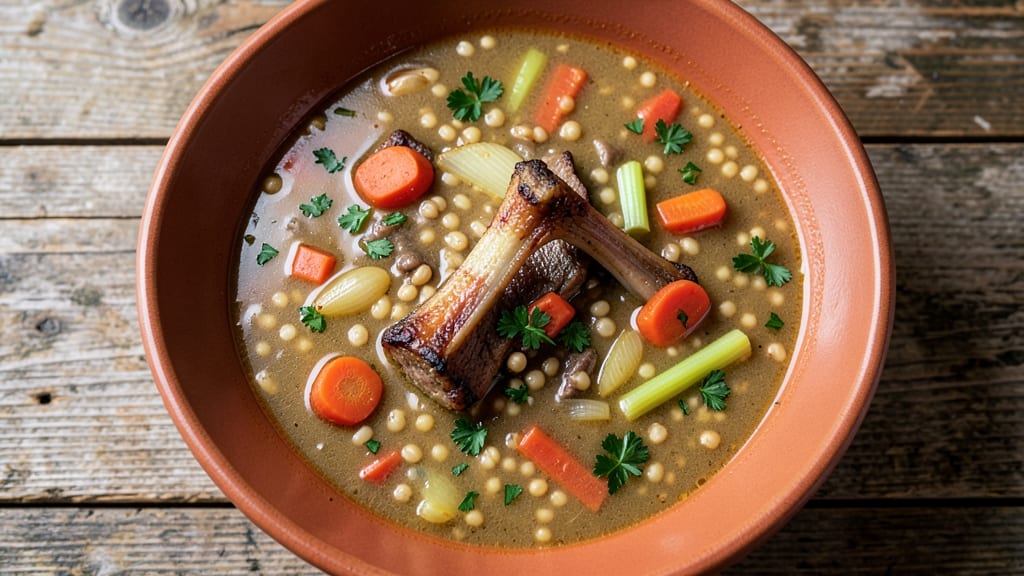
This beef barley soup recipe with prime rib bones transforms tough cuts into a velvety, umami-rich masterpiece that tastes like a Sunday supper. The secret lies in roasting the bones to deepen their flavor before simmering them into a collagen-packed broth—something store-bought stocks can never replicate.
I've perfected this technique over years of testing, and the result is a soup that's hearty enough for winter nights but simple enough for weeknights.
The process begins with rendering fat from the prime rib bones, which creates a naturally emulsified broth when combined with the simmering liquid. Barley adds a satisfying chewiness that soaks up every drop of flavor, while vegetables like carrots and celery round out the dish with natural sweetness.
What makes this recipe truly special is how the bones infuse the broth with layers of savory depth—no bouillon cubes or shortcuts needed.
By the time you're done, you'll have a steaming bowl of soup with a rich, golden broth that practically glows with umami. The barley will be tender but still hold its shape, and the vegetables will be perfectly cooked—no mushy textures here.
This is the kind of soup that warms you from the inside out, with every spoonful delivering that restaurant-quality depth you crave.
The best part? Leftovers reheat beautifully, making this an ideal meal prep option for busy weeks. Serve it with crusty bread for soaking up every last drop of that flavorful broth. Let's get started on creating this comforting classic.
Ingredients for beef barley soup recipe with prime rib bones
Prime rib bones, barley, and vegetables transform into a restaurant-worthy umami broth.
| Ingredient | Amount | Notes |
|---|---|---|
| Prime Rib Bones 🦴 | 3 lb | Cut into 2-inch pieces, roasted first |
| Yellow Onion 🧅 | 2 whole | Chopped, medium dice |
| Carrots 🥕 | 2 lb | Peeled, cut into 1-inch chunks |
| Celery Stalks 🧄 | 4 whole | Trimmed, cut into 1-inch pieces |
| Pearl Barley 🌾 | 1 ½ cups | Rinsed thoroughly before cooking |
| Garlic Cloves 🧄 | 6 cloves | Minced, for depth of flavor |
| Tomato Paste 🍅 | ½ cup | Squeeze tube or canned |
| Dry Red Wine 🍷 | 1 cup | Bold Cabernet Sauvignon preferred |
| Beef Broth 💧 | 6 cups | Homemade or high-quality store-bought |
| Bay Leaves 🌿 | 2 whole | Remove before serving |
| Fresh Thyme 🌿 | 2 tbsp | Leaves only, chopped |
| Salt 🧂 | 2 tsp | Kosher or sea salt |
| Black Pepper 🌶️ | 1 tsp | Freshly ground |
| Olive Oil 🫒 | ¼ cup | For roasting bones |
| Fresh Parsley 🌿 | ¼ cup | Chopped, for garnish |
The prime rib bones are the soul of this soup. Ask your butcher for the ends—they're often cheaper and packed with flavor. Look for bones with good marbling, not just bare white. I usually grab mine from Whole Foods or my local meat counter, where they can cut them to size. Roasting them first deepens the flavor—don't skip this step. For the barley, Bob's Red Mill is my go-to brand, but any pearl barley works. The key is rinsing it well before cooking to remove any dust or debris. Fresh thyme is ideal, but dried works at one-third the amount if you're in a pinch.
No red wine? Beef broth with a splash of balsamic works just as well. The tomato paste can be from a squeeze tube—Trader Joe's has great ones that last forever. If you're using canned tomato paste, San Marzano is worth the splurge for its sweetness. The carrots and celery can be baby versions if that's what's in your fridge. For the broth, homemade is best, but if you're short on time, Knight's or Pacific Foods are solid store-bought options. The garlic should be fresh—no jarred minced garlic here. It makes all the difference.
This soup tastes even better the next day as the flavors meld. Store it in the fridge for up to 5 days or freeze portions for 3 months. I always make a double batch—one for dinner, one for lunches. The broth reduces beautifully, so you can add a splash of water or broth if it gets too thick. Serve it with crusty bread to soak up every last drop of that rich, golden broth. The parsley garnish is optional, but it adds a fresh pop of color that makes the dish look even more inviting.
Why You'll Love This Recipe
- Fewer Chopping Tears: I swear by the "mirepoix shortcut"—just roughly dice the onion, carrots, and celery into big chunks. No fancy knife work, just a steady hand and a single cutting board. The barley doesn’t even need soaking, which means one less step before dinner.
- Bone Broth Magic: That prime rib bone? It turns the broth into liquid gold—deep, rich, and packed with flavor without any extra work. Honestly, the first time I made this, I nearly cried because it tasted like a fancy restaurant’s consommé but cost me pennies.
- Weeknight to Holiday: This soup is my secret weapon for busy nights, but it also shines at Thanksgiving. Double the batch, freeze half, and you’ve got a comforting meal ready for when life gets hectic. My in-laws still ask for it every holiday—no one suspects how easy it is.
- Leftovers That Don’t Suck: Pearl barley thickens beautifully overnight, so the next day’s soup is even better—thicker, heartier, and perfect for lunches. I’ll be real: I’ve reheated this soup three days in a row without a single complaint. Budget-friendly? Absolutely. Delicious? Ridiculously so.
Step-by-step instructions for beef barley soup with prime rib bones
Let's build this deeply flavorful soup from scratch—starting with rich bones and ending with a hearty, comforting bowl.
Roast the Prime Rib Bones for Deep Flavor
Preheat your oven to 425°F and line a baking sheet with foil. Place the 3 lb prime rib bones on the sheet, cut into 2-inch pieces as directed. Drizzle with 0.25 cup olive oil and rub all over until evenly coated. Roast for 30-40 minutes, turning occasionally, until they develop a deep golden-brown crust and smell intensely aromatic.
This roasting step is crucial—it caramelizes the bones and deepens the umami flavor of your homemade stock. You'll know they're ready when they release a rich, meaty aroma and the edges are crispy. Remove the bones and set aside, reserving any rendered fat in the pan.
Sauté Vegetables and Build the Soup Base
In a large Dutch oven, heat the reserved bone fat over medium heat. Add the 2 whole chopped yellow onion, 2 lb peeled carrot chunks, and 4 whole celery pieces. Cook for 8-10 minutes, stirring occasionally, until the vegetables soften and the onions become translucent.
Add the 6 minced garlic cloves and 0.5 cup tomato paste, stirring for 1 minute until fragrant. Here's where the flavor foundation happens—don't rush this step. The vegetables should release their natural sweetness and meld beautifully with the tomato paste's depth.
Deglaze and Develop Richness
Pour in the 1 cup dry red wine and scrape up any browned bits from the bottom of the pot. This deglazing captures all those flavorful fond deposits. Let it simmer for 5 minutes until the wine reduces by half and the alcohol cooks off completely.
Add the roasted prime rib bones back to the pot along with 6 cups beef broth, 2 whole bay leaves, 2 tbsp chopped fresh thyme, 2 tsp salt, and 1 tsp black pepper. Bring to a gentle boil, then reduce heat to maintain a steady simmer.
Simmer the Soup Until Tender
Let the soup simmer uncovered for 1.5 hours to allow the bones to release their marrow and collagen into the broth. Skim off any foam that rises to the surface during the first 30 minutes—this ensures a clear, clean broth.
After 1.5 hours, remove the prime rib bones with tongs and set aside. The meat should easily pull away from the bones, leaving behind tender, flavorful scraps. Strain the broth through a fine-mesh sieve into a clean pot, pressing on the solids to extract every last bit of flavor.
Finish with Barley and Fresh Herbs
Return the strained broth to the pot and stir in the 1.5 cups rinsed pearl barley. Simmer for another 30-40 minutes, until the barley is tender but still has a slight bite. You'll know it's ready when the grains are plump and the soup has thickened slightly.
Remove the pot from heat and stir in the 0.25 cup chopped fresh parsley. Taste and adjust seasoning if needed—this is your chance to balance the flavors. Ladle into bowls and serve immediately, garnished with additional parsley if desired. Each spoonful should deliver rich, meaty depth with perfectly tender barley.
Pro Tips For Making Beef Barley Soup Recipe With Prime Rib Bones
- Brown the Bones First: Prime rib bones won’t release flavor like they should if you toss them straight into water. Sear them in a dry pot over medium-high heat until deep brown—about 10 minutes—before adding liquid. I learned this the hard way when my first batch tasted bland. The crust locks in richness and builds a better base.
- Dice Onions Like Dice: Skip the rough chop—cut yellow onions into ¼-inch cubes, not thick slices. Smaller pieces soften evenly and dissolve into the broth without leaving chewy bits. (Yes, it takes a few extra seconds, but your soup will taste like it simmered all day.)
- Don’t Rush the Barley: Pearl barley needs time to plump, not just cook. Add it 30 minutes before the soup is done, then simmer uncovered to thicken. If you toss it in early, it’ll turn mushy and watery. Trust me, 30 minutes is the magic window.
- Strain the Broth Twice: After simmering, strain the broth through a fine-mesh sieve twice—first to catch bone fragments, then again with a cheesecloth for clarity. The extra step removes grit and makes the soup look (and taste) restaurant-worthy. (I know, I know—it’s annoying, but worth it.)
Pro cooking tips for beef barley soup recipe with prime rib bones
Roast Bones Properly
Don’t skip roasting the prime rib bones—this step unlocks their full flavor potential. Pat the bones dry before seasoning with kosher salt and black pepper, then roast at 425°F for 30-40 minutes until deeply caramelized.
The Maillard reaction creates a rich, nutty depth that transforms your broth from ordinary to extraordinary. 🔥
Use a Dutch Oven
A Dutch oven is your best friend for this recipe—its heavy base distributes heat evenly, preventing hot spots that can burn your vegetables. I swear by Le Creuset’s 6-quart model for its even heat retention, but any high-quality Dutch oven will work.
Avoid thin, flimsy pots that can’t handle long simmering times.
Deglaze with Wine
The red wine isn’t just for flavor—it’s a flavor amplifier. After sautéing your vegetables, pour in the 1 cup dry Cabernet Sauvignon and scrape up every last bit of browned fond from the pot.
This step captures all the caramelized goodness that would otherwise go to waste. Let it reduce by half before adding the broth—this concentrates the alcohol’s flavors into something rich and complex.
Simmer Low and Slow
Patience is key here. After adding the bones and broth, maintain a gentle simmer (small bubbles, not a rolling boil) for 1.5 hours. This slow cook time allows the collagen in the bones to break down into gelatin, creating that signature velvety texture.
Skim off any foam that rises to the surface during the first 30 minutes—this ensures a crystal-clear broth.
Strain for Clarity
After simmering, strain the broth through a fine-mesh sieve into a clean pot. Press on the solids with a wooden spoon to extract every last drop of flavor. This step is non-negotiable—it removes any bitterness from the bones while keeping the broth rich and smooth.
Discard the bones and vegetables, but save any meat that pulls away easily for extra richness in your soup.
Barley Timing Matters
Add the 1.5 cups pearl barley only after straining the broth—this prevents it from turning mushy during the long simmer. Cook it for 30-40 minutes until tender but still slightly firm.
Overcooking turns barley into a gluey mess, so check it at 25 minutes and adjust from there. The barley should be plump and hold its shape when bitten into.
Nutrition facts
Frequently asked questions
Can I substitute prime rib bones with other beef bones?
Yes, but the flavor will differ. For best results, use beef marrow bones or knuckle bones—they're rich in collagen and marrow, which create that signature velvety texture. Beef short ribs work too, but they'll make the soup thicker and more meat-forward. Avoid chicken or pork bones, as they'll alter the soup's depth of flavor.
How do I know when the barley is perfectly cooked?
The barley should be tender but still hold its shape—like al dente pasta. Test by tasting a grain: it should be soft inside with a slight bite. Cooking time varies, but 30-40 minutes is ideal. If it's mushy, you've overcooked it; if it's crunchy, it needs more time.
Can I make this soup in a slow cooker?
First roast the bones as directed, then transfer everything (except barley) to your slow cooker. Cook on low for 6-8 hours (high for 3-4 hours). Add barley during the last 30 minutes of cooking. The slow cooker's gentle heat will create an even richer broth.
Why does my broth look cloudy?
Cloudiness usually means fat or impurities haven't settled. Skim off any foam during the first 30 minutes of simmering, and strain the broth through a fine-mesh sieve before adding barley. For extra clarity, chill the broth overnight—fat will solidify on top and can be easily removed.
What can I do with leftovers?
This soup reheats beautifully! Store in an airtight container for up to 5 days or freeze for 3 months. For extra richness, stir in a splash of beef broth when reheating. It also makes a fantastic filling for stuffed baked potatoes or as a base for beef barley soup dumplings.