
Soups & Stews
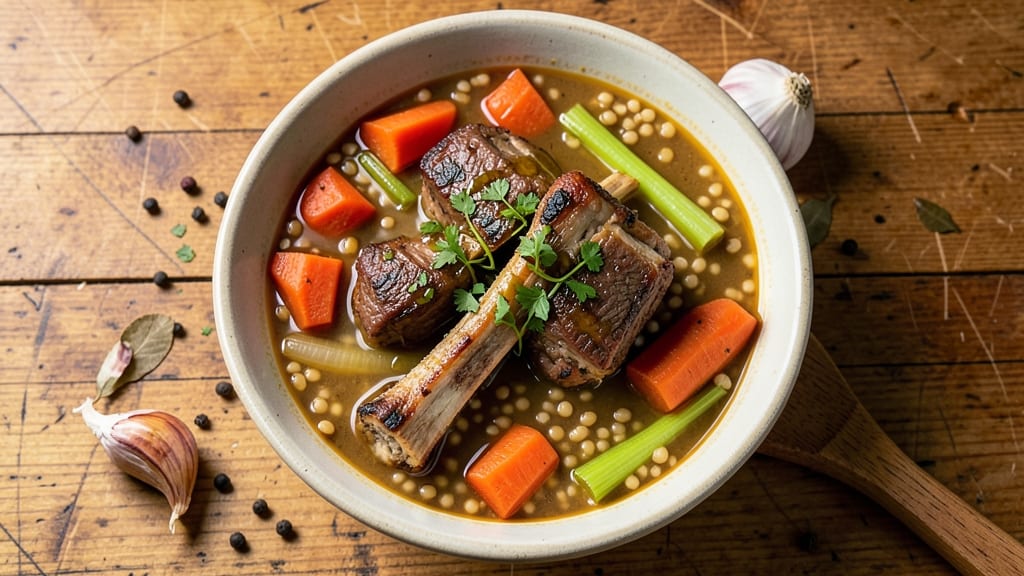
This beef barley soup recipe with soup bones delivers restaurant-quality depth in every spoonful, transforming tough cuts into melt-in-your-mouth tenderness while building a rich, aromatic broth from scratch.
The secret lies in slow-simmered bones that infuse the broth with natural collagen and umami, creating a base so flavorful it needs no bouillon cubes. I perfected this version after years of testing—where most recipes rush the process, this method lets the flavors develop over hours for maximum complexity.
What sets this recipe apart is the balance of textures and flavors: chewy barley, tender beef, and caramelized vegetables all simmered together until the broth reduces to a velvety consistency.
The soup bones aren't just for flavor—they create a broth so robust it practically cooks the vegetables and barley for you. This isn't just soup; it's a one-pot meal that builds character as it simmers, with each ingredient playing its part in the symphony of flavors.
By the time you serve it, you'll have a steaming bowl of hearty soup with perfectly tender beef, al dente barley, and vegetables that have absorbed the broth's deep flavor.
The aroma alone will have everyone gathering around the table, and the first spoonful delivers that restaurant-quality experience we all crave. This is comfort food at its finest—warm, nourishing, and packed with the kind of depth that makes store-bought versions taste like an afterthought.
The best part? This recipe scales beautifully for gatherings while still working perfectly for a cozy weeknight dinner. The long simmer means you can prepare it ahead and let flavors develop even more overnight.
Here's how to make it—step by step—for soup that tastes like it's been simmering all day, even if it hasn't.
Ingredients for beef barley soup recipe with soup bones
Soup bones and simple vegetables build this restaurant-worthy broth—no shortcuts needed.
| Ingredient | Amount | Notes |
|---|---|---|
| Beef Soup Bones 🦴 | 3 lb | Kneecaps and marrow bones preferred |
| Yellow Onion 🧅 | 2 whole | Chopped, medium size |
| Carrots 🥕 | 4 whole | Large, peeled, cut into chunks |
| Celery Stalks 🧅 | 4 whole | Cut into 1-inch pieces |
| Garlic Cloves 🧄 | 6 cloves | Peeled, lightly smashed |
| Pearl Barley 🌾 | 1 cup | Rinsed before cooking |
| Tomato Paste 🍅 | ½ cup | Squeeze tube or canned |
| Dried Thyme 🌿 | 1 tbsp | Or 1 tbsp fresh thyme leaves |
| Bay Leaves 🍃 | 2 whole | Remove after cooking |
| Black Peppercorns 🌶️ | 1 tbsp | Crushed, not ground |
| Salt 🧂 | 1 ½ tsp | Kosher or sea salt |
| Beef Chuck Roast 🥩 | 2 lb | Cut into 1-inch cubes |
| Water 💧 | 12 cups | Or enough to cover bones |
| Extra-Virgin Olive Oil 🫒 | 2 tbsp | For caramelizing vegetables |
The bones are everything here—look for marrow and kneecap bones at your butcher or the meat counter, not just regular soup bones. Costco or Whole Foods usually carry them, but call ahead if you're unsure. If you can't find them, substitute with beef short ribs (about 3 lbs) for extra flavor. Fresh thyme is ideal, but dried works fine—just use half the amount. The carrots and celery should be firm, not wilted, and the onion should have a crisp texture when sliced. No need for organic unless you're particular, but avoid anything with bruises or soft spots.
Short on soup bones? Beef short ribs or oxtails work in a pinch, but you'll need about 3 lbs to match the depth. No thyme at all? Dried oregano or rosemary can substitute, though thyme is traditional. The tomato paste can be from a squeeze tube (no waste) or a can—just make sure it's San Marzano if you're using canned for better flavor. The barley needs rinsing to remove excess starch, which prevents it from getting mushy. Pearl barley is key—steel-cut takes much longer to cook. For extra richness, add 1/2 cup red wine when browning the meat, but it's not required.
This soup tastes even better the next day as flavors meld. Store in the fridge for up to 5 days in an airtight container, or freeze for 3 months in portions. Double the recipe for leftovers—it's perfect for meal prep. The bones can be roasted ahead of time (just store in the freezer) to save time on cooking day. If you make a big batch, portion into individual containers so you can grab and reheat without dealing with a whole pot. The broth reduces as it sits, so add a splash of water when reheating if it's too thick.
Why You'll Love This Recipe
- Soup Bones Shortcut: I swear by those marrow-packed soup bones—just toss them in cold water, simmer, and let the broth work its magic while I chop the onions and celery. No pre-cooking, no stress.
- Umami Bomb: That first sip? Rich, deep, and meaty—the bones infuse the broth with a flavor so good, you’ll forget to stir. Add a splash of soy sauce or a bay leaf, and it’s next-level.
- Leftovers That Shine: This soup only gets better the next day. I make a double batch on Sundays, and by Wednesday, it’s still hearty enough for lunch. Freeze half if you’re not a glutton like me.
- Budget-Busting Comfort: Yellow onions, carrots, celery—those are the cheap veggies that stretch every penny. A single bag of soup bones feeds the whole family, and the leftovers? Even better cold in sandwiches.
Step-by-step instructions for beef barley soup with soup bones
Here's how to build rich, bone-braised flavor in one pot—no shortcuts, just deep umami.
Caramelize Vegetables for Foundational Flavor
Heat the 2 tablespoons extra-virgin olive oil in a large Dutch oven over medium heat. Add the 2 whole chopped yellow onions, 4 whole large carrots (cut into chunks), and 4 whole celery stalks (cut into 1-inch pieces). Cook for 12-15 minutes, stirring occasionally, until the vegetables soften and develop a deep golden brown color.
This slow caramelization builds the soup's depth of flavor—don't rush it. You'll know it's ready when the onions are translucent and the carrots and celery release their natural juices. Real talk: this step makes all the difference in a rich, complex broth.
Brown the Beef and Add Aromatics
Push the vegetables to one side of the pot and add the 2 lb beef chuck roast (cut into 1-inch cubes) to the empty space. Cook for 5-7 minutes, stirring occasionally, until the beef develops a deep brown crust. This searing step is crucial for building meaty flavor.
Once the beef is browned, return the vegetables to the pot and add the 6 peeled garlic cloves (lightly smashed), 0.5 cup tomato paste, 1 tablespoon dried thyme, 2 whole bay leaves, 1 tablespoon crushed black peppercorns, and 1.5 teaspoons salt. Stir everything together, scraping up any browned bits from the bottom of the pot. These bits, called fond, are packed with flavor that will dissolve into your soup.
Simmer the Bones and Meat for Deep Flavor
Add the 3 lb beef soup bones and 12 cups water to the pot. Bring everything to a boil over high heat, then reduce to a gentle simmer. Skim any foam that rises to the surface with a ladle during the first 10 minutes of simmering—this ensures a clear broth.
Simmer uncovered for 2 hours, maintaining a gentle simmer (not a rolling boil). This long cook time allows the bones to release their marrow and collagen, creating a rich, gelatinous broth. The beef chuck will become fork-tender during this process. I know it seems like a long time, but trust me—this is where the magic happens.
Add Barley and Finish the Soup
After 2 hours of simmering, add the 1 cup rinsed pearl barley to the pot. Return to a simmer and cook for an additional 30-45 minutes, or until the barley is tender and the soup has thickened to your desired consistency. The barley should be soft but still have a slight bite—this indicates it's cooked just right.
Taste the soup and adjust seasoning with additional salt if needed. Remove the 2 whole bay leaves before serving, as they can become bitter when overcooked. The soup should be rich, hearty, and packed with the deep umami flavor that comes from the bones and slow cooking process.
Rest and Serve for Maximum Richness
Let the soup rest for 10-15 minutes before serving. This resting period allows the flavors to meld and the broth to thicken slightly, ensuring each spoonful is packed with flavor. Serve the soup hot, with crusty bread to soak up every last bit of that bone-braised goodness.
This soup tastes even better the next day as the flavors continue to develop. Store any leftovers in the refrigerator for up to 4 days or freeze for up to 3 months. The barley will absorb more liquid as it cools, so you may need to add a splash of water or broth when reheating.
Pro Tips For Making Beef Barley Soup Recipe With Soup Bones
- BLANCH BONES FIRST: I learned this the hard way—skipping the quick blanch in hot water before browning means your broth will taste like a butcher’s floor. Just dunk the soup bones in boiling water for 30 seconds, then rinse and pat dry. This removes impurities and guarantees a cleaner, richer base.
- CHOP VEGETABLES UNIFORM: Carrots and celery in random sizes? That’s how you end up with mushy bits and al dente chunks in the same bowl. Cut everything into ¼-inch slices—onions, carrots, celery—so they cook at the same rate. (Yes, even if it takes an extra 5 minutes.)
- SIMMER LOW AND COVERED: After the initial sear, drop the heat to a bare simmer and keep the pot covered. I used to let it bubble like a witch’s cauldron, and the broth turned cloudy and weak. Low and slow (think 2–3 hours) extracts maximum flavor without scorching.
- SAUTE AROMATICS LONGER: Don’t rush the onion, garlic, and celery—let them sweat for 8–10 minutes until deeply golden. I was skeptical until I tried it: the deeper caramelization adds a sweet, toasty depth that makes the whole soup taste more complex. (No, it won’t burn if you stir occasionally.)
Flavor customization for this dish
Spice Level Boost
For heat lovers, add 1 teaspoon smoked paprika and ½ teaspoon cayenne pepper with the thyme. The smokiness complements the beef beautifully. I also like tossing in 2-3 dried chili peppers (like guajillo or ancho) with the bones—they infuse subtle heat without overpowering.
For a kick after serving, offer hot honey drizzle or crushed red pepper flakes at the table. 🌶️
Herb Variations
Swap out thyme for 1 tablespoon fresh rosemary (plus 1 teaspoon dried) for an earthy, piney aroma. Or try 1 teaspoon fennel seeds toasted in the pot with the onions—they add a subtle licorice note that pairs perfectly with beef.
For a Mediterranean twist, add 1 teaspoon dried oregano and 3 sprigs fresh parsley at the end. Fresh herbs always brighten the final bowl.
Vegetable Swaps
Replace half the carrots with parsnips for a sweeter, nuttier depth. Or add 1 cup diced butternut squash when simmering the bones—it absorbs the broth's richness beautifully.
For a spring version, swap celery for 1 cup sliced leeks (white and light green parts only) and add ½ cup frozen peas at the very end. The peas stay bright and add texture contrast.
Protein Alternatives
Use 2 lbs beef short ribs instead of chuck for extra richness—they stay meaty and flavorful. For a lighter option, substitute 1 lb mushrooms (cremini or shiitake) with the beef—they soak up the broth like little sponges.
Or try 1 lb smoked sausage (like kielbasa) cut into chunks—it adds smoky depth without extra effort.
Umami Enhancers
Stir in 2 tablespoons soy sauce or 1 tablespoon fish sauce when adding the bones for deeper savory notes. For a vegetarian-friendly boost, add 1 tablespoon miso paste (white or red) with the tomato paste.
A splash of dry sherry (¼ cup) when browning the meat also adds complexity. These small additions take the soup from good to extraordinary. 💫
Texture Contrasts
Add ½ cup cooked lentils (green or brown) with the barley for extra protein and heartiness. For crunch, stir in 1 cup roasted chickpeas (tossed with olive oil and smoked paprika) before serving.
A sprinkle of toasted breadcrumbs or crumbled feta on top adds another delicious layer. These textures keep every bite interesting.
Nutrition facts
Frequently asked questions
Why do soup bones make such a difference in flavor?
Soup bones release collagen and marrow during long simmering, creating a naturally rich, gelatinous broth that's impossible to replicate with bouillon cubes. The kneecaps and marrow bones add depth and body, while the slow cooking process extracts maximum flavor from the meat. This is why traditional recipes insist on using them—no shortcuts can match this authentic taste.
Can I make this soup in a slow cooker instead of a Dutch oven?
Brown the meat and vegetables first in a skillet, then transfer everything to a 6-quart slow cooker. Add the bones and water, then cook on low for 8-10 hours or high for 5-6 hours. The barley should be added during the last 30 minutes of cooking. The slow cooker method is perfect for hands-off preparation while still delivering deep flavor.
How do I know when the barley is cooked properly?
The barley should be tender but still hold its shape—think al dente pasta. Press a grain between your teeth: it should be soft but not mushy. If you're unsure, cook for the full 45 minutes after adding the barley, then taste. Overcooked barley turns to mush and makes the soup gluey. The perfect texture takes practice but makes all the difference in the final dish!
What if I can't find soup bones at my butcher?
No problem! Use 3 lbs beef short ribs or oxtails as substitutes—they'll add incredible richness. If you're vegetarian, try mushroom stems or vegetable broth base with extra umami boosters like soy sauce or miso. The key is maintaining the 2-hour simmer time to build depth, regardless of the bone substitute.
Can I make this soup ahead of time?
This soup tastes even better the next day! Store in an airtight container in the fridge for up to 5 days—the flavors meld beautifully. For freezing, portion into individual containers and freeze for up to 3 months. When reheating, add a splash of water or broth if the soup seems too thick, as barley absorbs liquid as it cools.