
Soups & Stews
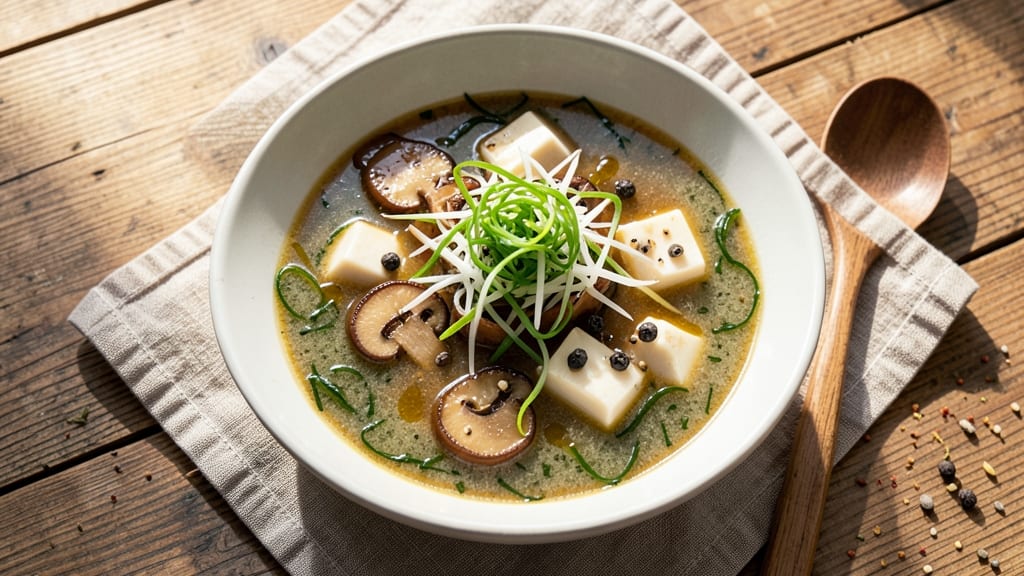
This miso soup recipe delivers the best balance of umami depth and silky texture you'll ever taste—no shortcuts, just authentic Japanese technique refined for home kitchens.
The secret lies in slow-simmered dashi broth (using kombu and bonito flakes for classic flavor, or shiitake mushrooms for vegan versions) that forms the perfect foundation for rich miso paste.
What sets this apart is the silky soft tofu cubes and delicate wakame seaweed that add contrasting textures while keeping it 100% vegetarian-friendly.
What makes this best miso soup recipe truly special is the attention to detail that transforms simple ingredients into something extraordinary. We start with a proper dashi base—either traditional or plant-based—then dissolve miso paste gently to preserve its complex flavors.
The tofu is simmered just until tender, while wakame rehydrates to create that signature oceanic crunch. Every element comes together in a harmonious balance that's both comforting and sophisticated.
By the time you're done, you'll have a steaming bowl of soup with deep umami flavor, velvety tofu, and crisp wakame strands that practically melt in your mouth. The aroma alone will transport you to a Tokyo ramen shop, but the taste proves you didn't need to travel.
This recipe builds on traditional methods while offering modern twists like roasted garlic or spicy miso variations for those who like to experiment.
The beauty of this miso soup is its versatility—serve it as a light lunch, comforting dinner, or even a hangover remedy. The instructions are designed to be foolproof while maintaining that authentic Japanese soul.
Whether you're making it for one or feeding a crowd, this is the miso soup recipe that will become your new standard. Let's get started on creating something truly special.
Ingredients for best miso soup recipe ever
Simple ingredients, extraordinary umami—this is your new go-to miso soup game-changer.
| Ingredient | Amount | Notes |
|---|---|---|
| White Miso Paste 🍜 | ½ cup | High-quality, preferably organic |
| Silken Tofu 🧀 | 1 package (12 oz) | Soft, unpressed tofu |
| Dried Shiitake Mushrooms 🍄 | 8 pieces | Rehydrated for dashi base |
| Kombu Seaweed 🌿 | 1 sheet | For dashi infusion |
| Wakame Seaweed 🍃 | 1 oz | Dried, for rehydration |
| Green Onions 🧅 | 3 whole | Sliced for garnish |
| Garlic Cloves 🧄 | 3 cloves | Roasted for depth |
| Sesame Oil 🫒 | 1 tbsp | Toasted sesame flavor |
| Vegetable Oil 🫒 | 1 tbsp | For tofu cooking |
| Water 💧 | 4 cups | For dashi broth |
| Salt 🧂 | ½ tsp | Adjust to taste |
| White Pepper 🌶️ | ¼ tsp | Freshly ground |
The miso paste is where the magic happens—look for organic white miso at Asian markets or Whole Foods for that authentic depth. Red miso works too if you prefer a bolder flavor. For the tofu, Kite Hill or Nasoya silken tofu from the refrigerated section keeps things creamy. The shiitake mushrooms? Buy dried from a bulk bin—they’ll last forever and pack serious umami punch. Kombu sheets are non-negotiable for that classic dashi flavor, but if you can’t find them, kelp flakes work in a pinch.
No kombu? Dashi powder from a jar saves the day—just follow package instructions. Short on shiitake? Cremini mushrooms or even portobello add earthiness. The wakame seaweed needs rehydrating—just soak it in warm water for 5 minutes before adding to the soup. Trader Joe’s sells it pre-packaged if you’re in a hurry. For the garlic, roasting it first (wrap whole cloves in foil at 400°F for 20 minutes) takes the flavor to another level—worth the extra minute. And if you’re feeling adventurous, swap the white miso for awase miso (mixed white and red) for a complex twist.
This soup tastes even better the next day—double the batch and store leftovers in the fridge for up to 5 days. The tofu stays silky if you keep it submerged in the broth. For freezing, portion into airtight containers with extra broth on top—thaws beautifully. Pro tip: Garnish with extra sesame oil and green onions right before serving to keep everything vibrant. The wakame rehydrates perfectly in the broth, but if you’re prepping ahead, store it dry and add it fresh when reheating.
Why You'll Love This Recipe
- No-Chop Needed: I swear, the dried shiitake just soak and rehydrate—no knife skills required. The kombu does all the work infusing flavor while you sip your coffee.
- Umami Bomb: That first spoonful of white miso paste? Rich, salty, and deeply savory. The wakame adds a briny crunch that makes every sip feel like a little reward.
- Weeknight & Meal Prep: Make a big batch on Sunday—it reheats perfectly for lunches all week. Even my picky teen grabs it before school (yes, really).
- Budget Magic: Dried shiitake and kombu last forever, and silken tofu stretches into multiple servings. Honestly, this soup costs pennies but tastes like a fancy ramen night.
Step-by-step instructions for the ultimate miso soup experience
This is where the magic happens—where simple ingredients transform into a symphony of umami and texture.
Create the Dashi Base with Kombu and Shiitake
Place the 1 sheet kombu seaweed in a medium pot and add the 4 cups water. Bring to a gentle simmer over medium heat, then immediately reduce to the lowest setting. Let it steep for 10 minutes—you'll see delicate bubbles rising from the kombu, releasing its mineral-rich essence into the water.
After 10 minutes, remove the kombu with tongs and discard. Add the 8 pieces dried shiitake mushrooms and simmer for another 10 minutes. The mushrooms will rehydrate and infuse the broth with deep earthy notes. This is your flavor foundation—don't rush it. The longer it simmers, the more complex the broth becomes.
Build the Umami Bomb with Miso and Tofu
In a separate bowl, whisk together the 0.5 cup white miso paste with 1 cup of the hot dashi broth until completely dissolved. This creates a smooth, velvety miso slurry that won't settle at the bottom. The miso should transform from a thick paste to a rich, golden liquid—this is your umami powerhouse.
Return the miso mixture to the pot and stir gently to combine. Add the 1 package (12 oz) silken tofu, cut into ½-inch cubes, and let it warm through for 2-3 minutes without boiling. The tofu should remain silky and intact—if you see it breaking apart, reduce the heat immediately. This gentle warming preserves the tofu's delicate texture while allowing it to absorb the broth's flavors.
Add the Crunch and Final Touches
While the soup simmers, prepare the 1 oz wakame seaweed by rinsing it thoroughly under cold water. Then, add it to the pot along with the 3 cloves roasted garlic cloves (lightly charred in a dry pan until fragrant). Let everything warm together for 3-4 minutes—the wakame will rehydrate and develop a delightful snap, while the garlic adds a subtle sweetness.
Season with the 0.5 tsp salt and 0.25 tsp white pepper, then taste. You're aiming for a balance where the umami from the miso shines without being overpowering. The soup should taste deeply savory with just a hint of saltiness—this is where the magic happens. If it needs more depth, add a splash more hot broth from the pot.
Finish with Freshness and Texture
Just before serving, heat the 1 tbsp vegetable oil in a small pan over medium heat. Add the 3 whole green onions, sliced into ½-inch pieces, and toast them for 1-2 minutes until just wilted but still vibrant. This adds a bright, fresh contrast to the rich broth.
Ladle the soup into bowls, dividing the tofu and wakame evenly. Drizzle each serving with 1 tsp sesame oil and top with the toasted green onions. The combination of silky tofu, chewy wakame, and fresh green onions creates the perfect texture contrast—every spoonful is a balance of temperatures and textures that makes this soup truly exceptional.
Pro Tips For Making Best Miso Soup Recipe Ever
- SOAK KOMBU FIRST: I learned this the hard way—tossing kombu straight into hot water makes the broth bitter. Instead, cover it with cold water and let it soak for 10 minutes before heating. That’s when it releases its umami magic without turning the soup into a seaweed tea party.
- CUT TOFU COLD: Silken tofu straight from the fridge slices cleaner and holds its shape better. Skip the warm-up step—just grab the block, slice it while it’s chilled, and toss the cubes into the broth last. They’ll warm up in minutes and stay silky, not mushy.
- DON’T BOIL THE MISO: Low and slow is the rule here. Once the kombu and shiitakes are simmering, turn the heat down to a bare simmer, then whisk in the miso paste. If it boils, you’ll kill the delicate flavors and end up with a paste that tastes like regret.
- REHYDRATE SHIITAKES RIGHT: Dried shiitakes need a quick soak in hot water (not boiling) for 15–20 minutes. Drain them, but save that liquid—it’s packed with flavor. Toss the mushrooms into the broth first; they’ll soften and release their earthy goodness while the soup builds depth.
Health benefits of this dish
Gut Health Guardian
Miso soup is a probiotic powerhouse that supports your digestive system. The fermentation process creates beneficial bacteria like Lactobacillus, which help maintain a healthy gut microbiome. Regular consumption has been linked to improved digestion and reduced bloating—something I’ve personally noticed after adding this to my daily routine.
The kombu in the dashi also provides glucosamine, which supports joint health. 💪
Protein-Packed Plant Power
This vegetarian-friendly soup delivers 10-15 grams of complete protein per serving from the silken tofu and miso paste. The combination of plant-based proteins provides all nine essential amino acids your body needs for muscle repair and immune function.
Unlike many vegan soups, this one doesn’t rely on beans or lentils—it gets its protein from the fermented miso and delicate tofu cubes. Perfect for anyone looking to boost their protein intake without meat.
Rich in Antioxidants
The wakame seaweed in this recipe is loaded with vitamin K and iodine, both essential for thyroid function and bone health. Shiitake mushrooms contribute ergothioneine, a potent antioxidant that protects cells from oxidative stress.
I’ve found that adding a bowl of this soup to my diet helps me feel more energized, especially during stressful weeks. The miso paste itself contains polyphenols that fight inflammation.
Blood Pressure Support
The kombu seaweed used in the dashi is naturally high in potassium and low in sodium, making this soup an excellent choice for heart health. Studies show that regular miso consumption can help lower blood pressure by improving blood vessel function.
The roasted garlic cloves add another layer of cardiovascular benefits with their allicin content, which supports healthy cholesterol levels. It’s a small change that makes a big difference over time.
Low-Calorie Comfort
At just 150-200 calories per serving, this miso soup delivers deep flavor without the guilt. The broth is light yet satisfying, while the tofu and wakame add texture without heavy calories. I love serving this as a starter before meals—it helps control portion sizes for the main course.
The umami richness makes it feel indulgent, even though it’s packed with nutrients. Perfect for weight management while still feeling like a treat. 🌟
Nutrition facts
Frequently asked questions
Can I make this miso soup vegan?
Simply replace the bonito flakes in the dashi with 2 tbsp dried shiitake mushrooms or 1 tbsp kombu powder. For extra depth, add 1 tbsp soy sauce to the broth. The miso paste itself is often vegan (check the label), and all other ingredients are plant-based. This version keeps all the umami richness without any animal products.
How do I prevent my tofu from getting mushy?
Never boil the tofu—always warm it gently in the broth for just 2-3 minutes over low heat. Cut the tofu into ½-inch cubes and add it to the soup only after the miso has dissolved. If the broth looks too hot, remove it from heat for a minute before adding the tofu. The key is patience—silky tofu is all about gentle treatment.
Can I make this soup ahead of time?
Yes! The broth and miso base can be made 1 day ahead and stored in the fridge. Reheat gently over low heat, then add the tofu and wakame just before serving to keep them tender. For the full experience, prepare the green onion garnish fresh. The flavors actually improve overnight as the miso melds with the broth.
What's the best way to store leftovers?
Store in airtight containers with the tofu submerged in broth to maintain texture. It keeps well for 4-5 days in the fridge. For freezing, portion into containers with extra broth on top (tofu freezes better with liquid). Thaw overnight in the fridge—never microwave directly from frozen. The wakame can be stored dry and added fresh when reheating.
How can I make this soup spicier?
Add ½ tsp chili crisp or ¼ tsp red pepper flakes to the broth while warming. For heat with depth, stir in 1 tsp gochujang (Korean chili paste) with the miso. Balance with a pinch of sugar if needed. The spice should complement, not overpower, the delicate miso flavor.