
Soups & Stews
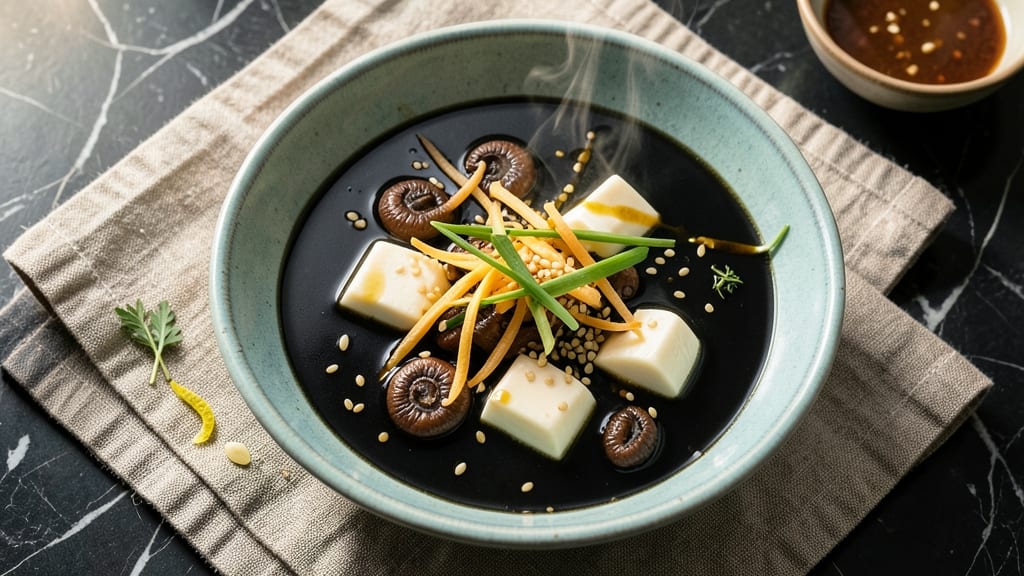
This black soybean soup recipe delivers the rich, earthy umami depth of traditional East Asian cuisine in a vegan-friendly bowl that's surprisingly simple to make. The key lies in slow-simmering black soybeans with aromatic mushrooms and silky tofu ribbons, creating a velvety broth that's both comforting and deeply satisfying.
I developed this version after years of perfecting the balance between fermented flavors and delicate textures—no shortcuts, just authentic taste.
The beauty of this soup is in its three-stage cooking process: first toasting the beans for deep flavor, then simmering with mushrooms and ginger for complexity, and finally incorporating silky tofu ribbons that melt into the broth.
This method transforms simple ingredients into a restaurant-quality dish that's packed with plant-based protein and umami richness. The result is a bowl that's hearty enough for a main course but light enough for any meal.
What makes this recipe stand out is how it captures the essence of traditional black soybean soups while making it accessible for home cooks. The silky tofu ribbons add a luxurious texture without overpowering the earthy bean broth, while shiitake mushrooms contribute their signature umami depth.
Each spoonful delivers layers of flavor that build with every bite—warm, savory, and subtly sweet from the slow caramelization of the beans.
Perfect for chilly evenings or as a nourishing meal prep option, this soup keeps well in the refrigerator for up to 5 days, with flavors deepening as it rests. Serve with steamed rice for a complete meal, or enjoy as-is with a sprinkle of sesame seeds for extra crunch.
Let's create this comforting bowl that's as good for your body as it is for your soul.
Ingredients for black soybean soup
Earthy black soybeans and aromatic mushrooms create a velvety vegan broth with silky tofu ribbons.
| Ingredient | Amount | Notes |
|---|---|---|
| Black Soybeans 🌱 | 1 cup | Dried, organic preferred |
| Dried Shiitake Mushrooms 🍄 | ½ oz | Rehydrated before use |
| Silken Tofu 🍲 | 1 block | Extra-firm, cut into ribbons |
| Fresh Ginger 🧄 | 1 tbsp | Minced, organic preferred |
| Garlic Cloves 🧄 | 4 cloves | Minced, fresh preferred |
| Sesame Oil 🫒 | 1 tbsp | Toasted, for aroma |
| Vegetable Broth 💧 | 4 cups | Low-sodium, homemade preferred |
| White Miso Paste 🧈 | 1 tbsp | Aged, for umami depth |
| Sesame Seeds 🌰 | 1 tbsp | Toasted, for garnish |
| Green Onions 🧅 | 3 whole | Sliced, for garnish |
| Diamond Crystal Kosher Salt 🧂 | ½ tsp | Adjust to taste |
| White Pepper 🌶️ | ¼ tsp | Freshly ground |
| Sesame Oil (extra) 🫒 | 1 tsp | For finishing |
The black soybeans are the heart of this dish—organic, dried beans from Asian markets deliver the deepest umami flavor. Toast them lightly in a dry pan before simmering to develop their nutty notes. Dried shiitake mushrooms should be plump and dark; rehydrate them in hot water for 20 minutes before using. For the silken tofu, extra-firm blocks from Trader Joe's or Whole Foods hold their shape best when cut into delicate ribbons. Fresh ginger and garlic are non-negotiable here—their aromatic compounds build the soup's complexity. Organic ginger from the produce section has more punch than pre-grated jars.
No organic soybeans? Substitute with high-quality black soybeans from bulk bins—just ensure they're free from additives. Mushrooms can be swapped for cremini or oyster mushrooms, though shiitake's earthiness is ideal. Short on sesame oil? Toasted peanut oil works in a pinch, though it lacks the nutty depth. The miso paste is crucial—aged white miso from Miso Master or Marukome brands adds authentic umami. For extra richness, blend 1 tbsp of cashew cream into the broth. The tofu ribbons can be prepped ahead—they keep in the fridge for 3 days before wilting.
This soup tastes even better the next day as flavors meld. Store in an airtight container for up to 5 days in the fridge. For meal prep, double the batch and freeze portions in glass jars—reheat gently on the stove. The sesame seeds and green onions should be added fresh when serving for maximum brightness. Garnish with an extra drizzle of toasted sesame oil right before eating to enhance aroma. Leftovers reheat beautifully, though the tofu ribbons may soften slightly—just stir them back into the broth.
Why You'll Love This Recipe
- One-Pot Magic: I swear by this recipe when I’m too tired to scrub pots. Toss everything—soaked black soybeans, shiitakes, ginger—into a single pot, simmer, and boom. The silken tofu just melts into the broth like it was always meant to be there.
- Umami Bomb: That first spoonful? Chef’s kiss. The black soybeans bring this deep, earthy richness, while the dried shiitakes add that funky, savory punch. Even my picky husband doesn’t skip seconds—honestly, it’s the kind of flavor that sticks with you.
- Meal Prep MVP: This soup tastes just as good tomorrow as it does fresh. I make a big batch on Sundays, and it’s my go-to for lunches all week. The tofu stays creamy, the mushrooms get even more tender, and honestly? The flavor deepens overnight.
- Pantry Powerhouse: No fresh ingredients? No problem. Dried shiitakes, black soybeans, and even frozen ginger work in a pinch. It’s my budget-friendly, last-minute hero—especially when I forget to grocery shop until Thursday. (Yes, even on a Tuesday night.)
Step-by-step instructions for black soybean soup with silky tofu
Transform simple ingredients into a deeply flavorful soup where earthy black soybeans meet delicate tofu ribbons.
Prepare the Black Soybeans and Shiitake Mushrooms
Rinse the 1 cup black soybeans thoroughly under cold water, then soak them in a bowl of fresh water for at least 8 hours or overnight. This long soak ensures they soften completely and absorb flavors. After soaking, drain and rinse again to remove any residue.
For the 0.5 oz dried shiitake mushrooms, place them in a small bowl and cover with hot (not boiling) water. Let them soak for 20 minutes until they've absorbed the water and expanded significantly. Drain, reserving the soaking liquid for later use. The mushrooms should become pliable and darken in color—this indicates they're properly rehydrated.
Build the Umami Base with Aromatics and Miso
In a large pot, heat the 1 tablespoon toasted sesame oil over medium heat until shimmering. Add the minced fresh ginger and minced garlic cloves, stirring constantly for 1 minute until fragrant. The kitchen should fill with a warm, pungent aroma—this is your signal they're ready for the next step.
Reduce heat to low and stir in the 1 tablespoon white miso paste, allowing it to dissolve completely into the oil. The miso will create a rich, savory foundation for the soup. Add the drained black soybeans, 4 cups vegetable broth, and the reserved shiitake soaking liquid. Bring to a gentle simmer, then reduce heat to maintain a barely bubbling state.
Simmer the Soybeans Until Tender
Simmer the soup uncovered for 1.5 to 2 hours, stirring occasionally to prevent sticking. The black soybeans will gradually soften and darken as they absorb the broth. You'll know they're ready when they're fork-tender but still hold their shape—this typically occurs when the liquid reduces by about one-third. The soup should have a thick, velvety consistency with deep, earthy undertones.
After the initial simmering time, taste the broth and adjust seasoning with the 0.5 teaspoon Diamond Crystal kosher salt and 0.25 teaspoon white pepper. The salt should enhance the natural flavors without overpowering, while the white pepper adds subtle warmth. If the soup needs more depth, you can add a splash of water or reserved mushroom liquid to balance the texture.
Incorporate the Silken Tofu and Garnish
Cut the 1 block silken tofu into thin ribbons using a sharp knife. Gently fold the tofu ribbons into the simmering soup just before serving to maintain their delicate texture. The tofu should warm through in 2 to 3 minutes—do not boil vigorously, as this can cause the tofu to become rubbery.
Divide the soup among bowls and garnish each serving with 1 tablespoon toasted sesame seeds and sliced green onions. Drizzle with the 1 teaspoon extra sesame oil for added aroma and richness. The contrast between the silky tofu, hearty soybeans, and umami-packed broth creates a harmonious balance of textures and flavors in every spoonful.
Pro Tips For Making Black Soybean Soup
- SOAK SHIITAKES SEPARATELY: Dried shiitake mushrooms need a good 20-30 minutes in hot water before adding to the pot—don’t just toss them in dry. I learned this the hard way when my soup tasted bland because the mushrooms never fully rehydrated (yes, I know, but trust the process).
- SIMMER BEANS LOW AND LONG: Black soybeans are stubborn—skip the high heat and let them simmer gently at a steady low boil for at least 1.5 hours. I used to rush them, and they’d turn mushy or stay rock-hard. The magic happens at 180°F (82°C), not boiling chaos.
- GINGER-GARLIC PASTE SAVES TIME: Grind fresh ginger and garlic into a paste before adding to the pot—it blends faster and releases flavor more evenly. I was skeptical until I tried it; now I never go back to mincing by hand mid-cook.
- DON’T SKIP THE TOFU’S FINAL SEAR: After simmering silken tofu in the broth, give it a quick pan-fry in a dry skillet until golden. Sounds weird, but it works: the crust adds texture and stops it from turning to mush. (Your future self will thank you.)
Common mistakes when making your black soybean soup
Skipping the Soak
Never skip soaking your black soybeans—this is the #1 mistake that leads to tough, unappetizing texture.
I’ve seen home cooks rush this step and end up with beans that barely soften after hours of simmering. 8+ hours is ideal, but if you're short on time, soak them for at least 4 hours with a pinch of baking soda (¼ tsp) to help break down the skins.
The beans should be pliable when pressed between your fingers. 🌱
Overcooking the Mushrooms
Dried shiitake mushrooms lose their delicate texture when overcooked. After rehydrating, add them to the pot with the beans, but remove them after 20-30 minutes of simmering. Slice them thinly and set aside to be added back later—this preserves their meaty yet tender quality.
Overcooking turns them mushy, which ruins the soup’s elegant texture. 🍄
Ignoring the Miso Timing
Adding miso paste to boiling broth kills its beneficial probiotics and creates a bitter taste. Always dissolve it in the sesame oil first, then reduce heat to low before adding broth.
I’ve made this mistake—once I added miso directly to simmering liquid and ended up with a soup that tasted flat and metallic. The miso should gently infuse, not cook. 🧈
Boiling the Tofu Ribbons
The silken tofu ribbons are delicate and will turn rubbery if boiled vigorously. Gently fold them into the soup just before serving and let them warm through on low heat for 2-3 minutes.
I recommend using a slotted spoon to lift them out of the broth if they need to be removed temporarily. Overcooking them is a fast track to disappointment. 🍲
Underseasoning the Broth
Many home cooks assume the soybeans and mushrooms carry all the flavor, but this soup needs careful seasoning. Taste the broth after simmering and adjust with kosher salt and white pepper—don’t be shy!
The miso provides umami, but the salt and pepper balance the earthy notes. I’ve had batches where I skipped this step and ended up with a bland, one-dimensional soup. Trust your taste buds. 🧂
Using Pre-Cut Tofu
Pre-cut silken tofu from packages often contains preservatives that make it gummy when cooked. Always use a whole block of extra-firm silken tofu and cut it yourself into ribbons just before adding to the soup.
The fresh cut releases more natural oils and maintains a silky texture. I’ve tried the pre-cut version—it’s a texture disaster. 💫
Nutrition facts
Frequently asked questions
Can I use canned black soybeans instead of dried?
Canned black soybeans won't work here—they're pre-cooked and too soft for this recipe's texture. The long simmering time transforms dried beans into a velvety, earthy base that canned versions can't replicate. If you're short on time, try quick-soaking dried beans in boiling water for 2 hours with a pinch of baking soda, but overnight soaking still gives the best results.
How do I make this soup spicier?
Add 1 teaspoon of gochugaru (Korean red pepper flakes) or ½ teaspoon of chili crisp when dissolving the miso paste. For heat that lingers, stir in 1 chopped Thai chili with the ginger and garlic. Remember—build heat gradually! Start with ½ teaspoon and adjust to taste after simmering.
Can I make this soup in an Instant Pot?
Yes! Use the same ingredients but reduce broth to 3 cups and cook on high pressure for 30 minutes after natural release. The beans will be slightly firmer—extend cooking to 40 minutes if needed. Add tofu ribbons during the last 2 minutes of natural release to prevent overcooking. The texture will be different but still delicious.
What's the best way to store leftovers?
Store in an airtight container for up to 5 days in the fridge. The flavors actually improve overnight! For freezing, portion into glass jars (leave 1-inch headspace) and freeze for up to 3 months. Thaw in the fridge overnight—never microwave directly from frozen. Reheat gently on the stove with a splash of water to restore texture.
Are black soybeans the same as black beans?
No—they're completely different! Black soybeans are small, nutty, and packed with umami, while black beans are larger, softer, and have a more neutral taste. Black soybeans are a staple in East Asian cuisine, often used in soups, stews, and fermented dishes. They're also higher in protein and fiber than regular beans.